








Editor's note: As the year comes to a close, EnergyCapital is looking back at the year's top stories in Houston energy transition. When it comes to the future of energy, Houston has tons of forward-thinking minds hard at work researching solutions to climate change and its impact on Earth. The following research-focused articles that stood out to readers this year — be sure to click through to read the full story.
New study from Houston research team looks at how the Earth cycles fossil carbon
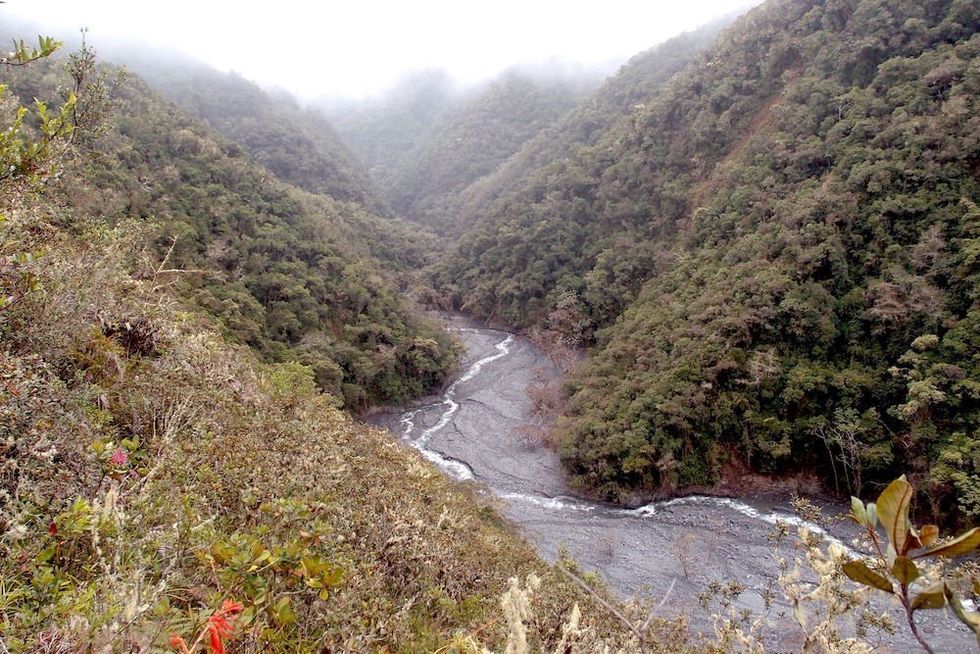
A Rice University professor studied the Earth's carbon cycle in the Rio Madre de Dios to shed light on current climate conditions. Photo courtesy of Mark Torres/Rice University
Carbon cycles through Earth, its inhabitants, and its atmosphere on a regular basis, but not much research has been done on that process and qualifying it — until now.
In a recent study of a river system extending from the Peruvian Andes to the Amazon floodplains, Rice University’s Mark Torres and collaborators from five institutions proved that that high rates of carbon breakdown persist from mountaintop to floodplain.
“The purpose of this research was to quantify the rate at which Earth naturally releases carbon dioxide into the atmosphere and find out whether this process varies across different geographic locations,” Torres says in a news release. Click here to continue reading article from November.
Rice University team breaks records with new sunlight-to-hydrogen device

Rice University engineers have created a device that absorbs light, converts it into electricity, and then uses the electricity to split water molecules and generate hydrogen. Photo courtesy Gustavo Raskoksy/Rice University
A team of Rice University engineers have developed a scalable photoelectrochemical cell that converts sunlight into clean hydrogen at a record-setting pace.
The lab led by Aditya Mohite, an associate professor at Rice, published the findings in a study in Nature Communications late last month, in collaboration with the National Renewable Energy Laboratory, which is backed by the Department of Energy. In it, the team details how they created a device that absorbs light, converts it into electricity, and then uses the electricity to split water molecules and generate hydrogen.
Austin Fehr, a chemical and biomolecular engineering doctoral student at Rice and one of the study’s lead authors, says in a statement that the device "could open up the hydrogen economy and change the way humans make things from fossil fuel to solar fuel." Click here to continue reading article from August.
Houston research shows how much hydrogen-powered vehicles would cost at the pump
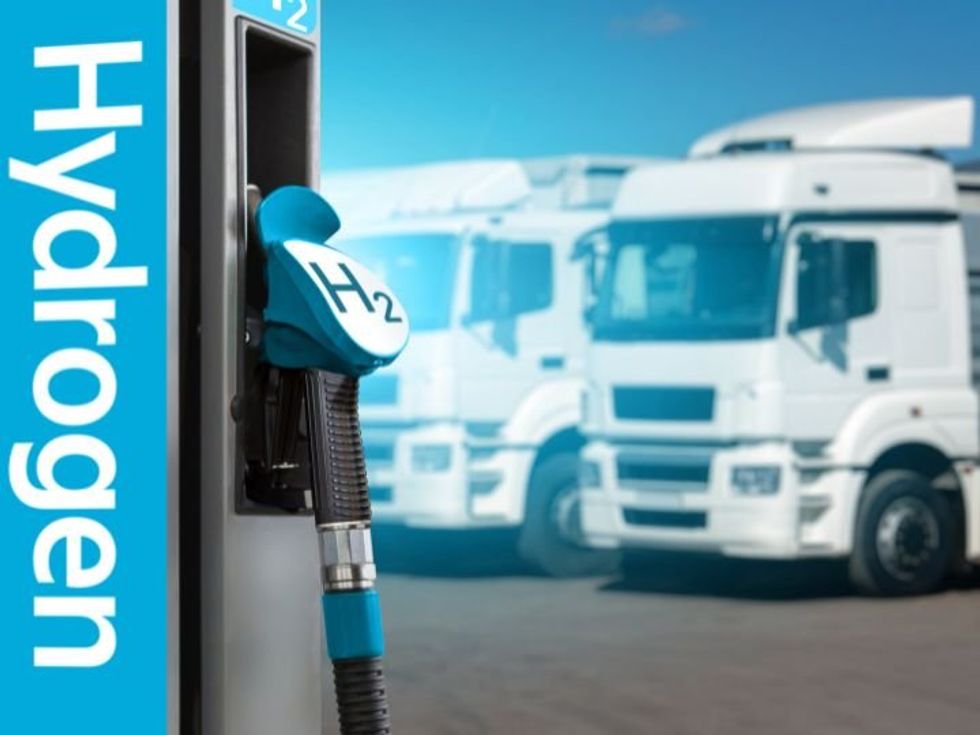
Researchers at the University of Houston are proposing that supplying hydrogen for transportation in the greater Houston area could also be profitable. Photo via UH.edu
It's generally understood that transitioning away from gas-powered vehicles will help reduce the 230 million metric tons of carbon dioxide gas released each year by the transportation sector in Texas.
Now, researchers at the University of Houston are proposing that supplying hydrogen for transportation in the greater Houston area could also be profitable.
The research team has done the math. In a white paper, "Competitive Pricing of Hydrogen as an Economic Alternative to Gasoline and Diesel for the Houston Transportation Sector," the team compared three hydrogen generation processes—steam methane reforming (SMR), SMR with carbon capture (SMRCC), and electrolysis using grid electricity and water—and provided cost estimates and delivery models for each. Click here to continue reading article from November.
Houston university to lead new NSF-back flooding study

A Rice University study will consider how "design strategies aimed at improving civic engagement in stormwater infrastructure could help reduce catastrophic flooding." Photo via Getty Images
Houston will be the setting of a new three-year National Science Foundation-funded study that focuses on a phenomenon the city is quite familiar with: flooding.
Conducted by Rice University, the study will consider how "design strategies aimed at improving civic engagement in stormwater infrastructure could help reduce catastrophic flooding," according to a statement.
The team will begin its research in the Trinity/Houston Gardens neighborhood and will implement field research, participatory design work and hydrological impact analyses.
Rice professor of anthropology Dominic Boyer and Rice's Gus Sessions Wortham Professor of Architecture Albert Pope are co-principal investigators on the study. They'll be joined by Phil Bedient, director of the Severe Storm Prediction, Education and Evacuation from Disasters Center at Rice, and Jessica Eisma, a civil engineer at the University of Texas at Arlington. Click here to continue reading article from October.
Research team lands DOE grant to investigate carbon storage in soil

Two Rice University researchers just received DOE funding for carbon storage research. Photo by Gustavo Raskosky/Rice University
Two researchers at Rice University are digging into how soil is formed with hopes to better understand carbon storage and potential new methods for combating climate change.
Backed by a three-year grant from the Department of Energy, the research is led by Mark Torres, an assistant professor of Earth, environmental and planetary sciences; and Evan Ramos, a postdoctoral fellow in the Torres lab. Co-investigators include professors and scientists with the Brown University, University of Massachusetts Amherst and Lawrence Berkeley National Laboratory.
According to a release from Rice, the team aims to investigate the processes that allow soil to store roughly three times as much carbon as organic matter compared to Earth's atmosphere.
“Maybe there’s a way to harness Earth’s natural mechanisms of sequestering carbon to combat climate change,” Torres said in a statement. “But to do that, we first have to understand how soils actually work.” Click here to continue reading article from September.