







Trending News

Helix Earth closes $12M round and more Houston energy headlines

Helix Earth's technology has the potential to cut AC energy use by up to 50 percent. Photo by Sergei A/Pexels

Editor's note: The top energy transition headlines for the month include Helix Earth's Seed 2 funding and Chevron's plans for a West Texas power plant. Below are the five most-read EnergyCapital stories published April 1-15, 2026:

1. Houston cleantech company closes $12M seed round
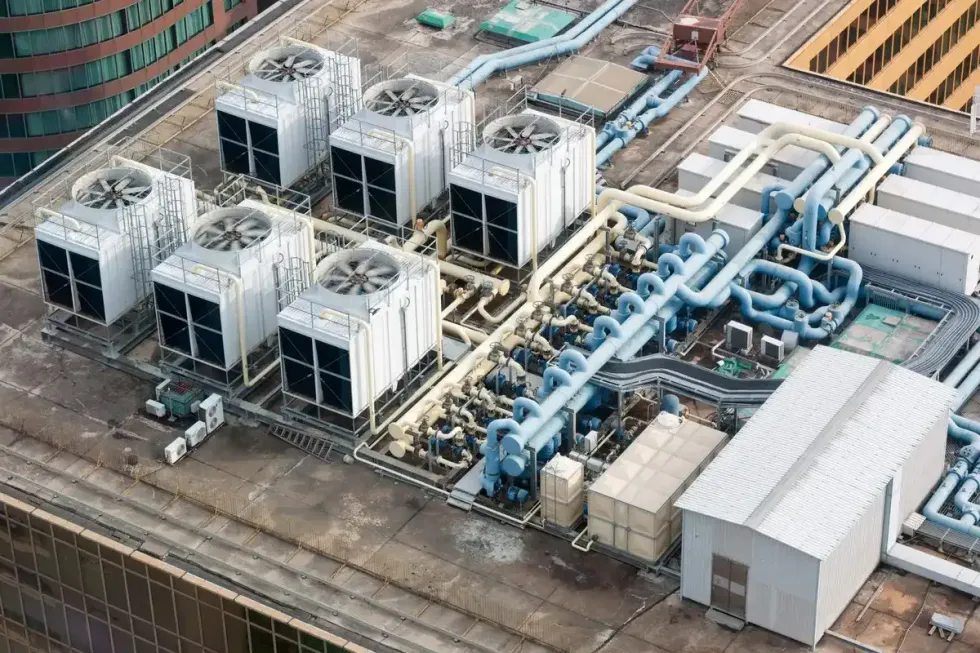
Helix Earth is developing a retrofit technology that has the potential to cut HVAC energy use by up to 50 percent. Photo via Getty Images

Houston-based Helix Earth Technologies has closed a $12 million Seed 2 funding round to scale manufacturing of its energy-efficient commercial HVAC add-on technology. Veriten, a Houston-based energy investment firm, led the round. Rua Ventures, Carnrite Ventures, Skywriter LLC and Textbook Ventures also participated. Continue reading.

2. Chevron eyes $7B Texas power plant for Microsoft data center campus
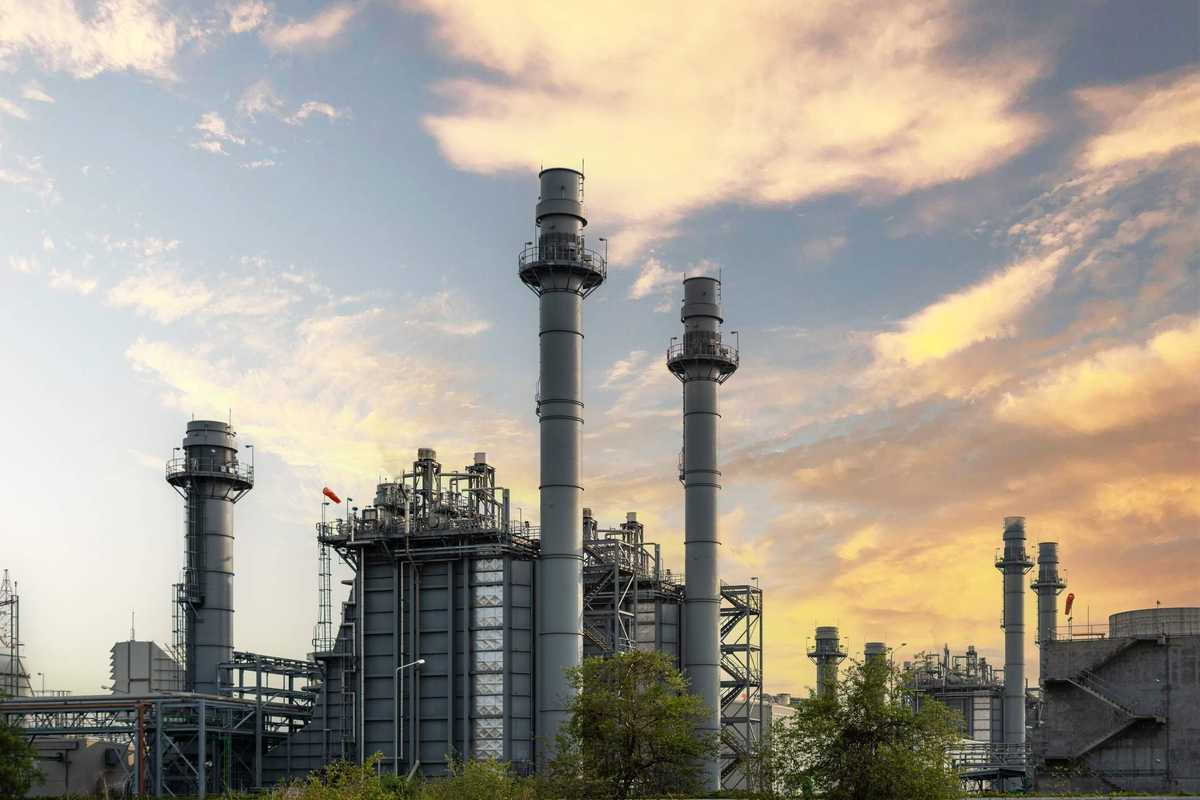
Chevron is in talks with Microsoft and Engine No. 1 about a massive natural gas power plant in Texas. Photo via Getty Images

Software giant Microsoft is negotiating exclusively with Houston-based oil and gas titan Chevron and investment firm Engine No. 1 about the development of a $7 billion power plant in West Texas that would supply electricity for a Microsoft data center campus. Continue reading.

3. 3 strategies to strengthen the Gulf Coast as a global energy hub
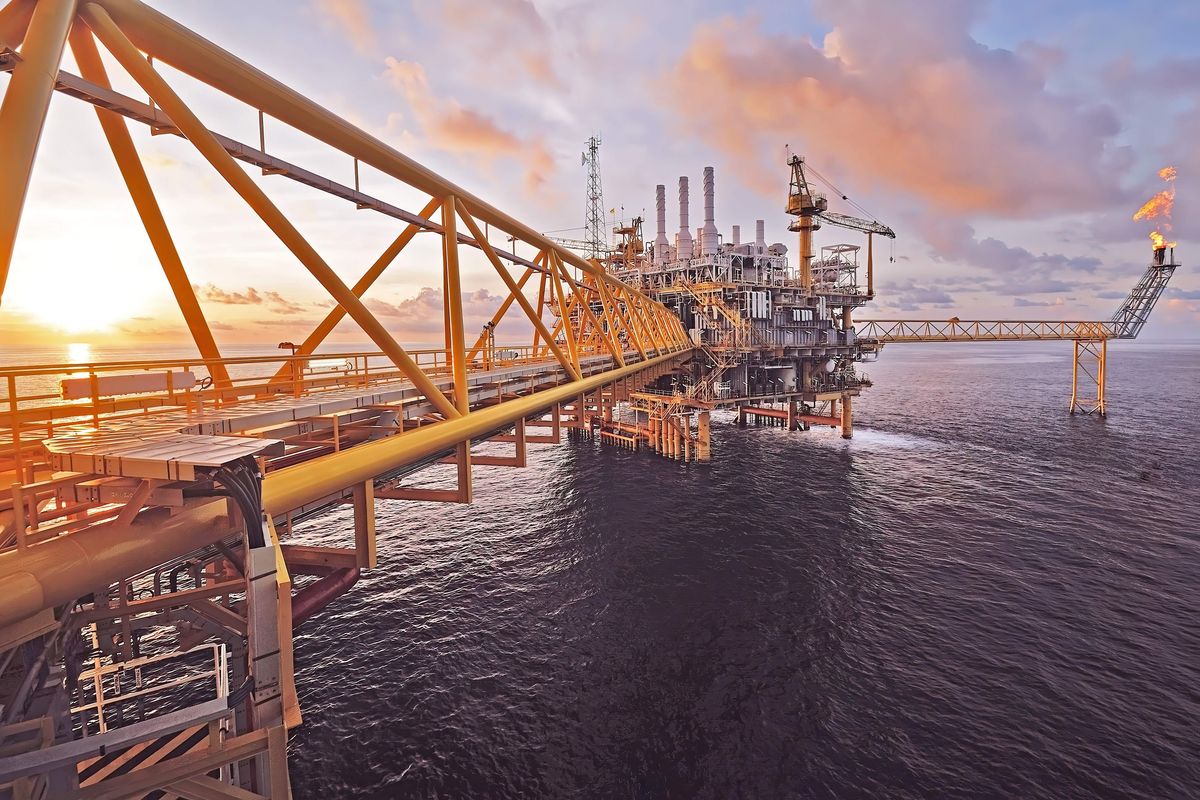
The Gulf Coast is one of the most critical energy hubs in the world. Photo via Getty Images.

The Texas-Louisiana Gulf Coast is the backbone of America’s energy and chemical economy. Texas produces roughly 43% of U.S. crude oil and 28% of natural gas, while Texas and Louisiana together account for about half of the nation’s refining capacity, processing 9.3 million barrels of crude per day across 50 refineries. The region also produces approximately 80% of the nation’s primary petrochemicals and ships more than $117 billion in chemical products annually from Texas alone. Continue reading.

4. 8 CERAWeek 2026 takeaways from a new Houston energy leader
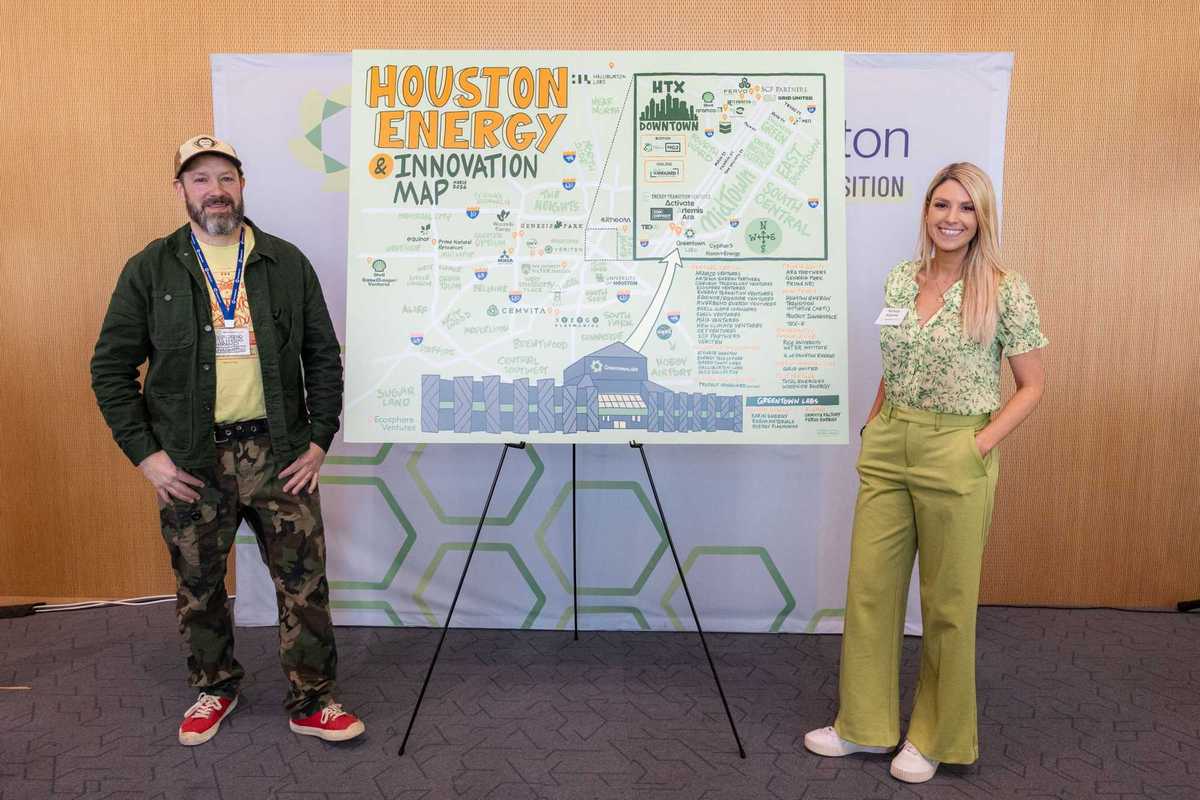
Kelsey Kearns (right), the new director of Greentown Houston, shared her takeaways from her first-ever CERAWeek with Energy Capital HTX. Photo courtesy Greentown

My first CERAWeek was a blur. Having top energy executives, policymakers, and technologists all gathered in Houston—over 11,000 of them this year—was both overwhelming and energizing. The theme was “Convergence and Competition: Energy, Technology, and Geopolitics,” and walking through the George R. Brown Convention Center, it was immediately clear that this was no ordinary industry conference. As a first-timer with a Greentown Labs lens, here’s what really stuck with me. Continue reading.

5. Greentown Labs names new COO, appoints new Head of Houston

Lawson Gow and Kelsey Kearns have stepped into new leadership roles at Greentown Labs. Photos courtesy Greentown/LinkedIn

Greentown Labs has reshuffled its leadership, elevating Houston leaders into new roles. Lawson Gow was named COO of the Houston- and Boston-based climatech incubator in February 2026. In his new role, he will focus on optimizing Greentown's structure, building new internal and external systems and developing a plan for growth. Continue reading.

Trending News

A View From HETI

A new report estimates that more than 90 percent of data center-related carbon dioxide emissions could potentially be mitigated through carbon capture and storage. Photo via Unsplash

A new study out of Rice University points to carbon capture and storage methods as pivotal solutions to addressing emissions from AI-driven data centers.

The study was authored by Hon Chung Lau, an adjunct professor in the Department of Chemical and Biomolecular Engineering at Rice University and founder of Low Carbon Energies LLC, and Steve C. Tsai, an energy transition consultant at Low Carbon Energies LLC, and published in the journal Energy & Fuels.

According to the study, U.S. data center power capacity could more than quadruple in five years, growing from 40 gigawatts in 2025 to 169 gigawatts by 2030. Without proper regulation of emissions, the report estimates that carbon dioxide produced by fossil-fuel power plants supplying electricity to data centers could grow at the same scale, increasing from 90 million metric tons to more than 404 million metric tons over the same time period.

The researchers analyzed publicly available data on announced U.S. data centers, which included energy sources, locations, and projected power capacity before estimating data center-related carbon emissions based on each state’s electricity mix. From there, they examined whether those emissions could be captured and stored underground in saline aquifers.

The team estimates that 34 states have enough saline aquifer storage capacity to store more than 100 years of projected data center-related carbon dioxide emissions beyond 2030. Aquifers could store an estimated 59 million metric tons of data center-related carbon dioxide, or about 66 percent of the sector’s emissions in 2025. However, that calculation could grow to 299 million metric tons, or about 74 percent of projected data center-related emissions by 2030.

The researchers found that more than 90 percent of data center-related carbon dioxide emissions could potentially be mitigated through carbon capture and storage when out-of-state storage options are included, even though they note that carbon capture isn’t the only solution.

“It does show that the geology exists to make a meaningful impact, especially in states where data center growth is strongest,” Lau said in a news release.

Rapid growth in states including Texas, Virginia, Pennsylvania, Ohio, Arizona, Colorado, Utah and Illinois was considered in the study. According to the findings, Texas would need to add 25 gigawatts of power capacity by 2030 to meet projected data center demand, as data centers require reliable electricity 24/7.

“Data centers are becoming one of the defining energy challenges of the AI era,” Lau added in the news release. “The question is not only whether we can build enough computing infrastructure, but whether we can power it in a way that is reliable, affordable and compatible with decarbonization goals.”

Trending News