








Editor's note: From DOE funding for underground power line research to Zeta Energy's big deal with, these are the top headlines that resonated with EnergyCapital readers on social media and daily newsletter this week.
Houston researchers earn $3.3M in DOE funding to develop safer underground power line installation
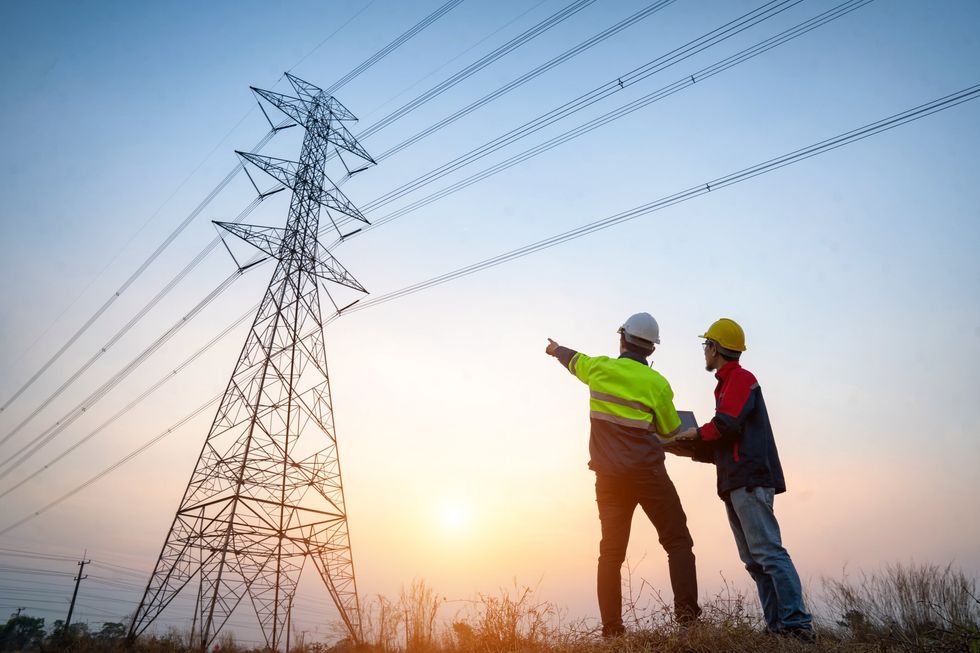
Researchers have secured $3.3 million in funding to develop an AI-powered subsurface sensing system aimed at improving the safety and efficiency of underground power line installation. Photo via Getty Images
Researchers from the University of Houston — along with a Hawaiian company — have received $3.3 million in funding to explore artificial intelligence-backed subsurface sensing system for safe and efficient underground power line installation.
Houston's power lines are above ground, but studies show underground power is more reliable. Installing underground power lines is costly and disruptive, but the U.S. Department of Energy, in an effort to find a solution, has put $34 million into its new GOPHURRS program, which stands for Grid Overhaul with Proactive, High-speed Undergrounding for Reliability, Resilience, and Security. The funding has been distributed across 12 projects in 11 states.
“Modernizing our nation’s power grid is essential to building a clean energy future that lowers energy costs for working Americans and strengthens our national security,” U.S. Secretary of Energy Jennifer M. Granholm says in a DOE press release. Continue reading.
Houston company to develop game-changing lithium-sulfur EV batteries for automaker
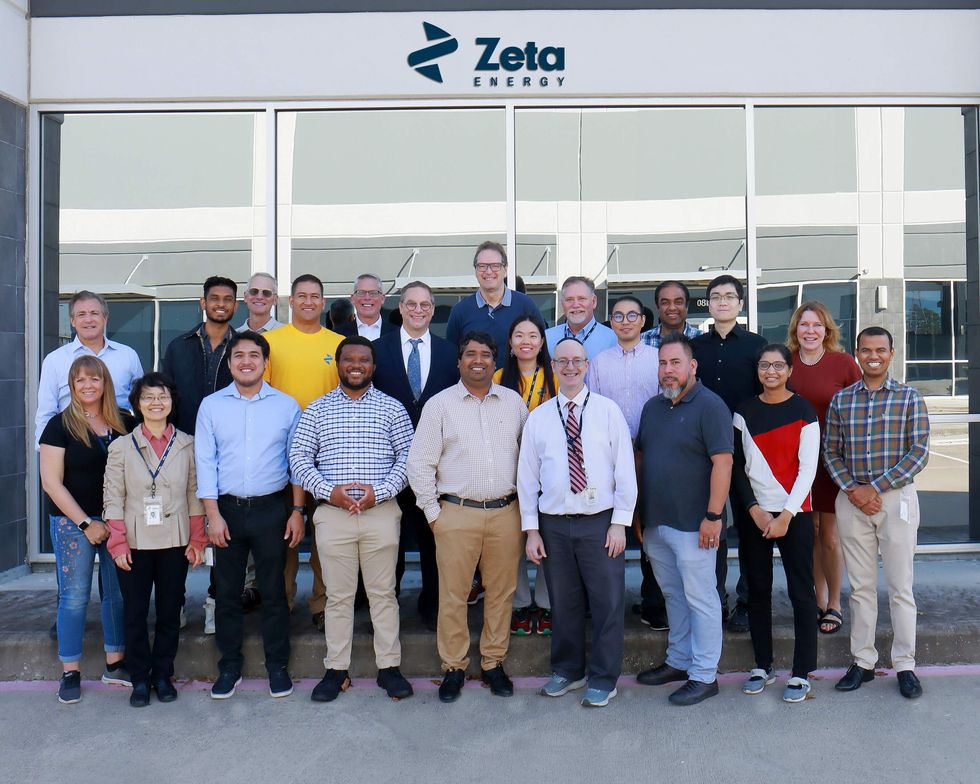
Zeta Energy's batteries are targeted to power Stellantis electric vehicles by 2030. Image via Zeta Energy
Houston-based Zeta Energy Corp. has teamed up with an automaker to develop new battery technology.
Zeta Energy and Stellantis N.V. announced a joint development deal to advance battery cell technology for electric vehicle applications that will develop lithium-sulfur EV batteries with gravimetric energy density that can achieve a volumetric energy density comparable to today’s lithium-ion technology. The batteries are targeted to power Stellantis electric vehicles by 2030.
“The combination of Zeta Energy’s lithium-sulfur battery technology with Stellantis’ unrivaled expertise in innovation, global manufacturing and distribution can dramatically improve the performance and cost profile of electric vehicles while increasing the supply chain resiliency for batteries and EVs,” Tom Pilette, CEO of Zeta Energy, says in a news release. Continue reading.
SLB unveils AI-powered tech to enhance drilling efficiency and reduce emissions
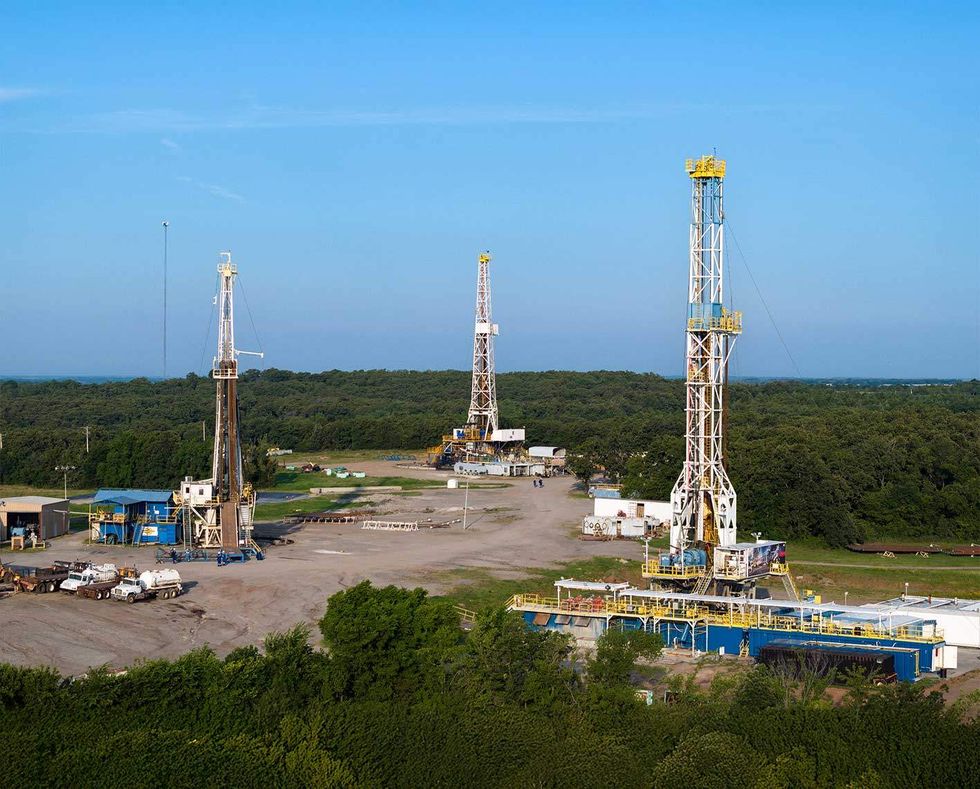
SLB has introduced Neuro, an AI-driven autonomous geosteering system that optimizes well drilling by responding to complex subsurfaces, enhancing efficiency, and reducing carbon emissions. Photo courtesy of SLB
Houston energy technology company SLB introduced a new autonomous geosteering system called Neuro, which can reduce the carbon footprint of the drilling operations. Neuro can respond to complex subsurfaces to drill more efficiently with higher-performing wells.
Neuro, which is an AI-based platform,expands the technological foundation of SLB’s Neuro autonomous directional drilling, which drills wells to a specific target. Now, the Neuro autonomous geosteering incorporates high-fidelity downhole measurements that ensure certainty of well placement in the best part of the reservoir.
“Neuro autonomous geosteering is a remarkable industry-first achievement that is for drillers what the autonomous vehicle is for drivers,” Jesus Lamas, president of Well Construction at SLB, says in a news release. Continue reading.
Aramco partners to demonstrate compact carbon capture technology for gas turbines
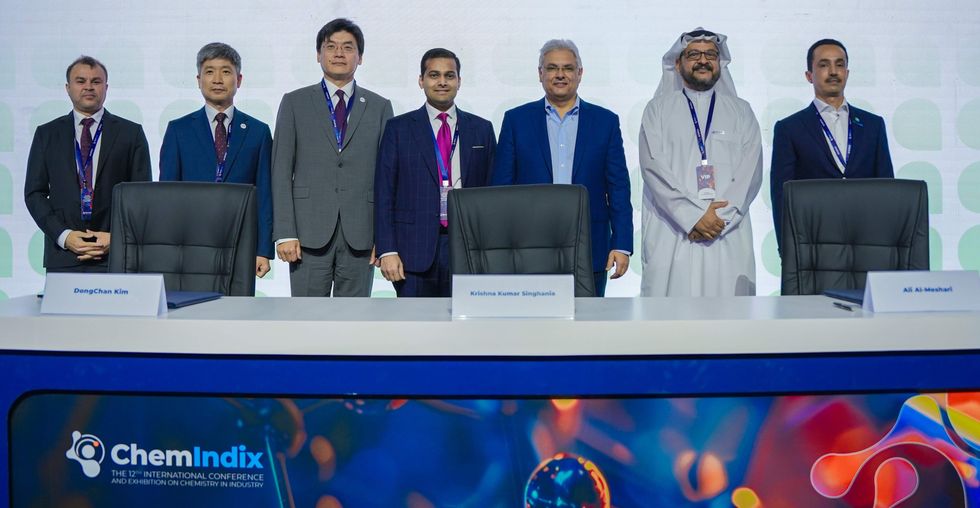
The technology demonstration will be used to deploy Carbon Clean’s novel CycloneCC technology to capture CO2 from natural gas turbine exhaust streams. Photo via Carbon Clean
Integrated energy and chemicals company Aramco has signed a collaboration agreement with Carbon Clean and SAMSUNG E&A in an effort to showcase new carbon capture technology.
The technology demonstration will be used to deploy Carbon Clean’s novel CycloneCC technology to capture CO2 from natural gas turbine exhaust streams containing approximately 4 percent CO2, according to Aramco.
Carbon Clean, which U.S. headquarters are located in Houston at the Ion, boasts technology that has captured nearly two million tons of carbon dioxide at almost 50 sites around the world. Aramco’s U.S. headquarters is also in Houston. Continue reading.
Houston energy tech company scores spot on Deloitte's list of fast-growing businesses

A Houston energy tech company makes the list of fast-growing businesses. Photo via Getty Images
Deloitte’s annual North America Technology Fast 500 list includes a Houston energy tech company boasting 407 percent growth.
NatGas Hub LLC landed at No. 286 on the list, which is an annual ranking of the fastest-growing North American companies in technology, energy tech sectors, telecommunications, life sciences, media, and fintech. It marks an improvement for the company, which provides an automation software for natural gas nominations and scheduling services. In 2023, the company ranked No. 356 with 364 percent growth.
Direct Digital Holdings Inc. took the highest-ranking spot for Houston companies, coming in at No. 101 (up from 108 previous year) with 1,184 percent growth. Additional Houston companies on the list include Liongard (No. 437, 246 percent growth) and Stratus Medical LLC (No. 483, 212 percent growth). Continue reading.