







Trending News

New $22M ERCOT energy storage project and more trending news to know

Houston's GoodPeak is breaking ground on its first energy storage projects. Photo via Getty Images.

Editor's note: We're looking back at the top energy transition news for the first part of April 2025, including tapping into AI to boost grid reliability, new ERCOT energy storage projects, Greentown Labs' newest members, and more. Read on for the five most-read EnergyCapital stories from April 1-10.

CenterPoint partners with AI and infrastructure companies to boost reliability
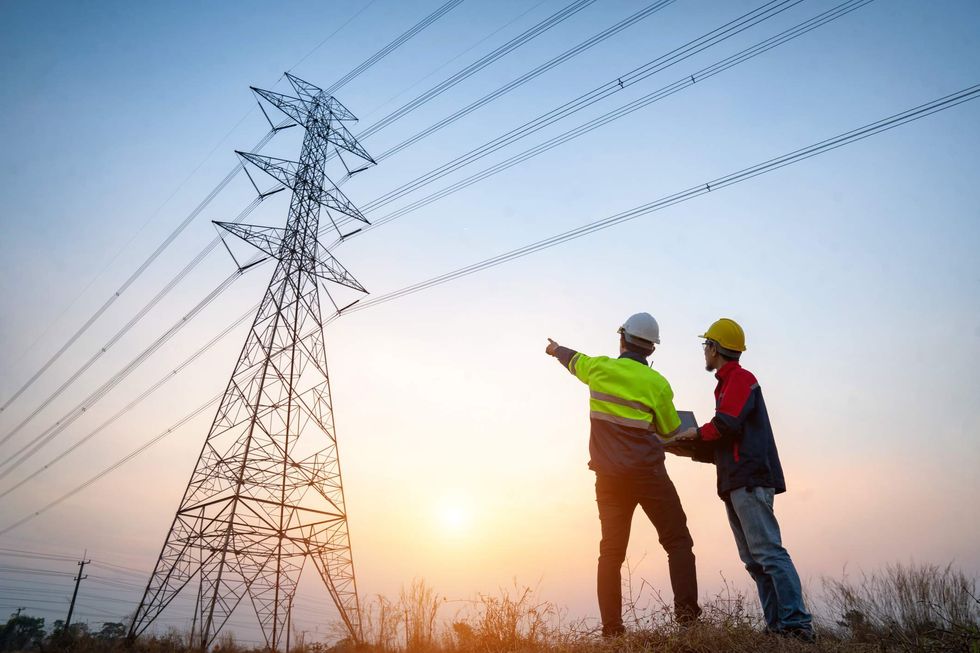
CenterPoint has partnered with Atlanta-based Osmose and Australia-based Neara to use AI-powered predictive modeling to inform decisions on restorations and risk. Photo via Getty Images

Houston utilities giant CenterPoint is partnering with companies from Atlanta and Australia to use AI to increase data accuracy and strengthen the power grid. The partnership is part of a collaboration between AI-powered predictive modeling platform company Neara and utility infrastructure asset assessment solutions company Osmose. Continue reading.

Houston startup secures $22 million for ERCOT energy storage projects
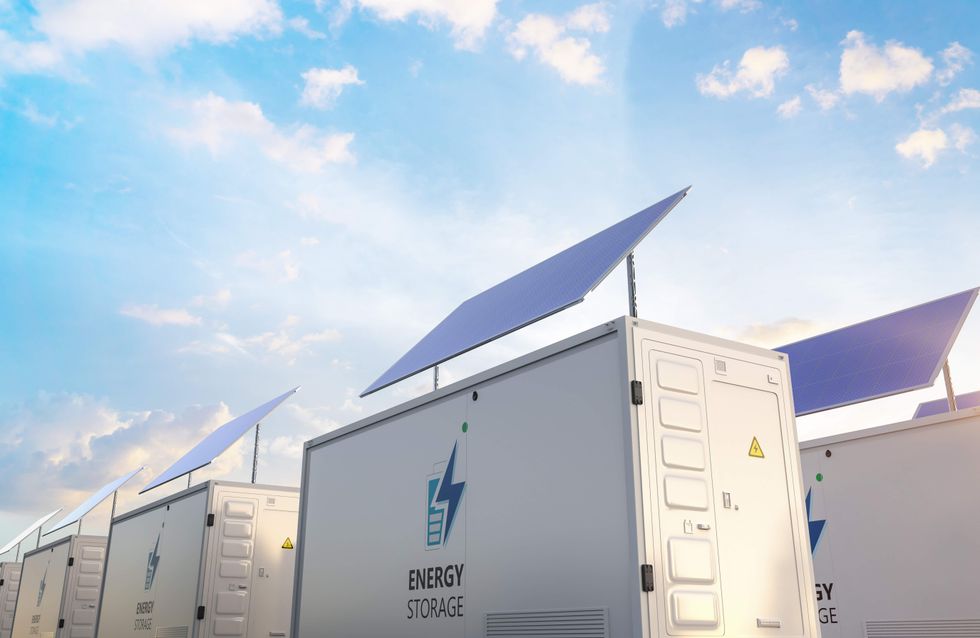
Houston's GoodPeak is breaking ground on its first energy storage projects. Photo via Getty Images.

Houston-based GoodPeak has nailed down $22 million in construction debt financing to help build its first two 10-megawatt battery energy storage projects, both of which are expected to come online in the Houston area at the end of 2025. GoodPeak secured the debt financing from financial services company Pathward and renewable energy lender BridgePeak Energy Capital.

GoodPeak says an undisclosed amount of funding from private equity firm Current Equity Partners and other investors will further spur growth. That growth starts with the construction of the two Houston-area battery energy storage projects, which will serve the Electric Reliability Council of Texas (ERCOT), whose power grid serves most of the state. Continue reading.

Houston Energy and Climate Startup Week announces 2025 dates, key events

Houston Energy and Climate Startup Week is coming back for a second year. Photo via GHP

Six local organizations focused on the energy transition have teamed up to bring back Houston Energy and Climate Startup Week. The second annual event will take place Sept. 15-19. The Ion District will host many of the week's events.

Houston Energy and Climate Startup Week was founded in 2024 by Rice Alliance for Technology and Entrepreneurship, Halliburton Labs, Greentown Labs, Houston Energy Transition Initiative (HETI), Digital Wildcatters and Activate. Continue reading.

Greentown Labs announces newest startups to join Houston climatetech incubator
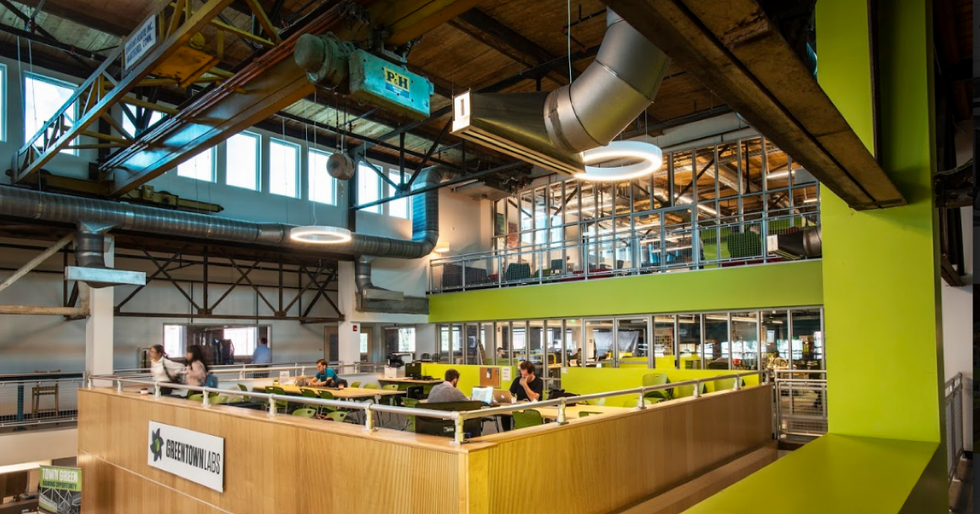
Five companies have joined Greentown Labs Houston, specializing in various "green" applications, from converting plastic waste into sustainable materials to developing energy-storage solutions. Photo courtesy Greentown Labs.

Greentown Labs announced that it added five startups to its Houston community in Q1 of 2025. The companies are among a group of 19 that joined the climatetech incubator, which is co-located in Houston and Boston, in the same time period. The companies that joined the Houston-based lab specialize in a number of "green" applications, from converting plastic waste into sustainable materials to developing energy-storage solutions. Continue reading.

Houston geothermal company closes $13M in investments to fuel growth
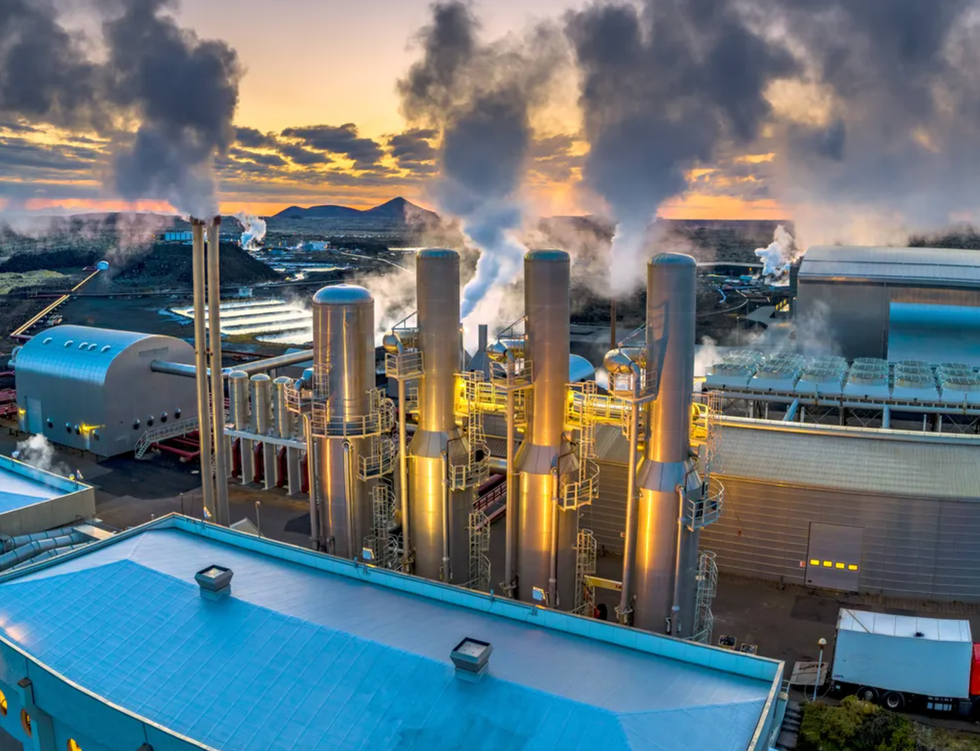
XGS Energy plans to “aggressively expand” its team in Houston this year thanks to its latest round of investments. Photo via Getty Images

XGS Energy, a California-headquartered geothermal power company with a major presence in Houston, has closed $13 million in new financing that included new investors Aligned Climate Capital, ClearSky, ClimateIC and WovenEarth Ventures, in addition to inside investors. The company plans to “aggressively expand” its team in Houston this year. Continue reading.

Trending News

A View From HETI

Texas leaned heavily on clean energy in 2025. Photo via Pexels

2025 marked a pivotal year for Texas’ energy ecosystem. Rising demand, accelerating renewable integration, tightening reserve margins and growing industrial load reshaped the way policymakers, utilities and the broader market think about reliability.

This wasn’t just another year of operational challenges; it was a clear signal that the state is entering an era where growth and innovation must move together in unison if Texas is going to keep pace.

What happened in 2025 is already influencing the decisions utilities, regulators and large energy consumers will make in 2026 and beyond. If Texas is going to remain the nation’s proving ground for large-scale energy innovation, this year made one thing clear: we need every tool working together and working smarter.

What changed: Grid, policy & the growth of renewables

This year, ERCOT recorded one of the steepest demand increases in its history. From January through September 2025, electricity consumption reached 372 terawatt-hours (TWh), a 5 percent increase over the previous year and a 23 percent jump since 2021. That growth officially positions ERCOT as the fastest-expanding large grid in the country.

To meet this rising load, Texas leaned heavily on clean energy. Solar, wind and battery storage served approximately 36 percent of ERCOT’s electricity needs over the first nine months of the year, a milestone that showcased how quickly Texas has diversified its generation mix. Utility-scale solar surged to 45 TWh, up 50 percent year-over-year, while wind generation reached 87 TWh, a 36 percent increase since 2021.

Battery storage also proved its value. What was once niche is now essential: storage helped shift mid-day excess solar to evening peaks, especially during a historic week in early spring when Texas hit new highs for simultaneous wind, solar and battery output.

Still, natural gas remained the backbone of reliability. Dispatchable thermal resources supplied more than 50 percent of ERCOT’s power 92 percent of the time in Q3 2025. That dual structure of fast-growing renewables backed by firm gas generation is now the defining characteristic of Texas’s energy identity.

But growth cuts both ways. Intermittent generation is up, yet demand is rising faster. Storage is scaling, but not quite at the rate required to fill the evening reliability gap. And while new clean-energy projects are coming online rapidly, the reality of rising population, data center growth, electrification and heavy industrial expansion continues to outpace the additions.

A recent forecast from the Texas Legislative Study Group projects demand could climb another 14 percent by mid-2026, tightening reserve margins unless meaningful additions in capacity, or smarter systemwide usage, arrive soon.

What 2025 meant for the energy ecosystem

The challenges of 2025 pushed Texas to rethink reliability as a shared responsibility between grid operators, generation companies, large load customers, policymakers and consumers. The year underscored several realities:

1. The grid is becoming increasingly weather-dependent. Solar thrives in summer; wind dominates in spring and winter. But extreme heat waves and cold snaps also push demand to unprecedented levels. Reliability now hinges on planning for volatility, not just averages.

2. Infrastructure is straining under rapid load growth. The grid handled multiple stress events in 2025, but it required decisive coordination and emerging technologies, such as storage methods, to do so.

3. Innovation is no longer optional. Advanced forecasting, grid-scale batteries, demand flexibility tools, and hybrid renewable-gas portfolios are now essential components of grid stability.

4. Data centers and industrial electrification are changing the game. Large flexible loads present both a challenge and an opportunity. With proper coordination, they can help stabilize the grid. Without it, they can exacerbate conditions of scarcity.

Texas can meet these challenges, but only with intentional leadership and strong public-private collaboration.

The system-level wins of 2025

Despite volatility, 2025 showcased meaningful progress:

Renewables proved their reliability role. Hitting 36 percent of ERCOT’s generation mix for three consecutive quarters demonstrates that wind, solar and batteries are no longer supplemental — they’re foundational.

Storage emerged as a real asset for reliability. Battery deployments doubled their discharge records in early 2025, showing the potential of short-duration storage during peak periods.

The dual model works when balanced wisely. Natural gas continues to provide firm reliability during low-renewable hours. When paired with renewable growth, Texas gains resilience without sacrificing affordability.

Energy literacy increased across the ecosystem. Communities, utilities and even industrial facilities are paying closer attention to how loads, pricing signals, weather and grid conditions interact—a necessary cultural shift in a fast-changing market.

Where Texas goes in 2026

Texas heads into 2026 with several unmistakable trends shaping the road ahead. Rate adjustments will continue as utilities like CenterPoint request cost recovery to strengthen infrastructure, modernize outdated equipment and add the capacity needed to handle record-breaking growth in load.

At the same time, weather-driven demand is expected to stay unpredictable. While summer peaks will almost certainly set new records, winter is quickly becoming the bigger wild card, especially as natural gas prices and heating demand increasingly drive both reliability planning and consumer stress.

Alongside these pressures, distributed energy is set for real expansion. Rooftop solar, community battery systems and hybrid generation-storage setups are no longer niche upgrades; they’re quickly becoming meaningful grid assets that help support reliability at scale.

And underlying all of this is a cultural shift toward energy literacy. The utilities, regulators, businesses, and institutions that understand load flexibility, pricing signals and efficiency strategies will be the ones best positioned to manage costs and strengthen the grid. In a market that’s evolving this fast, knowing how we use energy matters just as much as knowing how much.

The big picture: 2025 as a blueprint for a resilient future

If 2025 showed us anything, it’s that Texas can scale innovation at a pace few states can match. We saw record renewable output, historic storage milestones and strong thermal performance during strain events. The Texas grid endured significant stress but maintained operational integrity.

But it also showed that reliability isn’t a static achievement; it’s a moving target. As population growth, AI and industrial electrification and weather extremes intensify, Texas must evolve from a reactive posture to a proactive one.

The encouraging part is that Texas has the tools, the talent and the market structure to build one of the most resilient and future-ready power ecosystems in the world. The test ahead isn’t whether we can generate enough power; it’s whether we can coordinate systems, technologies and market behavior fast enough to meet the moment.

And in 2026, that coordination is precisely where the opportunity lies.

———

Sam Luna is director at BKV Energy, where he oversees brand and go-to-market strategy, customer experience, marketing execution, and more.

Trending News