








Editor's note: It's been a busy news week for energy transition in Houston, and some of this week's headlines resonated with EnergyCapital readers on social media and daily newsletter. Trending news included news of renewable energy projects, a new corporate appointment, and more.
Houston companies partner on sustainable plastics alternative

Lummus and Citroniq say their first plant, set for completion in 2027, will produce 400,000 metric tons of green polypropylene each year. Photo via lummustechnology.com
Two Houston companies, Lummus Technology and Citroniq Chemicals, have paired up to build North American plants that produce green polypropylene.
Polypropylene is a thermoplastic used to manufacture items such as plastic packaging, plastic parts, medical supplies, textiles, and fibers. Green polypropylene is made from biomass.
Lummus and Citroniq say their first plant, set for completion in 2027, will produce 400,000 metric tons of green polypropylene each year. The plant will be at an undisclosed location in the Midwest. Read more.
Prominent Houston energy business leader to retire, successor named

Amy Chronis is passing over the local leadership reins at Deloitte to Melinda Yee. Photos courtesy
Amy Chronis, a Houston business leader within the energy industry and beyond, is retiring next summer. Her replacement has been named.
Melinda Yee will be the incoming Houston managing partner at Deloitte, replacing Chronis who held the role along with the title vice chair and US energy and chemicals leader. Chronis will retire in June 2024, and Yee's new role is effective January 2.
“Melinda has been an active and valued member of Deloitte’s Houston leadership team. She brings an impressive depth of both industry and marketplace knowledge to her new role as managing partner,” Chronis says in a news release. “I am confident that she will be a great leader for our Houston professionals and in the local community.” Read more.
Central Texas wind energy facility goes online to power Target Corp.
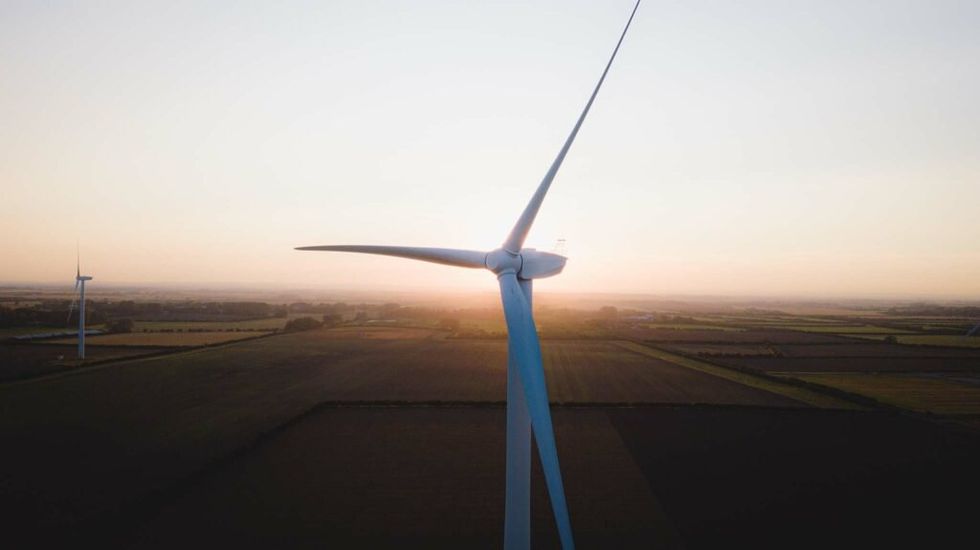
This new Texas wind farm is now partly powering Target Corp. Photo via swiftcurrentenergy.com
A Texas wind energy project has officially delivered and is actively providing power to its customer, Target Corp.
Boston-based Swift Current Energy, which has an office in Houston, announced this week that its 197 MW Castle Gap Wind project is operational. It has the capacity to create enough pollution-free energy to power more than 50,000 homes annually.
"Castle Gap Wind is a momentous project for Swift Current Energy as we grow our projects under asset management and operations," Eric Lammers, CEO and co-founder of Swift Current Energy, says in a news release. "Castle Gap Wind is one of the earliest projects supported by the Inflation Reduction Act, and we are thankful for our partners at Target, Goldman Sachs, MUFG, CaixaBank and of course the entire Swift Current Energy team who helped make the Project possible." Read more.
ExxonMobil breaks ground on Texas carbon dioxide storage project
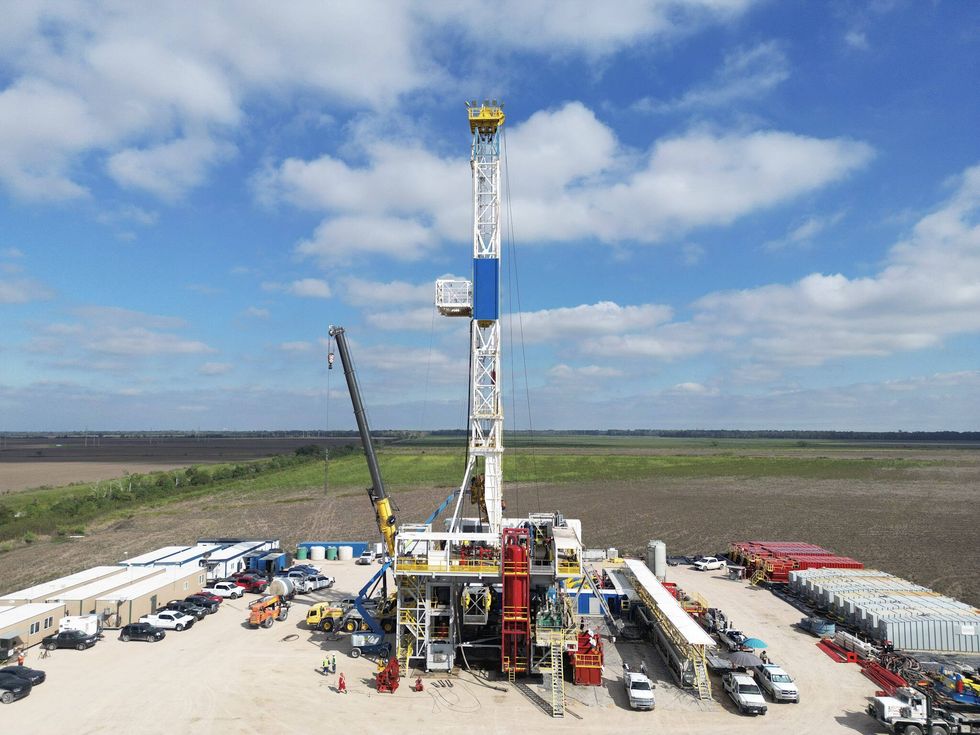
The rig stands 225 feet tall and extends 8,000 feet below the subsurface. Photo via exxonmobil.com
ExxonMobil announced this month that it has officially broken ground on a groundbreaking carbon dioxide storage site.
According to a release from the company, a new rig is currently being used to gather information about an underground site in Southeast Texas. The rig stands 225 feet tall, but more importantly extends 8,000 feet below the subsurface to investigate if the site is a safe place to store carbon underground.
“Everyone’s excited about this appraisal well because we’re literally breaking ground on a new chapter of our work to help reduce industrial emissions,” Joe Colletti, who oversees carbon capture and storage development along the Gulf Coast for Exxon, says in a statement. Read more.
New study from Houston research team looks at how the Earth cycles fossil carbon
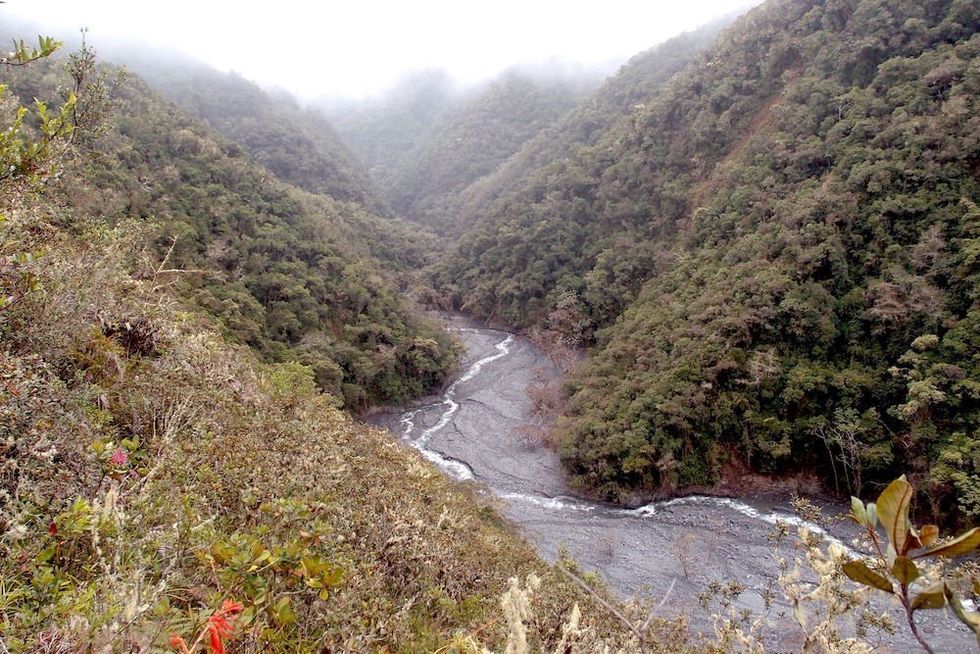
A Rice University professor studied the Earth's carbon cycle in the Rio Madre de Dios to shed light on current climate conditions. Photo courtesy of Mark Torres/Rice University
Carbon cycles through Earth, its inhabitants, and its atmosphere on a regular basis, but not much research has been done on that process and qualifying it — until now.
In a recent study of a river system extending from the Peruvian Andes to the Amazon floodplains, Rice University’s Mark Torres and collaborators from five institutions proved that that high rates of carbon breakdown persist from mountaintop to floodplain.
“The purpose of this research was to quantify the rate at which Earth naturally releases carbon dioxide into the atmosphere and find out whether this process varies across different geographic locations,” Torres says. Read more.