trending news

Energy startup wins pitch competition, new exec named, and more top Houston energy transition news

A Houston startup secures a win at a local competition — and more energy transition news. Photo via Getty Images

Editor's note: It's been a busy news week for energy transition in Houston, and some of this week's headlines resonated with EnergyCapital readers on social media and daily newsletter. Trending news included news of clean energy deals, a global firm names a new exec, and more.

Houston company acquired by private equity​ firm, plans to expand support of energy transition
The deal and financial support will help Saber to expand its services within the energy transition, including the ability to build out renewables and battery resources amid the electrification of the U.S. economy. Photo via Getty Images

A Houston-based infrastructure services platform has been acquired by an energy industry-focused private equity firm.

Saber Power Services announced last month that it has been acquired by an investor group led by Greenbelt Capital Management from funds managed by Oaktree Capital Management. The acquisition was in partnership with funds managed by Schroders Capital, StepStone Group, and Wafra Inc., according to the company's news release.

Saber, founded in 2010, is an electrical services firm that provides design, construction, testing, and maintenance services and solutions across the energy spectrum — renewables, battery storage, utility, industrial, and energy infrastructure markets. The company's customers are located throughout Texas and the Southeast. Read more.

Global consulting firm names new Houston energy practice leader​

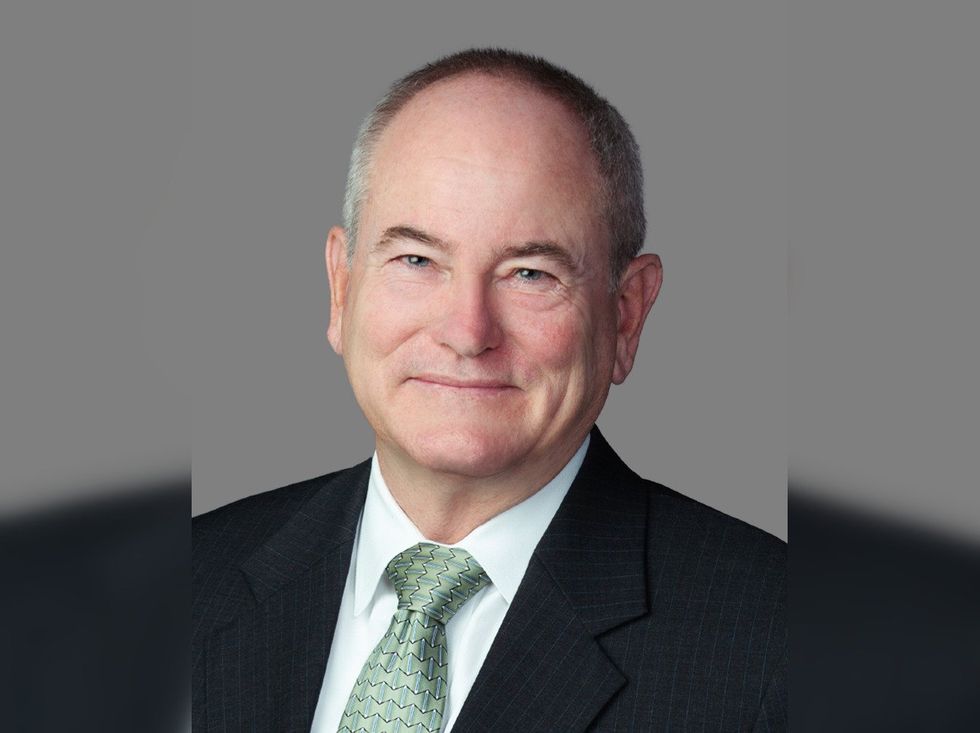
Alvarez & Marsal announced the appointment of Jay Johnson as senior adviser to its energy practice. Photo via alvarezandmarsal.com

A top global professional services firm named a Houston-based energy leader amid industry evolution and regulatory changes.

Alvarez & Marsal, or A&M, announced the appointment of Jay Johnson as senior adviser to its energy practice.

“I enjoy bringing together teams of people to solve the complex challenges facing companies today,” Johnson says in a news release. “I’m looking forward to working with A&M’s energy team to build leadership and capabilities to address industry challenges.” Read more.

Houston energy SaaS startup wins local pitch competition
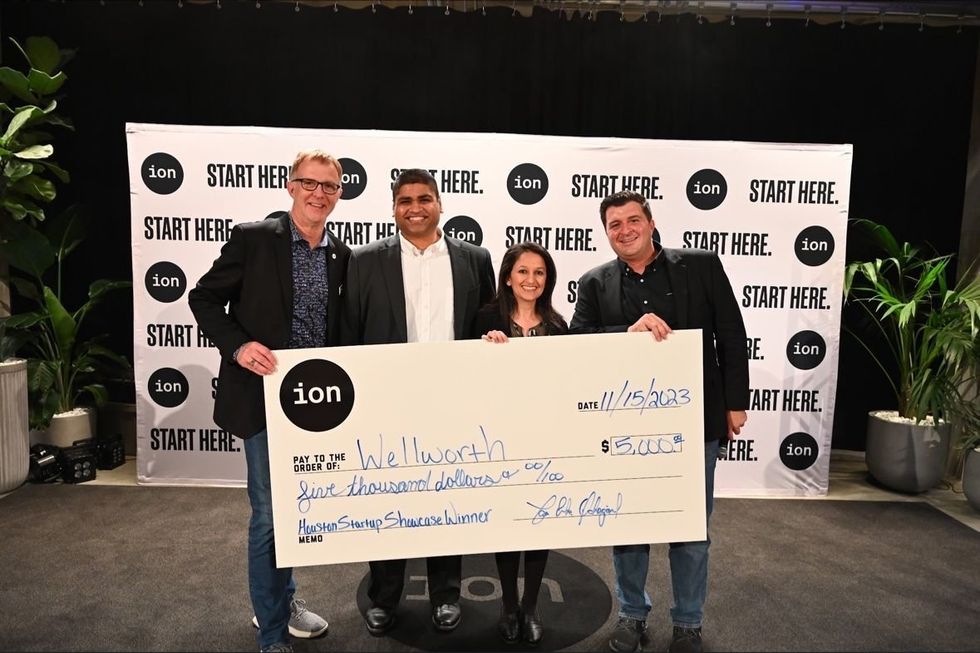
Houston-based WellWorth was selected as the winner of this year’s Houston Startup Showcase. Photo via LinkedIn

The Ion hosted its annual startup pitch competition, and one company walked away with a win.

WellWorth, a financial modeling and analysis software-as-a-service company for the upstream energy sector, won the Houston Startup Showcase + Expo and secured a $5,000 prize. The startup's technology introduces a more streamlined approach to NAV modeling or corporate financial modeling for its users.

“Having worked in investment banking, I have seen firsthand how the limitations of Excel models and a lack of bespoke tools have led to inefficient workflows in upstream Oil & Gas finance," says Samra Nawaz, CEO and Co-founder of WellWorth, in a statement. "We decided to solve this problem by building a cloud-based platform that helps energy finance leaders improve decision-making around raising, managing, and deploying capital.” Read more.

ExxonMobil’s Low Carbon Solution president makes inaugural TIME100 Climate list

The Houston-based executive makes the list of along with John Kerry, Bill Gates, and more. Photo via exxonmobil.com

A Houston energy executive has made the cut on an inaugural ranking of top climate action leaders.

TIME magazine’s first-ever TIME100 Climate list, which highlights “100 of the world’s most influential leaders driving climate action in business,” and ExxonMobil’s president of Low Carbon Solution business Dan Ammann has made it onto the list.

“The real credit goes to the ExxonMobil Low Carbon Solutions team for the progress we’ve made so far,“ Amann says in a LinkedIn post. “It’s great to see the world recognizing that ExxonMobil has a major role to play in accelerating the world’s path to net zero.” Read more.

Transocean calls for energy innovators, extends deadline for submissions

Transocean is looking for Houston innovators to help them on their decarbonization journey. Photo via Transocean

A major energy corporation has put its feelers out for Houston innovators solving for challenges within the decarbonization of offshore drilling operations.

Transocean, a Switzerland-based offshore energy leader with its United States headquarters in Houston, kicked off its Transocean Open Innovation Challenge this fall. The original deadline has been extended to December 15, and the program is in partnership with the Ion. Read more.

Trending News

A View From HETI

Exxon Mobil and Chevron made big profits in spring 2026. Photo via Chevron

American oil and gas giants raked in massive spring profits while fighting between Iran and the U.S. impeded petroleum shipments and consumers around the world paid more for fuel and confronted shortages.

The conflict, now in its sixth month, halted most shipping through the Strait of Hormuz, a narrow waterway that previously served as a delivery route for a fifth of the world's oil and natural gas. With global supplies constrained, prices for Brent crude, the international standard, soared from about $70 to above $100 a barrel for much of March, April and May, and at one point reached $126.

The money that oil companies accrued between the beginning of April and the end of June could receive extra scrutiny this year. Gasoline, diesel and jet fuel prices climbed sharply during that period, increasing costs for drivers and airline passengers. Supplies ran low in some countries, leading to sporadic fuel rationing in Australia and government office closures in Nepal and Sri Lanka.

Spring, Texas-based Exxon Mobil reported that its second quarter profits doubled to $14.53 billion, boosted by record diesel production. The oil giant brought in $116.02 billion in revenue, up 42%.

Chevron, based in Houston, nearly quadrupled its profits to $12.07 billion and revenue jumped 56% to $70.06 billion.

Six of Europe’s largest oil companies posted combined first-quarter profits of $22 billion, more than 40% higher than last year.

“There are constituencies around the world who are having a very good crisis, and the oil producers are one of them,” said Patrick Galey, fossil fuels lead at Global Witness, a nonprofit organization that investigates environmental issues. “When you compare that to the hundreds of millions of people who are struggling with rolling blackouts, with electricity curbs, rationing, waiting in line for food queues, or the disruption to fertilizers and the potential impact that that has on food prices, we don’t think that it’s a justifiable price for the rest of the world to be paying.”

Lawmakers propose taxing major oil producers for war windfalls

Energy companies such as Exxon and Chevron do not set the price of American oil, which ricocheted from $68 to $115 a barrel during the quarter. It’s driven by supply and demand, and what traders, refiners and other buyers are willing to pay.

Nevertheless, Democrats in Congress introduced bills in March to tax major oil producers for profits they show from 2026 onward and have the tax proceeds redistributed to consumers.

“It’s fair to put a windfall profits tax on inordinate windfall profits rather than cut off children’s food programs,” Sen. Sheldon Whitehouse, a Rhode Island Democrat who introduced the Senate version of the legislation.

Whitehouse's measure and a companion bill introduced by U.S. Rep. Ro Khanna of California would amend the U.S. tax code to impose a per-barrel tax on companies that produced or imported at least 300,000 barrels of oil per day in 2025.

“We cracked $4 again per gallon last weekend in gas stations that I drove by, and that’s a big expense, particularly for families that get their income from driving around from job to job in the work van or the work truck,” Whitehouse said.

The average price for a gallon of regular gasoline in the U.S., which was below $3 before the U.S. and Israel launched attacks on Iran, reached $4.11 Friday, July 31, about $1 more than last year at this time.

The UK and other European countries implemented temporary windfall profits taxes on fossil fuel companies in 2022. The UK extended that to 2030, according to Tax Foundation Europe.

“Penalizing the businesses who stood by those countries and provided that product going forward is very short-sighted,” Exxon CEO Darren Woods said in a call with investors Friday. “We canceled investments that we had planned for Europe based on the last time they passed a windfall profits tax.”

Refineries rake in cash while consumers pay more for fuel

Outfits such as Exxon and Chevron, which also own refineries, are in the best position to profit from the current market conditions, said Tom Seng, assistant professor of energy finance at Texas Christian University.

Refineries turn oil into gasoline, diesel, jet fuel and home heating oil. Higher prices for those products meant Chevron’s quarterly refinery profit was six times as big in 2026, despite processing less crude and selling less products.

“The return on refining, on a percentage basis, has skyrocketed,” Seng said. “Oil right now is priced what it is priced because of the Iran war. But in the meantime, the refineries are making money hand over fist.”

The global refining market is under-supplied, and with countries such as Russia and China no longer exporting, companies like Exxon and Chevron have to pick it up, said Rob Thummel, senior portfolio manager at Tortoise Capital. “The world is going to be short jet fuel, diesel and gasoline, so we’ll probably continue to see higher profits there.”

Globally, not all refineries have been able to get the supply of crude oil they need to meet demand since the conflict began, said Timothy Fitzgerald, a University of Tennessee professor of business economics who studies the petroleum industry.

As a result, refineries that have ample oil to work with, including those in the U.S., are turning high profits, particularly when they make jet fuel and diesel, which is priced about 41% higher in the U.S. than before the Strait of Hormuz was blocked.

"If you’re a company that owns a bunch of refinery capacity, things look pretty good," Fitzgerald said.

American refineries are running at near-full capacity and poised to benefit because some refineries in the Middle East and Russia were damaged. And Asia can't get the amount of Middle East oil needed for refining.

“Ultimately, users of the energy services pay,” Fitzgerald said. “Consumers, people like you and me buying retail motor gasoline or diesel fuel or airplane tickets. But it also means that almost everything else we buy has an embedded energy content to it ... and this is where you start to worry about it driving increases in costs.”

Not all oil and gas companies benefit in the same way

In the present geopolitical environment, some companies are winners while others are losers, Fitzgerald said.

“If you’re a company like a U.S. (oil) producer, even a U.S.-based international company like an Exxon or Chevron who’s got lots of production outside the Gulf, things are good. You’re selling your product at a higher price,” he said.

But companies in the Middle East that are not able to benefit from higher prices because they are struggling to get their liquefied natural gas out of the Persian Gulf or have a lot of damaged oil fields or processing facilities have a very different take on recent events, Fitzgerald added.

“Your ability to sell anything and the volume that you may be getting out is so curtailed that your revenues are way down and you’re incurring higher transportation costs and security costs,” he said.

Exxon and Chevron weren’t as profitable in the first quarter due to the way oil is traded; the first real opportunity they had to take advantage of higher prices oil was in April. Companies that had a lot of oil stored in floating tankers and available for spot-market trading, including some European ones, were able to benefit from March’s higher oil prices, Seng said.

Trending News