








Editor's note: It's been a busy news week for energy transition in Houston, and some of this week's headlines resonated with EnergyCapital readers on social media and daily newsletter. Trending news included Houston experts weighing in on the impact of the Inflation Reduction Act, Houston Airport System announcing green updates, and more.
Why this UK carbon capture co. expanded to Houston, IRA's impact, and more

Aniruddha Sharma of Carbon Clean weighs in on his North American expansion, the impact of the Inflation Reduction Act, and more. Photo via carbonclean.com
Earlier this year, a growing carbon capture company announced its new North American headquarters in Houston. Now, the company is focused on doubling it's headcount before the end of 2023 to meet demand.
Carbon Clean, which has a technology that has captured nearly two million tons of carbon dioxide at almost 50 sites around the world, opened its new office in the Ion earlier this year. The company is now building out its local supply chain with plans to rapidly expand.
In an interview with EnergyCapital, Co-Founder, Chair, and CEO Aniruddha Sharma weighs in on the new office, how pivotal the Inflation Reduction Act has been for his company's growth, and the future of Carbon Clean. Read more.
Houston airports land $12.5M for green projects, announce new EV fleet

Houston's airports are looking more and more green. Photo via fly2houston.org
Houston Airports will receive funding from The Federal Aviation Administration in the next few months on projects aimed at reducing greenhouse gas emissions and implementing the administration's climate challenge guidance at its hubs.
The funds — about $12.5 million — come from the FAA's FY2022 Airport Improvement Program Supplemental Discretionary Grant Competition and are slated to be rolled-out by September 2024. Projects at George Bush Intercontinental and Hobby airports were among 79 projects around the country, which the FAA granted about $268 million to in total.
“Houston Airports is committed to reducing our environmental impact while also protecting the planet as we expand our global reach. These FAA grants fund our ability to invest in smart and sustainable solutions” Jim Szczesniak, COO for Houston Airports, said in a statement. “The end result of these projects will be a more resilient, efficient and sustainable airport system that aligns with the goal of Houston Airports to achieve carbon neutrality by 2030.” Read more.
Houston experts evaluate the impact of the IRA on cleantech project development
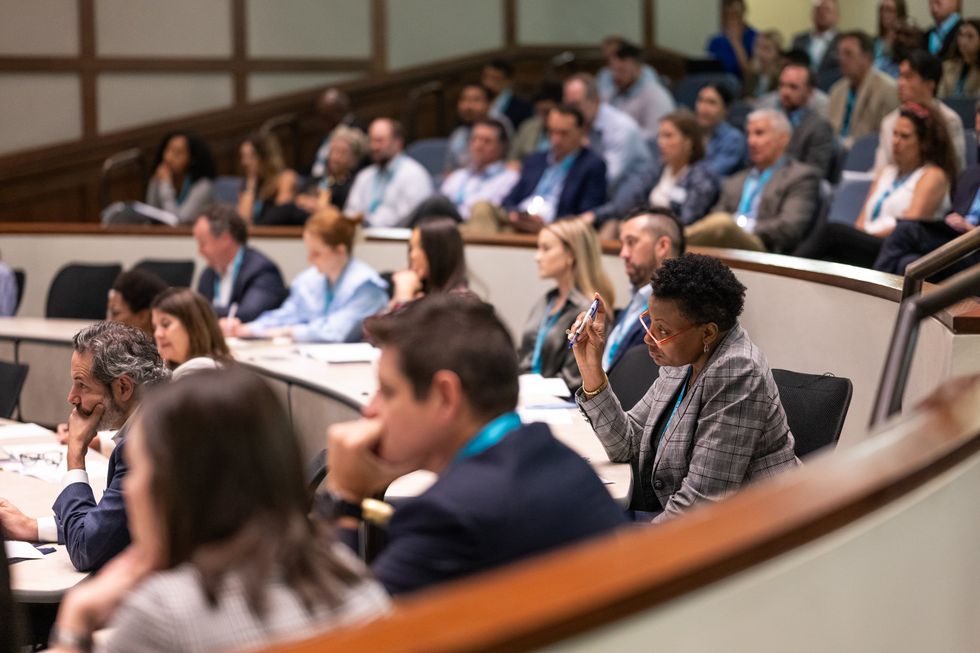
How did the IRA affect energy transition project development? Experts discussed the positive impacts — as well as the challenges still to overcome. Photo courtesy of Renewable Energy Alliance Houston
It's been officially a year since the Inflation Reduction Act was enacted, so it's no surprise that looking at the IRA's impact dominated the discussion at a recent industry event.
The second annual Renewable Energy Leadership Conference, presented by Renewable Energy Alliance Houston and Rice Business Executive Education, featured thought leadership from 20 experts on Tuesday, August 22. While some panels zeroed in on hiring and loan options for energy transition companies, the day's program kicked off with a couple panels looking both back and forward on the IRA.
When looking at the IRA's impact, the experts identified a few key things. Read more.
Former Obama Administration energy leader appointed CEO of Greentown Labs

Kevin Knobloch will lead Greentown Labs as CEO. Photos courtesy
The largest climatetech incubator in North America has named an Obama Administration appointee as its next CEO.
Kevin Knobloch, who served as chief of staff of the United States Department of Energy in President Barack Obama’s second term, will be CEO of Greentown Labs, effective September 5. In his role, Knobloch will oversee both Greentown locations in Houston and Somerville, Massachusetts, outside of Boston.
“Kevin has a proven and impressive track record of growing, operationalizing, and leading a dynamic mix of organizations at different stages and in various industries, all of which have aligned with his unwavering commitment to addressing the climate crisis,” Greentown Labs Board Chair Dawn James says in a news release. “On behalf of the entire Board of Directors, I am thrilled to welcome Kevin as our next CEO. We are excited for what is to come under Kevin’s leadership and look forward to the positive impact he will undoubtedly have on our team, our startup community, and the ecosystem at large.” Read more.
Guest column: Houston expert explains what’s needed to bend the curve on nuclear power
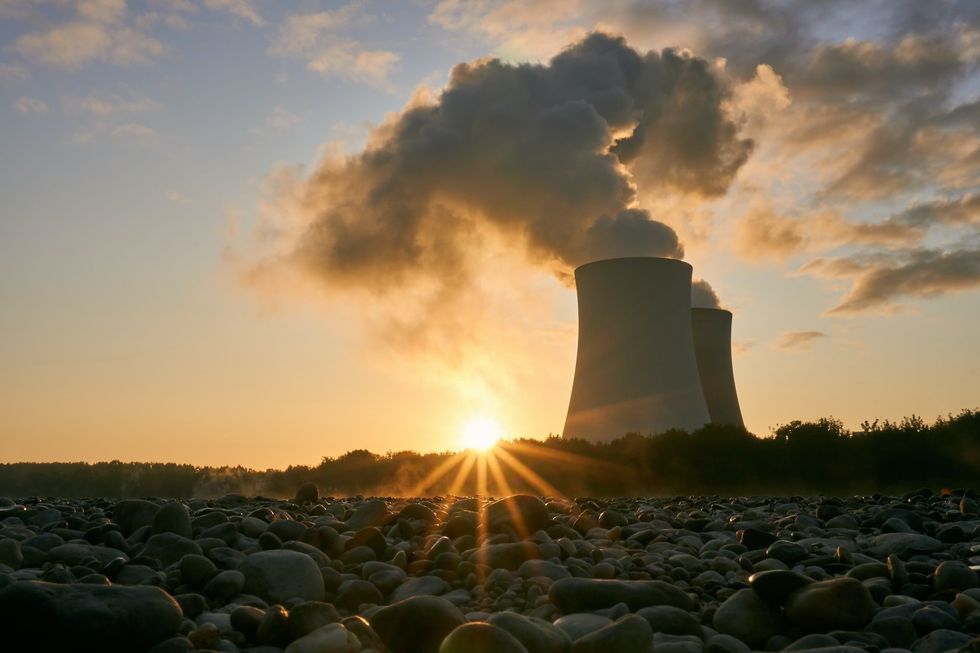
Nuclear could be a powerful tool to address rising greenhouse-gas emissions. But to get there, the industry needs to raise its game. Photo via Pexels
I argued previously that nuclear power can help the world deal with two related challenges: energy security and climate change. I still think that is the case.
McKinsey & Company, where I worked for more than 30 years, also recently turned to the topic. The authors agreed that nuclear can play a significant role in decarbonization, and noted that there were some encouraging trends, even in markets, such as the United States, where new plants are thin on the ground. And then the authors asked a critical question: “Can the industry reverse the trend of exceeding budgets and timelines while scaling up fast enough to rise to the climate challenge?”
That query got me thinking. To me, the case for nuclear is clear and compelling. Given that electricity demand could triple by 2050, the need for low-emission and constant power is acute. Nuclear fits that bill. Other sources either emit much more (coal, gas, oil) or are intermittent (wind, solar). Little new hydro is being built. Nothing else is at anything like scale. Read more.