








Editor's note: From a new Houston energy transition exec to strategic partnerships and acquisitions, these are the top headlines that resonated with EnergyCapital readers on social media and daily newsletter this week.
Houston energy tech company taps Microsoft tools to accelerate AI adoption for decarbonization

The collaboration will help Amperon's energy sector clients to "successfully navigate the evolving grid to improve reliability, optimize asset economics, and accelerate decarbonization." Photo via amperon.co
Amperon has announced that it is replatforming its AI-powered energy analytics technology onto Microsoft Azure.
The collaboration will help Amperon's energy sector clients to "successfully navigate the evolving grid to improve reliability, optimize asset economics, and accelerate decarbonization," according to the company.
"This collaboration with Microsoft marks a significant step forward in our mission to modernize energy data and AI infrastructure. By replatforming our technology onto Microsoft Azure and enabling our customers to use Microsoft's analytics stack with our data, we aim to empower users to make informed decisions as they navigate the energy transition," Abe Stanway, CTO of Amperon, says in the news release. Continue reading.
Environmental services firm names Houston energy leader to board

Houston-based Milestone Environmental Services, which provides environmental services and carbon management, named energy leader and former Chevron executive Barbara J. Burger to its board of managers. Photo courtesy
Barbara Burger has joined the board of one of the largest energy waste sequestration companies.
Houston-based Milestone Environmental Services, which provides environmental services and carbon management, named energy leader and former Chevron executive Barbara J. Burger to its board of managers, effective February 17.
“I am very pleased to welcome Dr. Barbara Burger to the Milestone Board and look forward to her invaluable insights and contributions,” Milestone President and CEO Gabriel Rio says in a news release. “Barbara’s impressive career in the energy industry coupled with her passion for education, sustainability, and resolving the challenges facing the energy transition will undoubtedly prove beneficial for Milestone, our customers, and our other stakeholders.” Continue reading.
Devon Energy leads Houston geothermal startup's $244M funding round
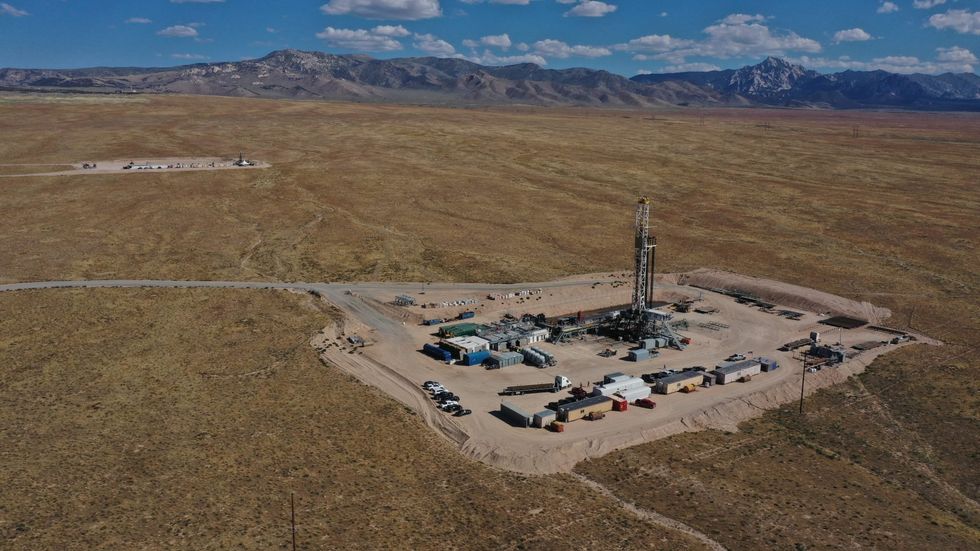
Fervo Energy scored a $244 million round of funding thanks to existing and new investors. Photo via Fervo Energy
An Oklahoma-based shale oil and gas leader has backed Fervo Energy's latest round of funding, supporting the startup's geothermal technology yet again.
Fervo announced its latest round of funding this week to the tune of $244 million. The round was led by Devon Energy, a company that's previously backed the startup.
“Demand for around-the-clock clean energy has never been higher, and next-generation geothermal is uniquely positioned to meet this demand,” Tim Latimer, Fervo CEO and co-founder, says in a news release. “Our technology is fully derisked, our pricing is already competitive, and our resource pipeline is vast. This investment enables Fervo to continue to position geothermal at the heart of 24/7 carbon-free energy production.” Continue reading.
Greentown Labs names latest cohort of BIPOC-led climatetech startups

The seven selected startups will have year-long curated curriculum, incubation at Greentown's two locations, a non-dilutive $25,000 grant, and access to mentors, corporates, and more from both Greentown and BGS's networks. Photo via browningthegreenspace.org
Two organizations have named the seven startup participants for their accelerator that works to advance BIPOC-led startups in the climatetech space.
Greentown Labs and Browning the Green Space named the newest accelerator for the Advancing Climatetech and Clean Energy Leaders Program, or ACCEL. The seven selected startups will have year-long curated curriculum, incubation at Greentown's two locations, a non-dilutive $25,000 grant, and access to mentors, corporates, and more from both Greentown and BGS's networks.
"Building on the momentum and success of our inaugural year, Greentown Labs is proud to welcome this incredible cohort of BIPOC-led startups to Year 2 of ACCEL," Greentown Labs CEO and President Kevin Knobloch says in a news release. "These founders and their teams are developing a dynamic array of much-needed climatetech solutions, and we're privileged to support them on their startup journeys as they advance their technologies and grow their teams." Continue reading.
Houston private equity professional tapped to lead growth development at firm focused on decarbonization

Climate Investment announced Patrick Yip will lead the firm's growth investment strategy as managing director, head of growth. Photo via LinkedIn
A London-based energy transition investment firm has named a new Houston-based leader.
Climate Investment announced Patrick Yip will lead the firm's growth investment strategy as managing director, head of growth. In his new role, he will oversee the development of CI’s growth-stage portfolio, including deal sourcing, operational function of strategy, and working with the team that manages the firm's early-stage Catalyst program. He reports to the CEO, Pratima Rangarajan.
“We are excited to welcome Patrick to Climate Investment,” Rangarajan says in a news release. “The decarbonization investment opportunity continues to grow rapidly, and Patrick’s extensive experience will help us capitalize on that. He will also provide leadership and develop the market partnerships that will drive our growth investment strategy forward, playing a key role in supporting portfolio market adoption and accelerating the next stage of development for CI.” Continue reading.