







Year in Review

Top 10 headlines that fueled Houston energy transition news in 2025

Here are the top Houston energy transition stories of the year. Photo via Getty Images

Editor's note: As we ring in a new year, we're looking back at the hottest energy transition topics of 2025. Here are the 10 most-read EnergyCapitalHTX stories of 2025, from a Texas energy startup's $200M funding round to a Houston energy storage company's major ERCOT deal:

Texas energy startup closes $200M round to fund first factory in the state

Base Power, founded by Justin Lopas and Zach Dell, closed a $200 million series B and plans to expand in Texas and around the country. Photo courtesy Base Power.

Base Power, an Austin-based startup that provides battery-powered home energy services and just entered the Houston market, raised $200 million in series B funding. The money was raised for construction of Base Power’s first factory in Texas and the national expansion of Base Power’s services. Last year, the startup landed $68 million in a series A funding round.

Houston startup secures $22 million for ERCOT energy storage projects
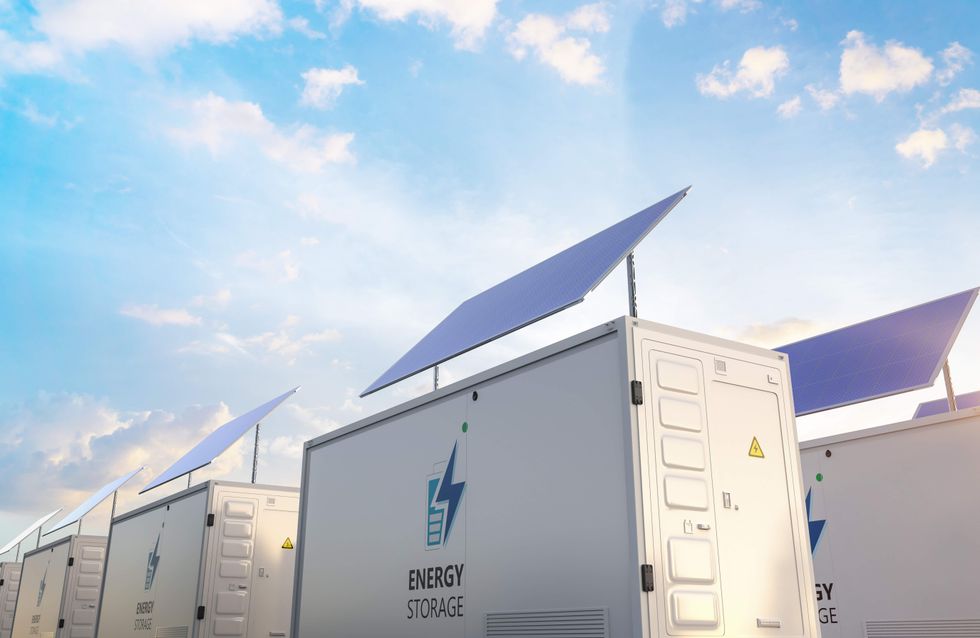
Houston's GoodPeak is breaking ground on its first energy storage projects. Photo via Getty Images.

Houston-based GoodPeak nailed down $22 million in construction debt financing to help build its first two 10-megawatt battery energy storage project. GoodPeak secured the debt financing from financial services company Pathward and renewable energy lender BridgePeak Energy Capital.

CenterPoint partners with AI and infrastructure companies to boost reliability
CenterPoint has partnered with Atlanta-based Osmose and Australia-based Neara to use AI-powered predictive modeling to inform decisions on restorations and risk. Photo via Getty Images

Houston utilities giant CenterPoint is partnering with companies from Atlanta and Australia to use AI to increase data accuracy and strengthen the power grid. The partnership is part of a collaboration between AI-powered predictive modeling platform company Neara and utility infrastructure asset assessment solutions company Osmose.

ExxonMobil, Rice launch sustainability initiative with first project underway

Under a new agreement, ExxonMobil and Rice University aim to develop “systematic and comprehensive solutions” to support the global energy transition. Photo via Getty Images.

Houston-based ExxonMobil and Rice University announced a master research agreement to collaborate on research initiatives on sustainable energy efforts and solutions. The agreement included multiple projects that were expected to be underway in 2025.

Houston expert: From EVs to F-35s — materials that power our future are in short supply

No critical minerals, no modern economy. Getty images

If you’re reading this on a phone, driving an EV, flying in a plane, or relying on the power grid to keep your lights on, you’re benefiting from critical minerals. These are the building blocks of modern life. Things like copper, lithium, nickel, rare earth elements, and titanium, they’re found in everything from smartphones to solar panels to F-35 fighter jets. Continue reading this guest column from Houston energy expert Scott Nyquist.

Greentown Labs announces newest startups to join Houston climatetech incubator

Five companies have joined Greentown Labs Houston, specializing in various "green" applications, from converting plastic waste into sustainable materials to developing energy-storage solutions. Photo courtesy Greentown Labs.

Greentown Labs added five startups to its Houston community in Q1 of 2025. The companies are among a group of 19 that joined the climatetech incubator, which is co-located in Houston and Boston, in the same time period. The companies that joined the Houston-based lab specialize in a number of "green" applications, from converting plastic waste into sustainable materials to developing energy-storage solutions.

Houston cleantech company expands into China with hydrogen energy pilot
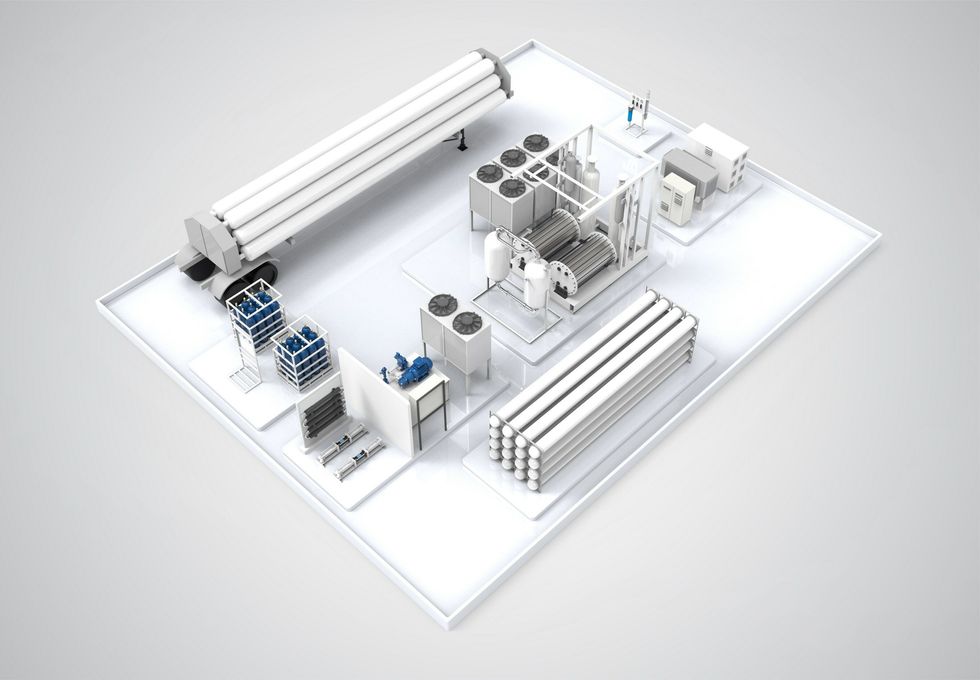
HNO International is partnering with Zhuhai Topower New Energy Co. to deploy its modular SHEP technology in China. Graphic courtesy of HNO

Hydrogen-based clean energy technology company HNO International announced its first foray into the Chinese market this spring. The company, which is building a state-of-the-art hydrogen production and refueling facility in Katy, entered into an agreement with renewable energy company Zhuhai Topower New Energy Co. This initiative includes a pilot deployment of HNOI’s Scalable Hydrogen Energy Platform, or SHEP, in China.

CenterPoint reports progress on grid improvements ahead of 2025 hurricane season

CenterPoint Energy aims to complete its suite of grid resiliency projects before the 2025 hurricane season. Photo via centerpointenergy.com

As part of an ongoing process to make Houston better prepared for climate disasters, CenterPoint Energy announced its mid-year progress update on the second phase of the Greater Houston Resiliency Initiative (GHRI). CenterPoint reported that it had completed 70 percent of its resiliency work, and that all GHRI-related actions were expected to be complete before the official start of the 2025 hurricane season.

Daikin completes solar plant to power massive Houston-area campus
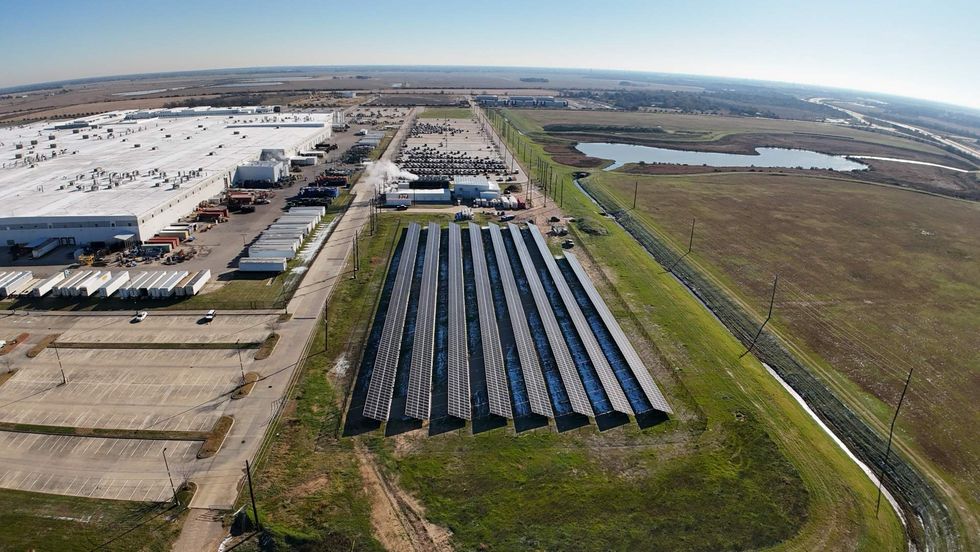
Daikin Industries' new solar power plant at its Waller-area campus will power its central chiller plant and is designed to connect to the campus' electric grid. Photo courtesy Daikin.

Japanese HVAC company Daikin Industries completed a nearly one-megawatt solar power plant at its Daikin Comfort Technologies North America campus southeast of Waller. Daikin said the new plant at its 4.2 million-square-foot Daikin Texas Technology Park will eliminate an estimated 845 metric tons of carbon emissions each year. The park houses the largest HVAC factory in North America.

Houston earns No. 3 spot among cities with most Fortune 500 headquarters

Twenty-six Houston-area companies landed on the latest Fortune 500 list. Photo via Getty Images

Houston maintained its No. 3 status this year among U.S. metro areas with the most Fortune 500 headquarters. Fortune magazine tallied 26 Fortune 500 headquarters in the Houston area, behind only the New York City area (62) and the Chicago area (30).

Trending News

A View From HETI

A team from UH has published two breakthrough studies that could help cut costs and boost efficiency in carbon capture. Photo courtesy UH.

Editor's note: As 2025 comes to a close, we're revisiting the biggest headlines and major milestones of the energy sector this year. Here are the most exciting scientific breakthroughs made by Houstonians this year that are poised to shape the future of energy:

Rice University team develops eco-friendly method to destroy 'forever chemicals' in water

Rice University researchers have developed a new method for removing PFAS from water that works 100 times faster than traditional filters. Photo via Rice University.

Rice University researchers have teamed up with South Korean scientists to develop the first eco-friendly technology that captures and destroys toxic “forever chemicals,” or PFAS, in water. The Rice-led study centered on a layered double hydroxide (LDH) material made from copper and aluminum that could rapidly capture PFAS and be used to destroy the chemicals.

UH researchers make breakthrough in cutting carbon capture costs

UH carbon capture cost cutting

A team from UH has published two breakthrough studies that could help cut costs and boost efficiency in carbon capture. Photo courtesy UH.

A team of researchers at the University of Houston has made two breakthroughs in addressing climate change and potentially reducing the cost of capturing harmful emissions from power plants. Led by Professor Mim Rahimi at UH’s Cullen College of Engineering, the team first introduced a membraneless electrochemical process that cuts energy requirements and costs for amine-based carbon dioxide capture during the acid gas sweetening process.The second breakthrough displayed a reversible flow battery architecture that absorbs CO2 during charging and releases it upon discharge.

Houston team’s discovery brings solid-state batteries closer to EV use

Houston researchers have uncovered why solid-state batteries break down and what could be done to slow the process. Photo via Getty Images.

A team of researchers from the University of Houston, Rice University and Brown University has uncovered new findings that could extend battery life and potentially change the electric vehicle landscape. Their work deployed a powerful, high-resolution imaging technique known as operando scanning electron microscopy to better understand why solid-state batteries break down and what could be done to slow the process.

Houston researchers make breakthrough on electricity-generating bacteria

A team of Rice researchers, including Caroline Ajo-Franklin and Biki Bapi Kundu, has uncovered how certain bacteria breathe by generating electricity. Photo by Jeff Fitlow/Rice University.

Research from Rice University that merges biology with electrochemistry has uncovered new findings on how some bacteria generate electricity. Research showed how some bacteria use compounds called naphthoquinones, rather than oxygen, to transfer electrons to external surfaces in a process known as extracellular respiration. In other words, the bacteria are exhale electricity as they breathe. This process has been observed by scientists for years, but the Rice team's deeper understanding of its mechanism is a major breakthrough, with implications for the clean energy and industrial biotechnology sectors, according to the university.

Rice researchers' quantum breakthrough could pave the way for next-gen superconductors

Researchers from Rice University say their recent findings could revolutionize power grids, making energy transmission more efficient. Image via Getty Images.

A study from researchers at Rice University could lead to future advances in superconductors with the potential to transform energy use. The study revealed that electrons in strange metals, which exhibit unusual resistance to electricity and behave strangely at low temperatures, become more entangled at a specific tipping point, shedding new light on these materials. The materials share a close connection with high-temperature superconductors, which have the potential to transmit electricity without energy loss, according to the researchers. By unblocking their properties, researchers believe this could revolutionize power grids and make energy transmission more efficient.

UH researchers develop breakthrough material to boost efficiency of sodium-ion batteries

A team at the University of Houston is changing the game for sodium-ion batteries. Photo via Getty Images

A research lab at the University of Houston developed a new type of material for sodium-ion batteries that could make them more efficient and boost their energy performance. The Canepa Research Laboratory is working on a new material called sodium vanadium phosphate, which improves sodium-ion battery performance by increasing the energy density. This material brings sodium technology closer to competing with lithium-ion batteries, according to the researchers.

Houston researchers make headway on developing low-cost sodium-ion batteries

Houston researchers make headway on developing low-cost sodium-ion batteries

Rice's Atin Pramanik and a team in Pulickel Ajayan's lab shared new findings that offer a sustainable alternative to lithium batteries by enhancing sodium and potassium ion storage. Photo by Jeff Fitlow/Courtesy Rice University

A new study by researchers from Rice University’s Department of Materials Science and NanoEngineering, Baylor University and the Indian Institute of Science Education and Research Thiruvananthapuram has introduced a solution that could help develop more affordable and sustainable sodium-ion batteries. The team worked with tiny cone- and disc-shaped carbon materials from oil and gas industry byproducts with a pure graphitic structure. The forms allow for more efficient energy storage with larger sodium and potassium ions, which is a challenge for anodes in battery research. Sodium and potassium are more widely available and cheaper than lithium.

Houston scientists develop 'recharge-to-recycle' reactor for lithium-ion batteries

Rice University scientists' “recharge-to-recycle” reactor has major implications for the electric vehicle sector. Photo courtesy Jorge Vidal/Rice University.

Engineers at Rice University have developed a cleaner, innovative process to turn end-of-life lithium-ion battery waste into new lithium feedstock. The findings demonstrate how the team’s new “recharge-to-recycle” reactor recharges the battery’s waste cathode materials to coax out lithium ions into water. The team was then able to form high-purity lithium hydroxide, which was clean enough to feed directly back into battery manufacturing. The study has major implications for the electric vehicle sector, which significantly contributes to the waste stream from end-of-life battery packs.

Houston researchers develop strong biomaterial that could replace plastic

A team led by M.A.S.R. Saadi and Muhammad Maksud Rahman has developed a biomaterial that they hope could be used for the “next disposable water bottle." Photo courtesy Rice University.

Collaborators from two Houston universities are leading the way in engineering a biomaterial into a scalable, multifunctional material that could potentially replace plastic. The study introduced a biosynthesis technique that aligns bacterial cellulose fibers in real-time, which resulted in robust biopolymer sheets with “exceptional mechanical properties.” Ultimately, the scientists hope this discovery could be used for the “next disposable water bottle,” which would be made by biodegradable biopolymers in bacterial cellulose, an abundant resource on Earth. Additionally, the team sees applications for the materials in the packaging, breathable textiles, electronics, food and energy sectors.

Houston researchers reach 'surprising' revelation in materials recycling efforts

A team led by Matteo Pasquali, director of Rice’s Carbon Hub, has unveiled how carbon nanotube fibers can be a sustainable alternative to materials like steel, copper and aluminum. Photo by Jeff Fitlow/ Courtesy Rice University

Researchers at Rice University have demonstrated how carbon nanotube (CNT) fibers can be fully recycled without any loss in their structure or properties. The discovery shows that CNT fibers could be used as a sustainable alternative to traditional materials like metals, polymers and the larger, harder-to-recycle carbon fibers, which the team hopes can pave the way for more sustainable and efficient recycling efforts.

Trending News