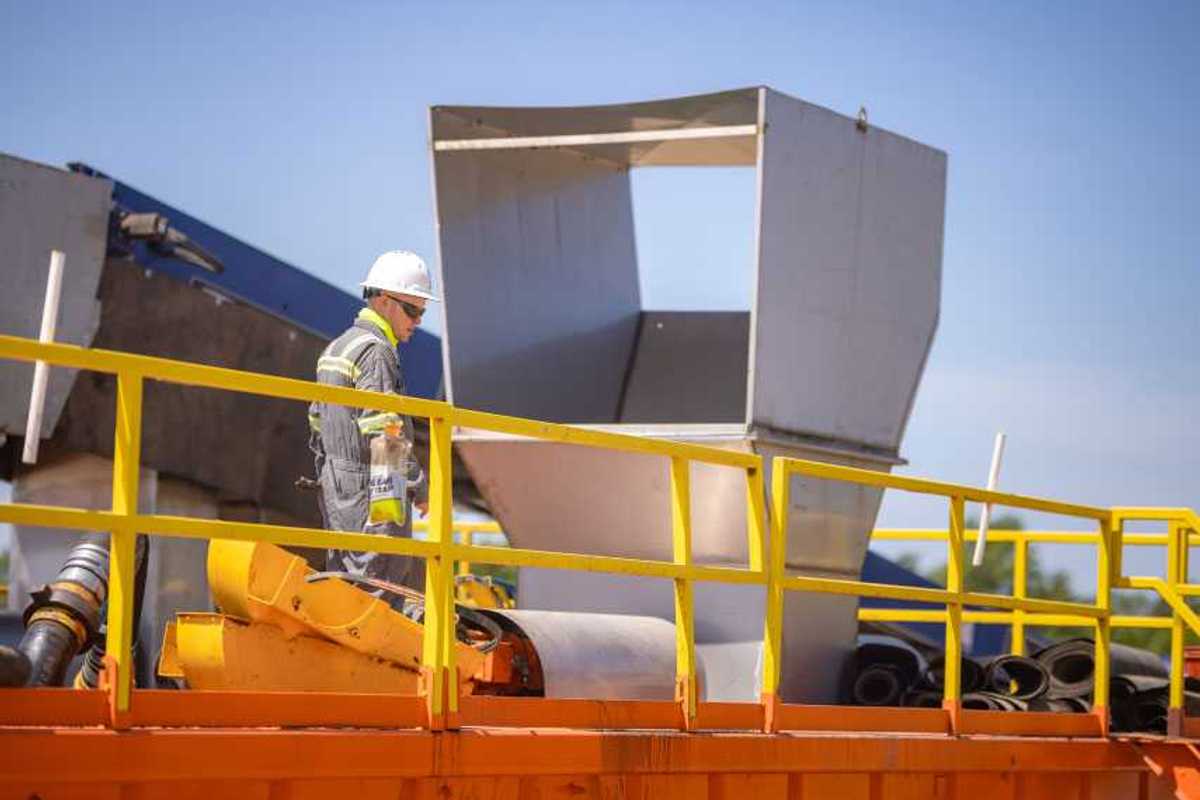
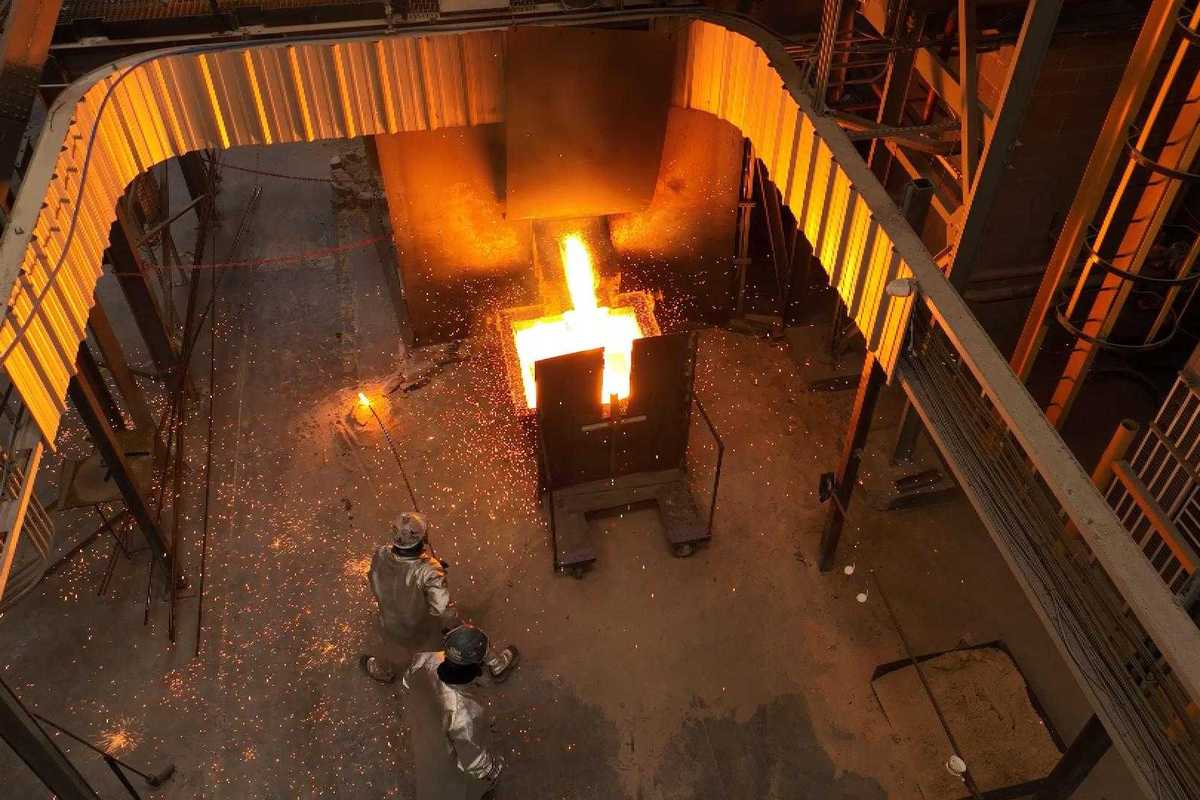
Conversations rarely focus on what keeps electricity moving: transmission infrastructure. Photo by REVTLProjects on Unsplash

Texas takes pride in running one of the most dynamic and deregulated energy markets in the world, but conversations about electricity rarely focus on what keeps it moving: transmission infrastructure.

As ERCOT projects unprecedented electricity demand growth and grid operators update their forecasts for 2026, it’s becoming increasingly clear that generation, whether renewable or fossil, is only part of the solution. Transmission buildout and sound governing policy now stand as the linchpin for reliability, cost containment, and long-term resilience in a grid under unprecedented stress.

At the heart of this urgency is one simple thing: demand. Over 2024 and 2025, ERCOT has been breaking records at a pace we haven’t seen before. From January through September of 2025 alone, electricity use jumped more than 5% over the year before, the fastest growth of any major U.S. grid. And it’s not slowing down.

The Energy Information Administration expects demand to climb another 14% in 2026, pushing total consumption to roughly 425 terawatt-hours in just the first nine months. That surge isn’t just about more people moving to Texas or running their homes differently; it’s being driven by massive industrial and technology loads that simply weren’t part of the equation ten years ago.

The most dramatic contributor to that rising demand is large-scale infrastructure such as data centers, cloud computing campuses, crypto mining facilities, and electrified industrial sectors. In the latest ERCOT planning update, more than 233 gigawatts of total “large load” interconnection requests were being tracked, an almost 300% jump over just a year earlier, with more than 70% of those requests tied to data centers.

Imagine hundreds of new power plants requesting to connect to the grid, all demanding uninterrupted power 24/7. That’s the scale of the transition Texas is facing, and it’s one of the major reasons transmission planning is no longer back-of-house policy talk but a central grid imperative.

Yet transmission is complicated, costly, and inherently long-lead. It takes three to six years to build new transmission infrastructure, compared with six to twelve months to add a new load or generation project.

This is where Texas will feel the most tension. Current infrastructure can add customers and power plants quickly, but the lines to connect them reliably take time, money, permitting, and political will.

To address these impending needs, ERCOT wrapped up its 2024 Regional Transmission Plan (RTP) at the end of last year, and the message was pretty clear: we’ve got work to do. The plan calls for 274 transmission projects and about 6,000 miles of new, rebuilt, or upgraded lines just to handle the growth coming our way and keep the lights on.

The plan also suggests upgrading to 765-kilovolt transmission lines, a big step beyond the standard 345-kV system. When you start talking about 765-kilovolt transmission lines, that’s a big leap from what Texas normally uses. Those lines are built to move a massive amount of power over long distances, but they’re expensive and complicated, so they’re only considered when planners expect demand to grow far beyond normal levels. Recommending them is a clear signal that incremental upgrades won’t be enough to keep up with where electricity demand is headed.

There’s a reason transmission is suddenly getting so much attention. ERCOT and just about every industry analyst watching Texas are projecting that electricity demand could climb as high as 218 gigawatts by 2031 if even a portion of the massive queue of large-load projects actually comes online. When you focus only on what’s likely to get built, the takeaway is the same: demand is going to stay well above anything we’ve seen before, driven largely by the steady expansion of data centers, cloud computing, and digital infrastructure across the state.

Ultimately, the decisions Texas makes on transmission investment and the policies that determine how those costs are allocated will shape whether 2026 and the years ahead bring greater stability or continued volatility to the grid. Thoughtful planning can support growth while protecting reliability and affordability, but falling short risks making volatility a lasting feature of Texas’s energy landscape.

Transmission Policy: The Other Half of the Equation

Infrastructure investment delivers results only when paired with policies that allow it to operate efficiently and at scale. Recognizing that markets alone won’t solve these challenges, Texas lawmakers and regulators have started creating guardrails.

For example, Senate Bill 6, now part of state law, aims to improve how large energy consumers are managed on the grid, including new rules for data center operations during emergencies and requirements around interconnection. Data centers may even be required to disconnect under extreme conditions to protect overall system reliability, a novel and necessary rule given their scale.

Similarly, House Bill 5066 changed how load forecasting occurs by requiring ERCOT to include utility-reported projections in its planning processes, ensuring transmission planning incorporates real-world expectations. These policy updates matter because grid planning isn’t just a technical checklist. It’s about making sure investment incentives, permitting decisions, and cost-sharing rules are aligned so Texas can grow its economy without putting unnecessary pressure on consumers.

Without thoughtful policy, we risk repeating past grid management mistakes. For example, if transmission projects are delayed or underfunded while new high-demand loads come online, we could see congestion worsen. If that happens, affordable electricity would be located farther from where it’s needed, limiting access to low-cost power for consumers and slowing overall economic growth. That’s especially critical in regions like Houston, where energy costs are already a hot topic for households and businesses alike.

A 2026 View: Strategy Over Shortage

As we look toward 2026, here are the transmission and policy trends that matter most:

  • Pipeline of Projects Must Stay on Track: ERCOT’s RTP is ambitious, and keeping those 274 projects, thousands of circuit miles, and next-generation 765-kV lines moving is crucial for reliability and cost containment.
  • Large Load Forecasting Must Be Nuanced: The explosion in large-load interconnection requests, whether or not every project materializes, signals demand pressure that transmission planners cannot ignore. Building lines ahead of realized demand is not wasteful planning; it’s insurance against cost and reliability breakdowns.
  • Policy Frameworks Must Evolve: Laws like SB 6 and HB 5066 are just the beginning. Texas needs transparent rules for cost allocation, interconnection standards, and emergency protocols that keep consumers protected while supporting innovation and economic growth.
  • Coordination Among Stakeholders Is Critical: Transmission doesn’t stop at one utility’s borders. Regional cooperation among utilities, ERCOT, and local stakeholders is essential to manage congestion and develop systemwide reliability solutions.

Here’s the bottom line: Generation gets the headlines, but transmission makes the grid work. Without a robust transmission buildout and thoughtful governance, even the most advanced generation mix that includes wind, solar, gas, and storage will struggle to deliver the reliability Texans expect at a price they can afford.

In 2026, Texas is not merely testing its grid’s capacity to produce power; it’s testing its ability to move that power where it’s needed most. How we rise to meet that challenge will define the next decade of energy in the Lone Star State.

———

Sam Luna is director at BKV Energy, where he oversees brand and go-to-market strategy, customer experience, marketing execution, and more.
Ad Placement 300x100
Ad Placement 300x600

CultureMap Emails are Awesome

Texas claims No. 1 spot on new energy resilience report

A new report by mineral group Texas Royalty Brokers ranks Texas as the No. 1 most energy-resilient state.

The study focused on four main sources of electricity in hydroelectric dams, natural gas plants, nuclear reactors and petroleum facilities. Each state was given an Energy Resilience Score based on size and diversity of its power infrastructure, energy production and affordability for residents.

Texas earned a score of 71.3 on the report, outpacing much of the rest of the country. Pennsylvania came in at No. 2 with a score of 55.8, followed by New York (49.1) and California (48.4).

According to the report, Texas produces 11.7 percent of the country’s total energy, made possible by the state’s 141,000-megawatt power infrastructure—the largest in America.

Other key stats in the report for Texas included:

  • Per-capita consumption: 165,300 kWh per year
  • Per-capita expenditures: $5,130 annually
  • Total summer capacity: 141,200 megawatts

Despite recent failures in the ERCOT grid, including the 2021 power grid failure during Winter Storm Uri and continued power outages with climate events like 2024’s Hurricane Beryl that left 2.7 million without power, Texas still was able to land No. 1 on an energy resilience list. Texas has had the most weather-related power outages in the country in recent years, with 210 events from 2000 to 2023, according to an analysis by the nonprofit Climate Central. It's also the only state in the lower 48 with no major connections to neighboring states' power grids.

Still, the report argues that “(Texas’ infrastructure) is enough to provide energy to 140 million homes. In total, Texas operates 732 power facilities with over 3,000 generators spread across the state, so a single failure can’t knock out the entire grid here.”

The report acknowledges that a potential problem for Texas will be meeting the demands of AI data centers. Eric Winegar, managing partner at Texas Royalty Brokers, warns that these projects consume large amounts of energy and water.

According to another Texas Royalty Brokers report, Texas has 17 GPU cluster sites across the state, which is more than any other region in the United States. GPUs are specialized chips that run AI models and perform calculations.

"Energy resilience is especially important in the age of AI. The data centers that these technologies use are popping up across America, and they consume huge amounts of electricity. Some estimates even suggest that AI could account for 8% of total U.S. power consumption by 2030,” Winegar commented in the report. “We see that Texas is attracting most of these new facilities because it already has the infrastructure to support them. But we think the state needs to keep expanding capacity to meet growing demand."

Houston energy expert looks ahead to climate tech trends of 2026

Guest Column

There is no sugar‑coating it: 2025 was a rough year for many climate tech founders. Headlines focused on policy rollbacks and IRA uncertainty, while total climate tech venture and growth investment only inched up to about 40.5 billion dollars, an 8% rise that felt more like stabilization than the 2021–2022 boom. Deal count actually fell 18% and investor participation dropped 19%, with especially steep pullbacks in carbon and transportation, as capital concentrated in fewer, larger, “safer” bets. Growth-stage funding jumped 78% while early-stage seed rounds dropped 20%.

On top of that, tariff battles and shifting trade rules added real supply‑chain friction. In the first half of 2025, solar and wind were still 91% of new U.S. capacity additions, but interconnection delays, equipment uncertainty, and changing incentive structures meant many projects stalled or were repriced mid‑stream. Founders who had raised on 2021‑style valuations and policy optimism suddenly found themselves stuck in limbo, extending runway or shutting down.

The bright spots were teams positioned at the intersection of climate and the AI power surge. Power demand from data centers is now a primary driver of new climate‑aligned offtake, pulling capital toward firm, 24/7 resources. Geothermal developers like Fervo Energy, Sage Geosystems and XGS did well. Google’s enhanced‑geothermal deal in Nevada scales from a 3.5 MW pilot to about 115 MW under a clean transition tariff, nearly 30× growth in geothermal capacity enabled by a single corporate buyer. Meta and others are exploring similar pathways to secure round‑the‑clock low‑carbon power for hyperscale loads.

Beyond geothermal, nuclear is clearly back on the strategic menu. In 2024, Google announced the first U.S. corporate nuclear offtake, committing to purchase 500 MW from Kairos Power’s SMR fleet by 2035, a signal that big tech is willing to underwrite new firm‑power technologies when the decarbonization and reliability story is compelling. Meta just locked in 6.6GW of nuclear capacity through deals with Vistra, Oklo, and TerraPower.

Growth investors and corporates are increasingly clustering around platforms that can monetize long‑duration PPAs into data‑center demand rather than purely policy‑driven arbitrage.

Looking into 2026, the same trends will continue:

Solar and wind

Even with policy headwinds, solar and wind continue to dominate new capacity. In the first half of 2025 they made up about 90% of new U.S. electricity capacity. Over the 2025–2028 period, FERC’s ‘high‑probability’ pipeline points to on the order of 90–93 GW of new utility‑scale solar and roughly 20–23 GW of new wind, far outpacing other resources.

Storage and flexibility

Solar plus batteries is now the default build—solar and storage together account for about 81% of expected 2025 U.S. capacity additions, with storage deployments scaling alongside renewables to keep grids flexible. Thermal storage and other grid‑edge flexibility solutions are also attracting growing attention as ways to smooth volatile load.

EVs and transport

EV uptake continues to anchor long‑term battery demand; while transportation funding cooled in 2025, EV sales and charging build‑out are still major components of clean‑energy demand‑side investment

Buildings

Heat pumps, smart HVAC, and efficient water heating are now the dominant vectors for building‑sector decarbonization. Heating and cooling startups alone have raised billions since 2020, with nearly 700 million dollars going into HVAC‑focused companies in 2024, and that momentum carried into 2025.

Hydrogen

The green hydrogen narrative has faded, but analysts still see hydrogen as essential for steel, chemicals, and other hard‑to‑abate sectors, with large‑scale projects and offtake frameworks under development rather than headline hype.

CCS/CCUS

After years of skepticism, more large CCS projects are finally reaching FID and coming online, helped by a mix of tax credits and industrial demand, which makes CCS look more investable than it did in the pre‑IRA era.

So, yes, 2025 was a downer from the easy‑money, policy‑euphoria years. But the signal beneath the noise is clear: capital is rotating toward technologies with proven unit economics, real offtake (especially from AI‑driven power loads), and credible paths to scale—not away from climate altogether.

---

Nada Ahmed is the founding partner at Houston-based Energy Tech Nexus.

Houston startup advances methane tech, sets sights on growth capital

making milestones

Houston-based climatech startup Aquanta Vision achieved key milestones in 2025 for its enhanced methane-detection app and has its focus set on future funding.

Among the achievements was the completion of the National Science Foundation’s Advanced Sensing and Computation for Environmental Decision-making (ASCEND) Engine. The program, based in Colorado and Wyoming, awarded a total of $3 million in grants to support the commercialization of projects that tackle critical resilience challenges, such as water security, wildfire prediction and response, and methane emissions.

Aquanta Vision’s funding went toward commercializing its NETxTEN app, which automates leak detection to improve accuracy, speed and safety. The company estimates that methane leaks cost the U.S. energy industry billions of dollars each year, with 60 percent of leaks going undetected. Additionally, methane leaks account for around 10 percent of natural gas's contribution to climate change, according to MIT’s climate portal.

Throughout the months-long ASCEND program, Aquanta Vision moved from the final stages of testing into full commercial deployment of NETxTEN. The app can instantly identify leaks via its physics-based algorithms and raw video output of optical gas imaging cameras. It does not require companies to purchase new hardware, requires no human intervention and is universally compatible with all optical gas imaging (OGI) cameras. During over 12,000 test runs, 100 percent of leaks were detected by NETxTEN’s system, according to the company.

The app is geared toward end-users in the oil and gas industry who use OGI cameras to perform regular leak detection inspections and emissions monitoring. Aquanta Vision is in the process of acquiring new clients for the app and plans to scale commercialization between now and 2028, Babur Ozden, the company’s founder and CEO, tells Energy Capital.

“In the next 16 months, (our goal is to) gain a number of key customers as major accounts and OEM partners as distribution channels, establish benefits and stickiness of our product and generate growing, recurring revenues for ourselves and our partners,” he says.

The company also received an investment for an undisclosed amount from Marathon Petroleum Corp. late last year. The funding complemented follow-on investments from Ecosphere Ventures and Odyssey Energy Advisors.

Ozden says the funds will go toward the extension of its runway through the end of 2026. It will also help Aquanta Vision grow its team.

Ozden and Marcus Martinez, a product systems engineer, founded Aquanta Vision in 2023 and have been running it as a two-person operation. The company brought on four interns last year, but is looking to add more staff.

Ozden says the company also plans to raise a seed round in 2027 “to catapult us to a rapid growth phase in 2028-29.”