








Editor's note: It's been a busy news week for energy transition in Houston, and some of this week's headlines resonated with EnergyCapital readers on social media and daily newsletter. Trending news included Houston Methodist's green initiatives, an interview with a renewables entrepreneur, and more.
Why this Houston energy innovator created a spin-off company to focus on tire waste

Vibhu Sharma founded InnoVent Renewables to make a sustainable impact on tire waste. Photo courtesy
With over a billion cars. currently on the road — each with four tires that will eventually end up discarded, one Houstonian is hoping to create the infrastructure to sustainably dispose of tire waste now and into the future.
Announced earlier this month, Vibhu Sharma founded InnoVent Renewables to establish production facilities that utilize a proprietary continuous pyrolysis technology that is able to convert waste tires, plastics, and biomass into fuels and chemicals.
In a Q&A with EnergyCapital, Sharma explains his plans to sustainably impact the tire waste space and his vision for his company. Read more.
How this Houston hospital is leading sustainable health care
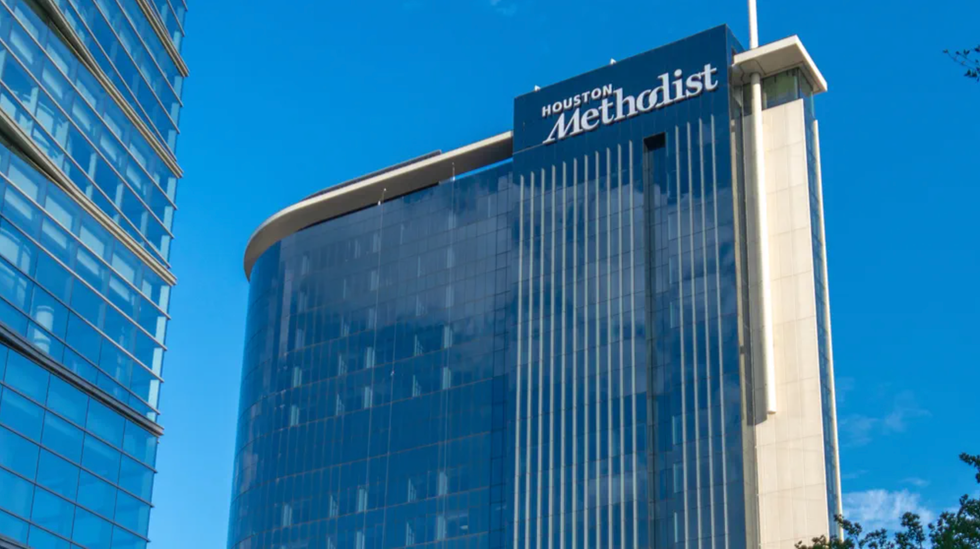
Houston Methodist has several ongoing and future initiatives dedicated to reducing the hospital system's carbon footprint. Photo via HoustonMethodist.org
The United States health care sector contributes around 8.5 percent of greenhouse gas emissions, and one Houston hospital is committed to doing its part in reducing the industry's carbon footprint.
Houston Methodist, which recently opened a new tech hub in the Ion in midtown, has put in place several initiatives that reflect a more sustainable future for health care. The organization, which has seven hospitals in the Houston area, revealed some of these ongoing and planned projects at a recent event.
"Houston Methodist is always looking ahead on ways — not only of how we are taking care of patients — but what are we doing to create this environment and making the right efforts for sustainability, which we should all be doing," Michelle Stansbury, vice president of innovation and IT applications at Houston Methodist, says on this week's episode of the Houston Innovators Podcast. "We have to protect this environment that we have or it may not be the same for our children going forward." Read more.
ERCOT makes major leadership changes, names COO
ERCOT has made four leadership changes. Photo courtesy of ERCOT
Last week, the Electric Reliability Council of Texas, or ERCOT, announced a reorganization amongst its leadership.
“These changes were designed to harness the collaborative talents and strengths of our experienced team in supporting the delivery of reliable and efficient energy to the millions of Texans that we serve,” Pablo Vegas, ERCOT President and CEO, says in a news release.
Effective September 1, four ERCOT leaders have new titles and positions. Read more.
Houston-based, energy-focused digital media company launches networking app

This Houston-based media company launched a networking platform to help solve the energy crisis. Photo via Headway/Unsplash
A Houston-based media organization dedicated to covering the energy industry has officially launched the beta program of their networking app.
After producing zanily named energy podcasts like “Big Digital Energy” and “What the Funk,” Digital WIldcatters is trying to bridge the hiring gap in the energy industry. By providing a platform for individuals to get their questions answered by experts and a space for companies seeking qualified talent, Collide is structured to ignite the next generation of energy innovators. Collide is currently available for users in both the Apple App Store and Google Play Store.
Collin McLelland, co-founder and CEO of Digital Wildcatters, says he aims to expand their professional community through this networking platform. Rather than being a transition away from Digital Wildcatters’ roots as a digital media organization McLelland explains Collide is an integration of the community they have built through podcasts and events into an interactive platform.
“If you look at what we’ve done historically with Digital Wildcatters, we’ve built an extremely engaged community of energy professionals — it’s a next generation community, very young forward thinking professionals that are working towards solving the world’s energy crisis,” McLelland shares. Read more.
Houston company gets greenlight for liquid hydrogen storage system

CB&I got the approval it was looking for on its cargo containment system for liquid hydrogen. Photo courtesy
CB&I, the storage business of Houston-based energy contractor McDermott International, has gotten a preliminary green light for its design of a cargo containment system for liquid hydrogen.
DNV, a classification body for the maritime industry, extended the preliminary approval for the system’s design. CB&I is working on the project with Shell International Trading and Shipping, which transports crude oil, gas, carbon dioxide, and other cargo.
The Shell transportation unit operates the Suiso Frontier, the world’s first ship for hauling liquid hydrogen (LH2). The vessel can carry 75 metric tons of LH2. The Suiso Frontier, which completed its maiden voyage between Australia and Japan in 2022, is the key component of a $360 million coal-to-hydrogen venture. Read more.