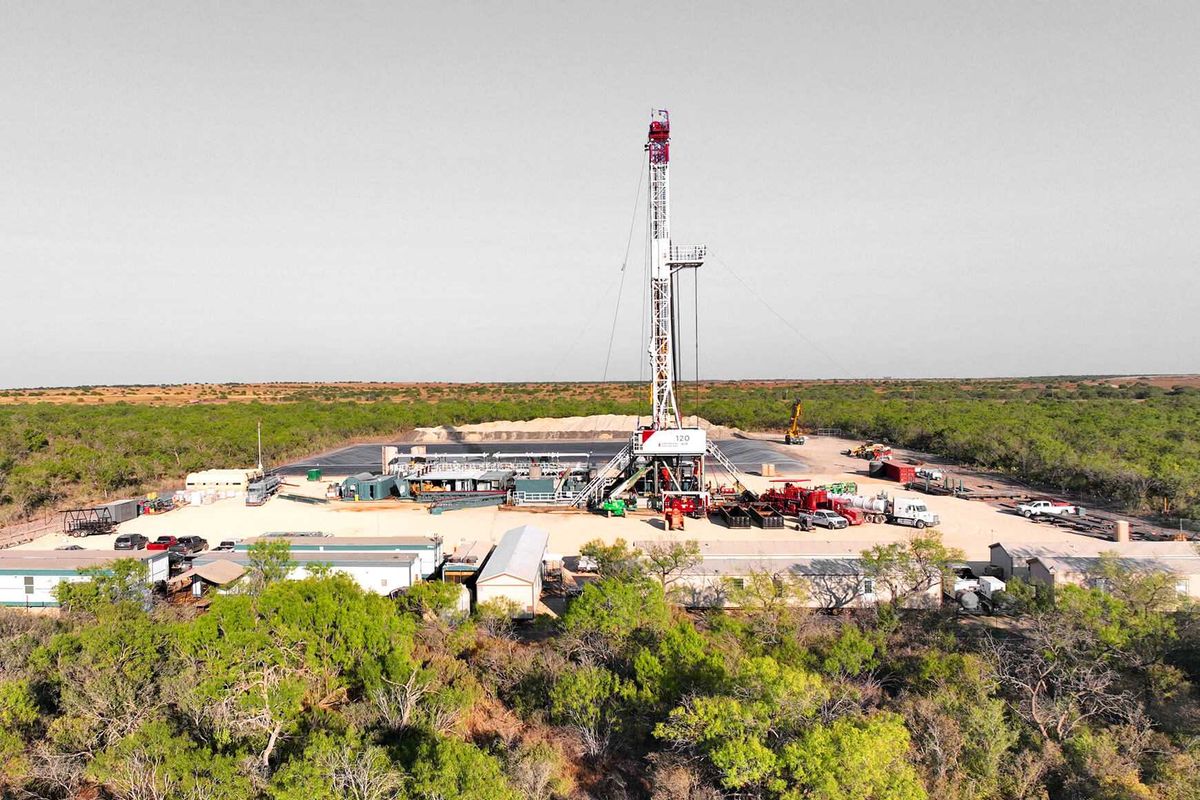
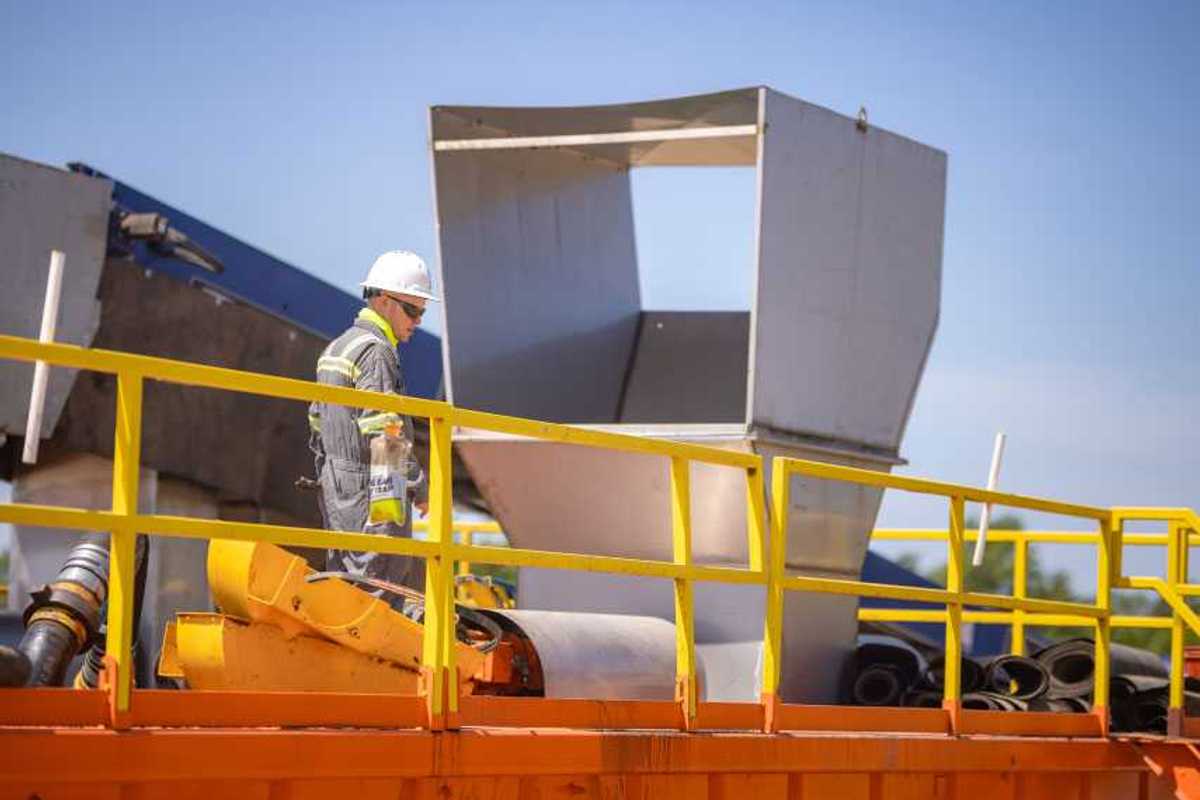
Houston American Energy Corp. will break ground on its first advanced recycling facility in Q4. Photo via Getty Images.

Houston American Energy Corp. (NYSE: HUSA) plans to break ground on its new advanced recycling facility in the Cedar Port Industrial Park in Q4, the company shared in an announcement this week.

The company acquired a 25-acre, $8.5 million site for development in July from TGS Cedar Port Partners, which handles approximately 5 billion pounds of plastic resin annually. HUSA also plans to build the Abundia Innovation Center on the site.

HUSA named Houston-based Corvus Construction Company the design and construction partner on both projects.

“The site at Cedar Port is in the largest master-planned rail and barge served industrial park in the United States with direct access to the Houston Ship Channel and the Port of Houston,” Ed Gillespie, CEO of HUSA, said in a news release. “It provides robust logistical advantages for the transportation of both feedstock and our low-carbon drop-in fuels and chemical products. Critically, the region has a deep pool of engineering and operations talent. HUSA looks forward to working with local communities and adding economic growth in the Gulf Coast region.”

The new advanced recycling facility will convert plastic waste into pyrolysis oil and will serve as a hub for a five-year development plan designed to scale production capacity.

The facility will be built around New York-based Abundia Global Impact Group LLC’s technologies and proprietary pyrolysis process, which converts plastic and certified biomass waste into high-quality renewable fuels.

HUSA acquired AGIG this summer. At the time, the combined company shared that it planned to serve a multi-billion-dollar global demand for renewable fuels, Sustainable Aviation Fuel (SAF) and recycled chemical feedstocks.

The Abundia Innovation Center is planned to serve as a state-of-the-art research and development facility for the renewable energy sector, aiding in the commercial and technical validation of new technologies. HUSA previously announced that Nexus PMG, also based in Houston, will provide strategic support and guidance in the development of the innovation hub.

According to HUSA, the recycling facility and innovation center will “create the foundation for HUSA’s long-term vision to be a leader in the low-carbon fuels sector by driving collaborative innovation.”

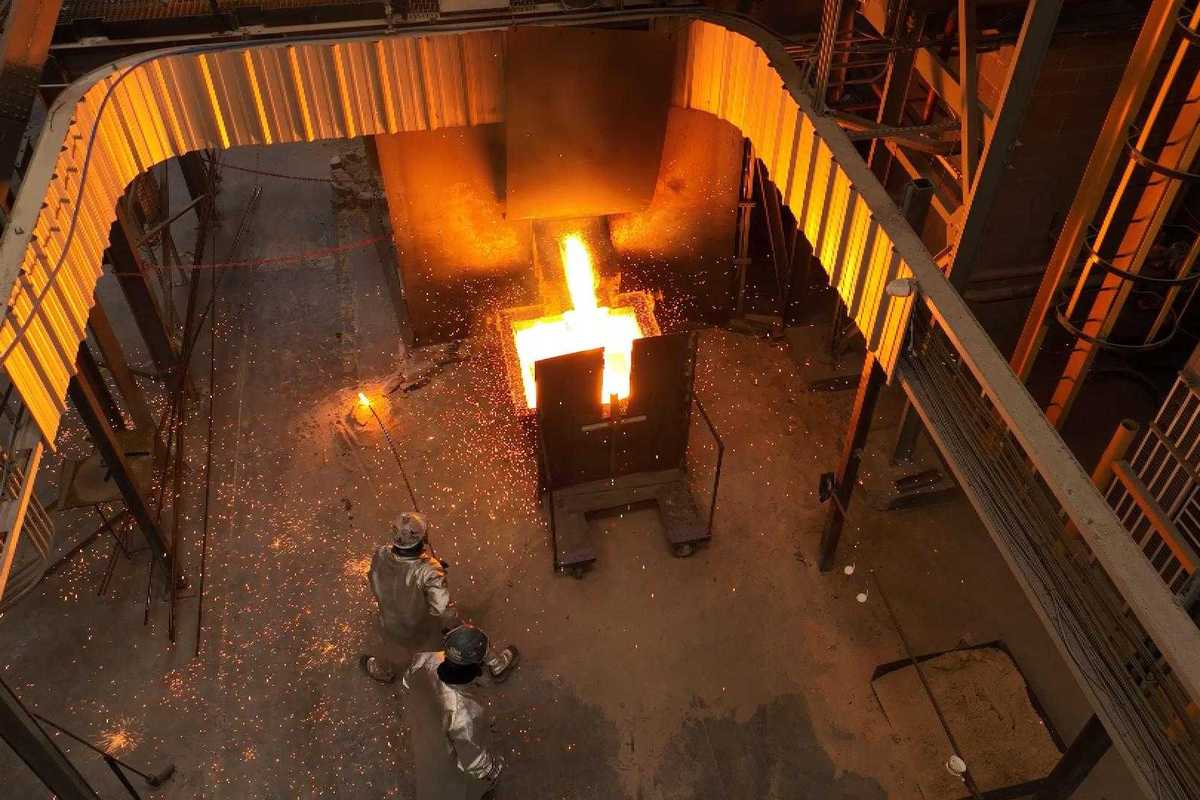
Houston American Energy Corp. has acquired Abundia Global Impact Group, which converts plastic and certified biomass waste into high-quality renewable fuels. Photo via Getty Images.

Houston American Energy closes acquisition of New York low-carbon fuel co.

power deal

Renewable energy company Houston American Energy Corp. (NYSE: HUSA) has acquired Abundia Global Impact Group, according to a news release.

Houston American reports that the acquisition will allow it to create a combined company focused on converting waste plastics into high-value, drop-in, low-carbon fuels and chemical products. It plans to move forward with Abundia’s plans for developing large-scale recycling projects, with a new facility previously announced for the Gulf Coast, located in Cedar Port Industrial Park, near the Baytown area of Houston.

New York-based Abundia used its proprietary pyrolysis process to convert plastic and certified biomass waste into high-quality renewable fuels. Its founder, Ed Gillespie, will serve as CEO of the combined company and will join HUSA’s board of directors. Peter Longo, who previously served as HUSA's CEO, will serve as chairman of the board. Lucie Harwood was named CFO and Joseph Gasik will serve as COO.

“The completion of this acquisition represents a pivotal transformation for HUSA,” Longo said in a news release. “Abundia has a commercially ready solution for converting waste into valuable fuels and chemicals, with a backlog of development opportunities utilizing proprietary technologies and key industry partnerships. This transaction gives HUSA shareholders a ready-made platform and project pipeline for future value generation as the fuel and chemical industries accelerate their adoption of low-carbon solutions and sustainable aviation fuel.”

The combined company plans to serve what it estimates is a multi-billion-dollar global demand for renewable fuels, Sustainable Aviation Fuel (SAF) and recycled chemical feedstocks, according to the news release.

“This is a landmark moment for Abundia and a major step forward for the renewable industry,” Gillespie added in the release. “Joining forces with HUSA and entering the public capital markets positions us to accelerate growth, scale our technology and expand our influence within the renewable and recycling industries. I am proud of the hard work and determination of both the AGIG and HUSA teams to finalize this transaction. We look forward to delivering shareholder value and critical technologies to reduce carbon emissions.”

Houston American Energy announced the deal in March. The company also closed a $4.42 million registered direct offering in January.

Ad Placement 300x100
Ad Placement 300x600

CultureMap Emails are Awesome

Houston researchers propose model to scale e-waste recycling

critical research

The “missing link” in critical minerals may have been in our junk drawers all along, according to new research from the University of Houston.

Jian Shi, an associate professor in the UH Cullen College of Engineering, and his team have unveiled a new supply chain model that aims to make e-waste economically viable and could help make large-scale recycling possible.

Shi, along with professor Kailai Wang and graduate researcher Chuyue Wang, published the work in a recent issue of Nature. Their study outlines how gold, lithium and cobalt from discarded electronics can be kept circulating in the U.S. through the process of “urban mining.” It was supported by the U.S. Department of Energy’s Office of Energy Efficiency and Renewable Energy (EERE) through the Vehicle Technologies Office.

The team’s research found that e-waste is the fastest-growing solid waste stream in the world. When waste from smartphones or tablets is left unmanaged, the devices can leak hazardous waste and pose significant fire risks due to aging batteries. Additionally, when they are shipped off to foreign landfills, the U.S. loses the potential to recycle or reuse the critical minerals left inside.

“A lot of people have iPads or old iPhones sitting in their drawers right now, and that’s a waste of a critical resource,” Shi said in a news release. “Urban mining allows us to extract the same high-value materials found in traditional mines without the environmental destruction. More importantly, it helps secure our domestic supply chain for the technologies of tomorrow.”

According to UH, recycling e-waste has not succeeded in the U.S. due to a fragmented recycling system, in which manufacturers, collectors and recyclers operate separately, driving up costs.

The UH team's research looks to change that.

In the study, the researchers modeled streamlined recycling efforts by mapping the interactions between manufacturers and independent recycling markets. Their dual-channel closed-loop supply chain (CLSC) model identified how these players can transition from competitors to partners, which can distribute profits more equitably and make recycling efforts more financially attractive.

According to UH, the research has particular significance due to the growing demand for electronic vehicles and their batteries.

“We can improve the performance of the entire recycling ecosystem and make the profit distribution more balanced,” Wang said in the release. “This ensures that the materials we need for EVs and advanced electronics stay right here in the U.S.”

“By making recycling work at scale, we aren’t just cleaning up waste,” Shi added. “We’re building a foundation that benefits both our national security and our economy.”

1PointFive signs latest deal, shares update on $1.3B carbon removal project

DAC deal

Houston-based 1PointFive, a subsidiary of Occidental Petroleum Corp., has secured another buyer of carbon dioxide removal credits for its $1.3 billion STRATOS project as it moves toward operation.

Bain & Company, a Boston-based consulting firm, has agreed to purchase 9,000 metric tons of carbon dioxide removal (CDR) credits from the direct air capture (DAC) facility over three years, according to a news release. DAC technology pulls CO2 from the air at any location, not just where carbon dioxide is emitted.

The deal is Bain's first purchase of DAC removal credits. The company has developed a program that helps clients purchase carbon credits from a range of carbon-removal technologies.

"We are proud to partner with 1PointFive and add them to our portfolio of engineered carbon removal technologies," Sam Israelit, Bain’s chief sustainability officer, said in the news release. "Their track record for developing DAC technology, coupled with their deep understanding of what it takes to deliver large-scale infrastructure projects, uniquely positions them to be a leader in this emerging segment.”

“We believe this agreement demonstrates continued momentum for the solution while supporting the development of vital domestic infrastructure,” Anthony Cottone, president and general manager of 1PointFive, added in the release.

Bain joins others like Microsoft, Amazon, AT&T, Airbus, the Houston Astros and the Houston Texans that have agreed to buy CDR credits from STRATOS.

The Texas-based STRATOS project is being developed through a joint venture with investment manager BlackRock and is designed to capture up to 500,000 metric tons of CO2 per year. The U.S Environmental Protection Agency approved Class VI permits for the project last year.

1PointFive says STRATOS is "progressing through start-up activities." The company shared in a LinkedIn post that Phase 1 of the project is expected to go online in Q2, with Phase 2 ramping up through the remainder of 2026.

Houston researcher develops efficient method to cool AI data centers

cool findings

A University of Houston professor has developed a new cooling method that can remove heat at least three times more effectively from AI data centers than current technologies.

Hadi Ghasemi, a distinguished professor of Mechanical & Aerospace Engineering at UH, published his findings in two articles in the International Journal of Heat and Mass Transfer. The findings solve a critical issue in the growing AI sector, according to UH.

High-powered AI data centers generate huge amounts of heat due to the GPU and operating systems they use with extreme power densities, which introduce complex thermal challenges. Traditionally, cooling methods, like microchannels, which use flow and spray cooling, have had limitations when exposed to extreme heat flux, according to UH.

Ghasemi’s research, however, found a more effective way to design thin-film evaporation structures to release heat from data centers and electronics at record performance.

Ghasem’s solution coupled topology optimization and AI modeling to determine the best shapes for thin film efficiency, ultimately landing on a branch-like structure—resembling a tree.

The model found that the “branches” needed to be about 50 percent solid and 50 percent empty space for optimum efficiency, and that they could sustain high heat fluxes with minimal thermal resistance.

“These structures could achieve high critical heat flux at much lower superheat compared to traditionally studied structures,” Ghasemi said in a news release. “The new structures can remove heat without having to get as hot as previous removal systems.

Ghasemi’s doctoral candidates, Amirmohammad Jahanbakhsh and Saber Badkoobeh Hezave, also worked on the project. The team believes their results show the impact of a physics-aware, AI design and can help ensure reliability, longevity and stability of AI data centers.

“Beyond achieving record performance, these new findings provide fundamental insight into the governing heat-transfer physics and establishes a rational pathway toward even higher thermal dissipation capacities,” Ghasemi added in the release