








Editor's note: From new Houston cleantech projects being announced to the Energy Capital of the World ranking on an international list, these are the top headlines that resonated with EnergyCapital readers on social media and daily newsletter this week.
DOE doles out funding to 4 Houston tackling carbon dioxide removal tech

The four companies are among 24 semifinalists in the agency’s Carbon Dioxide Removal Purchase Pilot Prize program that were chosen to receive a total of $1.2 million for their commercial-scale CO2 removal technology.
Four Houston companies have received $50,000 each from the U.S. Department of Energy to further develop their carbon dioxide removal technology.
The four companies are among 24 semifinalists in the agency’s Carbon Dioxide Removal Purchase Pilot Prize program that were chosen to receive a total of $1.2 million for their commercial-scale CO2 removal technology.
The funding comes in the form of the Department of Energy’s purchase of CO2 removal credits. Continue reading.
New collaboration to build data center microgrid in Houston

The new microgrid will be built on ViVa Center, a campus that was originally developed for Compaq. Photo via vivaversesolutions.com
Two companies are teaming up to build a natural gas microgrid in Houston that will reduce emissions by 98 percent.
Provider of prime and backup power solutions RPower has teamed up with Houston’s ViVaVerse Solutions to build a 17-megawatt (MW) microgrid at the ViVa Center campus in Houston, which is expected to be commissioned by the end of the year.
The microgrid plans to employ ultra-low emissions and natural gas generators to deliver Resiliency-as-a-Service (RaaS), and this will connect to ViVaVerse's colocation data center operations during utility outages. Continue reading.
Houston company expands JV to build new power generation, storage assets
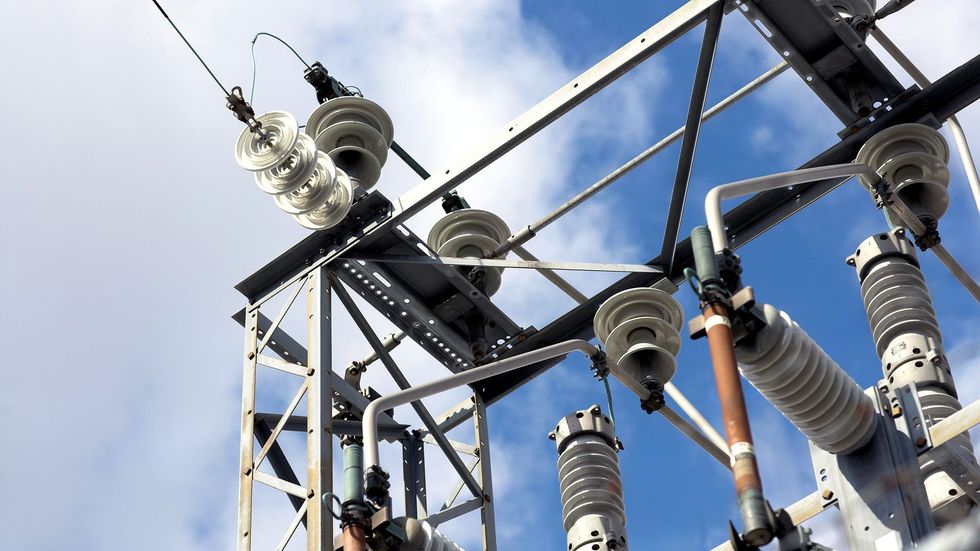
Under this deal, the joint venture, RPC Power, will build power generation and storage assets for the sale of energy and related services to ERCOT. Photo via conduitpower.co
Houston-based Conduit Power is broadening the scope of its joint venture with Oklahoma City-based Riley Exploration Permian.
Under this deal, the joint venture, RPC Power, will build power generation and storage assets for the sale of energy and related services to the Electric Reliability Council of Texas (ERCOT), which operates the power grid for the bulk of Texas.
RPC Power, established in March 2023, owns and operates power generation assets that use Riley Permian’s natural gas to power its oilfield operations in Yoakum County, located in West Texas. Continue reading.
Elon Musk sees more resistance against his multibillion dollar pay package

Shareholders of the electric vehicle and solar panel company are voting on the package, with the results to be tabulated at Tesla's June 13 annual meeting. Photo via cdn.britannica.com
A second shareholder advisory firm has come out against reinstating a pay package for Tesla CEO Elon Musk that was voided earlier this year by a Delaware judge.
ISS late Thursday joined Glass Lewis in recommending against the package, recently valued by the company at $44.9 billion but in January had a value of about $56 billion.
Shareholders of the electric vehicle and solar panel company are voting on the package, with the results to be tabulated at Tesla's June 13 annual meeting. Continue reading.
Houston's energy industry deemed both a strength and weakness on global cities report

Houston could have ranked higher on a global report of top cities in the world if it had a bit more business diversification. Photo via Getty Images
A new analysis positions the Energy Capital of the World as an economic dynamo, albeit a flawed one.
The recently released Oxford Economics Global Cities Index, which assesses the strengths and weaknesses of the world’s 1,000 largest cities, puts Houston at No. 25.
Houston ranks well for economics (No. 15) and human capital (No. 18), but ranks poorly for governance (No. 184), environment (No. 271), and quality of life (No. 298). Continue reading.