








Editor's note: From a Greentown Labs' new donor to Huntsman's new innovation center, these are the top headlines that resonated with EnergyCapital readers on social media and daily newsletter this week.
SLB seals the deal with Norwegian company on carbon capture JV

SLB now owns 80 percent of Aker Carbon Capture, with Aker retaining a 20 percent stake. Photo via Getty Images
Houston-based energy technology company SLB has finalized its purchase of a majority stake in Norway’s Aker Carbon Capture, a provider of industrial-scale carbon capture and sequestration (CCS) technology.
SLB now owns 80 percent of Aker Carbon Capture, with Aker retaining a 20 percent stake.
In March 2024, SLB said it would pay roughly $388 million for the 80 percent stake in Aker and contribute its carbon capture business to the joint venture. In addition, SLB said it might pay close to $130 million over the next three years if the joint venture meets certain performance benchmarks. Continue reading.
Texas named most vulnerable state to climate change in new report

In addition to its No. 22 overall ranking, Texas took first place in the "Vulnerability to Climate Change" category.
The Lone Star State performed most averagely in a new report that ranked all 50 states on environmental protection.
Texas ranked No. 22 on the report from SmileHub, a nonprofit tech platform using data to evaluate charities. The report analyzed 23 metrics — from energy efficiency score and industrial toxins per square mile of land area to climate change vulnerability — factoring in data from U.S. Census Bureau, Internal Revenue Service, Department of Agriculture, and more.
"Pollution and waste are issues across the U.S., but some states work harder than others to limit their impact." Continue reading.
Houston energy company celebrates new innovation center in Belgium

Huntsman Corp. celebrated the opening of the new R&D center in Tienen, Belgium, this month. Photo via Huntsman
A Houston-based global leader of innovative chemistries strengthened its research and development capabilities by opening a new international innovation center.
Huntsman Corp. celebrated the opening of the new R&D center in Tienen, Belgium, on June 13.
The 11,000-square-meter facility is a world-scale analytical laboratory; two machine halls; and fully equipped and automated product testing facilities. According to the company, the facility will assist with the “journey from the formulation of initial ideas at lab scale through to the manufacture of novel systems and samples ready for customers to trial.” Continue reading.
Climatetech funding: New York investment firm to donate part of proceeds to Greentown Labs
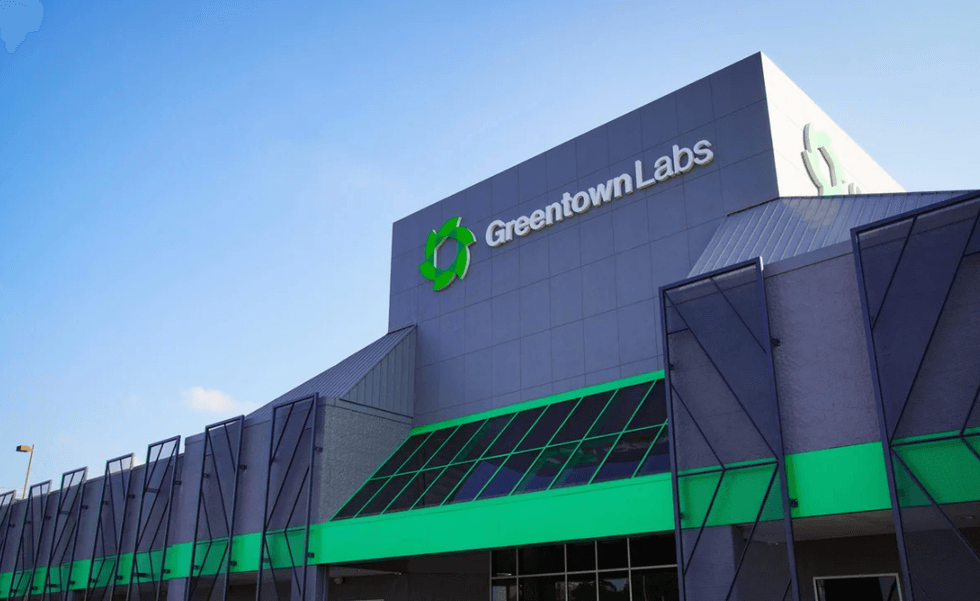
Greentown Labs announced it's receiving a percentage of Prithvi Ventures' proceeds. Photo courtesy of Greentown Labs
Effective immediately, Greentown Labs, which has locations in Houston and Somerville, Massachusetts, is benefitting from funds raised by an investment group.
Greentown Labs, a nonprofit climatetech incubator, announced its partnership with New York-based Prithvi Ventures, a firm that specializes in early-stage climatetech. The unique partnership includes Prithvi Ventures donating "a percentage of proceeds received from its Fund 1 and Fund 2 to Greentown on a quarterly basis, in perpetuity," per Greentown's news release. The exact percentage was not disclosed.
“There’s an understanding in sports that the best teams always take responsibility and accountability for their own and look out for each other—that the members of the team are a reflection of the franchise,” says Kunal Sethi, founder and general partner at Prithvi Ventures. “I have always believed the same to be true in venture, too." Continue reading.
Houston organization calls for startup submissions to pitch at inaugural climatetech week

The event "will showcase energy tech innovations to shift towards a more sustainable, reliable and lower carbon future across interactive panels, inspiring keynotes and over 50 dynamic venture pitches." Photo via Rice.edu
Calling all energy tech startups — you don't want to miss the opportunity to pitch at the inaugural Energy and Climate Startup Week in Houston.
Applications are open now for Rice Alliance for Technology and Entrepreneurship's Energy Tech Venture Forum, which will take place on September 12 as a part of the first Energy and Climate Startup Week in Houston that is taking place September 9 to 13. While ETVF has been hosted by Rice every year for over 20 years, this will be the first time startups will be pitching as a part of the bigger, citywide event. Continue reading.