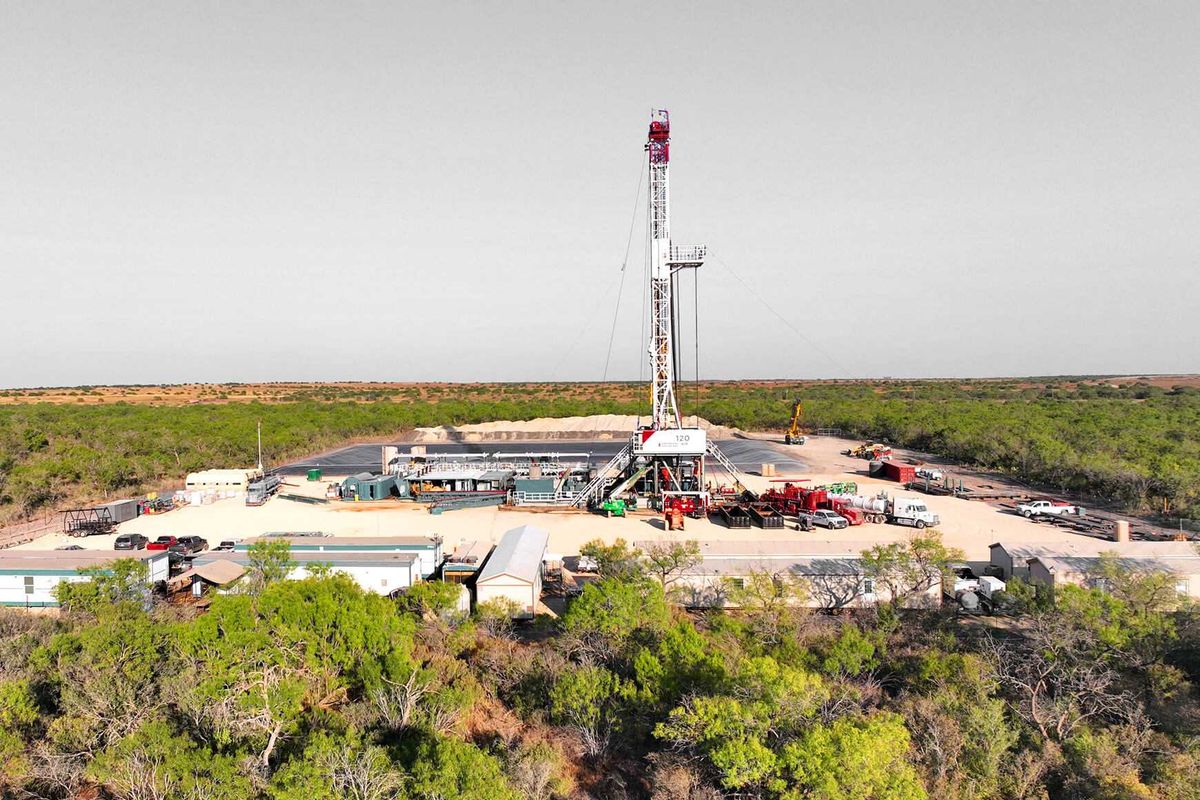




The Texas solar project is expected to go online in 2026. Photo via elawan.com

A Spanish renewable power company with its United States headquarters in Houston has struck a corporate power purchase agreement with Google.

Elawan Energy, announced that it will supply renewable energy to Google under a PPA for the energy generated by a 37 megawatts defined conditions solar project located in the Texas Hill Country.

The PPA deal was facilitated through LEAP (LevelTen Energy’s Accelerated Process), which was co-developed by Google and LevelTen Energy. The goal is to source and execute clean energy PPAs more efficiently. All of this will contribute to Google’s 2030 goal to run on 24/7 carbon-free energy on every grid where it operates.

Elawan, which has local development teams with offices in Houston, is working to expand its presence in North America by reinforcing its commitment to providing clean energy solutions. The company is part of the ORIX Group, and specializes in the development and operation of wind and solar power plants in 15 countries.

Elawan Energy and ORIX currently manage an operational portfolio of over 300 megawatts across ERCOT, SPP, and PJM regions. Elawan operates 1.8 gigawatts of renewable energy projects and has approximately 8 gigawatts under development.

The current solar project is in an advanced stage of development. The commercial operations are expected to commence in 2026.

Earlier this year, Google reported that it plans to spend more than $1 billion to support its cloud and data center infrastructure and expand its commitment to clean energy.

For the first time, Texas has outpaced California as the top state for new solar energy, according to American Clean Power Association's recent quarterly market report. The Lone Star State added 1.6 gigawatts of new solar, the report found.

Ad Placement 300x100
Ad Placement 300x600

CultureMap Emails are Awesome

TEX-E names New Climate Ventures as latest expert in residence

energy mentors

Texas Exchange for Energy & Climate Entrepreneurship (TEX-E) has named its latest expert in residence.

The Houston-based energy transition nonprofit recently announced that New Climate Ventures will join the newly established program. The Expert-in-Residence partnership aims to connect TEX-E Fellows with "the people and organizations shaping the future of energy and entrepreneurship," the nonprofit previously announced.

Taylor Chapman, an investment principal at New Climate Ventures, sits on TEX-E's board of directors. New Climate Ventures invests in early-stage startups building next-gen technologies in the energy, materials and fuels sectors. The venture capital firm's portfolio includes Houston-based clean energy startups like Solidec, Syzygy Plasmonics and Rheom Materials.

“If you know me, you know that I'm passionate about ensuring that my beloved hometown, Houston, is the energy capital of the future — not just of the past," Chapman said in a LinkedIn post. "TEX-E is building a key piece to ensure that's the case: a strong pipeline of graduate and college students immersed [and] versed in the world of energy [and] climate entrepreneurship."

TEX-E says the partnership with New Climate Ventures will allow its fellows opportunities to learn from investors that work with emerging companies and understand how they evaluate new technologies.

TEX-E announced Houston-based geothermal unicorn Fervo Energy and venture capital firm Mercury Fund as its first experts in residence in August. At the time, it said the partnerships would allow its fellows to network and work with Tim Latimer, CEO of Fervo; Sarah Jewett, COO of Fervo; and Blair Garrou, managing partner of Mercury Fund.

The nonprofit was founded in 2022 through partnerships with MIT Martin Trust Center for Entrepreneurship and Greentown Labs. It works with university students from six schools: Rice University, University of Houston, Prairie View A&M University, The University of Texas at Austin, Texas A&M University and MIT.

Rice University spinouts named among 50 top cleantech companies to watch

green team

Two Rice University spinouts, Coflux Purification and DexMat, appear on a new list of the world’s 50 cleantech companies to watch.

Cleantech Group’s 2026 Cleantech 50 to Watch list recognizes early-stage companies “creating groundbreaking solutions to address some of the world’s most pressing environmental and sustainability challenges.”

Cleantech Group, a market research, consulting, and events company, selects the 50 honorees based on insights from analysts and early-stage innovators, along with public nominations.

Destroying “forever chemicals”

Coflux, founded in 2024, offers an onsite treatment system that captures and destroys manufactured “forever chemicals”—per- and polyfluoroalkyl substances—in water and wastewater. It’s a member of Greentown Houston.

Alec Ajnsztajn, CEO; Jeremy Daum, chief technology officer; and Dana Vazquez, chief commercial officer, co-founded Coflux. Ajnsztajn and Daum earned doctoral degrees from Rice, and Vazquez earned an MBA from the university.

Coflux spun out of Rice labs directed by professors Rafael Verduzco and Pulickel Ajayan.

Last year, Coflux received a $175,000 grant from the U.S. Food and Drug Administration’s National Institute of Food and Agriculture. The startup has also raised more than $500,000 in non-dilutive funding, including $80,000 awarded in 2024 by Rice’s One Small Step Grant program.

Promoting an alternative to copper

DexMat, founded in 2015, produces carbon nanotube products such as fibers, yarns, cables, and fabric. The company’s products address demand for materials that can reduce carbon emissions, according to CB Insights.

Its main product, Galvorn, is a copper alternative made of carbon nanotube fibers. CB Insights says Galvorn is engineered to be lighter and stronger than traditional conductive materials like carbon and steel. It’s used in industries such as energy, aerospace, defense, automotive, consumer electronics, and health care.

DexMat emerged from Matteo Pasquali’s Carbon Lab at Rice. Pasquali, co-founder of DexMat, co-invented the company’s technology with the late Nobel Prize-winning chemist Rick Smalley. Smalley was a professor of chemistry, physics, and astronomy at Rice.

Pasquali is a professor of chemical and biomolecular engineering, chemistry, materials science, and nanoengineering at Rice. He co-founded DexMat with Rice graduate Dmitri Tsentalovich, the company’s director of product innovation.

Earlier this year, DexMat raised $5 million in seed funding from Non Sibi Ventures, Governance Partners, Tailwind Futures, BetterWay, Capital Factory, and other investors. The company also secured $3 million in non-dilutive funding.

In 2023, DexMat raised $3 million in a pre-seed round led by Shell Ventures.