








Editor's note: We're one week into 2024, and some of the first top headlines that resonated with EnergyCapital readers on social media and daily newsletter include a PE firm acquiring a local company, a new tech showcase for Baker Hughes, and more.
PE firm acquires Houston renewables fuels infrastructure company

Ara Partners announced this week that it has acquired a majority interest in Houston-based USD Clean Fuels. Image via Shutterstock.
Fresh off its $3 billion fund closure, a Houston private equity firm has made its latest acquisition.
Ara Partners announced this week that it has acquired a majority interest in Houston-based USD Clean Fuels, a developer of logistics infrastructure for renewable fuels. The terms of the deal were not disclosed.
"We have high conviction that the green molecules economy – whether it's renewable fuel feedstocks or biofuels – offers disproportionate opportunity for returns and impact," George Yong, partner and co-head of Infrastructure at Ara Partners, says in a news release. Continue reading.
Houston-based startup secures million-dollar prize after global competition

Revterra was selected from among 10 finalists receiving up to $1 million piloting opportunities. Photo via ADNOC
A Houston sustainability startup has secured a major win on a global scale.
Revterra, which produces novel batteries made from recycled steel, has been awarded a million-dollar piloting opportunity by ADNOC following a global competition.
The ADNOC Decarbonization Technology Challenge, in collaboration with AWS, bp, Hub71, and the Net Zero Technology Centre, sought to find emerging climate tech innovations that are ready for scale. Continue reading.
Greentown Labs partners with VC firm on new emissions calculator integration

Greentown Labs has a new tool for evaluating potential members. Photo via Getty Images
If you want to be a member at either Boston-area or Houston location of Greentown Labs, you better have a small carbon footprint.
Leading global venture capital firm Clean Energy Ventures, which funds early-stage climate tech innovations, announced a partnership to offer access to the firm’s Simple Emissions Reduction Calculator (SERC) to Greentown Labs, the largest climate tech incubator in North America that is dually located in Houston and Sommerville, Massachusetts. New members will be required to report their CO2e emissions reduction potential as part of the incubator’s climate impact assessment as part of the Greentown Labs’ application process. Continue reading.
10 Houston energy companies recognized as best workplaces on annual list
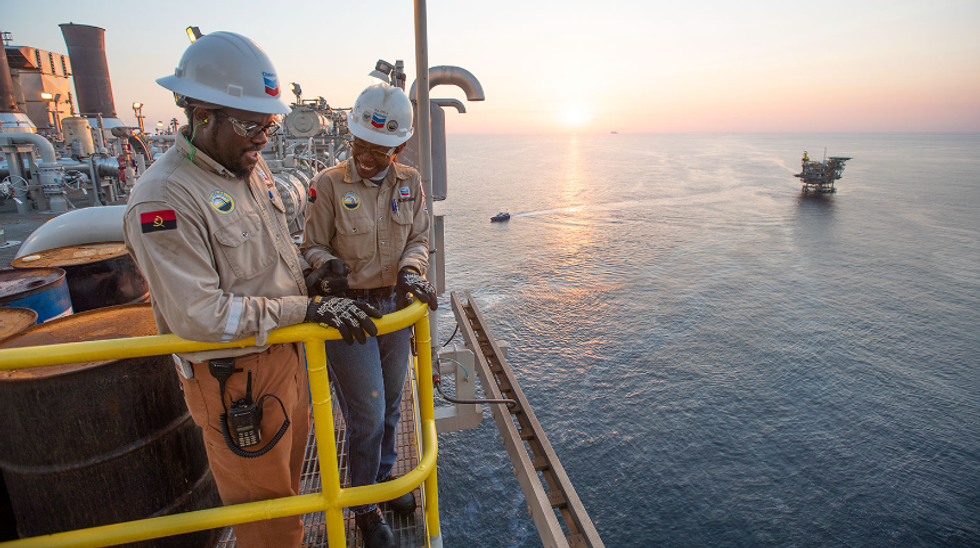
Chevron — as well as nine other Houston energy companies — was named a top company by Newsweek. Photo via chevron.com
Newsweek recently recognized the country's top workplaces, and 10 Houston energy businesses made the cut.
The annual America's Greatest Workplaces 2023 list, which originally published in the fall, gave 10 Houston energy companies four stars or above. Continue reading.
Photos: Baker Hughes sets up interactive hub to showcase technology, sustainable energy solutions
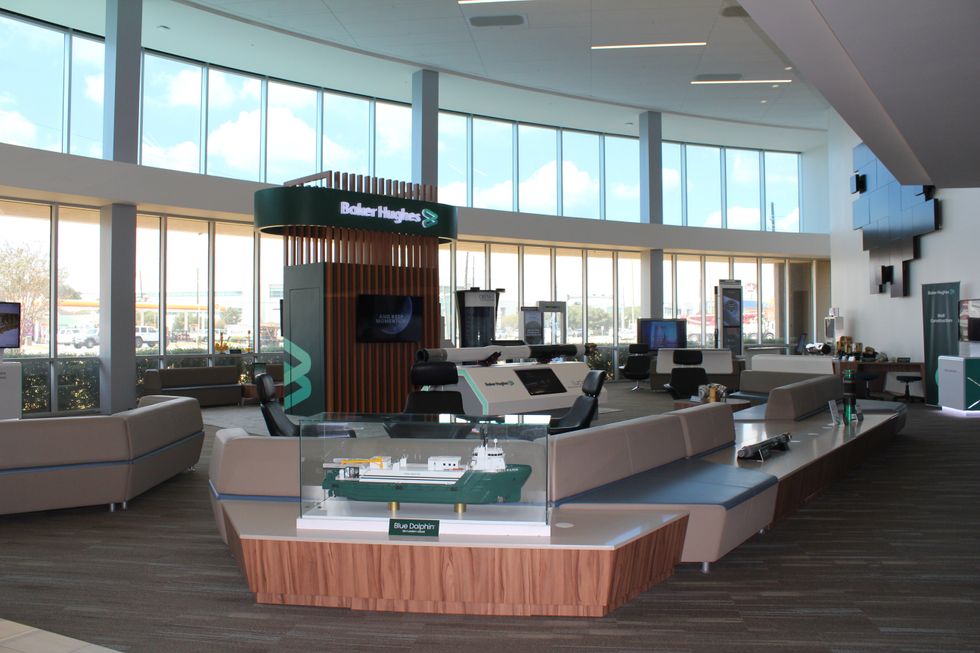
The Baker Hughes Technology Showcase permanently displays the company's technology and clean energy solutions. Photo courtesy of Baker Hughes
When not traveling the world and being showcased internationally at various events and opportunities, the technology displays that Baker Hughes constructed to use as demonstrations and sales tools sat mostly in storage collecting dust until their next gig. That didn't sit well with Matt Hartman.
As sales and commercial enablement director, Hartman saw an opportunity for another use for these displays — one that would take them out of far-flung storage facilities.
"I wanted to reduce our storage and carbon footprint there, but I also wanted to make all of these items accessible at all times. And what better place to do it than one of the energy capitals of the world here in Houston," Hartman tells EnergyCapital. Continue reading.