








Editor's note: From a new national ranking of energy affordability to Activate's inaugural Houston cohort, these are the top headlines that resonated with EnergyCapital readers on social media and daily newsletter this week.
Here's how Texas ranks when it comes to energy affordability

Texas's evolving energy landscape means affordability for residents, a new report finds. Photo via Pexels
The Lone Star State is an economical option when it comes to energy costs, one report has found.
WalletHub, a personal finance website, analyzed energy affordability across the 50 states in its new report, Energy Costs by State in 2024, which looked at residential energy types: electricity, natural gas, motor fuel and home heating oil.
Texas ranked as the fourth cheapest state for energy, or No. 47 in the report that sorted by most expensive average monthly energy bill. Texans' average energy cost per month is $437, the report found. Continue reading.
6 energy transition innovators named to inaugural Houston hardtech fellowship cohort

The inaugural Activate Houston cohort has 11 fellows across energy, materials, life sciences, space, and other sectors. Photo via activate.org
A national hardtech-focused organization has named its 2024 batch of innovators, which includes the inaugural Houston-based cohort.
Activate named 62 fellows and 50 companies for is latest class, which spans Berkley, California — where the organization is based, Boston, New York, and Houston. Additionally, Activate Anywhere, the program's virtual and remote cohort, was named. According to Activate, it received over 1,000 applicants.
It's the first year Activate has hosted a Houston-based cohort. The organization initially announced its expansion early last year. The inaugural cohort has 11 fellows across energy, materials, life sciences, space, and other sectors. Continue reading.
bp's first fast-charging EV station opens at Houston headquarters
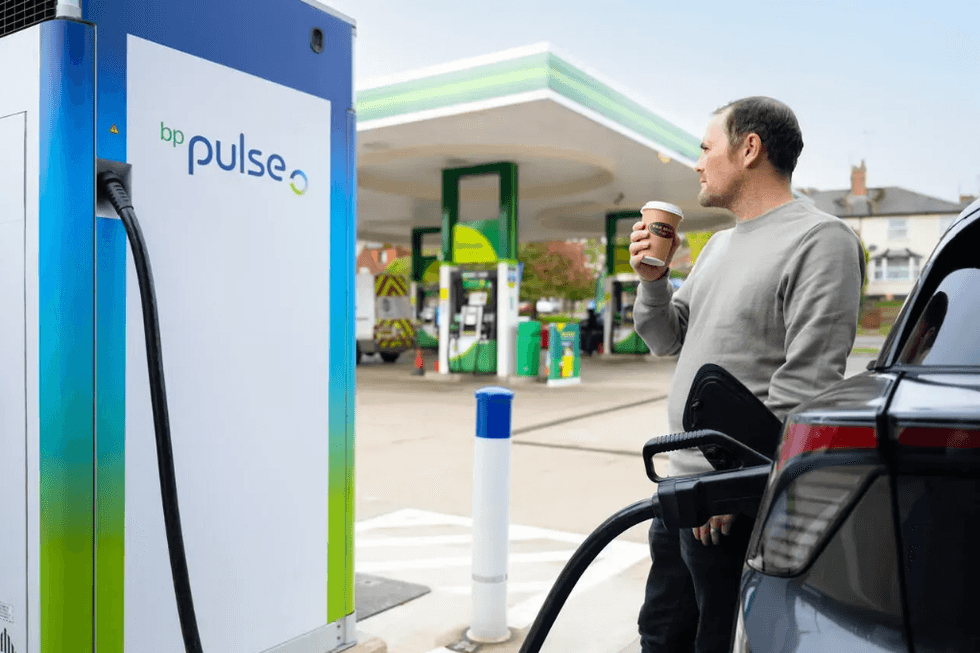
The new bp pulse station — the first bp pulse branded Gigahub in the U.S. — is open for business. Photo via bp.com
A Houston company has announced the completion of its new high-speed electric vehicle charging site.
The bp pulse branded Gigahub at bp's Houston campus — the first of its kind with its 24 high-speed charge points — is ready to power up EVs, Arcadis, a global design and consultancy organization for natural and built assets, announced.
"The opening of our first bp pulse Gigahub is a major step in bp pulse's plans to build out a national EV charging network," Sujay Sharma, CEO, bp pulse Americas, says in a news release. Continue reading.
ExxonMobil’s low-carbon hydrogen project in Baytown adds Air Liquide as partner

The deal will enable transportation of ExxonMobil’s low-carbon hydrogen through Air Liquide’s pipeline network. Photo via exxonmobil.com
Spring-based energy giant ExxonMobil has enlisted Air Liquide as a partner for what’s being billed as the world’s largest low-carbon hydrogen project.
The deal will enable transportation of ExxonMobil’s low-carbon hydrogen through Air Liquide’s pipeline network. Furthermore, Air Liquide will build and operate four units to supply 9,000 metric tons of oxygen and up to 6,500 metric tons of nitrogen each day for the ExxonMobil project. Continue reading.
NOV opens applications for unique energy tech startup pilot program in Houston

The five-month program establishes a significant relationship between the 20 selected startups and NOV, beginning with paid pilot programs. Photo via NOV.com
Houston-based NOV is launching a new growth-stage startup accelerator focused on the upstream oil and gas industry.
NOV, a provider of oil and gas drilling and production operations equipment, has announced its new NOV Supernova Accelerator in collaboration with VentureBuilder, a consulting firm, investor, and accelerator program operator led by a group of Houston innovators.
Applications to the program are open online, and the deadline to apply is July 7. Specifically, NOV is looking for companies working on solutions in data management and analytics, operational efficiency, HSE monitoring, predictive maintenance, and digital twins. Continue reading.