








Editor's note: From a deal closing at the Offshore Technology Conference to ExxonMobil's new board member, these are the top headlines that resonated with EnergyCapital readers on social media and daily newsletter this week.
ExxonMobil adds energy transition leader, investor to board

Maria Jelescu Dreyfus is CEO and founder of Ardinall Investment Management, which is an investment firm that works in “sustainable investing and resilient infrastructure.” Photo via ExxonMobil
An energy transition expert and investor has joined Houston-headquartered ExxonMobil Corp.’s board of directors.
Maria Jelescu Dreyfus is CEO and founder of Ardinall Investment Management, which is an investment firm that works in “sustainable investing and resilient infrastructure.”
She previously spent 15 years at Goldman Sachs as a portfolio manager and managing director in the Goldman Sachs Investment Partners Group that focused on energy, industrials, transportation and infrastructure investments across the capital structure. Click here to continue reading.
Equinor makes big investment into lithium projects in Arkansas, East Texas
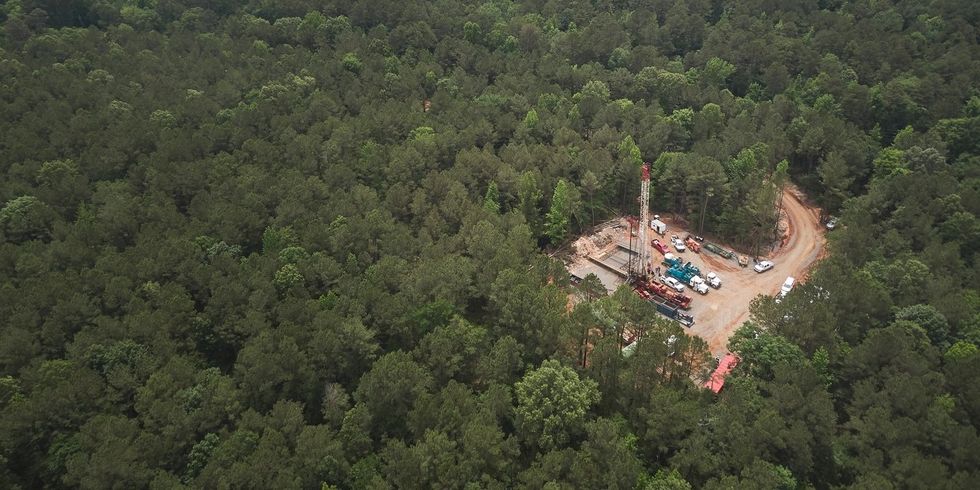
Standard Lithium retaining operatorship, while Equinor will support through its core competencies, like subsurface and project execution capabilities. Photo via Equinor.com
A Norwegian international energy company has entered into a deal to take a 45-percent share in two lithium project companies in Southwest Arkansas and East Texas.
Equinor, which has its U.S. headquarters in Houston, has reached an agreement with Vancouver, Canada-based Standard Lithium Ltd. to make the acquisition. Standard Lithium retaining operatorship, while Equinor will support through its core competencies, like subsurface and project execution capabilities.
“Sustainably produced lithium can be an enabler in the energy transition, and we believe it can become an attractive business. This investment is an option with limited upfront financial commitment. We can utilise core technologies from oil and gas in a complementary partnership to mature these projects towards a possible final investment decision,” says Morten Halleraker, senior vice president for New Business and Investments in Technology, Digital and Innovation at Equinor. Click here to continue reading.
Greentown accelerator in partnership with Shell wraps up with startup milestones met
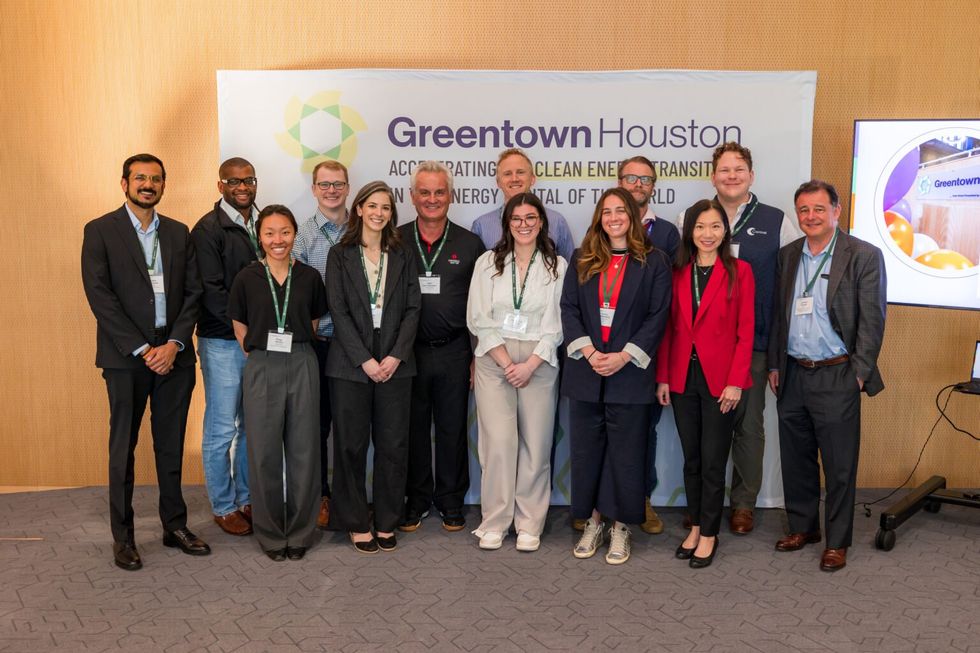
The cohort was selected from over 100 applications, and experts from Shell worked to support the cohort as they navigated the program. Photo via Greentown Labs
After six months of incubating with Shell through Greentown Labs, the 2023 Greentown Go Make startup cohort has completed with its recent showcase.
The six participating startups — Caravel Bio, Circularise, Corumat, Lydian, Maple Materials, and Universal Matter — were originally announced in October. The cohort was selected from over 100 applications, and experts from Shell worked to support the cohort as they navigated the program. Click here to continue reading.
OTC names Houston professionals to 2024 class of emerging leaders
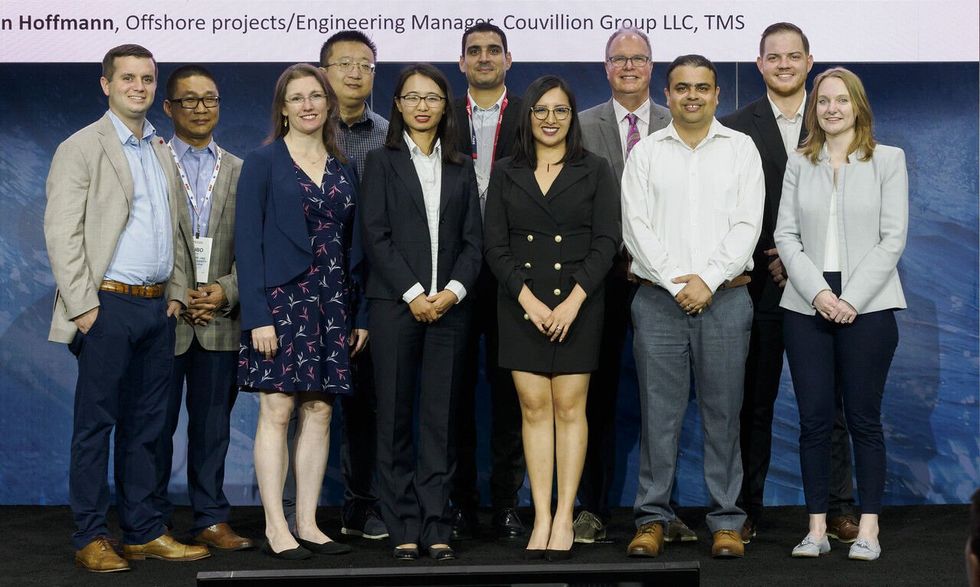
OTC’s annual Emerging Leaders program recognizes professionals with less than 10 years of experience in the offshore energy sector. Photo via LinkedIn
Nine people with ties to the Houston area have been named emerging leaders in the energy industry by the Offshore Technology Conference (OTC).
OTC’s annual Emerging Leaders program recognizes professionals with less than 10 years of experience in the offshore energy sector.
“This year's recipients embody the essence of what it means to be a young professional,” Alex Martinez, chair of the OTC board, says. Click here to continue reading.
Houston company teams up with offshore partner to level up decarbonization innovation
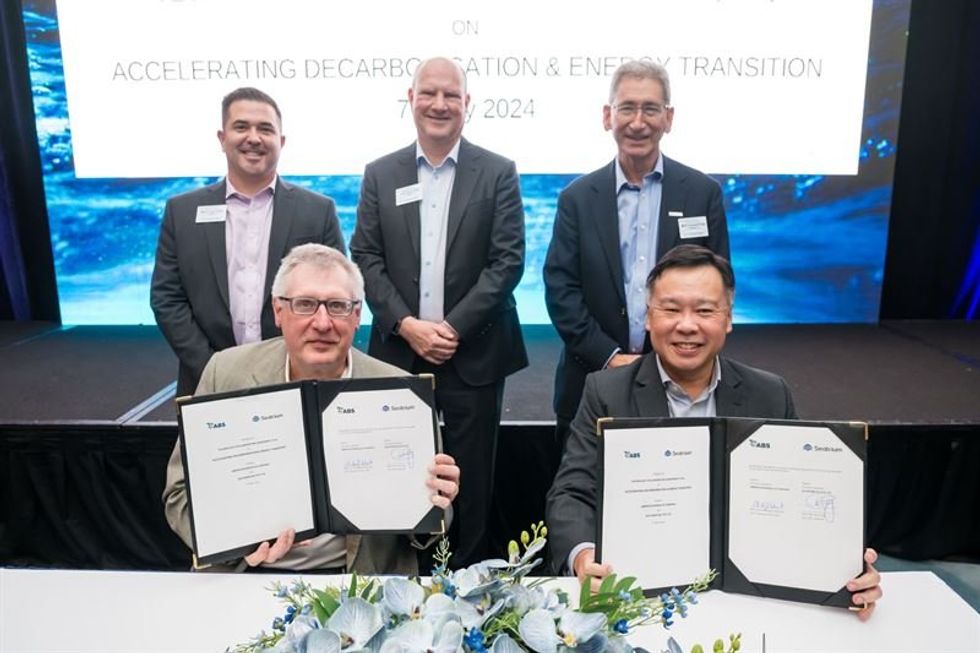
ABS and Seatrium signed a three-year Technology Collaboration Agreement at OTC. Photo courtesy of ABS
Two companies have teamed up on decarbonization efforts and made their relationship official at Houston's Offshore Technology Conference last week.
ABS and Seatrium signed a three-year Technology Collaboration Agreement at OTC, which expands on "their long running partnership on cutting-edge marine and technology projects," per a news release.
The agreement is entitled “Accelerating Decarbonization and Energy Transition,” and covers collaboration on technologies that fall under four broad themes: decarbonization, electrification, new energies and digital transformation. Click here to continue reading.