








Editor's note: From the Department of Energy funding regional projects to big clean energy deals, these are the top headlines that resonated with EnergyCapital readers on social media and daily newsletter this week.
DOE deploys $6B into decarbonization projects — including 4 on the Gulf Coast

Four decarbonization projects in the region have received federal support. Photo via Getty Images
Four projects along the Gulf Coast will receive a share of up to $6 billion in federal funding for decarbonization initiatives.
The $6 billion in funding was announced March 25 by the U.S. Department of Energy. The federal agency and the award recipients still must hammer out details.
“Spurring on the next generation of decarbonization technologies in key industries like steel, paper, concrete, and glass will keep America the most competitive nation on Earth,” U.S. Energy Secretary Jennifer Granholm says in a news release. Continue reading.
SLB to consolidate carbon capture business in partnership

The combined technology portfolios will accelerate the introduction of promising early-stage decarbonization technology. Photo via Getty Images
SLB announced its plans to combine its carbon capture business with Norway company, Aker Carbon Capture.
Upon completion of the transaction, which is expected to close by the end of the second quarter of this year, SLB will own 80 percent of the combined business and ACC will own 20 percent.
According to a SLB news release, the combined technology portfolios will accelerate the introduction of promising early-stage decarbonization technology. Continue reading.
Home Depot taps Houston company as exclusive solar, battery service partner
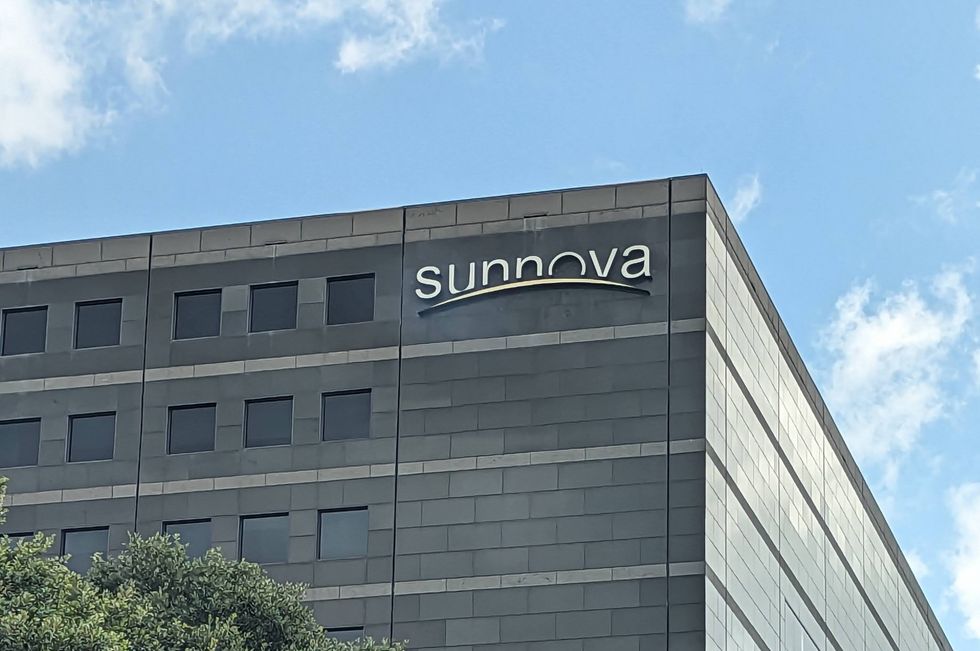
Under this partnership, Home Depot customers will be able to buy Sunnova’s Adaptive Home products, which includes solar power, battery storage, and smart energy management. Photo via Sunnova
Houston-based clean energy company Sunnova Energy International has been tapped as the exclusive provider of solar power and battery storage services for the more than 2,000 Home Depot stores in the U.S.
Under this partnership, Home Depot customers will be able to buy Sunnova’s Adaptive Home products. The Adaptive Home line combines solar power, battery storage, and smart energy management.
Sunnova didn’t assign a value to the Home Depot deal. Continue reading.
Baker Hughes, bp team up on flare emissions monitoring tech

bp is now using Baker Hughes emissions abatement technology, flare.IQ, to quantify methane emissions from its flares. Photo via Canva
Two energy companies with Houston headquarters are collaborating on flare emissions monitoring.
According to a news release, bp is now using Baker Hughes emissions abatement technology, flare.IQ, to quantify "methane emissions from its flares, a new application for the upstream oil and gas sector." The statement goes on to explain that the industry doesn't have a to methane emission quantifying, and that bp ad Baker Hughes has facilitated a large, full-scale series of studies on the technology.
Now, bp is utilizing 65 flares across seven regions to reduce emissions. Continue reading.
Hot rocks, AI, and more — 5 themes and takeaways from CERAWeek 2024 in Houston
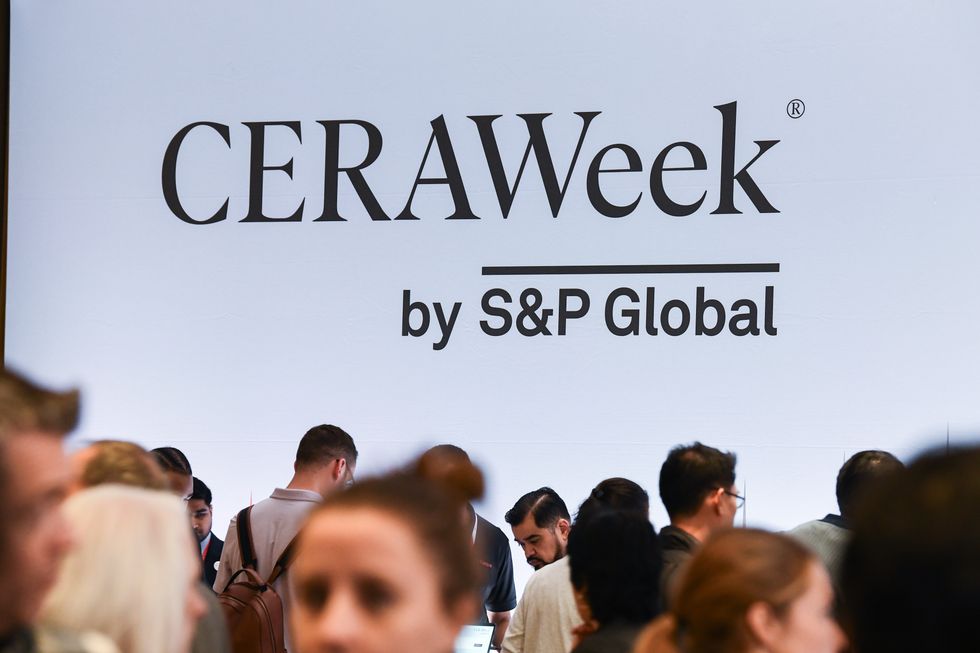
Here are five things to know from CERAWeek this year. Photo courtesy of CERAWeek
The 2024 edition of CERAWeek by S&P Global wrapped up last Friday in Houston, and a handful of themes emerged as topical and disruptive amid the energy transition.
Here are five takeaways from the conference, according to EnergyCapital reporting. Continue reading.