








Editor's note: From Caliche Development Partners finding fresh funding for a Beaumont plant to an energy transition SPAC going public, these are the top headlines that resonated with EnergyCapital readers on social media and daily newsletter this week.
Houston researchers develop catalyst for emission-free hydrogen production using light instead of heat
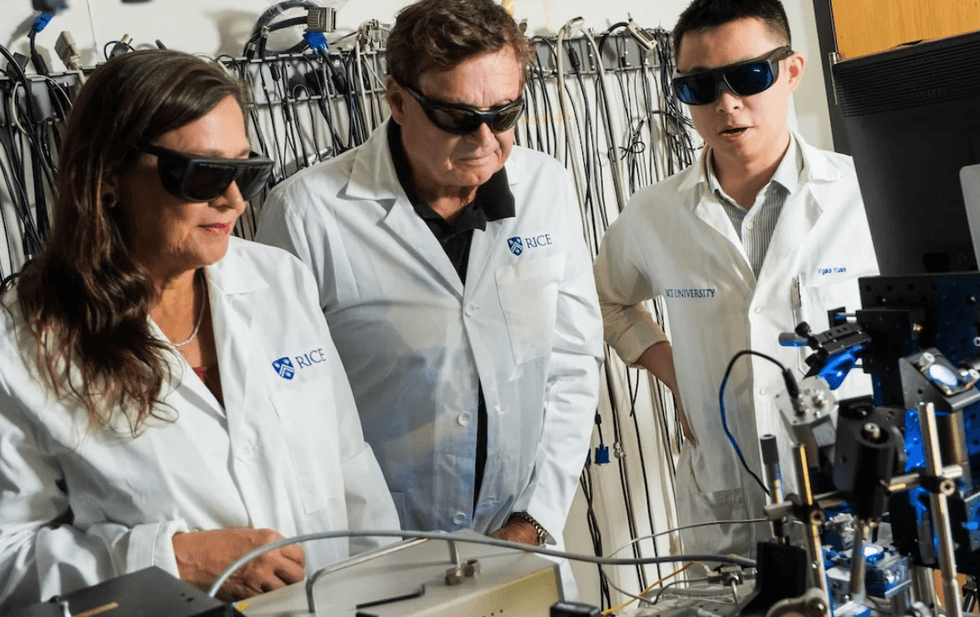
Researchers created a light-driven catalyst for hydrogen production, offering an emission-free alternative to traditional methods. Photo by Jeff Fitlow/Rice University
Researchers at Rice University have developed a catalyst that could render steam methane reforming, or SMR, entirely emission-free by using light rather than heat to drive the reaction.
The researchers believe the work could prove to be a breakthrough for extending catalyst lifetimes. This will improve efficiencies and reduce costs for a number of industrial processes that are affected by a form of carbon buildup that can deactivate catalysts called coking.
The new copper-rhodium photocatalyst uses an antenna-reactor design. When it is exposed to a specific wavelength of light it breaks down methane and water vapor without external heating into hydrogen and carbon monoxide. The importance of this is it is a chemical industry feedstock that is not a greenhouse gas. Rice’s work also shows that the antenna-reactor technology can overcome catalyst deactivation due to oxidation and coking by employing hot carriers to remove oxygen species and carbon deposits, which effectively regenerates the catalyst with light. Continue reading.
Is Enron back? Houstonians aren't laughing at the joke
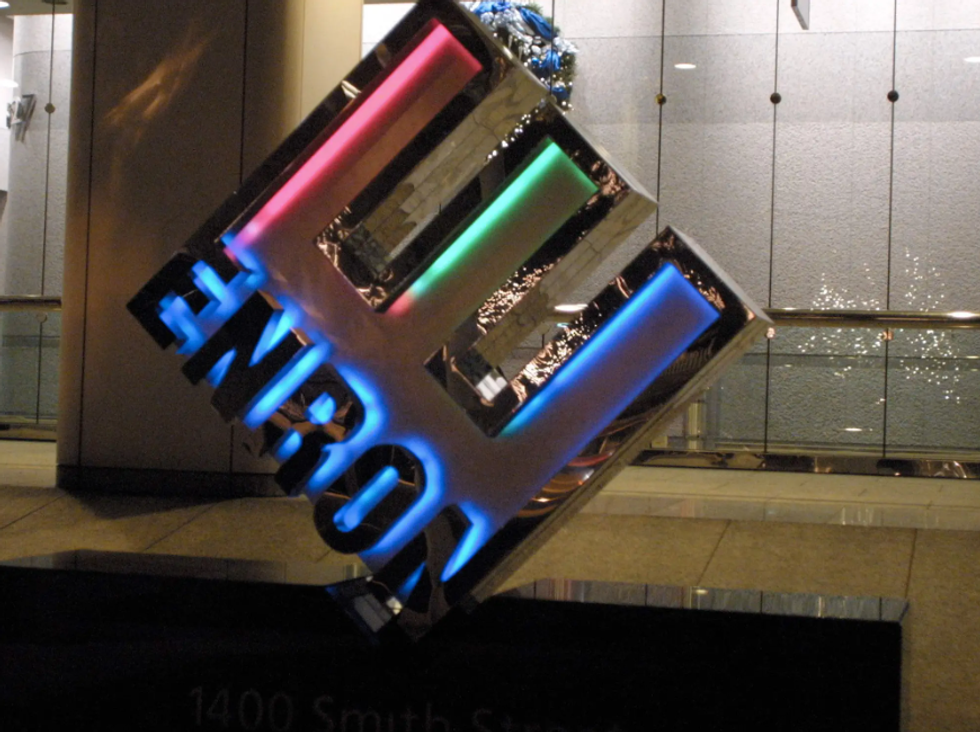
If its return is comedic, some former employees who lost everything in Enron’s collapse aren’t laughing. Photo by James Nielsen/Getty Images
An elaborate parody appears to be behind an effort to resurrect Enron, the Houston-based energy company that exemplified the worst in American corporate fraud and greed after it went bankrupt in 2001.
If its return is comedic, some former employees who lost everything in Enron’s collapse aren’t laughing.
“It’s a pretty sick joke and it disparages the people that did work there. And why would you want to even bring it back up again?” said former Enron employee Diana Peters, who represented workers in the company’s bankruptcy proceedings. Continue reading.
Houston to host cleantech collaboration with delegation from Belgium

Houston-based energy tech-oriented companies will be invited to the pitching event for Antwerp and Houston Cleantech Entrepreneurs from 2 to 5 pm on December 3 at The Ion. Photo via the Ion
A delegation of nine startups from Antwerp, Belgium, along with industry experts will visit Houston from December 2 through December 6, which will include The Greater Houston Partnership, Greentown Labs, The Ion, and The Cannon.
The delegation will represent cleantech, sustainable chemistry, and energy tech sectors to engage with Houston’s energy transition ecosystem and identify collaboration and investment opportunities.
Houston-based energy tech-oriented companies will be invited to the pitching event for Antwerp and Houston Cleantech Entrepreneurs from 2 to 5 pm on December 3 at The Ion. Continue reading.
New Mexico court upholds emissions crackdown impacting oil, gas operations along Texas border
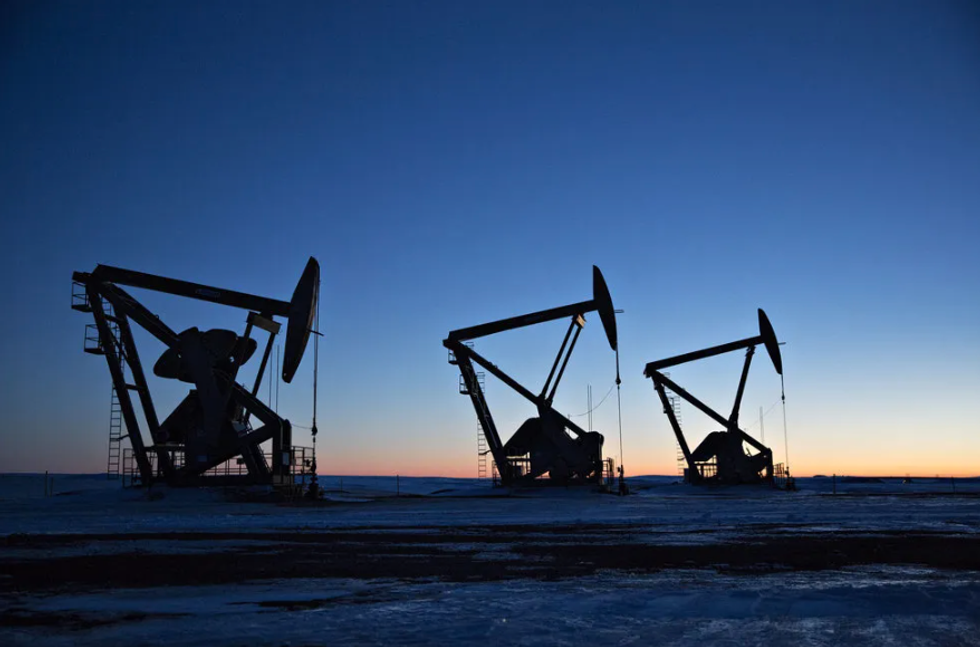
Some of those counties affected include production hot spots within the San Juan Basin in northwestern New Mexico and the Permian Basin, which straddles the New Mexico-Texas line. Photo via Getty Images
The New Mexico Court of Appeals has upheld regulations aimed at cracking down on emissions in one of the nation’s top-producing oil and gas states.
The case centered on a rule adopted in 2022 by state regulators that called for curbing the pollutants that chemically react in the presence of sunlight to create ground-level ozone, commonly known as smog. High ozone levels can cause respiratory problems, including asthma and chronic bronchitis.
Democratic Gov. Michelle Lujan Grisham's administration has long argued that the adoption of the ozone precursor rule along with regulations to limit methane emissions from the industry were necessary to combat climate change and meet federal clean air standards. Continue reading.
Uniquely Houston event to convene innovation experts across aerospace, energy, and medicine

For the eighteenth year in a row, the annual Pumps & Pipes event will showcase and explore convergence innovation and common technology themes across Houston’s three major industries. Image courtesy of Pumps & Pipes
Every year, Houston's legacy industries — energy, medicine, and aerospace — come together to share innovative ideas and collaborate on future opportunities.
For the eighteenth year in a row, the annual Pumps & Pipes event will showcase and explore convergence innovation and common technology themes across Houston’s three major industries. The hosting organization, also called Pumps & Pipes, was established in 2007 in Houston and is dedicated to fostering collaboration amongst the city's three major industries. Continue reading.