






Shortly after announcing a $133.65 million Series A funding round, Conroe-based Hertha Metals broke ground Oct. 8 on a $100 million factory that will produce steel-grade and magnet-grade high-purity iron.
Hertha’s Chalyx plant, located in Conroe, will manufacture a total of about 10,000 metric tons per year of magnet-grade and steel-grade high-purity iron. The factory will use Hertha’s single-step process to generate high-purity iron for rare-earth-magnet and steel manufacturers in the U.S.
Hertha says Chalyx will be the first U.S. commercial plant for production of magnet-grade high-purity iron.
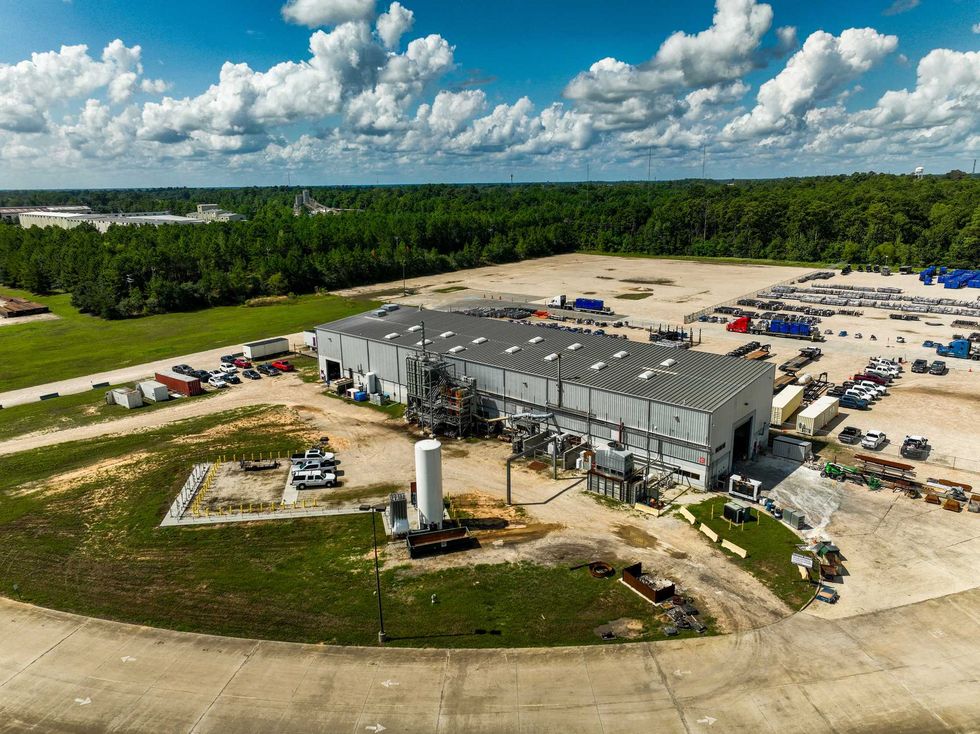
Chalyx is being built next to Hertha’s headquarters and its Pi100 pilot plant, which will remain in operation. Chalyx and Pi100 will form the first modern-day iron and steel “innovation complex” in the U.S., the company says.
“I founded Hertha Metals because I believed we could significantly improve how the world makes iron and steel from ore, and that an industry so fundamental to our future still had enormous room for invention,” Laureen Meroueh, founder and CEO of Hertha, said in a press release.
The 4-year-old startup says the Chalyx complex will lay the foundation for its first 500,000-ton-per-year steel mill.
Chalyx’s first priority is making high-purity iron for U.S. manufacturers of rare-earth magnets, Hertha says. These magnets are critical components for electric vehicles, data centers, wind turbines and defense systems.
China produces an estimated 94 percent of high-purity iron for rare-earth magnets, according to Hertha.
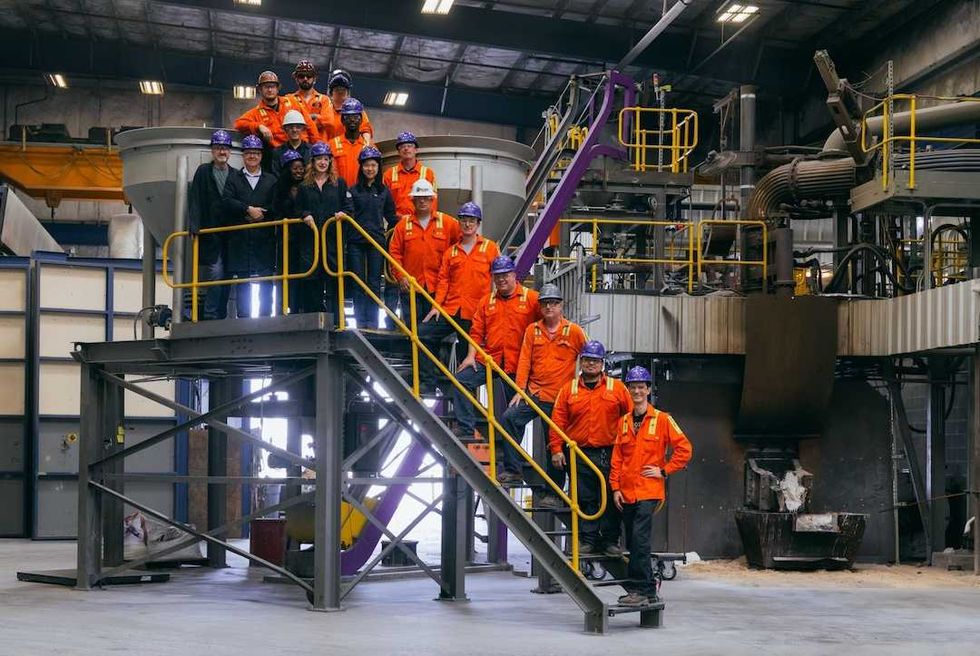
Aside from iron for rare-earth magnets, Chalyx will make iron and steel for pilot projects in the steel industry.
The plant is expected to come online in late 2027, with production of magnet-grade high-purity iron starting in early 2028.
Today, Hertha employs 32 people, the company says. Once it’s fully operating, the Chalyx plant will employ about 50 people.
Just ahead of the groundbreaking, Hertha announced the $133.65 million Series A round, co-led by Khosla Ventures and Doerr Capital. The round included a $65 million equity investment from the Pentagon.
“Iron and steel have shaped human progress for thousands of years. And I believe there is still an enormous amount left to invent,” Meroueh said at the groundbreaking ceremony.
- European cleantech company breaks ground on Houston manufacturing site ›
- Hertha Metals named world's No. 1 most innovative manufacturing co. of 2026 ›
- Hertha Metals raises $133M Series A round, plans high-purity iron plant ›
- Houston-area sustainable steel company emerges from stealth with $17M in VC funding ›