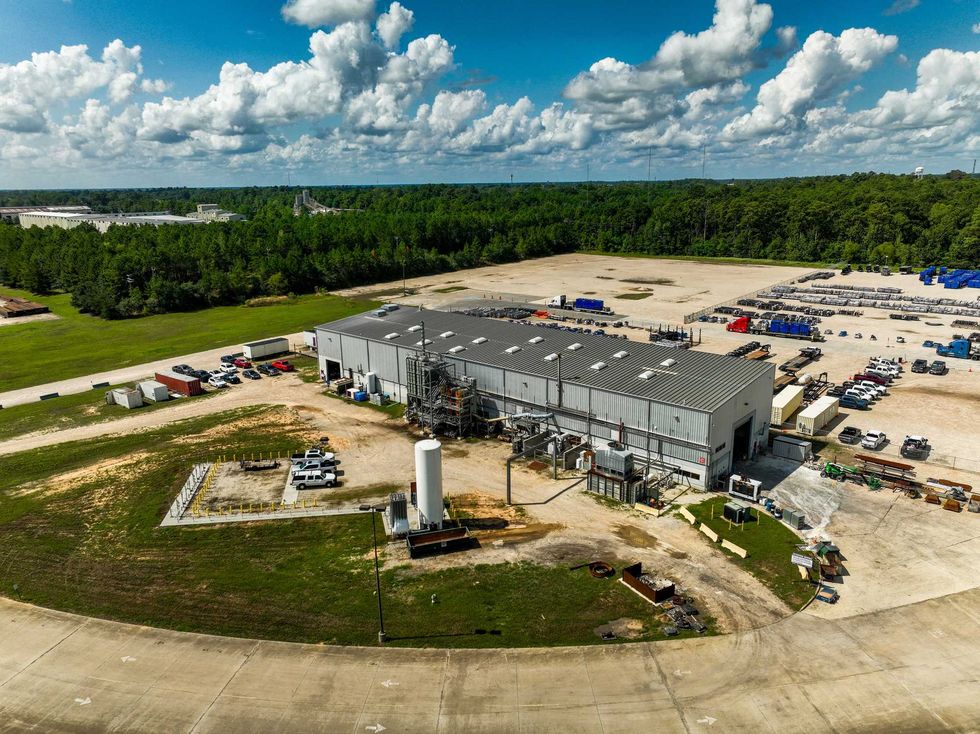
A team of Rice University researchers has found a way to convert data center waste into clean power using rooftop solar collectors. Photo courtesy Rice University.

As data centers expand, their energy demands rise as well. Researchers at Rice University have discovered a way to capture low-temperature waste heat from data centers and convert it back into usable power.

The team has introduced a novel solar thermal-boosted organic Rankine cycle (ORC)—a power system that uses a safe working fluid to make electricity from heat. The design incorporates low-cost rooftop flat-plate solar collectors, which warm the data center’s coolant stream before it enters the ORC. The findings, published in Solar Energy, show that the additional “solar bump” helps surpass the technical roadblocks with data center waste, which has typically been too cool to generate power on its own.

The research was supported by the Alliance for Sustainable Energy LLC, the National Renewable Energy Laboratory and the U.S. Department of Energy.

“There’s an invisible river of warm air flowing out of data centers,” Laura Schaefer, the Burton J. and Ann M. McMurtry Chair of Mechanical Engineering at Rice and co-author of the paper, said in a news release. “Our question was: Can we nudge that heat to a slightly higher temperature with sunlight and convert a lot more of it into electricity? The answer is yes, and it’s economically compelling.”

Traditionally, electric heat pumps have been used to raise temperatures before recovery, but the benefits were limited because the pumps consumed significant extra power.

Kashif Liaqat, a graduate student in mechanical engineering at Rice, and Schaefer achieved a "temperature lift” by using solar energy to create thermoeconomic models. They modeled affordable, low-profile rooftop solar collectors that fed into an ORC and tied into a liquid-cooling loop. The collectors were validated against industry tools and tested at some of America’s largest data center hubs in Ashburn, Virginia, and Los Angeles, which provided varying climate challenges.

The system recovered 60 percent to 80 percent more electricity annually from the same waste heat, with a 60 percent boost in Ashburn and an 80 percent boost in Los Angeles, according to Rice. It also achieved over 8 percent higher ORC efficiency during peak hours, and an increase in annual average efficiency. The approach also lowered the cost of electricity from the recovered power by 5.5 percent in Ashburn and by 16.5 percent in Los Angeles.

“What the industry considers a weakness becomes a strength once you add solar,” Liaqat said in a news release. “That’s great news for modern data centers.”

Next up, the team will look to pilot its hybrid system in operational sites and explore thermal storage, which the researchers hope could bank solar heat during the day to assist with energy recovery efforts at night.

Ad Placement 300x100
Ad Placement 300x600

CultureMap Emails are Awesome

Houston-area plastics company debuts state-of-the-art headquarters

new hq

Ultra-high-performance plastics company Drake Plastics officially opened its new state-of-the-art, 140,000-square-foot manufacturing center and corporate office in Cypress last month.

Dubbed “Drake HQ, ” the new facility was built to align with Harris County’s clean energy goals and features a 1.3-megawatt solar generation plant designed to offset 50 percent of the plant’s power consumption.

The facility is designed as a “factory ranch,” and is intended to blend in with its natural surroundings. With the expanded campus, Drake says it looks to serve existing and new customers in the semiconductor, aerospace, energy and defense industries.

The new headquarters is designed as a "factory ranch" and features a solar generation plant to offset half of its power consumption. Photo via LinkedIn

“We are thrilled to open the doors of our new headquarters in the area where it all began,” Drake Plastics President Steven Quance said in a news release. “We are honored to have reinvested in the community that has supported our growth and success over the past three decades.”

Drake Plastics cut the ribbon on March 26 at the new facility, which also marked the company’s 30th anniversary in the Cypress area. The company launched in 1996 with four employees and has grown to employ more than 100 staff members, according to a LinkedIn post.

Drake Plastics is a globally recognized leader in ultra-high-performance polymer manufacturing and specializes in extrusion, injection molding, precision machining, machine building, engineering and distribution. According to the company, its new Cypress facilty is one of the largest in the world that processes these high-performance polymers.

Energy expert on powering Texas by leading globally and acting locally

guest column

Texas is known around the world for shaping energy trends, including conservation efforts. As we reflect on Earth Day this month, let’s take a closer look at where Texas is getting things right and where there is still room for improvement.

Texas is the nation’s top producer of energy across oil, gas, wind and solar power. We have built our identity on the idea of leading the world as a powerhouse for energy production, but Texas also has to deliver results to its residents and the United States; otherwise, our global leadership falls flat.

Measuring Texas’ Global Leadership

Texas is the nation’s largest energy producer, leading the U.S. in wind-powered electricity generation and rapidly expanding its solar capacity, according to the U.S. Energy Information Administration. Our state continues to lead nationally in large-scale energy investments, business-friendly policies and abundant natural resources.

Texas is not standing still or simply doing what it has always done. The state recognizes that to stay competitive, we must adapt and change. Diversification in the areas of liquefied natural gas exports and new investments in carbon and hydrogen capture are defining what the next chapter of Texas’ leadership will look like.

Energy leadership requires production, innovation and influence. Together, these will keep Texas as a formidable force in global energy production.

Our Local Texas Reality Is Important, Too

When we zoom in to look more closely at what is happening in Texas, the picture becomes a bit more nuanced. Our energy independence creates both flexibility and vulnerability, especially during major weather events such as winter storms and hurricanes.

Five years later, the effects of Winter Storm Uri remain in many of our minds. Demand for home generators has risen quickly in the state, with Houston leading the way due to grid uncertainty. As our population continues to rise quickly and more data centers are built in the state, grid stability remains a major factor in Texas’ ability to lead in energy innovation to meet the demands of residents.

ERCOT has developed a three-part plan to help mitigate the risk of grid failure during periods of extreme demand or emergencies. While this is an improvement over five years ago, Texas still needs to invest significantly in grid resiliency.

Texas’ Energy Market and Affordability

Often, proponents of our deregulated energy market in Texas hold it up as an example of healthy competition and consumer choice. Lawmakers claim that it gives residents the ability to select an energy plan that best meets their needs.

In practice, however, the market can be difficult to navigate. There are many electricity plans and providers, so residents often feel overwhelmed when navigating the energy market. With fluctuating rates, complex contracts and peak pricing structures, monthly energy bills can be surprising.

Additionally, as utility companies seek to distribute energy infrastructure costs to customers, prices are rising rapidly. According to TEPRI, electricity rates have risen by 30% since 2021, and the organization predicts an additional 29% increase by 2030.

A 60% increase in electricity prices over less than a decade will affect more than 4.1 million LMI (low- to moderate-income) households in Texas. Conservative projections by TEPRI estimate that by 2030, LMI households will pay an additional $863 annually for electricity, representing an electricity-pricing burden of 8.2%.

The energy affordability crisis is just beginning here in Texas, and greater education and proactive legislation are needed to help LMI households navigate the changing market and rising energy costs. LMI households are already choosing between paying for electricity and healthcare for their family members.

If Texas wants to remain a global leader in energy production, innovation, reliability and affordability, the rising cost of energy needs urgent attention.

Grid Resilience Is Mandatory

In addition to energy affordability, Texas frequently experiences extreme weather, making grid resilience foundational to its continued leadership in both local and global markets.

Between 1980 and 2024, Texas experienced 190 weather-related events with financial losses exceeding $ 1 billion. From hurricanes along the Gulf Coast to prolonged heat waves and drought, the state’s energy infrastructure is under increasing strain. These events necessitate that Texas invest in long-term planning and preparedness for its energy infrastructure.

Next Steps for Local Leadership

Texas needs to strengthen every part of its energy infrastructure. Leading locally means strengthening the grid by building out transmission, scaling battery storage, and deploying smarter, more responsive technology. At the same time, we need to make the market easier to navigate and ensure Texans are better educated and protected as they make energy decisions.

Additionally, as Texans become more informed about the energy landscape, it is crucial to equip them with the knowledge to use energy conservation tools such as programmable thermostats, mobile apps to monitor and adjust energy usage, shifting away from peak-hour usage and selecting energy plans without gimmicks or tricky clauses.

These important intersections are where Texas’ global leadership meets local impact in a critical time of change and transition in the Texas energy landscape.

Going Forward

Beyond addressing the critical issues of reliability and affordability at home here in Texas, it is important to recognize that they are also global. While we already export our energy products to the world, we have a unique opportunity to also export solutions in grid innovation, market design and technologies that are applicable to varied environments and markets around the world.

If we get it right, Texas will be known for not only producing energy but also for shaping how energy systems evolve globally. In order for Texas to lead both locally and globally, we need to focus on performance through smarter infrastructure, thoughtful policy and informed consumers.

Because true energy leadership isn’t just about how much we produce, it’s about performance, access and impact from Texas communities to the global stage, which is an imperative that goes far beyond Earth Day.

———

Sam Luna is director at BKV Energy, where he oversees brand and go-to-market strategy, customer experience, marketing execution, and more.