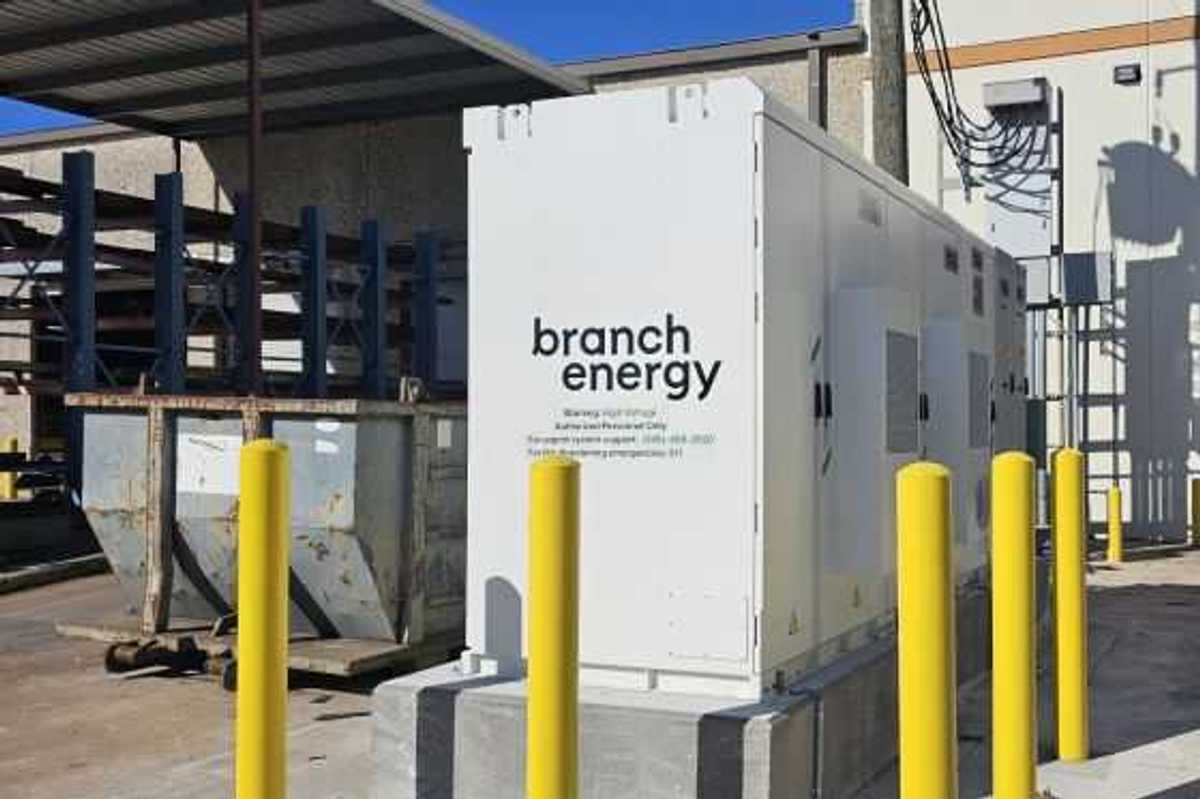
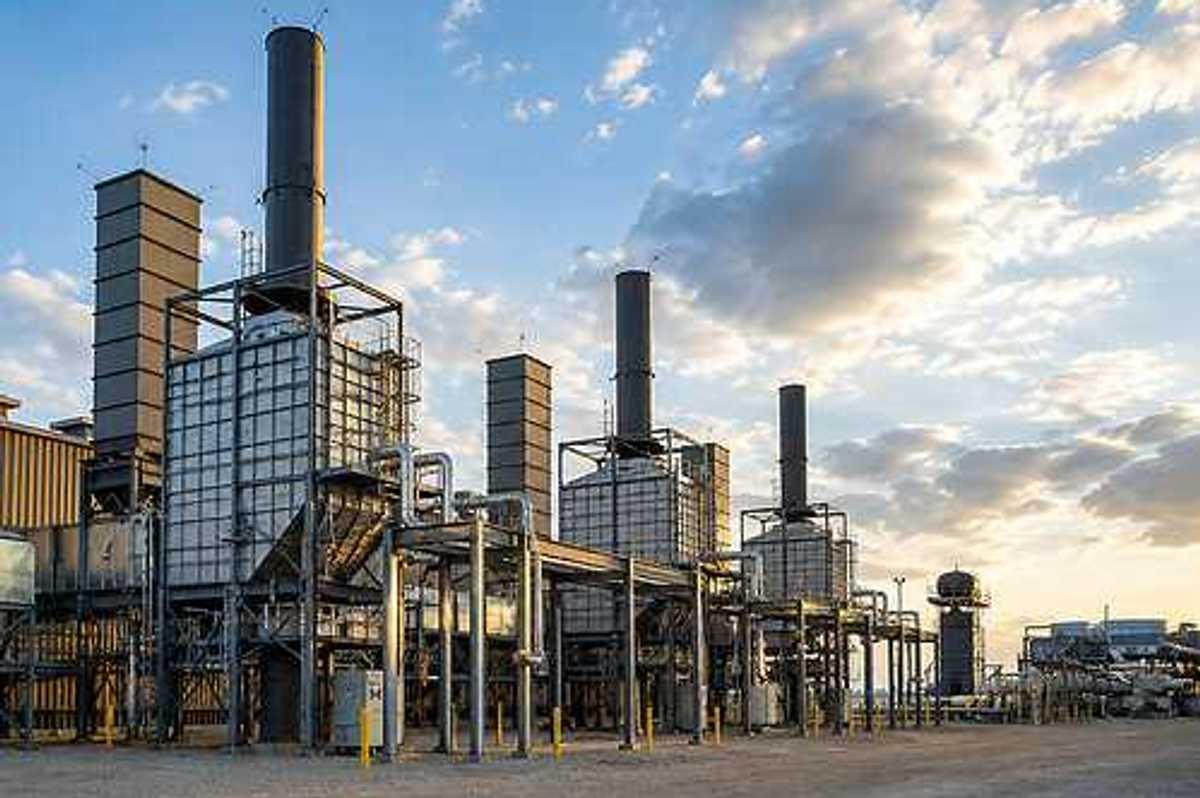
Houston-based SLB says the acquisition will help it dramatically scale revenue generated by its data center business. Photo courtesy SLB

Houston’s SLB has announced plans to acquire German thermal management and heat exchange technology organization Kelvion for approximately $4 billion.

SLB reports in a news release that the acquisition is expected to boost its Data Center Solutions business, as thermal management technologies are key to cooling artificial-intelligence-related infrastructure. Data centers continue to pose numerous challenges, but SLB believes thermal management technology can help ease energy burdens.

“Data centers are becoming more sophisticated and energy-intensive, and customers are increasingly looking for partners that can optimize how critical systems work together across the facility and help bring new capacity online faster,” Gavin Rennick, president of SLB’s New Energy and Industrial business, said in the release. “Thermal management is central to that challenge, and this acquisition allows us to address it directly by delivering more integrated cooling solutions, accelerating innovation, optimizing thermal efficiency, and more directly embedding thermal management into our modular infrastructure offering.”

SLB will acquire Kelvion from funds managed by New York-based financial services group Apollo Global Management Inc. for approximately $3.4 billion in cash and will assume about $700 million of debt, according to the release. The deal is expected to close in Q1 of 2027.

SLB says the acquisition will help it dramatically scale revenue generated by the data center sector.

“This transaction accelerates our ambition to become an industrial technology partner to the data center industry and help customers address the growing infrastructure complexity required to scale AI,” Olivier Le Peuch, CEO of SLB, added in a news release. “Kelvion advances our path toward more integrated data center infrastructure solutions, expands our addressable market — more than doubling our revenue opportunity per gigawatt of delivered capacity — and allows us to scale both our offerings and the global reach of the business.”

SLB reports that it expects its Data Center Solutions business revenues to grow by more than 90 percent annually between 2024 and 2026.

If the acquisition is approved, the combined company will target revenue of $4.5 billion to $5 billion for its data center solutions business in 2028, according to the release.

Kelvion has previously served customers in AI infrastructure, energy system transformation and energy/ industrial markets. Its past work focuses on heat pumps, renewables, carbon capture and processing solutions for thermal management. According to the news release, Kelvion's data center revenue is expected to reach about $1.2 billion in 2026, and the sector is considered the company’s "largest and fastest-growing end market.

Ad Placement 300x100
Ad Placement 300x600

CultureMap Emails are Awesome

Tesla files plans for Houston-area solar plant & more top energy news

Trending news

Editor's note: Houston energy news in August was fueled by Tesla solar plans, a massive deal for ERock, and Halliburton Labs' newest cohort. Below are the five most-read EnergyCapitalHTX stories published during the second half of the month.

Telsa eyes Houston area for $10 billion solar manufacturing plant

Electric vehicle and clean energy company Tesla is considering building a new $10.1 billion solar cell manufacturing facility in Fort Bend County, according to documents filed with the Texas Comptroller’s Office. If approved, the plant, called Project Sun City, would be located on a 3,050-acre site off FM 762 and FM 1994 in Richmond, Texas. Tesla aims to finish construction in 2028, with the plant being operational by early 2029. Continue reading.

Houston’s data center capacity set to grow 80%, report says

Houston stands to benefit from constraints dogging data center markets elsewhere in Texas, a new report indicates. This comes against the backdrop of Texas surpassing Virginia as the country’s top state for data centers — and amid deepening opposition to these facilities. The report, published by commercial real estate services provider JLL, foresees Houston continuing to gain traction in data center development as occupants seek “scalable alternatives” to Texas markets experiencing supply-and-demand imbalances. Continue reading.

EV surge could shutter 40 refineries by 2040, Wood Mackenzie report warns

The rise of electric vehicles could spell trouble for Houston’s oil and gas sector, a new report suggests. But the oil and gas industry stands to benefit from potential sluggishness in U.S. adoption of EVs. If worldwide EV adoption rises as expected, global oil demand could fall by five million barrels per day by 2040, accelerating the closure of about 40 oil refineries, says the report, published by energy research and consulting firm Wood Mackenzie. The firm’s North American hub is in Houston. Continue reading.

ERock scores Anthropic deal, sees order backlog soar to $1.7B

Two months after its $400 million IPO, Houston-based ERock (NYSE: EROC) has landed a power-generator deal with AI powerhouse Anthropic, owner of the Claude platform. In its Q2 earnings report, ERock says it will provide equipment to Anthropic with a 470-megawatt capacity. ERock specializes in utility-grade, onsite microgrid power systems for data centers and other customers. The company previously did business as Enchanted Rock. Continue reading.

Halliburton Labs adds 3 energy, materials startups to Houston incubator

Three new companies have joined Halliburton Labs, the incubator for early-stage energy and hardtech startups run by Houston energy giant Halliburton. Halliburton Labs provides the emerging companies with mentorship, industry connections, laboratory access and other resources as they work toward commercialization. The latest companies to join the incubator focus on battery materials, resource recovery and gas separation solutions to address some of the "key bottlenecks in the energy and industrial landscape." Continue reading.

Houston geothermal startup bumps Series B to $180M with Nabors investment

fresh funding

Houston-based geothermal startup Quaise Energy has closed its Series B fundraising round at $180 million after inking a significant investment from another local energy leader.

Quaise, which is developing a 50-megawatt superhot geothermal plant in Oregon, announced a "first close" of the round last month at $134 million, led by San Francisco-based investment firm Prelude Ventures. The $46 million bump has been fueled by a $35 million investment from Houston-based Nabors Industries.

The funding will go toward the continued development of the company's superhot geothermal plant, Project Obsidian, as well as the commercialization of Quaise's millimeter-wave drilling system, according to a news release.

“We are unlocking the most powerful clean energy source on Earth, and the Series B signals deep conviction across a wide range of investors,” Carlos Araque, Quaise CEO and president, said in the release. “Nabors is an invaluable partner as we move millimeter wave drilling to full commercial operations at Project Obsidian and beyond.”

Nabors, a repeat investor in Quaise, has also entered into a strategic framework agreement with Quaise. Under the agreement, Quaise will have access to a dedicated Nabors land rig and drilling platform. Nabors will also provide expertise in reservoir modeling, well design and drilling strategy.

Last year, Quaise drilled to a depth of about 330 feet using its millimeter-wave technology at its field site in Central Texas. Canary Media previously reported that Quaise plans to drill to nearly 3,300 feet later this year and to deploy its millimeter-wave technology at its power plant in 2027. The plant is expected to deliver power to the Pacific Northwest in 2030.

Quaise and Nabors say the partnership will improve drilling performance, reduce costs and accelerate project timelines.

“Superhot geothermal has the potential to make clean energy ubiquitous. That is why we are excited about our close relationship with Quaise,” Anthony Petrello, president and CEO of Nabors, added in the release. “Quaise’s millimeter wave technology changes the equation entirely by reaching superhot rock at temperatures and depths that are inaccessible with conventional drilling, transforming geothermal from a location-dependent resource into a global energy solution. Combined with Nabors’ drilling expertise and infrastructure, we see a path to gigawatt-scale geothermal power that no other company can offer today.”

Quaise reports that with the latest funding, it has now raised $280 million. It raised $21 million in a Series A1 financing round in 2024 and a $52 million Series A in 2022.

The company announced in March that it was aiming to raise $200 million for Project Obsidian through $100 million in Series B funding, plus an additional $100 million from grants, debt and project-level finance.

Houston's KBR tapped to provide tech for first SAF plant in Kazakhstan

clean deals

Houston-based engineering and technology firm KBR Inc. has been tapped to provide technology for Kazakhstan's first sustainable aviation fuel (SAF) production plant.

KazMunayGas-Aero LLP (KMG-Aero), a subsidiary of Kazakhstan’s national oil and gas company KazMunayGas, and KazFoodProducts awarded the contract to KBR for the project. The plant will use the alcohol-to-jet (AtJ) process for producing aviation fuel and aims to support President Kassym-Jomart Kemeluly Tokayev’s goal of boosting Kazakhstan's profile as a global aviation player, according to a news release from KBR.

"We are honored to support KMG-Aero and KFP in advancing the national commitment to reduce greenhouse gas emissions, recognizing the pivotal role of aviation decarbonization in achieving these strategic objectives,” Jay Ibrahim, president of KBR Sustainable Technology Solutions, said in the release.

KBR will provide its PureSAF technology and engineering design for the project. Invented and developed by Swedish Biofuels AB, the PureSAF tech will be used to convert alcohol-based feedstocks into SAF. The PureSAF Technology can process multiple feedstocks—like bioethanol, syngas, carbon dioxide and hydrogen—and convert them to SAF, diesel and gasoline, according to KBR.

"KBR’s PureSAF is a feed-flexible, bankable technology that is designed to deliver high SAF yields and supports the project across the full lifecycle,” Ibrahim added in the release. “We look forward to closely collaborating and supporting the successful execution of this landmark SAF project.”

Earlier this summer, KBR was also chosen to provide technology for what’s expected to be Asia's first commercial-scale ethanol-to-jet (SAF) plant. The plant has a planned production capacity of up to 100,000 tons of SAF per year.

In addition to the SAF projects, KBR also announced this month that it has been selected by ORNX Green Hydrogen to provide proprietary ammonia technologies for a low-cost green ammonia project in Morocco.

The commitments come as KBR shifts its focus solely toward sustainability technology and services. The company is in the process of spinning off its Mission Technology Solutions business, which KBR recently announced will be named Trinzic. The remaining company, "New KBR," will serve the ammonia and syngas, chemical and petrochemicals, clean refining and circular economy markets.