








Editor's note: From a new direct lithium extraction plant going online to energy companies making Hurricane Beryl donations, these are the top headlines that resonated with EnergyCapital readers on social media and daily newsletter this week.
Houston company's commercial direct lithium extraction plant goes live
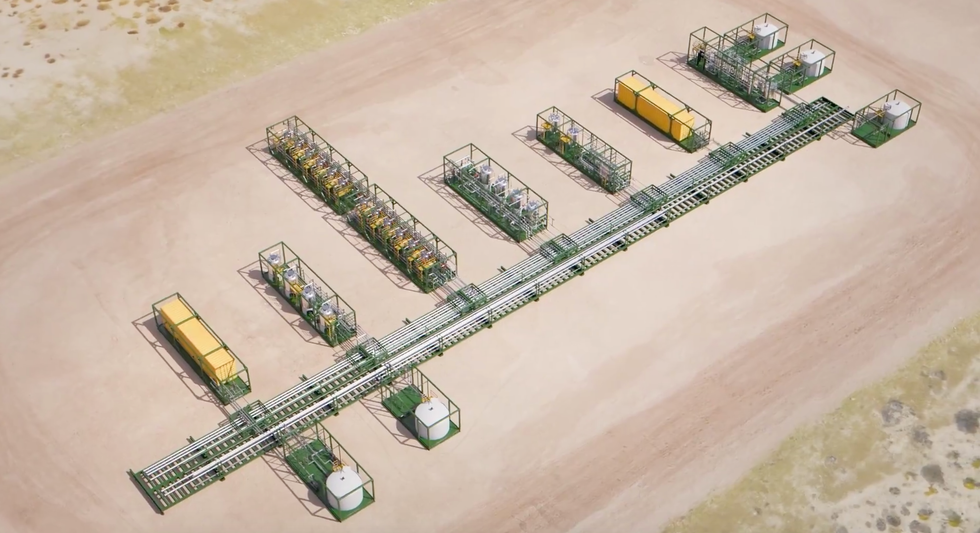
The newly launched plant will process brine produced from lithium-containing waste-magnesium salts. Photo via ibatterymetals.com
A Houston company has launched operations with what it's calling the world’s first commercial modular direct-lithium extraction plant.
International Battery Metals has reported that its new plant — just outside Salt Lake City, Utah, and co-located with US Magnesium LLC — is up and running. The plant, originally announced earlier this year, will process brine produced from lithium-containing waste-magnesium salts. The resulting lithium chloride product will provide feedstock for high-purity lithium carbonate generated by US Magnesium.
"This achievement is momentous for IBAT and a harbinger for an industry-transformation to significantly boost lithium production on a more cost-effective and sustainable basis, clearing a path for supplies of lower-priced, high-quality lithium for EV batteries and large-scale grid backup battery installations," John Burba, founder and CTO of IBAT, says in a news release. "This kicks off a U.S. lithium production renaissance and creates the potential for a sea change in global lithium supplies." Continue reading.
4 Houston energy companies pledge financial support in wake of Hurricane Beryl

Four energy companies are putting their money where their mouths are following Hurricane Beryl. Photo by Brandon Bell/Getty Images
Four major energy companies in the Houston area have chipped in more than $400,000 to support relief efforts for Hurricane Beryl in Southeast Texas. Nationwide, it’s estimated that the storm caused at least $28 billion in damage and economic losses.
Here’s a breakdown of contributions announced by the four energy companies. Continue reading.
New talent-packed TV show taps into Texas oil boom history

The new show is based on a podcast produced by Texas Monthly. Photo courtesy of Paramount+
A new television show that's slated to premiere this fall will put Texas' oil boom on center stage.
Taylor Sheridan's buzzy new Texas-based series Landman will premiere Sunday, November 17, on Paramount+, the network revealed. That's just one week after the November 10 debut of the final episodes of Sheridan's Yellowstone on Paramount.
Landman will launch with two episodes, with subsequent ones dropping weekly on Sundays, a news release says. In total, the first season will be 10 episodes long. The series is based on Texas Monthly's acclaimed podcast Boomtown by West Texas-raised journalist Christian Wallace, which aired from late 2019 to early 2020. Wallace is serving as a consultant and writer on the series. Continue reading.
Oxy subsidiary secures Microsoft as largest-ever DAC carbon removal credit customer

Here's 1PoinFive's newest customer on its Texas CCUS project. Photo via 1pointfive.com
Occidental Petroleum’s Houston-based carbon capture, utilization and, sequestration (CCUS) subsidiary, 1PointFive, has inked a six-year deal to sell 500,000 metric tons of carbon dioxide removal credits to software giant Microsoft.
In a news release, 1Point5 says this agreement represents the largest-ever single purchase of carbon credits enabled by direct air capture (DAC). DAC technology pulls CO2 from the air at any location, not just where carbon dioxide is emitted.
Under the agreement, the carbon dioxide that underlies the credits will be stored in a below-the-surface saline aquifer and won’t be used to produce oil or gas. Continue reading.
Houston renewable energy developer teams up with global commercial real estate biz
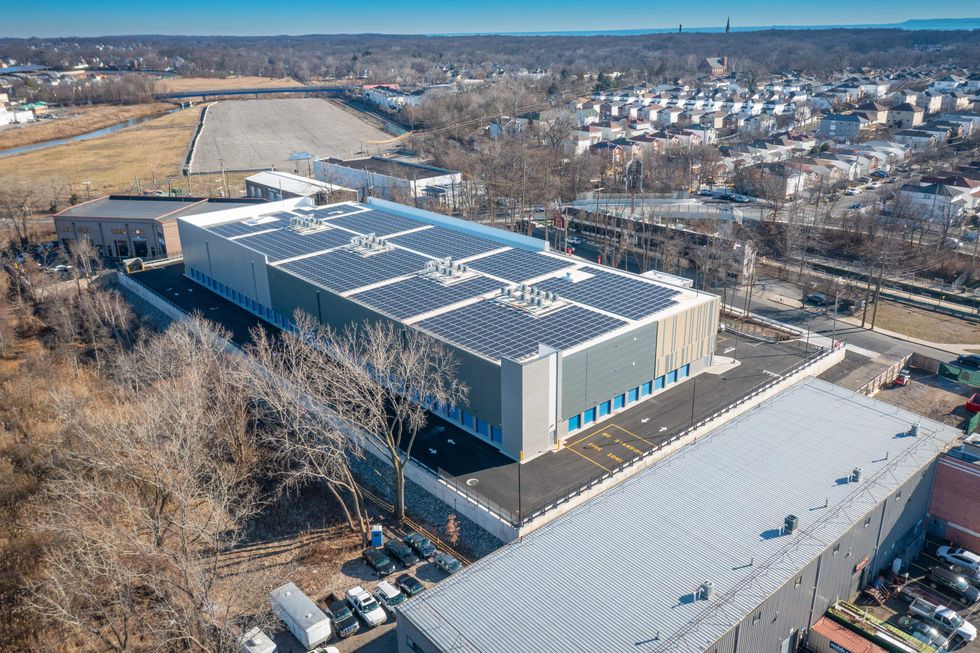
Catalyze has teamed up with Cushman & Wakefield to expand installation of solar panels and battery storage technology. Photo courtesy of Catalyze
Houston-based Catalyze, a developer of independent power systems, has teamed up with commercial real estate services powerhouse Cushman & Wakefield to expand installation of solar panels and battery storage technology at U.S. commercial and industrial properties.
The two companies say the partnership will help owners and tenants of office buildings, warehouses, and other commercial properties reduce utility costs, boost operating income, achieve environmental goals and ease stress on the power grid. Continue reading.