trending news

New corporate-backed program announced, startup raises $41M, and more top Houston energy transition stories

These are the most-read articles on EnergyCapital from the week. Photo via Getty Images

Editor's note: From a new solar energy tech hub to a major climate tech accelerator announcement for Houston, these are the top headlines that resonated with EnergyCapital readers on social media and daily newsletter this week.

Woodside Energy backs $12.5M clean energy accelerator for new technologies
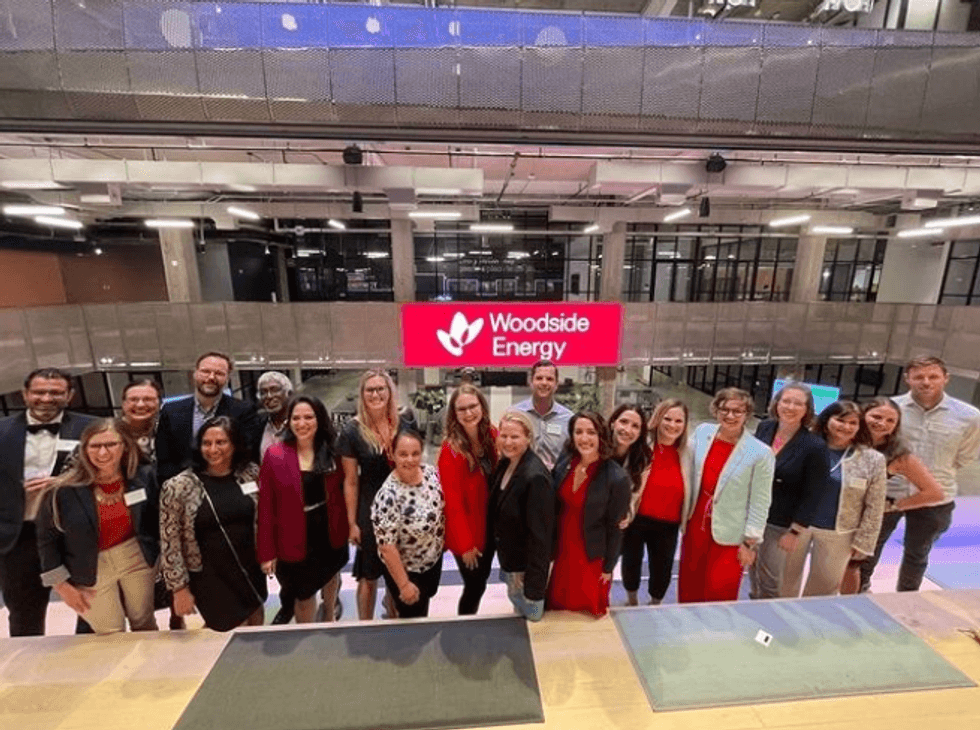
Woodside Energy has committed $12.5 million to a new partnership with Rice University. Photo via Instagram/WoodsideEnergy

A global Australian energy company with its international operations in Houston has backed a new climatetech accelerator in partnership with Rice University.

Woodside Energy, headquartered in Australia with its global operations in Houston following its 2022 acquisition of BHP Group, has committed $12.5 million over the next five years to create the Woodside Rice Decarbonization Accelerator.

"The goal of the accelerator is to fast track the commercialization of innovative decarbonization technologies created in Rice labs," Rice University President Reginald DesRoches says to a crowd at the Ion at the initiative's announcement. "These technologies have the potential to make better batteries, transitistors, and other critical materials for energy technologies. In addition, the accelerator will work on manufacturing these high-value products from captured and converted carbon dioxide and methane." Continue reading.

Houston entrepreneur crowdfunding for sustainable farming solution
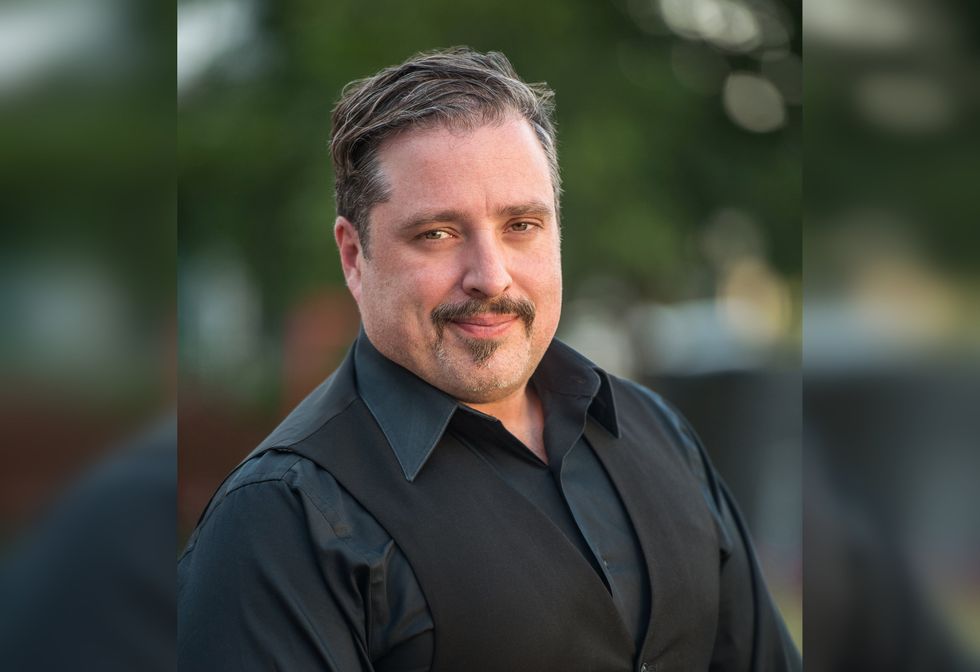
Bart Womack founded Eden Grow Systems in 2017. Photo courtesy

Whether it’s on Mars or at the kitchen table, entrepreneur Bart Womack wants to change what and how you eat.

But the CEO and founder of next-generation farming startup Eden Grow Systems is seeking crowdfunders to help feed the venture.

The company evokes images of a garden paradise on earth. But the idea behind the Houston-based NASA spinoff came from a more pragmatic view of the world. Womack’s company sells indoor food towers, self-contained, modular plant growth systems built on years of research by NASA scientists looking for the best way to feed astronauts in space.

The company has launched a $1.24 million regulated crowdfunding campaign to raise the money it needs to scale and expand manufacturing outside the current location in Washington state. Continue reading.

Solar energy company to open new tech center in Houston
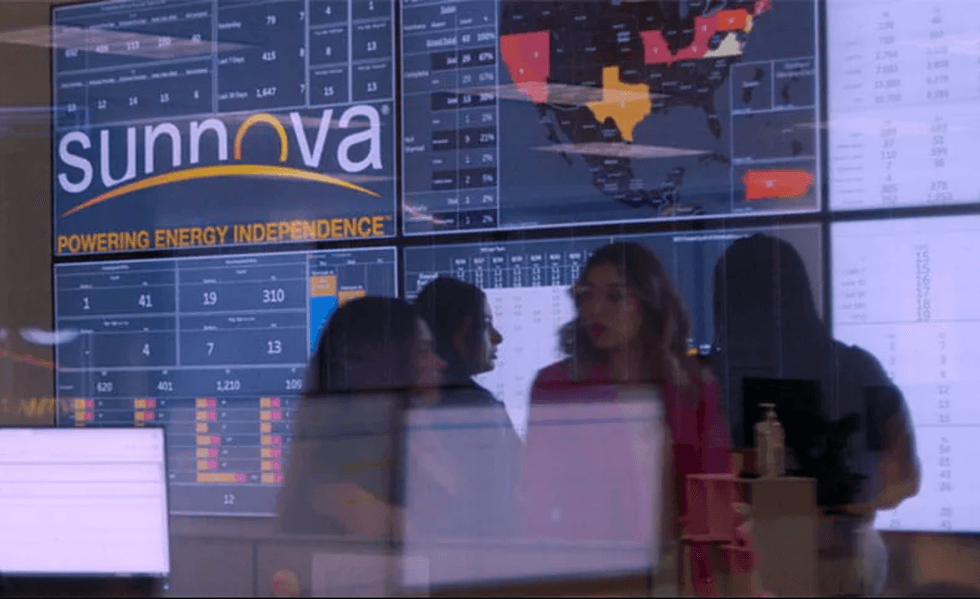
The new center will house Sunnova technologies, including a microgrid system powered by a grid simulator and a solar array simulator with the ability to replicate various grid and solar array conditions. Photo via sunnova.com

A Houston energy services company has announced the upcoming opening of a state-of-the-art energy testing and integration technologies hub.

Sunnova Energy International Inc. will open the Sunnova Adaptive Technology Center in 2024. The center, which will come sometime in the first quarter of the year, is part of Sunnova Adaptive Home, Sunnova Adaptive Business, and Sunnova Adaptive Community service offerings. Founded in Houston in 2012, Sunnova aims to “create a better energy service at a better price.”

The ATC will house Sunnova technologies, including a microgrid system powered by a grid simulator and a solar array simulator with the ability to replicate various grid and solar array conditions. An interchangeable inverter and battery test beds, and a fully-functioning model home equipped with full-sized appliances, including a range, oven, refrigerator and HVAC system, will also be part of the new ATC. Continue reading.

Houston energy analytics company garners $41M in growth capital
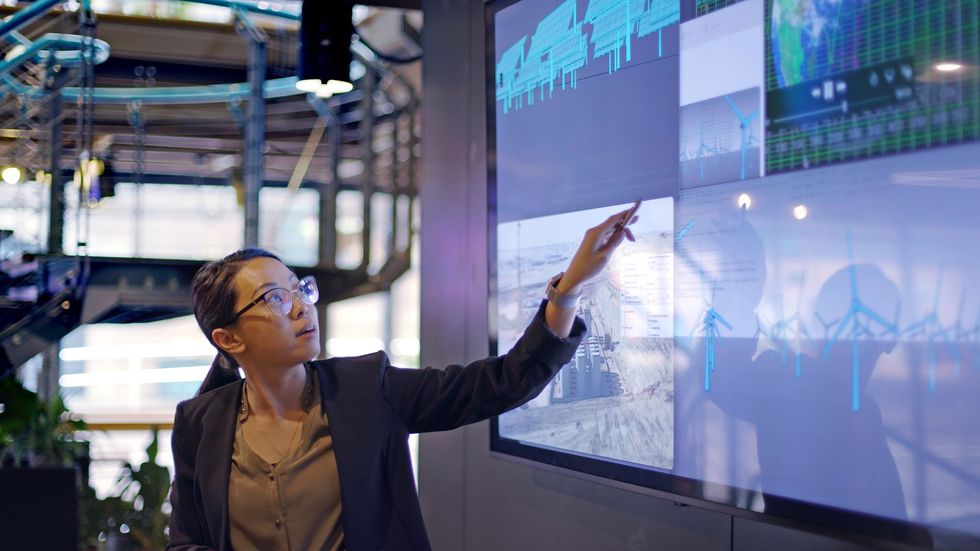
Houston-based Welligence Energy Analytics specializes in data and intelligence for the oil and gas markets, greenhouse gas emissions sector, and CCUS projects. Photo via Getty Images

A group of investors has chipped in $41 million to purchase a minority stake in Houston-based Welligence Energy Analytics, a provider of energy data and intelligence.

Boston-based venture capital firm Elephant Partners led the series B round, with participation from Veriten, a Houston-based, energy-focused research, investing, and strategy firm, and EDG, a Metairie, Louisiana-based energy consulting firm. Several executives from the energy, information services, and software sectors also contributed to the round.

Founded in 2016, Welligence specializes in data and intelligence for the oil and gas markets, greenhouse gas emissions sector, and carbon capture, storage, and utilization (CCUS) projects. Clients include major oil and gas companies, as well as large investment banks. Continue reading.

New York law firm appoints another energy practice partner in Houston

Dale Smith, an energy finance and transactions attorney, has joined Willkie Farr & Gallagher LLP. Photo via Willkie.com

A law firm again expanded its Houston-based, energy-focused team.

Willkie Farr & Gallagher LLP announced that energy finance and transactions attorney Dale Smith has joined the firm as a partner in the Corporate & Financial Services Department, which will be based in the Houston office. Willkie provides legal solutions to businesses that address critical issues that affect multiple industries and markets with 13 offices worldwide.

Smith was most recently a partner at Mayer Brown, and prior to law, he worked in the electric and gas utility industry as an analyst for Entergy. He currently serves on the Institute for Energy Law Advisory Board. He will manage energy clients in a broad range of transactions from upstream, midstream, and downstream oil and gas, renewable energy, power and energy finance deals. Continue reading.
Trending News

A View From HETI

Can Texas build the energy infrastructure needed to power what comes next? Photo via Getty Images

For a few weeks this summer, Houston welcomed the world.

The FIFA World Cup 2026 showcased our city's ability to host one of the largest international events on the planet. Millions watched from around the globe while hundreds of thousands of visitors experienced firsthand what Houston has become: a world-class destination for business, culture and global events.

But once the final match is played and the visitors return home, a more important question remains: Can Texas build the energy infrastructure needed to power what comes next?

The World Cup wasn't the finish line. It was a glimpse into the future.

That future is being shaped not only by population growth, but also by artificial intelligence, hyperscale data centers, advanced manufacturing, electrification, LNG expansion and continued industrial investment. Together, these forces are creating an unprecedented demand for electricity and placing new expectations on the infrastructure that supports it.

Energy Has Become Economic Infrastructure

For decades, economic development centered around highways, ports, airports and workforce.

Today, another asset has moved to the top of that list: energy infrastructure.

Reliable electricity is no longer simply a utility service. It has become a competitive advantage.

Companies evaluating where to build the next AI campus, manufacturing facility or industrial complex are increasingly asking different questions. How quickly can power be delivered? Is there enough transmission capacity? Can substations support future expansion? Is water infrastructure available? What is the long-term reliability of the local grid?

These questions are becoming just as important as tax incentives and available real estate.

Recent comments from Governor Greg Abbott that future AI developments should provide their own power generation and water illustrate just how dramatically the conversation has evolved. The challenge is no longer limited to meeting today's demand. It is preparing for a future where entirely new industries require unprecedented amounts of electricity while ensuring existing homes and businesses continue to receive reliable, affordable service.

The Next Energy Race Has Already Begun

Texas remains the nation's energy leader, producing more electricity than any other state while continuing to expand natural gas, wind, solar and emerging technologies.

But leadership in the next decade will be measured differently.

Success will depend on how quickly we can expand transmission infrastructure, modernize distribution systems, accelerate interconnection, strengthen grid resilience and support new generation where economic growth is occurring.

The conversation has shifted from producing more electricity to delivering it smarter.

That requires planning years before demand arrives.

Houston Is the Proving Ground

Houston sits at the center of this transformation.

Already recognized as the Energy Capital of the World, the region continues attracting major employers, global headquarters, industrial expansion and technology investment. The Port of Houston continues to grow. Advanced manufacturing is expanding. AI companies are evaluating Texas alongside other national markets.

Every one of these investments depends on reliable infrastructure.

While the World Cup demonstrated Houston's ability to manage a temporary surge of visitors, the more significant challenge lies ahead. Permanent economic growth creates sustained electricity demand that cannot be addressed with temporary solutions.

Meeting that demand will require coordinated investment across generation, transmission, distribution, storage and increasingly, digital technologies capable of forecasting and managing electricity in real time.

Smarter Infrastructure for a Smarter Grid

The future electric grid will look very different from the one that built modern Texas.

Artificial intelligence, predictive analytics, advanced sensors and distributed energy resources will allow operators to anticipate demand, identify equipment failures before they occur and optimize energy delivery across increasingly complex networks.

Infrastructure is no longer simply about building more. It is about building smarter.

At the same time, resilience must remain central to every investment. Texans understand better than most that hurricanes, flooding, winter storms and prolonged heat waves are no longer rare events. Modern infrastructure must not only support growth but also withstand increasingly volatile weather.

Building Beyond the Headlines

The World Cup generated headlines because of what happened on the field.

Its lasting legacy may be what it revealed about the city beyond the stadium.

Houston demonstrated that it can host the world. The next challenge is ensuring it can continue to power one of the fastest-growing economies in North America.

That will require continued investment, thoughtful policy and long-term planning that recognizes energy infrastructure as essential economic infrastructure.

Texas has spent decades leading the world in energy production.

The next opportunity is even greater.

To become the global leader in how energy systems are planned, built and operated for a future defined by artificial intelligence, industrial growth and rapidly evolving consumer demand.

Because the cities that lead tomorrow won't simply generate the most energy.

They'll be the ones best prepared to deliver it where opportunity is growing.

———

Sam Luna is director at BKV Energy, where he oversees brand and go-to-market strategy, customer experience, marketing execution, and more.

Trending News