







Trending News

The latest Houston energy breakthroughs + more top headlines for June

Cemvita reached a critical milestone in developing its FermOil product. Photo courtesy of Cemvita

Editor's note: June brings exciting news in the energy transition sector, from major milestones in clean energy production for Cemvita and Merichem to the release of the 2026 Fortune 500 list. Below are the five most-read stories published on EnergyCapitalHTX from June 1-14, 2026:

1. Houston startup strikes deal to develop hydrogen production plant in Canada
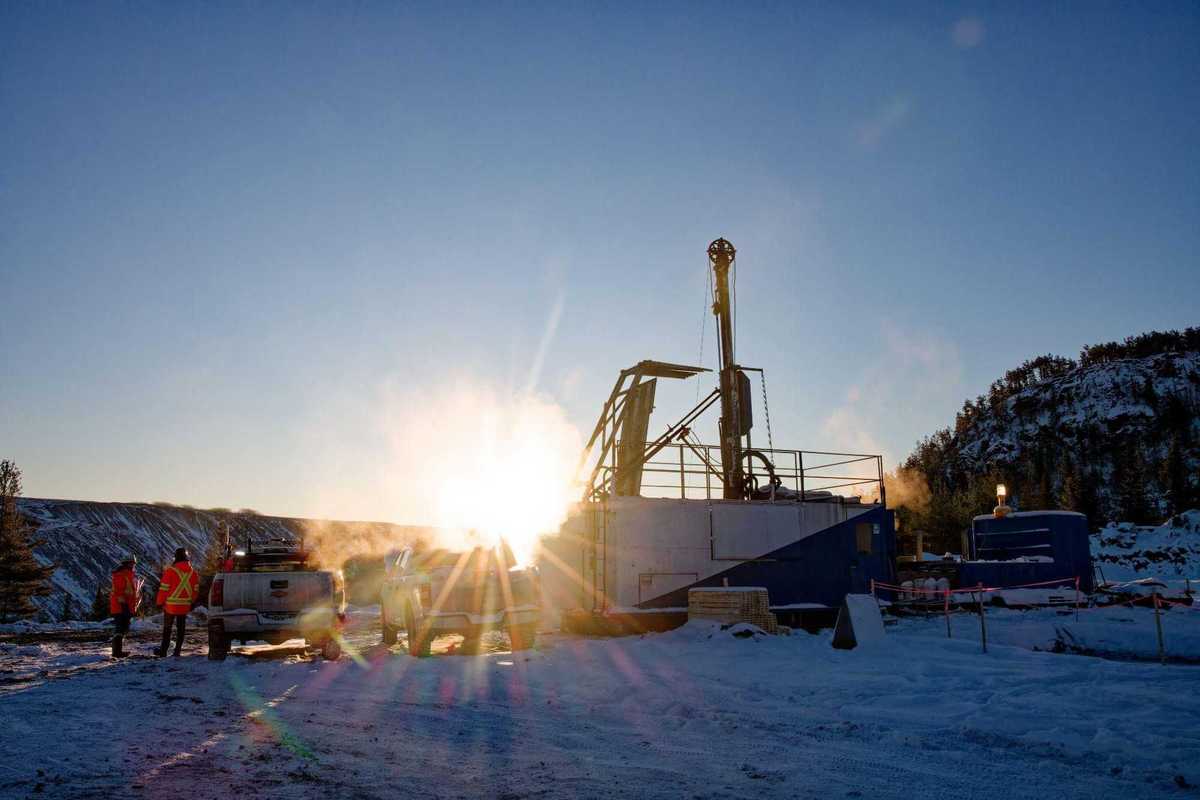
Houston-based cleantech startup Vema Hydrogen has reached a tentative agreement with Canada-based CHARBONE Corp. to develop a hydrogen production and processing plant in Québec. The deal would couple Vema’s production of engineered mineral hydrogen with CHARBONE’s purification, compression and distribution capabilities. Engineered mineral hydrogen, also known as orange hydrogen, is produced underground by accelerating naturally occurring geochemical reactions in iron-rich rock formations. Continue reading.

2. Cemvita reaches breakthrough in sustainable fuel feedstock production
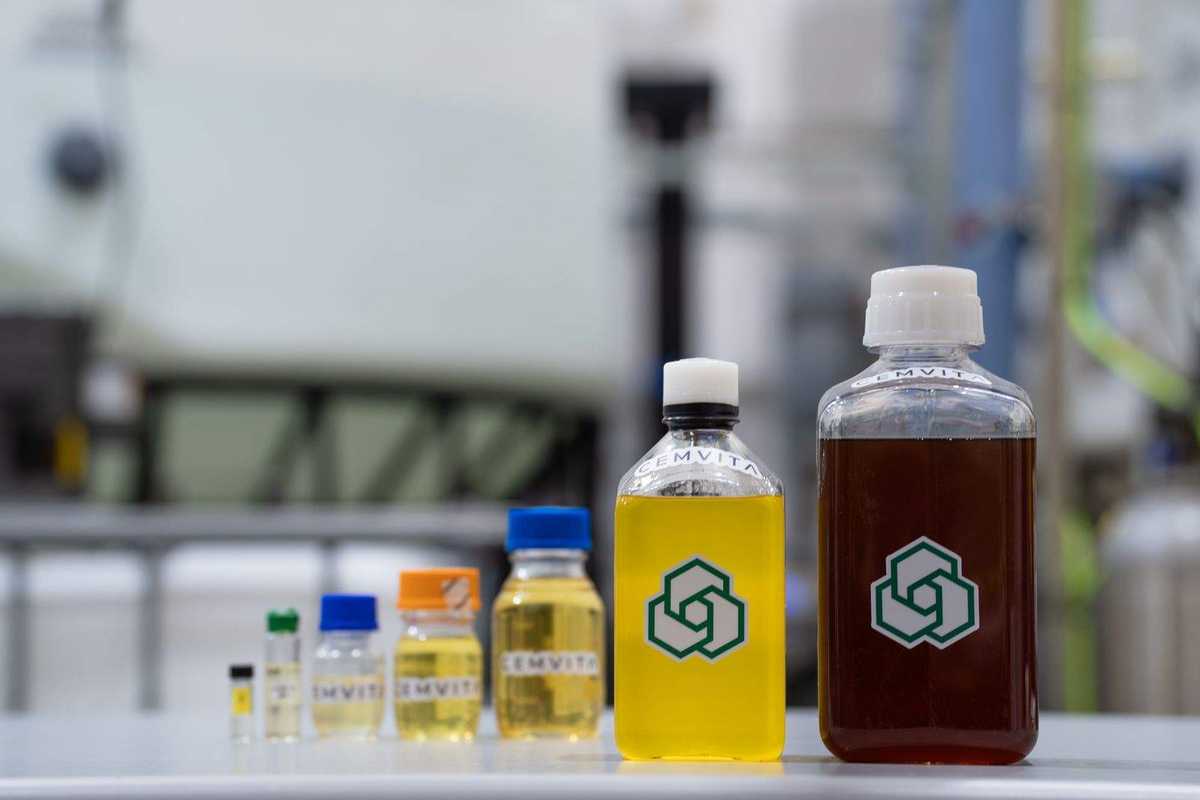
Houston-based biotech company Cemvita announced that it recently reached a critical milestone in the development of its FermOil product, which can be used to create Sustainable Aviation Fuel (SAF) and other renewable fuels at industrial scale. The company completed a 75,000-liter industrial fermentation run at Belgium's Bio Base Europe Pilot Plant. The campaign achieved target technical metrics for the production of FermOil, Cemvita’s renewable natural oil (RNO). Continue reading.

3. Houston chemical co. completes successful field trial of cleaner natural gas processing tech

Houston-based Merichem Technologies has announced successful results from the field trial of its new hydrogen sulfide (H2S) removal technology in the Permian Basin. The technology, known as ECOTREAT, removed more than 99 percent of hydrogen sulfide gas from natural gas streams, or “sour gas,” without producing solid waste during the month-long trial. It also showed sustained performance even when operating above the unit’s design capacity. Continue reading.

4. 6+ must-attend Houston energy transition events for June 2026
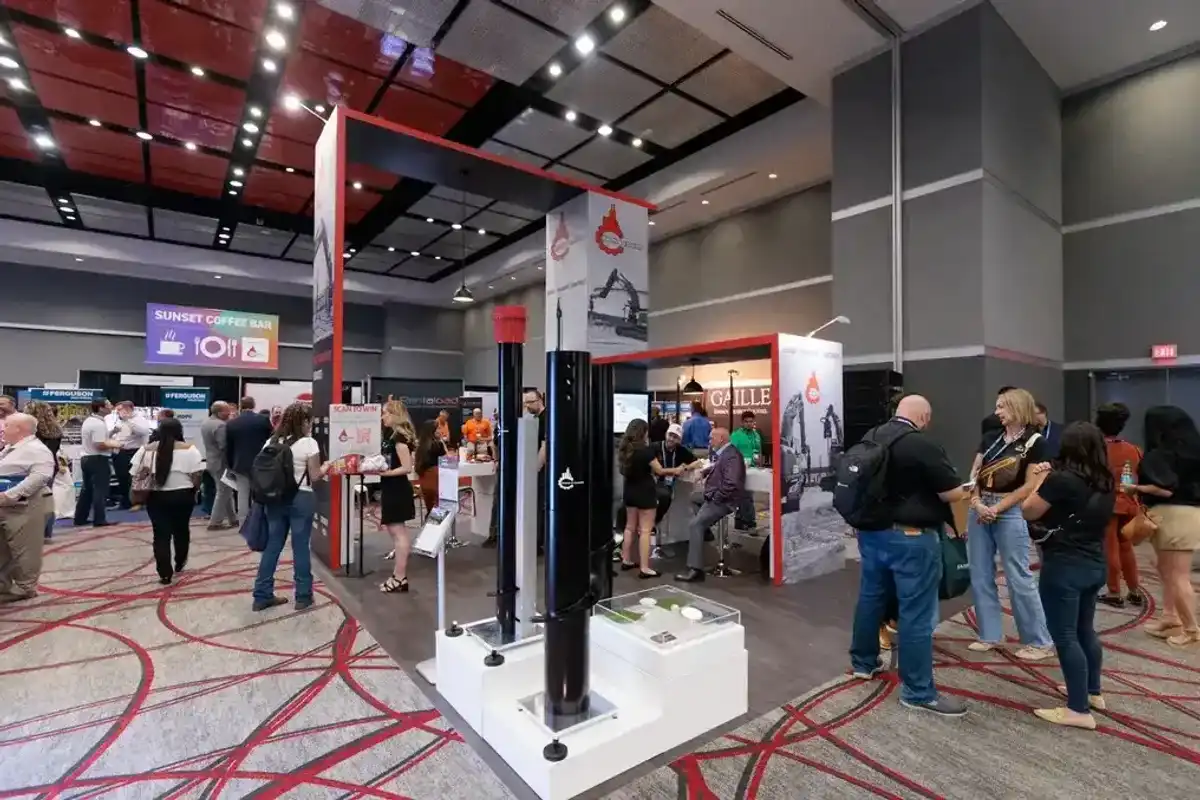
Editor's note: Summer is here, and June brings a slate of must-attend events for those in the energy transition sector. The month continues with EPC Show and InnovateEnergy Week. Mark your calendars and register now. Continue reading.

5. Houston lands 27 Fortune 500 headquarters, led by energy heavyweights

Houston is a giant among U.S. hubs for corporate headquarters. The 2026 Fortune 500 lists 27 companies based in the Houston area, with many energy companies claiming top spots. Houston ties with Chicago for the second-most Fortune 500 headquarters, preceded only by New York City (53). Dallas-Fort Worth is home to 23 Fortune 500 headquarters. Texas leads the nation for Fortune 500 headquarters (57), with California in the No. 2 spot and New York at No. 3. Continue reading.

Trending News

A View From HETI

Four Houston scientists have been awarded funding through the Department of Energy's Genesis Mission. Photos courtesy

The U.S. Department of Energy has named the nearly 300 projects selected under the Trump Administration's Genesis Mission, which aims to address some of the largest science and technology challenges in the country. The group features four projects from Houston universities and companies.

The initiative aims to unite government, industry, academia and philanthropy to lead to breakthroughs in energy, scientific discovery and national security, according to a release.

The selected projects feature 87 led by DOE and National Nuclear Security Administration (NNSA) National Laboratories, 168 led by universities, 19 led by companies and 4 led by nonprofit organizations—totalling 342 participating institutions.

“America has no shortage of bold ideas or talented scientists, and the response to the Genesis Mission proves that,” U.S. Secretary of Energy Chris Wright said in a news release. “The 278 projects selected today represent the very best of our nation’s scientific enterprise. The remarkable number of high-quality proposals we received demonstrates that America’s innovation pipeline is strong, and it points to even greater opportunities for future investment and continued expansion of the Genesis Mission portfolio.”

Twelve Texas-based projects were selected among the 278. The Houston projects and their researchers include:

Caroline Ajo-Franklin

Ajo-Franklin recieved a Phase I grant for her project "Predictive AI to Map Point Mutation Effects on Protein Function: Measurement and Biosynthesis of Isoprenoids." Ajo-Franklin is a professor of biosciences at Rice University, a CPRIT Scholar in Cancer Research and member of the Rice Synthetic Biology Institute. The project aims to accelerate the engineering of microbes that can produce isoprenoids, which are natural compounds that could replace petroleum-derived fuels, solvents and materials.

“This project creates a continuous feedback loop in which AI guides experiments and each experiment generates more detailed data to better hone the AI model,” Ajo-Franklin said in a news release. “In addition, it demonstrates the extraordinary star power Rice has recruited in protein engineering and synthetic biology.”

Anastasios Kyrillidis

Kyrillidis recived a Phase I grant for his project "Cracking the VQA Optimization Bottleneck: AI Methods for Quantum Chemistry and Materials." Kyrillidis is the Noah Harding Associate Professor of Computer Science at Rice and a member of the Ken Kennedy Institute. The project aims to develop AI tools to resolve bottlenecks in quantum computing for chemistry and materials research.

“Our goal is to replace fragile, hand-tuned optimization methods with intelligent systems that can learn from quantum computations while still operating within frameworks that provide strong mathematical guarantees,” Kyrillidis added in the release.

Myoungkyu Lee

Lee received a nearly $750,000 Phase I grant for his project "Physics-Informed AI Surrogates for Turbulent Forced Convection in Energy System." Lee is an assistant professor of mechanical aerospace engineering at the University of Houston. Lee will collaborate with researchers from Lawrence Livermore National Laboratory and University of Pennsylvania on the project and develop artificial intelligence to accelerate the design of materials for advanced nuclear fission and fusion reactors.

“The goal is to develop a tool that runs much faster than today’s most detailed simulations while keeping errors small,” Lee said in a news release. “If successful, the approach could support better heat-transfer predictions for molten-salt reactor design and provide a starting point for studying heat removal in fusion blankets. This is one contribution among many toward reliable, carbon-free energy.”

Amit Padhi

Padhi recieved a grant for his project "Probabilistic Inference of Subsurface Fracture Connectivity for Stimulation Control with Physics-Informed AI." Padhi is a scientific advisor for Halliburton.

The DOE first called for applications for the Genesis Mission in March. At the time, the DOE shared that it would grant approximately $293 million to the selected teams via Phase I awards, ranging from $500,000 to $750,000 for nine-month project periods, and Phase II awards, for $6 million to $15 million over a three-year project period.

Since then, however, the initiative has grown with 15 federal agencies now granting research awards and funding opportunities under the Genesis umbrella. The White House announced this week that it had secured more than $5 billion in federal commitments to expand the initiative.

Trending News