A more sustainable shoe can’t be built on a single material swap. From the hard plastics hidden inside a heel to the material covering a sneaker’s upper, footwear is a collection of components—and each presents a different challenge for companies trying to move away from conventional, petroleum-based materials.
Houston-based Rheom Materials wants to change that equation. The biomaterials company has launched a sustainable footwear platform featuring two of its bio-based alternatives: Benree, a biodegradable plastic designed for hard internal components, and ShoraiDura, a durable leather alternative for footwear uppers.
“A shoe is not one material; it is multiple parts working together as a system. Substituting a single material has never moved the needle,” Rheom founder and CEO Zimri Hinshaw said in a news release. “Rheom wants to make it easier for brands to make a positive impact. By providing an assortment of bio-based materials, brands can change the system, not just a swatch of it.”
Benree is Rheom’s alternative to conventional hard plastics used in footwear construction. The company says it is a 100 percent USDA-certified bio-based, biodegradable material with performance comparable to acrylonitrile butadiene styrene (ABS), a widely used engineering plastic.
The material has passed SATRA testing for high-heel applications with Bared Footwear, an Australian footwear brand.
“At Bared, we're constantly on a journey to remove plastic from our shoes. At the same time, our brand won't compromise on quality for the end customer,” Millie Richards, Bared’s head of sustainability, added in the release. “From samples and testing, Rheom has proven to be solving both of those problems for us. We look forward to seeing how they develop as a company and would love to use them in our shoes.”
Rheom says it is also exploring Benree for additional internal components, including toe puffs and heel counters.
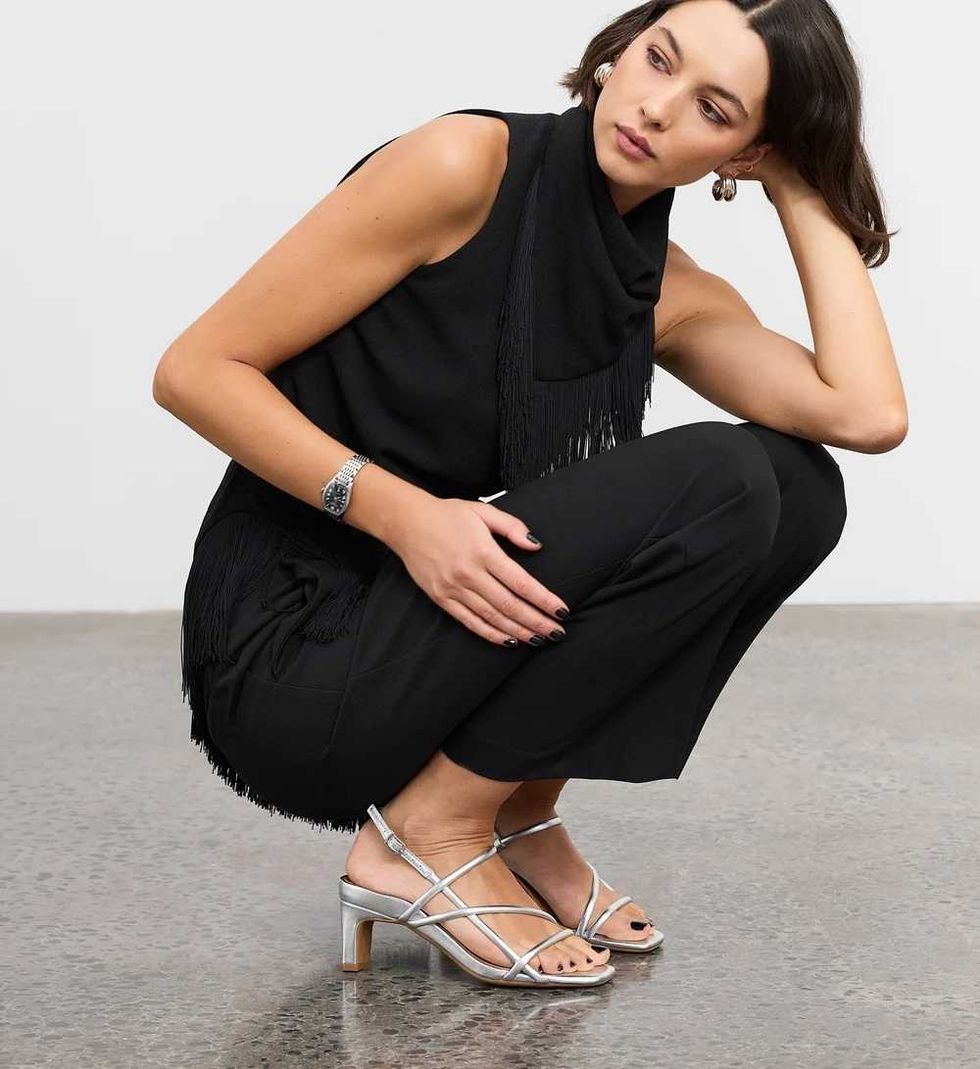 Rheom's Benree material was used for a high-heel prototype. Photo courtesy Rheom Materials
The company’s ShoraiDura material addresses another major part of shoe construction: the upper, which must withstand repeated flexing, friction and wear while maintaining its appearance.
Containing about 80 percent bio-based content, ShoraiDura is engineered as a durable leather alternative for footwear. Rheom says the material’s molecular structure is designed to deliver the strength and durability required for demanding applications.
To demonstrate how the material could be used in finished products, Rheom worked with a Los Angeles-based footwear manufacturer to create two prototypes: an athletic sneaker and a textured skater shoe, both featuring ShoraiDura uppers.
The two offerings reflect the company’s broader strategy. Rather than asking brands to evaluate a single material in isolation, Rheom is positioning its platform as a way to explore alternatives across different parts of footwear construction.
The next step is broader industry adoption. Benree’s testing with Bared Footwear and ShoraiDura’s footwear prototypes offer early examples of how the materials could be applied, while commercial use will depend on manufacturers’ evaluations and product-development decisions.
Rheom Materials is a Houston-based biomaterials company developing bio-based alternatives to petrochemical plastics. Its product portfolio includes Shorai, a leather alternative, and Benree, a hard plastic alternative.
The company debuted Shorai at the Houston Livestock Show and Rodeo in 2025 and showed a bio-based "leather" collection in Milan earlier this year. Read more here.
---
This article originally appeared on our sister site, InnovationMap.








