Junichiro Kono has assumed leadership of the Smalley-Curl Institute at Rice University. Photo via Rice.edu

A distinguished Rice University professor has assumed the reins of a unique institute that focuses on research within nanoscience, quantum science, and materials science.

Junichiro Kono has assumed leadership of the Smalley-Curl Institute, which houses some of the world’s most accomplished researchers across fields including advanced materials, quantum magnetism, plasmonics and photonics, biophysics and bioengineering, all aspects of nanoscience and nanotechnology, and more.

“With his great track record in fostering international research talent — with student exchange programs between the U.S., Japan, Taiwan, China, Singapore and France that have introduced hundreds of students to new cultures and ways of researching science and engineering — Jun brings a wealth of experience in building cultural and technological ties across the globe,” Ramamoorthy Ramesh, executive vice president for research, says in a news release.

Kono is the Karl F. Hasselmann Professor in Engineering, chair of the Applied Physics Graduate Program and professor of electrical and computer engineering, physics and astronomy and materials science and nanoengineering, and is considered a global leader in studies of nanomaterials and light-matter interactions. He currently leads Rice’s top 10-ranked Applied Physics Graduate Program.

Under his leadership, the program is expected to double in size over. By 2029. The Smalley-Curl Institute will also add additional postdoctoral research fellowships to the current three endowed positions.

The Smalley-Curl Institute is named for Nobel Laureates Richard Smalley and Robert Curl (‘54). Earlier in his career, Kono once worked with Smalley on the physical properties of single-wall carbon nanotubes (SWCNTs), which led to the experimental discovery of the Aharonov-Bohm effect on the band structure of SWCNTs in high magnetic fields.

“I am deeply honored and excited to lead the Smalley-Curl Institute,” Kono says in a news release. “The opportunity to build upon the incredible legacy of Richard Smalley and Robert Curl is both a privilege and a challenge, which I embrace wholeheartedly. I’m really looking forward to working with the talented researchers and students at Rice University to further advance our understanding and application of nanomaterials and quantum phenomena. Together, we can accomplish great things.”

Kono succeeds Rice professor Naomi Halas as director of the institute. Halas is the Stanley C. Moore Professor of Electrical and Computer Engineering and the founding director of the Laboratory for Nanophotonics.

Ad Placement 300x100
Ad Placement 300x600

CultureMap Emails are Awesome

Eclipse Energy lands Weatherford investment to scale clean hydrogen tech

clean energy collab

Oil and gas giant Weatherford International (NASDAQ: WFRD) has made a capital investment for an undisclosed amount in Eclipse Energy as part of a collaborative partnership aimed at scaling and commercializing Eclipse's clean fuel technology.

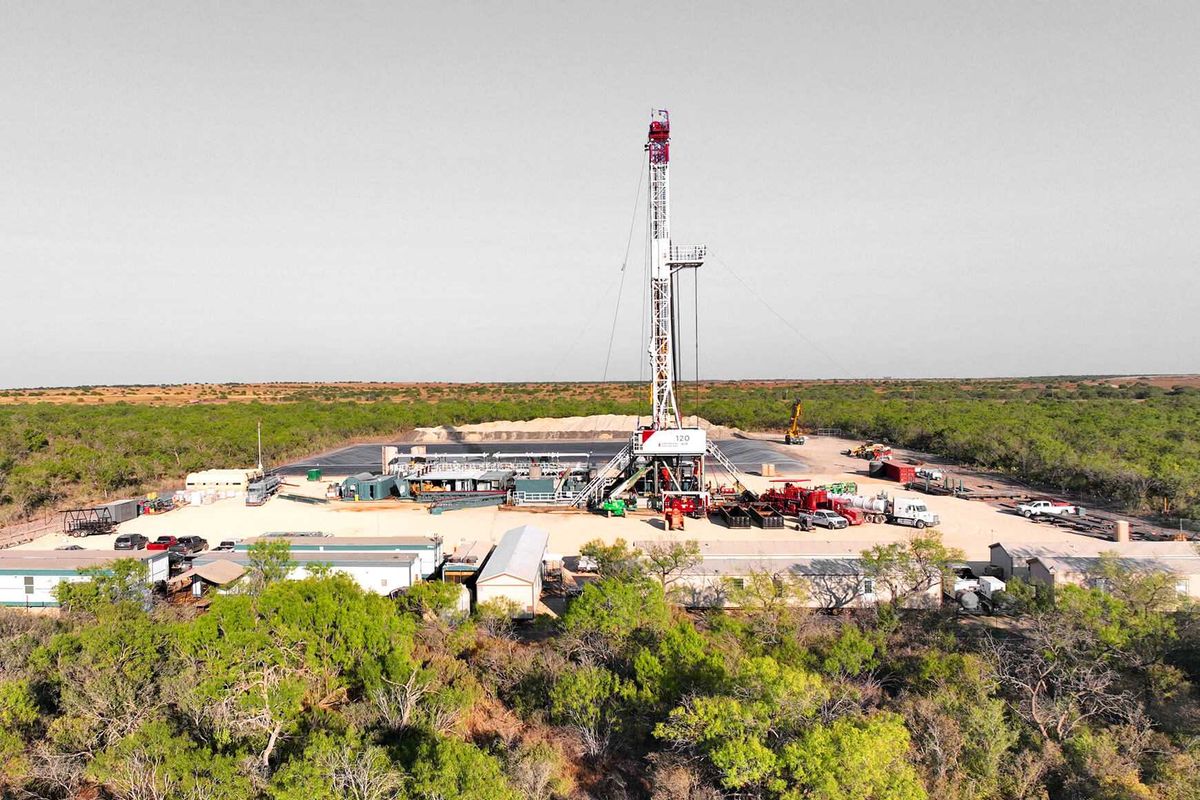
According to a release, joint projects from the two Houston-based companies are expected to launch as soon as January 2026. The partnership aims to leverage Weatherford's global operations with Eclipse Energy's pioneering subsurface biotechnology that converts end-of-life oil fields into low-cost, sustainable hydrogen sources.

“We strongly believe the subsurface is the most overlooked climate asset,” Prabhdeep Singh Sekhon, CEO of Eclipse Energy, said in the release. “This partnership demonstrates how traditional oilfield expertise and frontier biotechnology can come together to transform the energy transition. Weatherford’s global reach and deep technical knowledge will accelerate our ability to scale our low-carbon technology rapidly and cost-effectively.”

Eclipse Energy, previously known as Gold H2, completed its first field trial this summer, demonstrating subsurface bio-stimulated hydrogen production. According to the company, its technology could yield up to 250 billion kilograms of low-carbon hydrogen, and it could also extend "beyond hydrogen, laying the foundation for the next generation of subsurface clean energy fuels."

Last month, Eclipse Energy won in the Energy Transition Business category at the 2025 Houston Innovation Awards. The company closed an $8 million series A this year and has plans to raise another round in 2026.

CenterPoint and partners launch AI initiative to stabilize the power grid

AI infrastructure

Houston-based utility company CenterPoint Energy is one of the founding partners of a new AI infrastructure initiative called Chain Reaction.

Software companies NVIDIA and Palantir have joined CenterPoint in forming Chain Reaction, which is aimed at speeding up AI buildouts for energy producers and distributors, data centers and infrastructure builders. Among the initiative’s goals are to stabilize and expand the power grid to meet growing demand from data centers, and to design and develop large data centers that can support AI activity.

“The energy infrastructure buildout is the industrial challenge of our generation,” Tristan Gruska, Palantir’s head of energy and infrastructure, says in a news release. “But the software that the sector relies on was not built for this moment. We have spent years quietly deploying systems that keep power plants running and grids reliable. Chain Reaction is the result of building from the ground up for the demands of AI.”

CenterPoint serves about 7 million customers in Texas, Indiana, Minnesota and Ohio. After Hurricane Beryl struck Houston in July 2024, CenterPoint committed to building a resilient power grid for the region and chose Palantir as its “software backbone.”

“Never before have technology and energy been so intertwined in determining the future course of American innovation, commercial growth, and economic security,” Jason Wells, chairman, president and CEO of CenterPoint, added in the release.

In November, the utility company got the go-ahead from the Public Utility Commission of Texas for a $2.9 billion upgrade of its Houston-area power grid. CenterPoint serves 2.9 million customers in a 12-county territory anchored by Houston.

A month earlier, CenterPoint launched a $65 billion, 10-year capital improvement plan to support rising demand for power across all of its service territories.