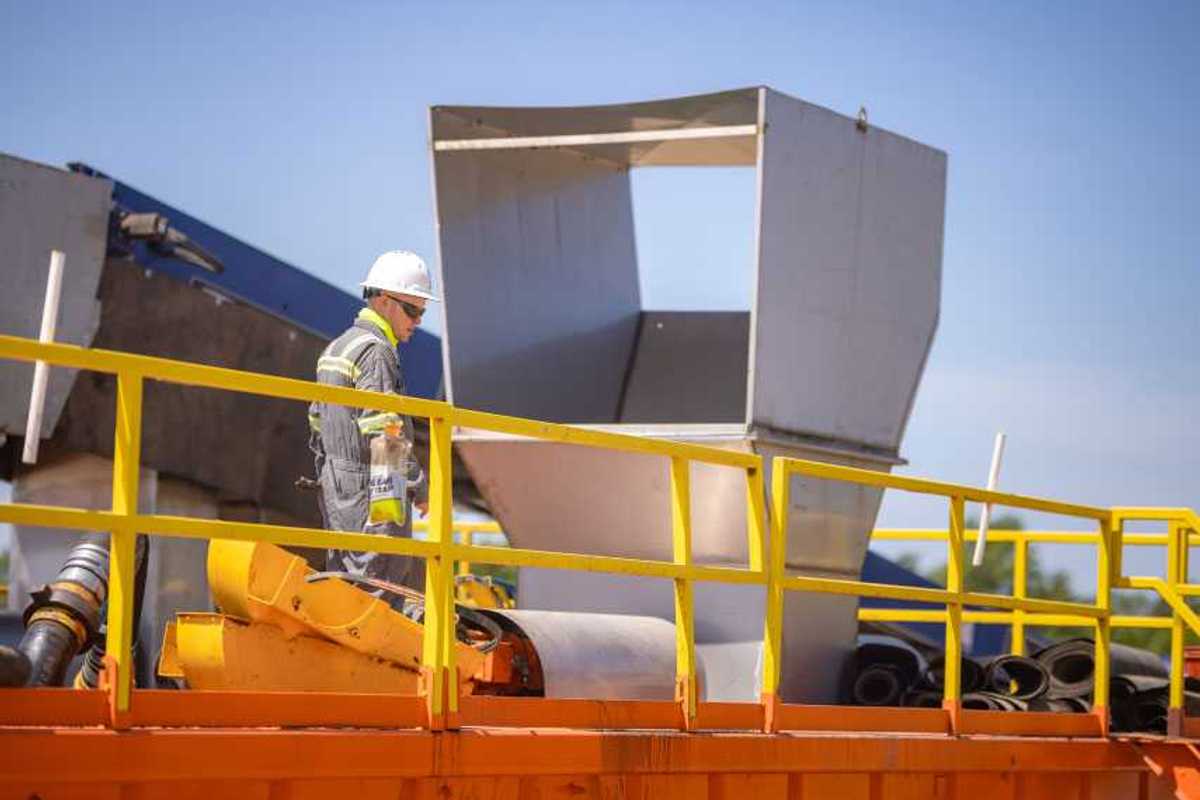
Collide has rolled out RIGGS, a large language model for energy professionals. Photo via Getty Images

Houston-based Collide is looking to solve AI issues in the energy industry from within.

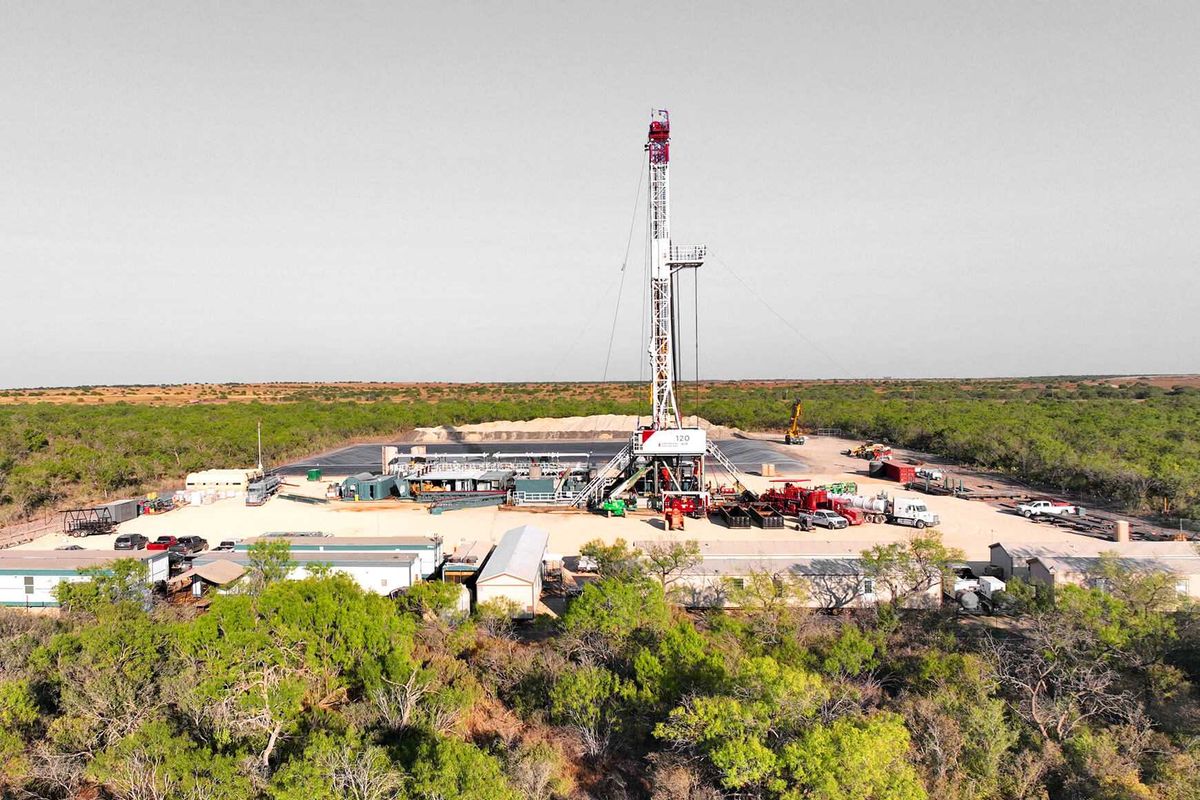
Co-founded by former oil roughneck Collin McLelland, the company has developed AI software for operators and field teams, shaped by firsthand oilfield experience. Its AI-native platform “retrieves and synthesizes data from authoritative sources to deliver accurate, cited, and energy-focused insights to oil and gas professionals,” according to the company.

“Oil and gas has a graveyard full of technology that was technically impressive and operationally useless,” McLelland tells Energy Capital. “The reason is almost always the same: the people who built it didn't understand what they were actually solving for. When you're an outsider, you see workflows and try to automate them. When you're an insider, you understand why those workflows exist—the regulatory constraints, the physical realities, the liability concerns, the trust dynamics between operators and service companies.”

Collide’s large language model, known as RIGGS, performed well in recent benchmarking results when taking a standardized petroleum engineering (SPE) exam, the company reports. The exam assesses understanding from conceptual terminology to complex mathematical problem-solving.

According to Collide, RIGGS achieved a score of 67.5 percent on a 40-question subset of the SPE petroleum engineering exam, outperforming other large language models like Grok 4 (62.5 percent), Claude Sonnet 4.5 (52.5 percent) and GPT 5.1 (4 percent).

RIGGS completed the test in 15 minutes, while Grok took two hours. Collide hopes over the next few months, RIGGS will receive a score between 75 percent to 80 percent accuracy.

The software could potentially help oil and gas companies produce accurate outputs and automate trivial workflows, which can open up valuable time for engineers and teams to work on other pressing matters, according to McLelland.

“Collide exists because we sat in those seats — we were the engineers, the operators, the field guys,” he says. ”RIGGS scoring higher on the PE exam versus the frontier labs isn't a party trick. It's evidence that the model understands petroleum engineering the way a petroleum engineer does, because it was built by people who do.”

RIGGS was trained on Collide’s Spindletop hardware and is supported by a vast library of information, as well as a reasoning engine and validation layer that uses logic to solve problems.

“Longer term, we see RIGGS as the intelligence layer that sits underneath every operator's workflow — not a chatbot you open in a browser, but something embedded in the tools engineers already use,” McLelland says. “The goal is to give every engineer the knowledge and pattern recognition of a 30-year veteran, on demand."

According to McLelland, Collide is already building toward reservoir analysis and production optimization, automated regulatory compliance (Railroad Commission filings, W-10s, G-10s), workover report generation, and engineering decision support in the field for near-term use cases. In March, Collide and Texas-based oil and gas operator Winn Resources announced a collaboration to automate the time-intensive process of filing monthly W-10 and G-10 forms with the Texas Railroad Commission, completing what’s normally a multi-hour task in under 30 minutes. Collide reports that Winn’s infrastructure now automates regulatory filings and provides real-time visibility into data gaps, which has reduced processing time by over 95 percent.

“Before Collide, I'd spend hours manually keying in filings,” Buck Crum, director of operations, said in a news release. “(In March), we had 50 wells to file and I was done in 20 minutes. It does the majority of the heavy lifting while keeping me in control. That human-in-the-loop approach saves meaningful time and gives us greater confidence in our compliance and reporting.”

Collide was originally launched by Houston media organization Digital Wildcatters as “a professional network and digital community for technical discussions and knowledge sharing.” After raising $5 million in seed funding led by Houston’s Mercury Fund last year, the company said it would shift its focus to rolling out its enterprise-level, AI-enabled solution.

Ad Placement 300x100
Ad Placement 300x600

CultureMap Emails are Awesome

Houston startup raises $12M to commercialize quantum energy chip technology

seed funding

Houston-based Casimir has emerged from stealth with a $12 million seed round to commercialize its quantum energy chip.

The round was led by Austin-based Scout Ventures. Lavrock Ventures, Cottonwood Technology, Capital Factory, American Deep Tech, and Tim Draper of Draper Associates also participated in the round. The oversubscribed round exceeded the company’s original $8 million target, according to a news release.

Casimir’s semiconductor chips can generate power from quantum vacuum fields without the need for batteries or charging. The company plans to commercialize its first-generation MicroSparc chip by 2028.

The MicroSparc chip measures 5 millimeters by 5 millimeters and is designed to produce 1.5 volts at 25 microamps, comparable to a small rechargeable battery, without degradation and no replacement cycle.

“Casimir represents exactly the kind of breakthrough dual-use technology Scout Ventures was built to back,” Brad Harrison, founder and managing partner at Scout Ventures, said in the release. “This is based on 100 years of science and we’re finally approaching a commercial product … We’re proud to lead this round and support Casimir’s journey from applied science to deployed technology.”

Casimir says it aims to scale its technology across the ”full power spectrum,” including large-scale energy systems that can power homes, commercial infrastructures and electric vehicles.

Casimir's scientific work has been supported by DARPA-funded nanofabrication research and its technology was incubated at the Limitless Space Institute (LSI). LSI is a nonprofit that works to innovate interstellar travel and was founded by Kam Ghaffarian. Technology investor and serial entrepreneur Ghaffarian has been behind companies like X-energy, Intuitive Machines, Axiom Space and Quantum Space.

Harold “Sonny” White, founder and CEO of Casimir, believes the technology can power devices for years without replacements.

“Millions of devices will operate for years without a battery ever needing to be replaced or recharged because we have engineered a customized Casimir cavity into hardware capable of producing persistent electrical power,” White added in the release. “I spent nearly two decades at NASA studying how we power humanity’s future. That work led me to the Casimir effect and the quantum vacuum, where new tools have allowed us to build on a century of scientific knowledge and bring abundant power to the world.”

---

This article originally appeared on our sister site, InnovationMap.com.

Electric truck charging network expands to Houston-Dallas freight corridor

electric trucking

Greenlane Infrastructure, an electric public charging station developer and operator, is expanding outside of its home state of California and into Texas.

The Santa Monica-based company plans to launch its high-power charging sites along the Dallas–Houston I-45 corridor, which is one of the highest-volume commercial trucking routes in the country, according to a news release from Greenlane.

The sites will feature 6-8 pull-through lanes with chargers supporting combined charging system (CCS) and megawatt charging system (MCS) connectors that allow electric truck drivers to recharge their vehicles during standard rest periods. They will also offer tractor parking and charging, as well as operations that will allow for overnight stops.

Drivers can reserve chargers in advance, monitor charging activity in real time, and manage billing from the Greenlane Edge platform.

“Our customers are making commitments to electrify their fleets, and they need a charging network that can grow alongside them,” Patrick Macdonald-King, CEO of Greenlane, said in the release. “This is the first leg of the Texas triangle, one of the more important freight arteries in the country, so bringing high-power charging there is the next logical step in building a network that serves how freight moves across America.”

Greenlane is also expanding across the West Coast, with five locations under development in California and Nevada. It opened its flagship Greenlane Center in Colton, California, in April 2025. The company plans to open locations in Blythe, California, and Port of Long Beach this year.

Greelane was founded in 2023 as a joint venture between Daimler Truck North America, NextEra Energy Resources and BlackRock. It has secured partnerships with electric long-haul truck developer Windrose Technology, Velocity Truck Centers and Volvo Trucks North America.