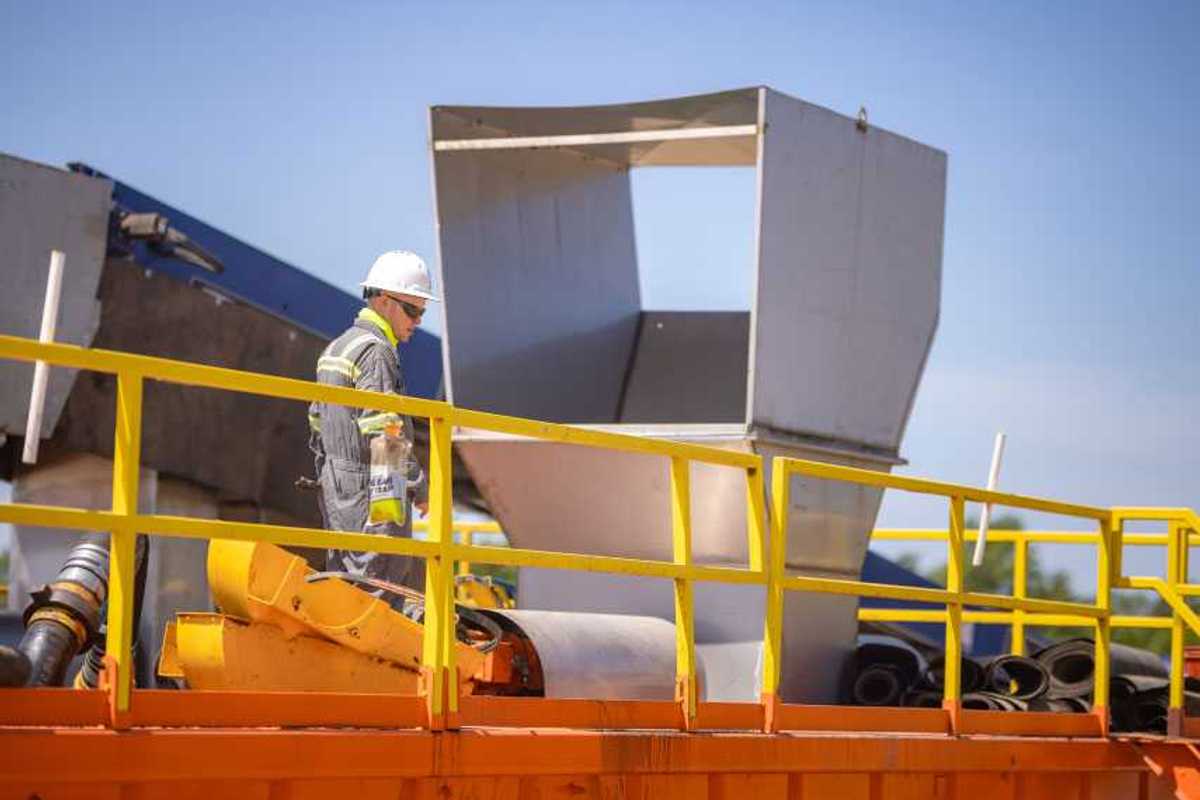
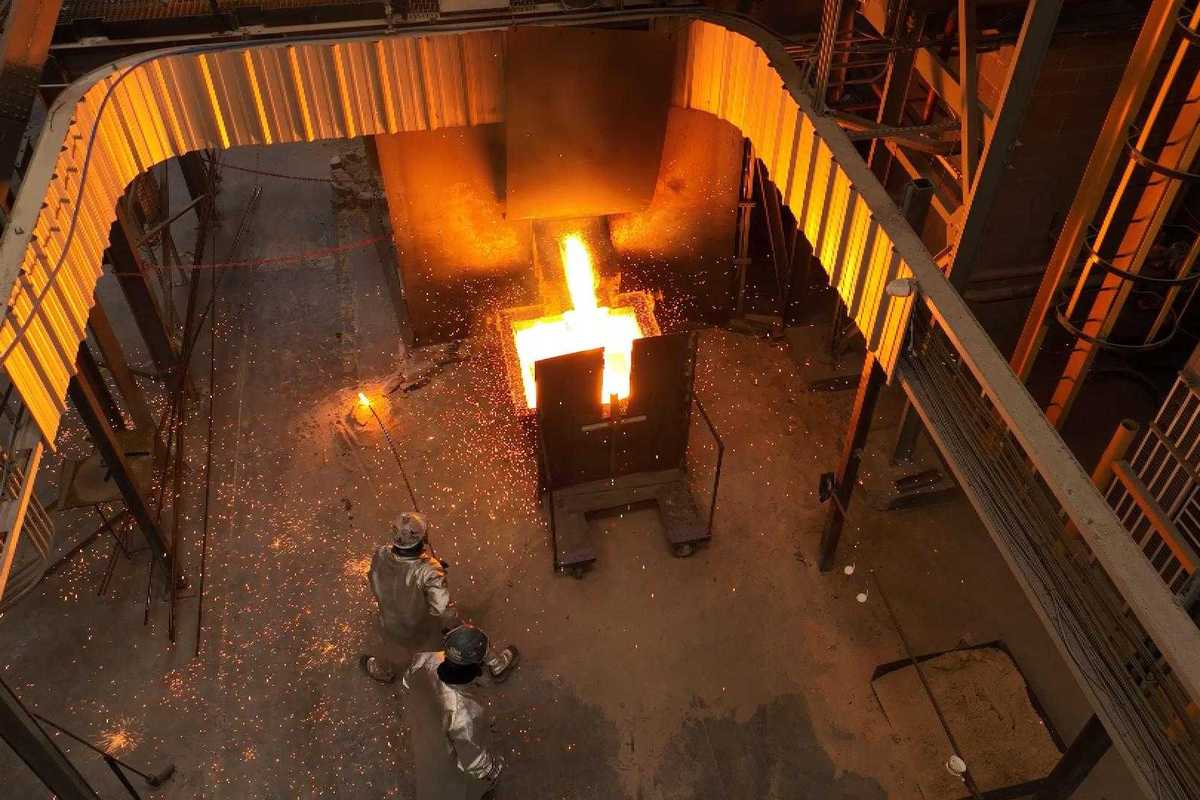
Quantum Power Systems took home the top TEX-E prize at this year's Energy Venture Day pitch competition during CERAWeek. Photo via LinkedIn

Twelve teams from around the country, including several from Houston, took home top honors at this year's Energy Venture Day and Pitch Competition at CERAWeek.

The fast-paced event, held March 25, put on by Rice Alliance, Houston Energy Transition Initiative and TEX-E, invited 36 industry startups and five Texas-based student teams focused on driving efficiency and advancements in the energy transition to present 3.5-minute pitches before investors and industry partners during CERAWeek's Agora program.

The competition is a qualifying event for the Startup World Cup, where teams compete for a $1 million investment prize.

PolyJoule won in the Track C competition and was named the overall winner of the pitch event. The Boston-based company will go on to compete in the Startup World Cup held this fall in San Francisco.

PolyJoule was spun out of MIT and is developing conductive polymer battery technology for energy storage.

Rice University's Resonant Thermal Systems won the second-place prize and $15,000 in the student track, known as TEX-E. The team's STREED solution converts high-salinity water into fresh water while recovering valuable minerals.

Teams from the University of Texas won first and second place in the TEX-E competition, bringing home $25,000 and $10,000, respectively. The student winners were:

Companies that pitched in the three industry tracts competed for non-monetary awards. Here are the companies named "most-promising" by the judges:

Track A | Industrial Efficiency & Decarbonization

Track B | Advanced Manufacturing, Materials, & Other Advanced Technologies

  • First: Licube, based in Houston
  • Second: ZettaJoule, based in Houston and Maryland
  • Third: Oleo

Track C | Innovations for Traditional Energy, Electricity, & the Grid

The teams at this year's Energy Venture Day have collectively raised $707 million in funding, according to Rice. They represent six countries and 12 states. See the full list of companies and investor groups that participated here.

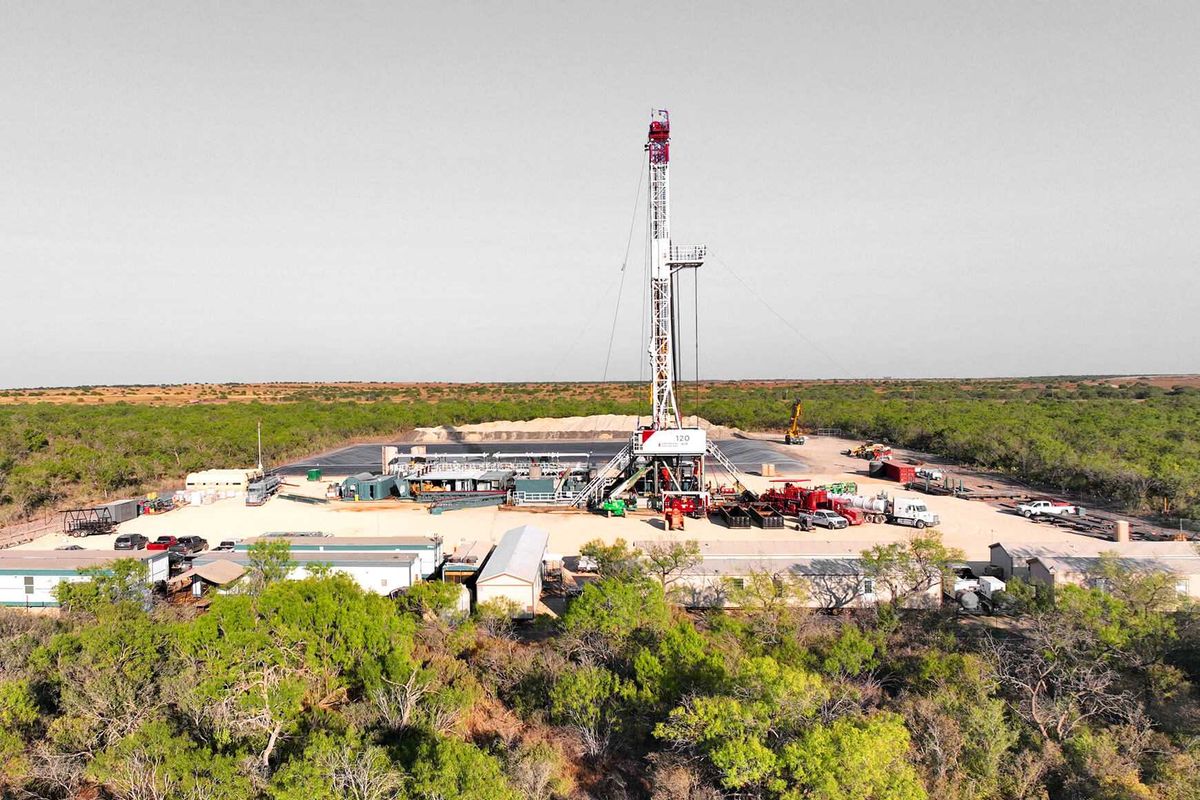
Twelve local startups have joined Greentown Houston, along with others from around the world. Photo courtesy Greentown Labs.

40+ climatetech startups join Greentown, including a dozen from Houston

green team

More than 40 climatetech startups joined the Greentown Labs Houston community in the second half of 2025. Twelve hail from the Bayou City.

The companies are among a group of nearly 70 that joined the climatetech incubator, which is co-located in Houston and Boston, in Q3 and Q4.

The new companies that have joined the Houston incubator specialize in a variety of clean energy applications, from green hydrogen-producing water-splitting cycles to drones that service wind turbines.

The local startups that joined Greentown Houston include:

  • Houston-based Wise Energie, which delivers turnkey microgrids that blend vertical-axis wind, solar PV, and battery storage into a single, silent system.
  • The Woodlands-based Resollant, which is developing compact, zero-emissions hydrogen and carbon reactors to provide low-cost, scalable clean hydrogen and high-purity carbon for the energy and manufacturing sectors.
  • Houston-based ClarityCastle, which designs and manufactures modular, soundproof work pods that replace traditional drywall construction with reusable, low-waste alternatives made from recycled materials.
  • Houston-based WattSto Energy, which manufactures vanadium redox flow batteries to deliver long-duration storage for both grid-scale projects and off-grid microgrids.
  • Houston-based AMPeers, which delivers advanced, high-temperature superconductors in the U.S. at a fraction of traditional costs.
  • Houston-based Biosimo, which is developing bio-based platform chemicals, pioneering sustainable chemistry for a healthier planet and economy.
  • Houston-based Ententia, which offers purpose-built, generative AI for industry.
  • Houston-based GeoKiln Energy Innovation, which is developing a new way to produce clean hydrogen by accelerating natural geologic reactions in iron-rich rock formations using precision electrical heating.
  • Houston-based Timbergrove, which builds AI and IoT solutions that connect and optimize assets—boosting visibility, safety, and efficiency.
  • Houston-based dataVediK, which combines energy-domain expertise with advanced machine learning and intelligent automation to empower organizations to achieve operational excellence and accelerate their sustainability goals.
  • Houston-based Resonant Thermal Systems, which uses a resonant energy-transfer (RET) system to extract critical minerals from industrial and natural brines without using membranes or grid electricity.
  • Houston-based Torres Orbital Mining (TOM),which develops autonomous excavation systems for extreme environments on Earth and the moon, enabling safe, data-driven resource recovery and laying the groundwork for sustainable off-world industry.

Other startups from around the world joined the Houston incubator in the same time period, including:

More than 100 startups joined Greentown this year, according to an end-of-year reflection shared by Greentown CEO Georgina Campbell Flatter.

Flatter joined Greentown in the top leadership role in February 2025. She succeeded former CEO and president Kevin Knobloch, who stepped down in July 2024.

"I moved back to the United States in March 2025 after six years overseas—2,000 miles, three children, and one very patient husband later. Over these months, I’ve had the chance to hear from the entrepreneurs, industry leaders, investors, and partners who make this community thrive. What I’ve experienced has left me brimming with urgent optimism for the future we’re building together," she said in the release.

According to Flatter, Greentown alumni raised more than $2 billion this year and created more than 3,000 jobs.

"Greentown startups and ecosystem leaders—from Boston, Houston, and beyond—are showing that we can move further and faster together. That we don’t have to choose between more energy or lower emissions, or between increasing sustainability and boosting profit. I call this the power of 'and,'" Flatter added. "We’re working for energy and climate, innovation and scale, legacy industry and startups, prosperity for people and planet. The 'and' is where possibility expands."

Ad Placement 300x100
Ad Placement 300x600

CultureMap Emails are Awesome

Japanese company plans $357M solar manufacturing plant in Houston area

coming soon

Japanese solar manufacturing company TOYO Co. Ltd. plans to invest $357 million to bring a 1.5-gigwatt solar cell manufacturing facility to the Houston area.

TOYO’s latest state-of-the-art facility will be co-located at its existing solar module site in Humble, according to a news release from the company. It will produce heterojunction (HJT) solar cells, which are known to be more durable and efficient with a higher heat threshold.

TOYO reports that the new facility will create 400 full-time manufacturing jobs. The project is expected to be completed in 20 months, which includes an initial pilot production.

"Expanding into domestic cell manufacturing is the natural next step in our commitment to creating an integrated onshore solar supply chain from polysilicon to panels," Takahiko Onozuka, chairman and CEO of TOYO, said in the news release. "Co-locating 1.5 GW of HJT cell capacity at our Houston module site significantly optimizes our capital allocation and infrastructure spend.”

TOYO entered the Houston market in 2024 through its acquisition of a majority stake in Solar Plus Technology Texas LLC.

Earlier this year, it began producing solar modules at its 567,140-square-foot plant in Lovett Industrial’s Nexus North Logistics Park. At the time, the company said it planned to expand manufacturing capacity to 6.5 gigawatts.

"The new cell plant reflects TOYO's long-term strategy to build a fully FEOC-compliant domestic manufacturing platform focused on serving the needs of the U.S. utility-scale solar market," Rhone Resch, TOYO's chief strategy officer, added in the release. "By producing premium solar products in the United States, we will be well positioned to meet the market's evolving domestic content requirements while strengthening supply chain security and reliability. Looking ahead, we believe HJT is the optimal technology platform for integrating next-generation perovskite solar cells, which we expect will drive the next major advancement in solar conversion efficiency and support TOYO's long-term technology roadmap.”

New survey reveals concerns over AI data center growth in Houston

data findings

A new report out of the University of Houston shows that area residents remain wary of the long-term effects of operating data centers.

The recent survey from the University of Houston’s latest SPACE City Panel, conducted by the Center for Public Policy at the Hobby School of Public Affairs, shows that while 85 percent of Houston-area residents use AI, nearly 63 percent oppose the construction of AI data centers within 1 mile of their homes.

Respondents’ concerns centered around data centers’ high energy demand and the area’s power grid reliability. According to the survey, 32 percent of residents who oppose local data center projects would be more likely to support the centers if they relied on renewable energy over fossil fuels.

“Respondents understand that AI can bring economic and educational benefits, but they are also concerned about the physical infrastructure needed to fuel AI, especially data centers,” Soran Mohtadi, post-doctoral fellow at the Hobby School and a researcher on the report, said in a news release. “This physical infrastructure demands more electricity and water, leading to environmental impacts.”

Experts estimate that 6.5 gigawatts of data center capacity will be added to the Texas grid by 2030. And Houston’s data center capacity is predicted to more than double by 2028.

The Electric Reliability Council of Texas also projects electricity demand could reach 218 gigawatts by 2031, which would be more than double the record peak set in August 2023. Data centers are expected to account for 86 gigawatts of that new demand.

Survey respondents also said they are concerned about the state's future water supply, given the large amounts of water that data centers need to stay cool.

In terms of who’s responsible for that issue, 57.6 percent of respondents said they put the onus on Texas lawmakers, while 31.5 percent say tech companies should be responsible.

Additionally, more than 75 percent of respondents believed that data center developers and technology companies—not residents—should bear the cost of infrastructure upgrades to support data centers.

“Every decision legislators make has implications on residents’ everyday lives and local infrastructure now and in the future,” Maria P. Perez Arguelles, lead researcher on the report and research assistant professor at the Hobby School, added in the news release. “This issue is going to become more important in years to come, so this is just the beginning.”

Read the full report here.

---

This article originally appeared on our sister site, EnergyCapitalHTX.com.