Experts: Houston's VC ecosystem has set the foundation — now we need scale
guest column
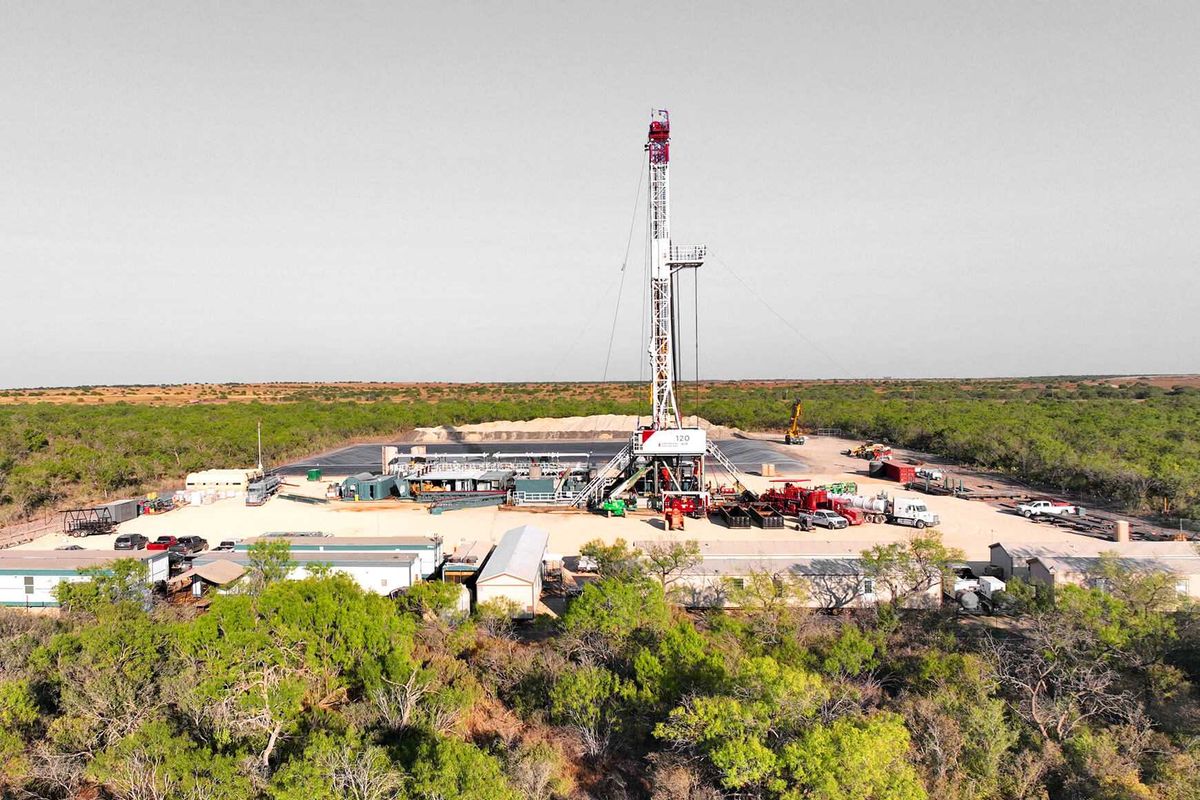
Fervo Energy went public earlier this summer. The Houston geothermal company priced its IPO at $27 per share, raised $1.89 billion, and opened the next morning at a market capitalization north of $10 billion. By most measures, it is the largest venture-backed cleantech IPO in history and an unambiguous win for Houston. It’s also a useful moment to look at where Houston's venture ecosystem stands and where it can go. The highlight: Houston's venture ecosystem has real foundations and, with increased company formation activity, can grow into the scale our city's ambitions deserve.
A Houston energy story in the national recovery
The recent uptick in Houston venture activity follows national trends. U.S. venture deal count contracted roughly 22 percent from its 2021 peak through 2024 before rebounding to about 16,700 rounds in 2025. Houston's 23 percent increase in VC funding from 2023 to 2024 is part of a national recovery of comparable magnitude over the same time window.
The energy sector is where Houston exhibits unique trends—and where the story turns clearly positive. (Houston's strong health and space sectors deserve their own separate consideration.) By deal count, energy-related rounds have accounted for 15 to 20 percent of Houston activity, roughly consistent over the past few years.
By capital, energy's share surged from about 14 percent in 2023 to over 60 percent in 2025, driven by a small number of large Houston-headquartered rounds, primarily in geothermal and related technologies. Fervo is the obvious anchor, but Sage Geosystems, Quaise Energy, Zeta Energy, Vaulted Deep, Applied Carbon and Mariana Minerals have all closed meaningful rounds. Houston is concentrated and accelerating as an energy capital market, an invaluable position to build upon.
From foundation to scale
The institutional pieces are in place. Greentown Labs, Activate, the Ion and others have built sector-specialized infrastructure most cities would struggle to assemble. Fervo itself is an alum of both Activate and Greentown Labs. Mercury Fund closed its $160 million Fund V, its largest ever. Houston Angel Network, GOOSE Capital, Fathom Fund, and broader pre-seed and seed capital coverage are here. The Houston $10 million-plus Series A list now includes 40 rounds since 2021, which break roughly into two eras. While 2021 to 2022 was biotech-heavy, with companies like Sporos Bioventures, RadioMedix, Cellenkos and Coya Therapeutics, 2024 to 2025 has tilted clearly toward energy, climate, and critical minerals, with Vaulted Deep, Applied Carbon, Mariana Minerals, Sage Geosystems and Ignis H2 Energy among them.
What’s less developed is the volume of seed-stage companies flowing into that capital. Imagine a dozen more Fervos coming out of that infrastructure over the next decade, each generating jobs, recycled founder capital, and the next wave of operators and angel investors. That is the kind of opportunity Houston has within reach if we build the company-formation pipeline to feed it. To be relevant on the national stage as a venture market, and to drive an economy the size of Houston's into the 2030s, the city needs to be doing closer to 20 Series A rounds per month rather than per year. That throughput implies roughly 1,000 seed rounds per year, feeding the funnel at a 20 percent to 30 percent graduation rate. Reaching such throughput depends on how many new founders Houston produces and how quickly our innovation ecosystem can help them achieve lift-off.
Houston in context
The comparative picture brings the scaling challenge into focus. Between 2021 and 2024, Houston-area startups closed between 126 and 153 disclosed venture rounds per year, against a national count between 9,854 and 14,125. That places Houston at a little over 1 percent of the U.S. deal count. For comparison, Austin ran about three times Houston's deal count each year.
At the Series A level, Houston closed between 12 and 24 rounds in any given year. The median Houston Series A across the period was about $10.7 million, compared with $15.4 million in San Francisco. Houston founders are raising fewer and smaller Series A rounds than founders in peer metros, which points directly to where Houston has the most room to grow.
The unicorn picture tells the same story. From 2021 through 2025, the U.S. produced 590 venture-backed unicorns. Four were Houston-based: Solugen and Axiom Space in 2021, Cart.com in 2023, and Fervo Energy in 2024. Adding HighRadius from 2020 brings Houston's all-time total to five. Austin added 19 over the same five-year window. The path from here is to make Houston's entries on lists like these less the exception and more the rule.
Where this leads
Houston has a real opportunity to become the deepest, most credible energy and climate capital market in the country, with the company formation, talent and operator density to support it. The data shows the foundation is already in place. Fervo, Solugen and the growing roster of energy-adjacent Series A graduates are proof. Fervo's IPO is the first of what should be many. Houston has not had a venture-backed cleantech liquidity event of this scale before, and the city now has one to reference, recruit against and build on. With increased company formation at the seed and pre-seed stages, a Fervo-scale outcome need not be a generational event in Houston, but instead, it can become part of a chain reaction powering the city's economy.
---
Stephanie T. Schmidt, PhD, is the founder of a stealth startup, a Venture Fellow at Energy Transition Ventures, and an Executive MBA candidate at Rice University's Jones Graduate School of Business. Lawson Gow is the Chief Operating Officer of Greentown Labs. The full Houston VC landscape report is available at Energy Transition Ventures and CleanTech.Org.
Sources: Crunchbase, PitchBook-NVCA, CartaThis guest column originally appeared on our sister site, InnovationMap.com.
- Fervo taps into its hottest-ever geothermal reservoir ›
- Fervo Energy officially files for initial public offering ›
- Fervo Energy bumps up IPO target to $1.82B ›
- Houston unicorn startup named North American Company of the Year by cleantech firm ›
- Fervo Energy selects Baker Hughes to supply geothermal tech for power plants ›
- Fervo Energy spotlighted by Bill Gates as geothermal’s global growth driver ›