








Editor's note: As the year comes to a close, EnergyCapital is looking back at the year's top stories in Houston energy transition. While the responsibility of moving the needle on sustainability doesn't always fall to the shoulders of nonprofit organizations, five of the sector's top news stories from this year resonated with readers — be sure to click through to read the full story.
Nonprofit harvests solar energy to serve Houston's food deserts
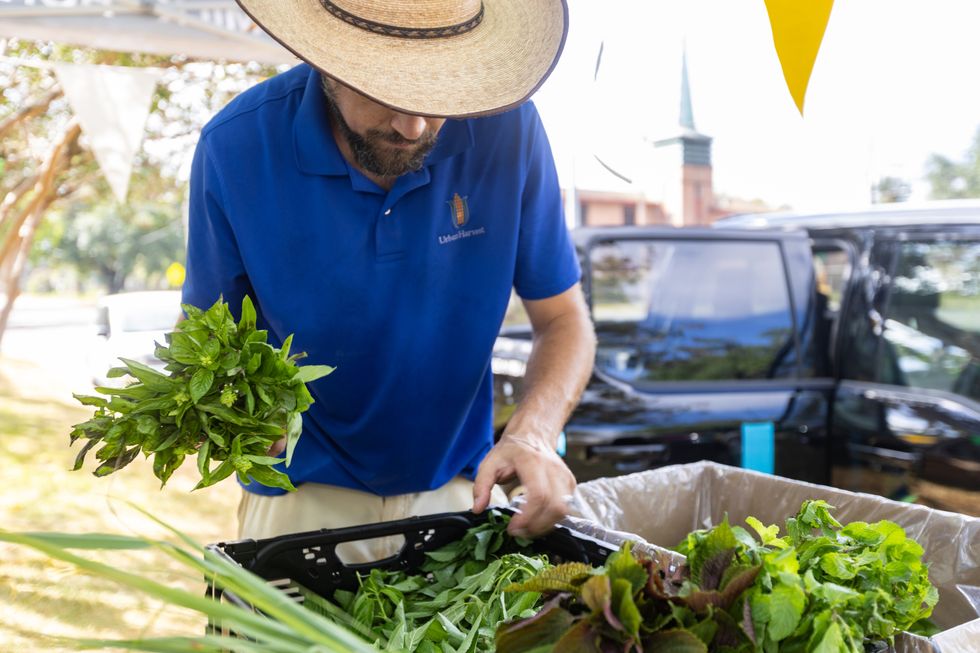
Sustainable nonprofit Urban Harvest has upgraded to use solar energy. Photo courtesy Andrew Hemingway/Urban Harvest
Houston nonprofit Urban Harvest is plugging into the power of solar energy.
The nonprofit’s Mobile Market program has added a custom-designed, solar-equipped trailer to its fleet. The market provides fresh locally sourced food to “food deserts.”
“By harnessing the sun’s energy, the trailer can become a self-sustaining unit, eliminating reliance on conventional power sources for a substantial period of time,” says Urban Harvest.
The trailer consists of a Ford F150 hybrid truck with a custom-designed trailer that’s equipped with solar power capabilities. The unit enables Urban Harvest to store and transport nearly $5,000 worth of fresh produce and goods to support the Mobile Market program, which serves an average of 1,200 customers each month. Click here to continue reading article from September.
Green jobs accelerator to launch to Houston, other cities with corporate and nonprofit partnership

The Goodwill Clean Tech Accelerator is a partnership between Goodwill and Accenture that will equip participants with employability and technical skills for entry-level jobs across the energy transition. Photo via Getty Images
A major nonprofit and a worldwide corporate leader have teamed up to advance clean tech jobs.
The Goodwill Clean Tech Accelerator is a partnership between Goodwill and Accenture that will equip participants with employability and technical skills for entry-level jobs across solar and storage, electric vehicles, heat pumps, and energy efficiency, according to a news release from the organizations.
The program launch next year in Houston, as well as in Atlanta, Nashville, and Detroit, as the two organizations announced in at the U.S. Chamber of Commerce Foundation's Talent Forward event. According to Accenture and Goodwill, the plan is to grow the program to 20 cities in the next seven years and train an estimated 7,000 job seekers. Click here to continue reading article from October.
Houston-based Baker Hughes pledges $175,000 to nonprofits with diversity-focused initiatives
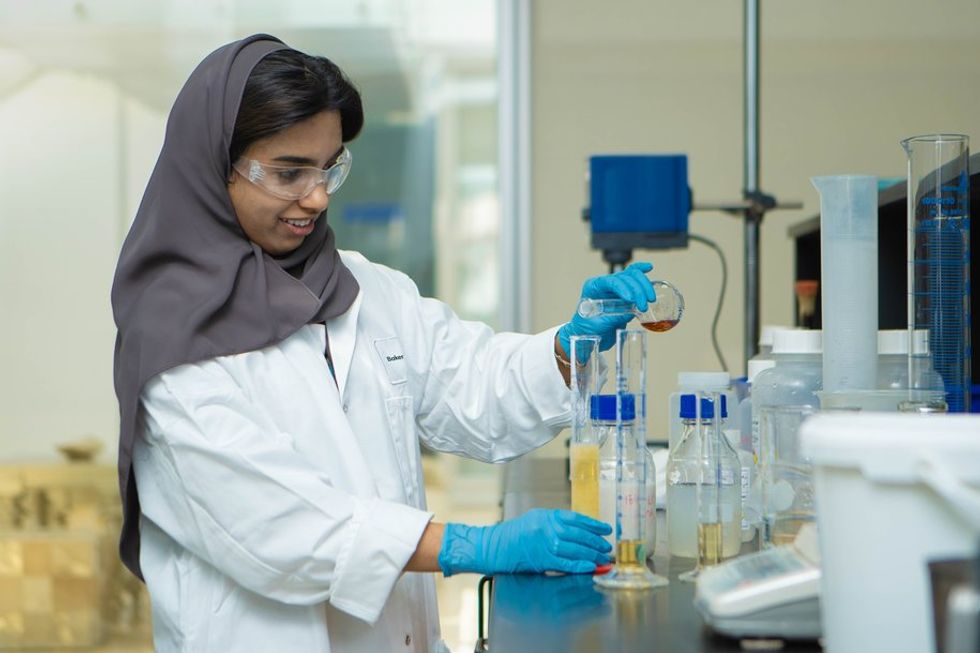
Baker Hughes has made two grants to nonprofits looking to support a diverse workforce. Photo via bakerhughes.com
The nonprofit arm of a Houston-based energy company has made two grants into organizations focused on supplier diversity.
Earlier this week, the Baker Hughes Foundation revealed details on a $75,000 grant to Houston Minority Supplier Development Council, or HMSDC, and a $100,000 grant to Washington, D.C.-based WEConnect International. HMSDC supports economic growth of minority-owned businesses, and WEConnect International is focused on women-owned companies.
“At Baker Hughes, supplier diversity is integral to our success, and it is our duty to support organizations that fuel building a more inclusive supply base and take the steps necessary to ensure business practices mirror our diverse landscape,” Lynn Buckley, Supplier Diversity and Business Development Sourcing leader, says in a news release. Click here to continue reading article from September.
Houston-area teen wins prestigious award for sustainable gardening initiative

A Pearland student's hydroponic gardening nonprofit is increasing sustainability efforts at local schools. Photo via Getty Images
At only 16 years old, Pearland student Rahul Vijayan has been named a winner of a prestigious award.
The 2023 Gloria Barron Prize for Young Heroes recognizes 25 young leaders "who have made a significant positive impact on people, their communities, and the environment," reads the news release. Additionally, 15 of the top winners each receive $10,000 toward their education or service work.
Vijayan created Farm to Tray, a nonprofit that equips schools with hydroponic gardening systems, which can grow fresh produce for school lunch programs. Since he started his initiative, he has distributed over 150 hydroponic grow kits to 23 schools across five districts.
“I want to influence and improve children’s day-to-day lives,” says Rahul. “Farm to Tray is allowing me to do that and make a tangible impact for thousands of students.” Click here to continue reading article from September.
Houston utility provider gifts $100,000 for energy-efficient upgrades in Galveston
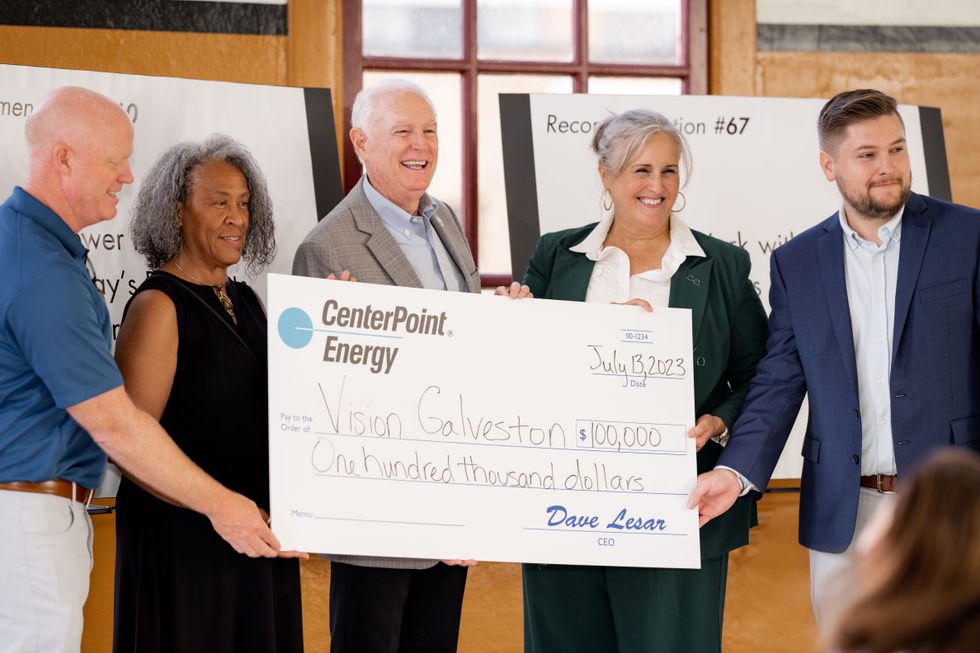
Galveston residents spend 14 percent more a month on electricity, and CenterPoint stepped in to help shrink that gap. Photo courtesy of Vision Galveston
As Texas bakes in scorching summertime heat, a new program has been rolled out in Galveston to provide free energy-efficiency upgrades of homes.
The program, a collaboration between the nonprofit Vision Galveston and Houston-based CenterPoint Energy, is designed to reduce energy consumption and cut utility bills through projects like HVAC tune-ups, as well as installation of ceiling insulation, LED light bulbs, solar screens, and low-flow showerheads.
The program launched July 13 with three CenterPoint customers, all residents of Galveston’s Old Central Carver Park neighborhood, receiving energy-efficiency upgrades. Click here to continue reading article from July.

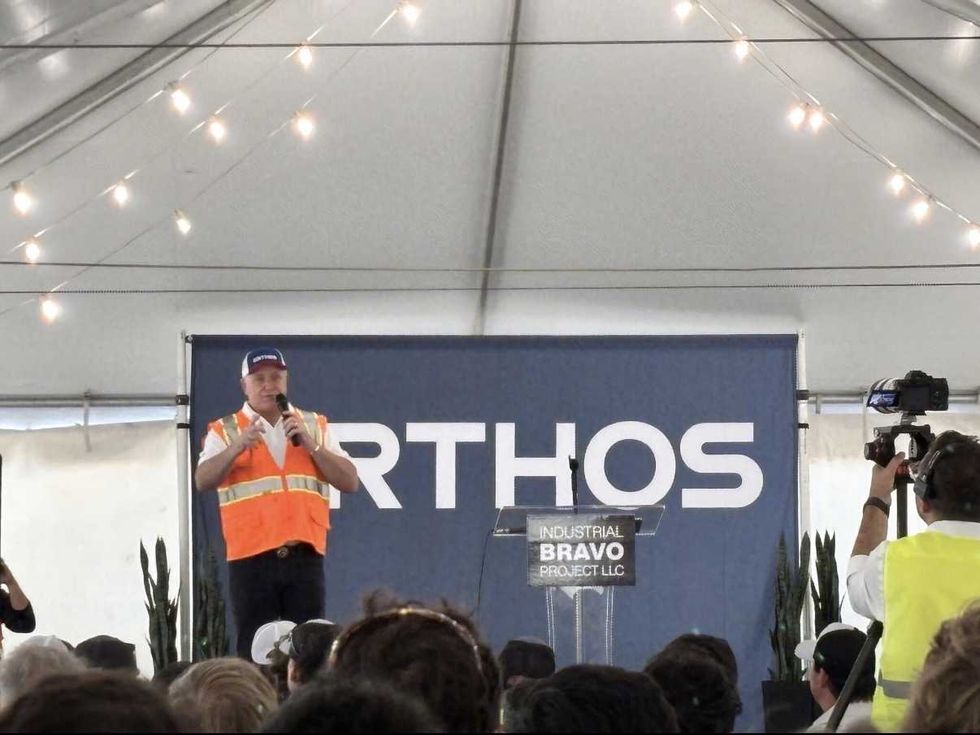 The HTX Tech Tours included a visit to the Erthos Project Bravo in Matagorda County. Photo courtesy