Clean tech startups score DOE funds, Houston company secures $12M, and more trending news

These were this week's most-read articles on EnergyCapital. Photo via Getty Images

Editor's note: From a new Houston energy transition exec to strategic partnerships and acquisitions, these are the top headlines that resonated with EnergyCapital readers on social media and daily newsletter this week.

Houston offshore robotics company secures $12M, makes major leadership changes

Houston-based Nauticus Robotics has a new CEO and fresh funding. Photo via LinkedIn

In the wake of a leadership reshuffling and amid lingering financial troubles, publicly traded Nauticus Robotics, a Webster-based developer of subsea robots and software, has netted more than $12 million in a second tranche of funding.

The more than $12 million in new funding includes a $9.5 million loan package.

Nauticus says the funding will accelerate certification of the company’s flagship Aquanaut robot, which is being prepared for its inaugural mission — inspecting a deep-water production facility in the Gulf of Mexico that’s owned by a major oil and gas company. Continue reading.

Houston companies land DOE vouchers for clean tech

Ten energy tech companies in Houston are among 111 organizations to receive up to $250,000 in vouchers from the DOE's Office of Technology Transitions, totaling $9.8 million in funding. Photo via Getty Images

Ten Houston-area companies will receive vouchers from the Department of Energy's latest round of funding to support the adoption of clean energy tech.

The companies are among 111 organizations to receive up to $250,000 in vouchers from the DOE's Office of Technology Transitions, totaling $9.8 million in funding, according to a release from the department.

The voucher program is in collaboration with the Offices of Clean Energy Demonstrations (OCED), Fossil Energy and Carbon Management (FECM), and Energy Efficiency and Renewable Energy (EERE). It is funded by the Bipartisan Infrastructure Law. Continue reading.

City offers free composting services to Houstonians looking to reduce landfill contributions

Looking to start composting? This is your month to try it out with free drop-off spots in Houston. Photo via Getty Images

The City of Houston Solid Waste Management Department is launching a free Food Waste Drop-Off pilot program through the end of February.

The program is in collaboration with Council Member Sallie Alcorn, Zero Waste Houston and the City of Houston Health Department, and allows residents to drop off food scraps at four different locations. Continue reading.

New global report names top cleantech startups to keep an eye on
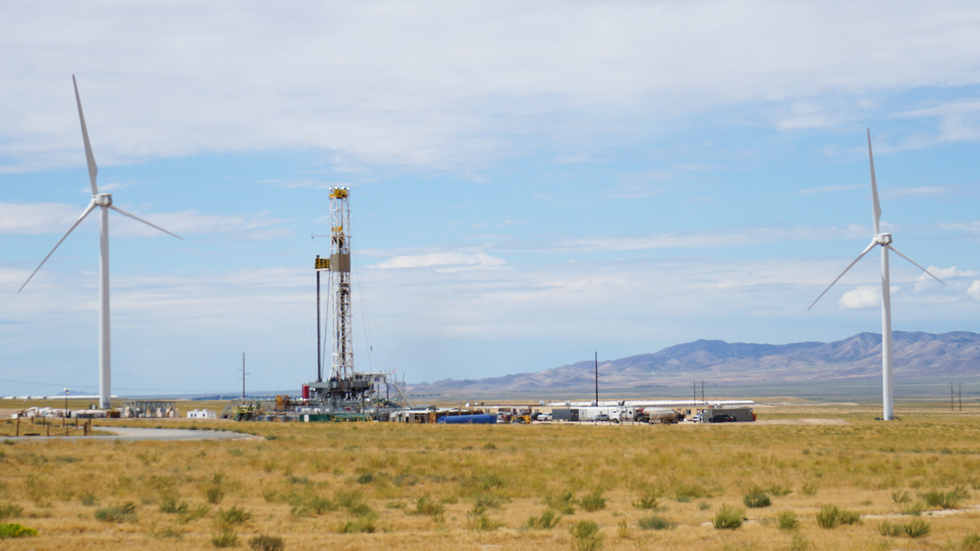
Fervo Energy — and a few other Greentown Labs companies — made a global list of clean tech companies. Photo via fervoenergy.com

Nine Greentown Labs members were recognized on a global list honoring cleantech companies.

Houston-based Fervo Energy was named to Cleantech Group’s Global Cleantech 100 report. Cleantech Group is a research-driven company that aids the public sector, private sector, investors, and also identifies, assesses, and engages with the innovative solutions around climate challenges.

Fervo, a geothermal energy company that specializes in a renewable energy technology that uses hot water to produce electricity, debuted in 2022 on the list, and was honored in the “Energy & Power” category for the second straight year. Continue reading.

Exxon overcomes hefty charge and falling crude prices in fourth quarter to top profit expectations

Shares of the Houston-based company rose 2% before the market opened Friday. Photo via exxonmobil.com

ExxonMobil's fourth-quarter revenue and profits declined along with the price of oil, and the energy giant was weighed down by a hefty impairment charge tied to regulatory issues in California. Still, it posted a healthy adjusted profit and the company raised its quarterly dividend.

Shares of the Houston-based company rose 2% before the market opened Friday.

Revenue for the three months ended Dec. 31 declined to $84.34 billion from $95.43 billion. That fell short of the $91.81 billion that analysts polled by Zacks Investment Research expected. Continue reading.

Trending News

A View From HETI

Conversations rarely focus on what keeps electricity moving: transmission infrastructure. Photo by REVTLProjects on Unsplash

Texas takes pride in running one of the most dynamic and deregulated energy markets in the world, but conversations about electricity rarely focus on what keeps it moving: transmission infrastructure.

As ERCOT projects unprecedented electricity demand growth and grid operators update their forecasts for 2026, it’s becoming increasingly clear that generation, whether renewable or fossil, is only part of the solution. Transmission buildout and sound governing policy now stand as the linchpin for reliability, cost containment, and long-term resilience in a grid under unprecedented stress.

At the heart of this urgency is one simple thing: demand. Over 2024 and 2025, ERCOT has been breaking records at a pace we haven’t seen before. From January through September of 2025 alone, electricity use jumped more than 5% over the year before, the fastest growth of any major U.S. grid. And it’s not slowing down.

The Energy Information Administration expects demand to climb another 14% in 2026, pushing total consumption to roughly 425 terawatt-hours in just the first nine months. That surge isn’t just about more people moving to Texas or running their homes differently; it’s being driven by massive industrial and technology loads that simply weren’t part of the equation ten years ago.

The most dramatic contributor to that rising demand is large-scale infrastructure such as data centers, cloud computing campuses, crypto mining facilities, and electrified industrial sectors. In the latest ERCOT planning update, more than 233 gigawatts of total “large load” interconnection requests were being tracked, an almost 300% jump over just a year earlier, with more than 70% of those requests tied to data centers.

Imagine hundreds of new power plants requesting to connect to the grid, all demanding uninterrupted power 24/7. That’s the scale of the transition Texas is facing, and it’s one of the major reasons transmission planning is no longer back-of-house policy talk but a central grid imperative.

Yet transmission is complicated, costly, and inherently long-lead. It takes three to six years to build new transmission infrastructure, compared with six to twelve months to add a new load or generation project.

This is where Texas will feel the most tension. Current infrastructure can add customers and power plants quickly, but the lines to connect them reliably take time, money, permitting, and political will.

To address these impending needs, ERCOT wrapped up its 2024 Regional Transmission Plan (RTP) at the end of last year, and the message was pretty clear: we’ve got work to do. The plan calls for 274 transmission projects and about 6,000 miles of new, rebuilt, or upgraded lines just to handle the growth coming our way and keep the lights on.

The plan also suggests upgrading to 765-kilovolt transmission lines, a big step beyond the standard 345-kV system. When you start talking about 765-kilovolt transmission lines, that’s a big leap from what Texas normally uses. Those lines are built to move a massive amount of power over long distances, but they’re expensive and complicated, so they’re only considered when planners expect demand to grow far beyond normal levels. Recommending them is a clear signal that incremental upgrades won’t be enough to keep up with where electricity demand is headed.

There’s a reason transmission is suddenly getting so much attention. ERCOT and just about every industry analyst watching Texas are projecting that electricity demand could climb as high as 218 gigawatts by 2031 if even a portion of the massive queue of large-load projects actually comes online. When you focus only on what’s likely to get built, the takeaway is the same: demand is going to stay well above anything we’ve seen before, driven largely by the steady expansion of data centers, cloud computing, and digital infrastructure across the state.

Ultimately, the decisions Texas makes on transmission investment and the policies that determine how those costs are allocated will shape whether 2026 and the years ahead bring greater stability or continued volatility to the grid. Thoughtful planning can support growth while protecting reliability and affordability, but falling short risks making volatility a lasting feature of Texas’s energy landscape.

Transmission Policy: The Other Half of the Equation

Infrastructure investment delivers results only when paired with policies that allow it to operate efficiently and at scale. Recognizing that markets alone won’t solve these challenges, Texas lawmakers and regulators have started creating guardrails.

For example, Senate Bill 6, now part of state law, aims to improve how large energy consumers are managed on the grid, including new rules for data center operations during emergencies and requirements around interconnection. Data centers may even be required to disconnect under extreme conditions to protect overall system reliability, a novel and necessary rule given their scale.

Similarly, House Bill 5066 changed how load forecasting occurs by requiring ERCOT to include utility-reported projections in its planning processes, ensuring transmission planning incorporates real-world expectations. These policy updates matter because grid planning isn’t just a technical checklist. It’s about making sure investment incentives, permitting decisions, and cost-sharing rules are aligned so Texas can grow its economy without putting unnecessary pressure on consumers.

Without thoughtful policy, we risk repeating past grid management mistakes. For example, if transmission projects are delayed or underfunded while new high-demand loads come online, we could see congestion worsen. If that happens, affordable electricity would be located farther from where it’s needed, limiting access to low-cost power for consumers and slowing overall economic growth. That’s especially critical in regions like Houston, where energy costs are already a hot topic for households and businesses alike.

A 2026 View: Strategy Over Shortage

As we look toward 2026, here are the transmission and policy trends that matter most:

  • Pipeline of Projects Must Stay on Track: ERCOT’s RTP is ambitious, and keeping those 274 projects, thousands of circuit miles, and next-generation 765-kV lines moving is crucial for reliability and cost containment.
  • Large Load Forecasting Must Be Nuanced: The explosion in large-load interconnection requests, whether or not every project materializes, signals demand pressure that transmission planners cannot ignore. Building lines ahead of realized demand is not wasteful planning; it’s insurance against cost and reliability breakdowns.
  • Policy Frameworks Must Evolve: Laws like SB 6 and HB 5066 are just the beginning. Texas needs transparent rules for cost allocation, interconnection standards, and emergency protocols that keep consumers protected while supporting innovation and economic growth.
  • Coordination Among Stakeholders Is Critical: Transmission doesn’t stop at one utility’s borders. Regional cooperation among utilities, ERCOT, and local stakeholders is essential to manage congestion and develop systemwide reliability solutions.

Here’s the bottom line: Generation gets the headlines, but transmission makes the grid work. Without a robust transmission buildout and thoughtful governance, even the most advanced generation mix that includes wind, solar, gas, and storage will struggle to deliver the reliability Texans expect at a price they can afford.

In 2026, Texas is not merely testing its grid’s capacity to produce power; it’s testing its ability to move that power where it’s needed most. How we rise to meet that challenge will define the next decade of energy in the Lone Star State.

———

Sam Luna is director at BKV Energy, where he oversees brand and go-to-market strategy, customer experience, marketing execution, and more.

Trending News