







top stories

Top 5 trending Houston energy transition this week

Here's what news trended this week on EnergyCapital. Photo via Getty Images

Editor's note: From Caliche Development Partners finding fresh funding for a Beaumont plant to an energy transition SPAC going public, these are the top headlines that resonated with EnergyCapital readers on social media and daily newsletter this week.

Houston energy co. accelerates Beaumont storage expansion after key investment deal
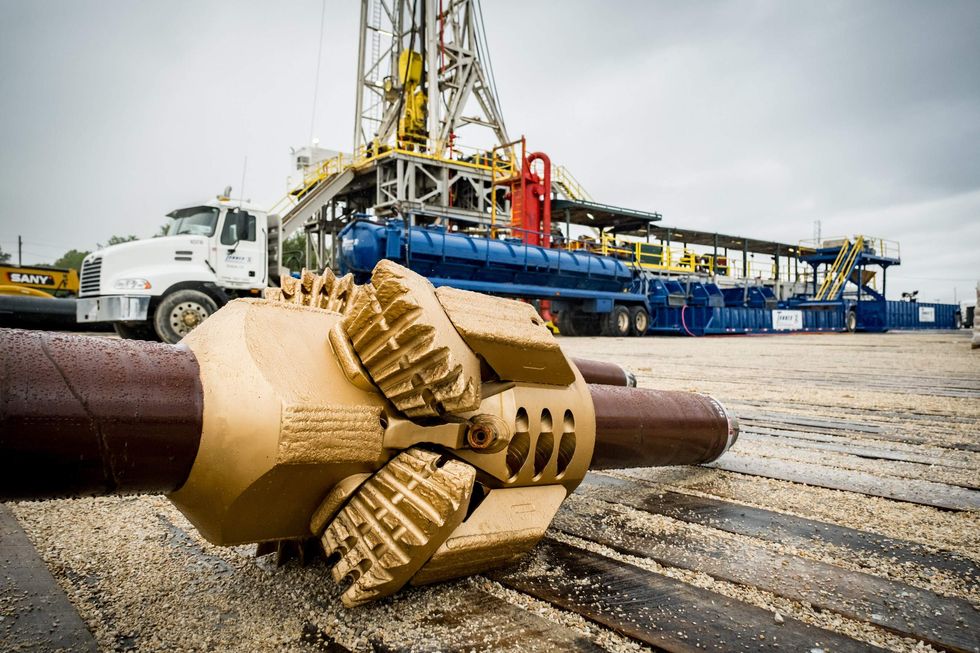
Houston-based Caliche Development Partners begins doubling natural gas storage capacity and building the world’s largest helium cavern, fueled by a key Texas deal completion. Photo courtesy of Caliche

With the acquisition of its Texas business now complete, Houston-based Caliche Development Partners is moving ahead with expansion of a natural gas storage project in Beaumont.

This milestone comes after a previously announced majority investment in Caliche by New York City-based investment firm Sixth Street, which has offices in Houston, Austin, and Dallas. Sixth Street recently closed on the Texas portion of the deal, and it expects to wrap up the California portion of the deal in mid-2025. Continue reading.

CenterPoint’s Greater Houston Resiliency Initiative makes advancements on progress
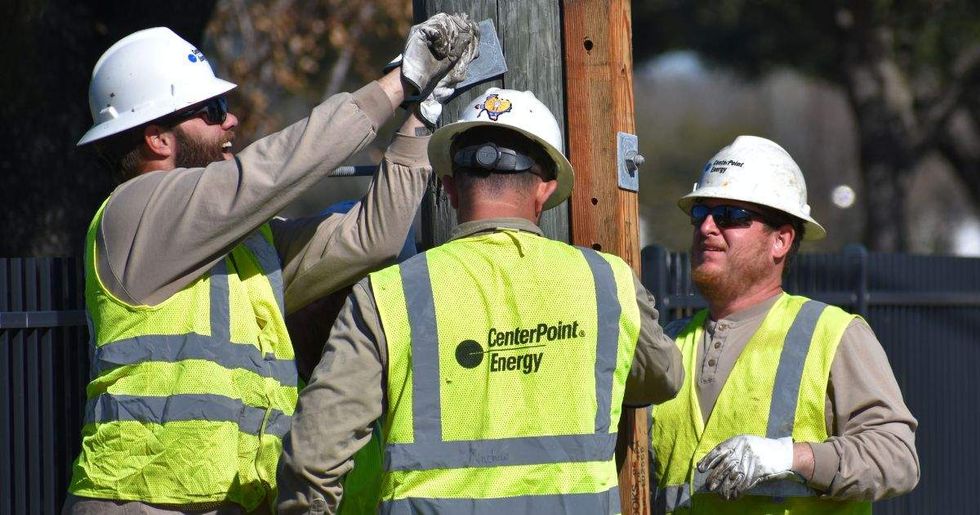
The GHRI Phase Two will lead to more than 125 million fewer outage minutes annually, according to CenterPoint. Photo via centerpoint.com

CenterPoint Energy has released the first of its public progress updates on the actions being taken throughout the Greater Houston 12-county area, which is part of Phase Two of its Greater Houston Resiliency Initiative.

The GHRI Phase Two will lead to more than 125 million fewer outage minutes annually, according to CenterPoint. Continue reading.

Houston group secures contract for major clean ammonia project in Louisiana
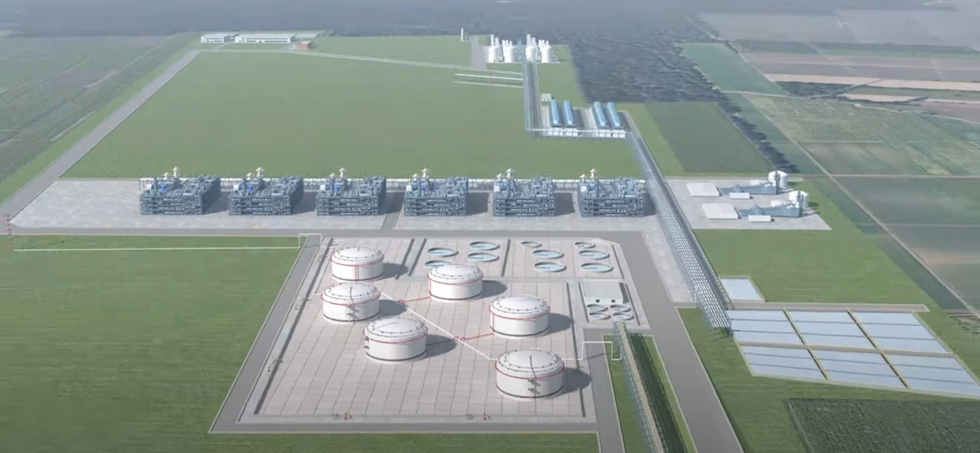
Houston global engineering firm McDermott will design a Louisiana project to produce millions of tons of clean ammonia. Image via cleanhydrogenworks.com

Houston-headquartered McDermott has received a new contract on a Louisiana clean ammonia project.

Clean energy development company Clean Hydrogen Works tapped McDermott for the front-end engineering and design contract for the Ascension Clean Energy Project. ACE — located in Ascension Parish, Louisiana — is jointly developed by CHW with strategic shareholders ExxonMobil, Mitsui O.S.K. Lines, and Hafnia and is expected to initially produce 2.4 million metric tons per annum of clean ammonia and expand to total 7.2 million metric tons per annum production down the road. Continue reading.

Houston energy SPAC goes public through IPO

Houston-based CO2 Energy Transition Corp., a SPAC focused on carbon capture, utilization, and storage (CCUS), raised $69 million in its IPO to target mid-sized CCUS companies. Photo via Getty Images

Houston-based CO2 Energy Transition Corp. — a “blank check” company initially targeting the carbon capture, utilization, and storage (CCUS) sector — closed November 22 on its IPO, selling 6 million units at $10 apiece.

“Blank check” companies are formally known as special purpose acquisition companies (SPACs). A SPAC aims to complete a merger, acquisition, share exchange, share purchase, reorganization or similar business combination in certain business sectors. CO2 Energy Transition will target companies valued at $150 million to $250 million. Continue reading.

Houston's hydrogen revolution gets up to $1.2B federal boost to power Gulf Coast’s clean energy future
The U.S. Department of Energy funding is earmarked for the new HyVelocity Hub. Photo via Getty Images

The emerging low-carbon hydrogen ecosystem in Houston and along the Texas Gulf Coast is getting as much as a $1.2 billion lift from the federal government.

The U.S. Department of Energy funding, announced November 20, is earmarked for the new HyVelocity Hub. The hub — backed by energy companies, schools, nonprofits, and other organizations — will serve the country’s biggest hydrogen-producing area. The region earns that status thanks to more than 1,000 miles of dedicated hydrogen pipelines and almost 50 hydrogen production plants. Continue reading.

Trending News

A View From HETI

Greenhouse gases continue to rise, and the challenges they pose are not going away. Photo via Getty Images

For the past 40 years, climate policy has often felt like two steps forward, one step back. Regulations shift with politics, incentives get diluted, and long-term aspirations like net-zero by 2050 seem increasingly out of reach. Yet greenhouse gases continue to rise, and the challenges they pose are not going away.

This matters because the costs are real. Extreme weather is already straining U.S. power grids, damaging homes, and disrupting supply chains. Communities are spending more on recovery while businesses face rising risks to operations and assets. So, how can the U.S. prepare and respond?

The Baker Institute Center for Energy Studies (CES) points to two complementary strategies. First, invest in large-scale public adaptation to protect communities and infrastructure. Second, reframe carbon as a resource, not just a waste stream to be reduced.

Why Focusing on Emissions Alone Falls Short

Peter Hartley argues that decades of global efforts to curb emissions have done little to slow the rise of CO₂. International cooperation is difficult, the costs are felt immediately, and the technologies needed are often expensive. Emissions reduction has been the central policy tool for decades, and it has been neither sufficient nor effective.

One practical response is adaptation, which means preparing for climate impacts we can’t avoid. Some of these measures are private, taken by households or businesses to reduce their own risks, such as farmers shifting crop types, property owners installing fire-resistant materials, or families improving insulation. Others are public goods that require policy action. These include building stronger levees and flood defenses, reinforcing power grids, upgrading water systems, revising building codes, and planning for wildfire risks. Such efforts protect people today while reducing long-term costs, and they work regardless of the source of extreme weather. Adaptation also does not depend on global consensus; each country, state, or city can act in its own interest. Many of these measures even deliver benefits beyond weather resilience, such as stronger infrastructure and improved security against broader threats.

McKinsey research reinforces this logic. Without a rapid scale-up of climate adaptation, the U.S. will face serious socioeconomic risks. These include damage to infrastructure and property from storms, floods, and heat waves, as well as greater stress on vulnerable populations and disrupted supply chains.

Making Carbon Work for Us

While adaptation addresses immediate risks, Ken Medlock points to a longer-term opportunity: turning carbon into value.

Carbon can serve as a building block for advanced materials in construction, transportation, power transmission, and agriculture. Biochar to improve soils, carbon composites for stronger and lighter products, and next-generation fuels are all examples. As Ken points out, carbon-to-value strategies can extend into construction and infrastructure. Beyond creating new markets, carbon conversion could deliver lighter and more resilient materials, helping the U.S. build infrastructure that is stronger, longer-lasting, and better able to withstand climate stress.

A carbon-to-value economy can help the U.S. strengthen its manufacturing base and position itself as a global supplier of advanced materials.

These solutions are not yet economic at scale, but smart policies can change that. Expanding the 45Q tax credit to cover carbon use in materials, funding research at DOE labs and universities, and supporting early markets would help create the conditions for growth.

Conclusion

Instead of choosing between “doing nothing” and “net zero at any cost,” we need a third approach that invests in both climate resilience and carbon conversion.

Public adaptation strengthens and improves the infrastructure we rely on every day, including levees, power grids, water systems, and building standards that protect communities from climate shocks. Carbon-to-value strategies can complement these efforts by creating lighter, more resilient carbon-based infrastructure.

CES suggests this combination is a pragmatic way forward. As Peter emphasizes, adaptation works because it is in each nation’s self-interest. And as Ken reminds us, “The U.S. has a comparative advantage in carbon. Leveraging it to its fullest extent puts the U.S. in a position of strength now and well into the future.”

-----------

Scott Nyquist is a senior advisor at McKinsey & Company and vice chairman, Houston Energy Transition Initiative of the Greater Houston Partnership. The views expressed herein are Nyquist's own and not those of McKinsey & Company or of the Greater Houston Partnership. This article originally appeared on LinkedIn.

Trending News