coming soon

Houston-based ENGIE to add new wind and solar projects to Texas grid

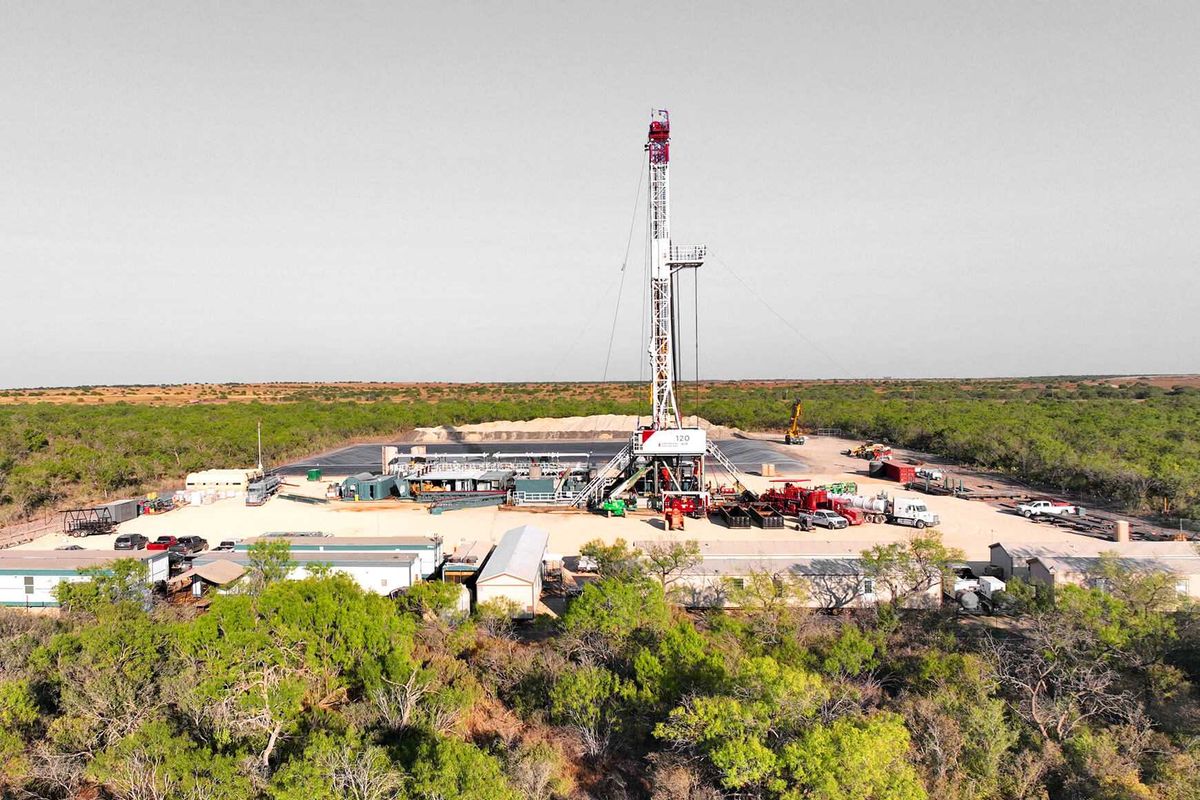
ENGIE plans to add one wind and two solar projects to the ERCOT grid. Photo via Pexels.

Houston-based ENGIE North America Inc. has expanded its partnership with Los Angeles-based Ares Infrastructure Opportunities to add 730 megawatts of renewable energy projects to the ERCOT grid.

The new projects will include one wind and two solar projects in Texas.

“The continued growth of our relationship with Ares reflects the strength of ENGIE’s portfolio of assets and our track record of delivering, operating and financing growth in the U.S. despite challenging circumstances,” Dave Carroll, CEO and Chief Renewables Officer of ENGIE North America, said in a news release. “The addition of another 730 MW of generation to our existing relationship reflects the commitment both ENGIE and Ares have to meeting growing demand for power in the U.S. and our willingness to invest in meeting those needs.”

ENGIE has more than 11 gigawatts of renewable energy projects in operation or under construction in the U.S. and Canada, and 52.7 gigawatts worldwide. The company is targeting 95 gigawatts by 2030.

ENGIE launched three new community solar farms in Illinois since December, including the 2.5-megawatt Harmony community solar farm in Lena and the Knox 2A and Knox 2B projects in Galesburg.

The company's 600-megawatt Swenson Ranch Solar project near Abilene, Texas, is expected to go online in 2027 and will provide power for Meta, the parent company of social media platform Facebook. Late last year, ENGIE also signed a nine-year renewable energy supply agreement with AstraZeneca to support the pharmaceutical company’s manufacturing operations from its 114-megawatt Tyson Nick Solar Project in Lamar County, Texas.
Trending News

A View From HETI

Babur Ozden is the founder and CEO of Aquanta Vision. Photo via LinkedIn

Houston-based climatech startup Aquanta Vision achieved key milestones in 2025 for its enhanced methane-detection app and has its focus set on future funding.

Among the achievements was the completion of the National Science Foundation’s Advanced Sensing and Computation for Environmental Decision-making (ASCEND) Engine. The program, based in Colorado and Wyoming, awarded a total of $3 million in grants to support the commercialization of projects that tackle critical resilience challenges, such as water security, wildfire prediction and response, and methane emissions.

Aquanta Vision’s funding went toward commercializing its NETxTEN app, which automates leak detection to improve accuracy, speed and safety. The company estimates that methane leaks cost the U.S. energy industry billions of dollars each year, with 60 percent of leaks going undetected. Additionally, methane leaks account for around 10 percent of natural gas's contribution to climate change, according to MIT’s climate portal.

Throughout the months-long ASCEND program, Aquanta Vision moved from the final stages of testing into full commercial deployment of NETxTEN. The app can instantly identify leaks via its physics-based algorithms and raw video output of optical gas imaging cameras. It does not require companies to purchase new hardware, requires no human intervention and is universally compatible with all optical gas imaging (OGI) cameras. During over 12,000 test runs, 100 percent of leaks were detected by NETxTEN’s system, according to the company.

The app is geared toward end-users in the oil and gas industry who use OGI cameras to perform regular leak detection inspections and emissions monitoring. Aquanta Vision is in the process of acquiring new clients for the app and plans to scale commercialization between now and 2028, Babur Ozden, the company’s founder and CEO, tells Energy Capital.

“In the next 16 months, (our goal is to) gain a number of key customers as major accounts and OEM partners as distribution channels, establish benefits and stickiness of our product and generate growing, recurring revenues for ourselves and our partners,” he says.

The company also received an investment for an undisclosed amount from Marathon Petroleum Corp. late last year. The funding complemented follow-on investments from Ecosphere Ventures and Odyssey Energy Advisors.

Ozden says the funds will go toward the extension of its runway through the end of 2026. It will also help Aquanta Vision grow its team.

Ozden and Marcus Martinez, a product systems engineer, founded Aquanta Vision in 2023 and have been running it as a two-person operation. The company brought on four interns last year, but is looking to add more staff.

Ozden says the company also plans to raise a seed round in 2027 “to catapult us to a rapid growth phase in 2028-29.”

Trending News