








Editor's note: It's time to look back at the top EnergyCapitalHTX stories from the first half of March 2025. CERAWeek 2025 tops the list, along with news of a Houston oil and gas producer expanding into renewables and an NRG Energy joint venture. Read on for the details.
1. 50+ teams announced for CERAWeek's annual clean tech pitch competition
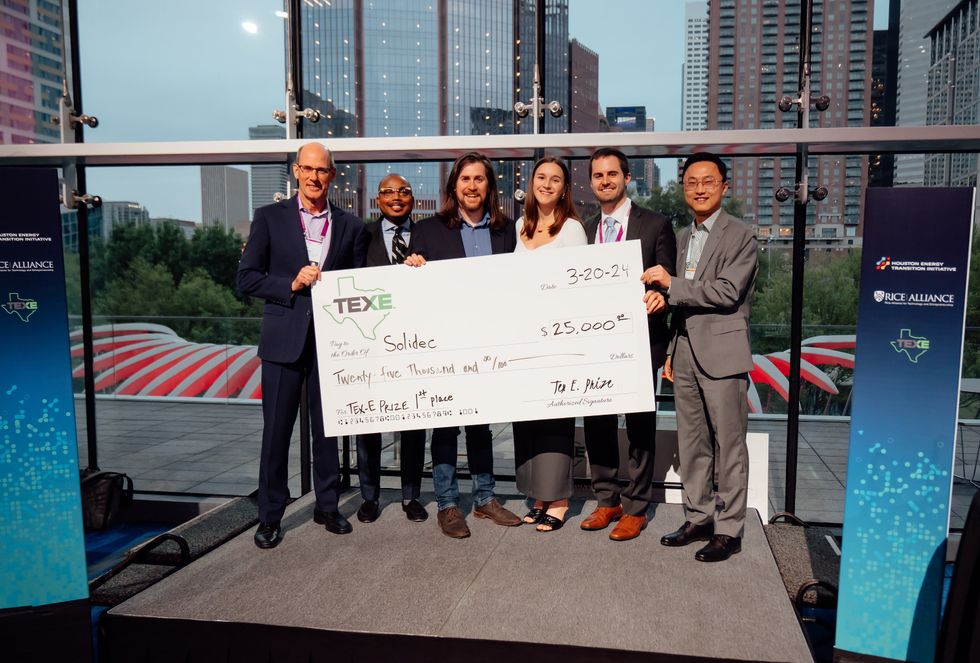
Houston-based Solidec took home the top TEX-E price and $25,000 at last year's Energy Venture Day and Pitch Competition. Photo courtesy of HETI
The Rice Alliance for Technology and Entrepreneurship, the Houston Energy Transition Initiative and the Texas Entrepreneurship Exchange for Energy announced the 30-plus energy ventures and five student teams that would pitch at the 2025 Energy Venture Day and Pitch Competition during CERAWeek.
The ventures are focused on driving efficiency and advancements toward the energy transition and will each present a 3.5-minute pitch before a network of investors and industry partners during CERAWeek's Agora program.
The pitch competition is divided up into the TEX-E university track, in which Texas student-led energy startups compete for $50,000 in cash prizes, and the industry ventures track. Continue reading.
2. Houston oil and gas producer expands into renewables, announces new Baytown facility

Houston American Energy Corp. plans to acquire Abundia Global Impact Group, which will build its first advanced plastic recycling facility in the Cedar Port Industrial Park in Baytown. Photo via Getty Images
Houston American Energy Corp. (NYSE: HUSA), an oil and gas exploration and production company, has entered into a definitive agreement to acquire New York-based Abundia Global Impact Group LLC, which specializes in converting waste into high-value fuels and chemicals.
HUSA is expected to close on the AGIG acquisition early in the second quarter and says the deal aims to provide value through “innovation in the renewable energy sector.” Continue reading.
3. CERAWeek 2025 returns to Houston featuring U.S. energy policy leaders
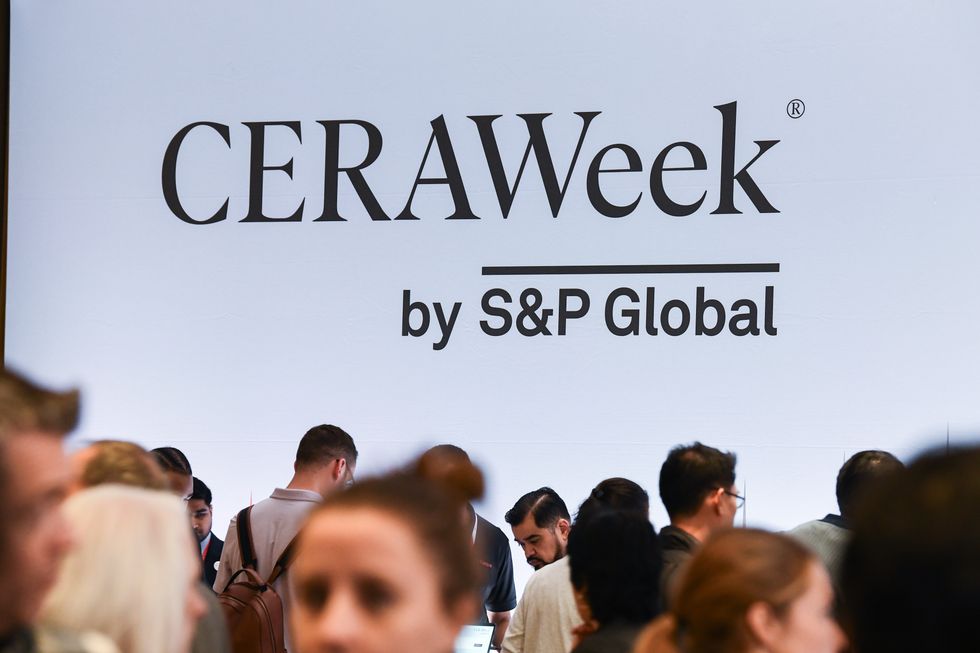
The CERAWeek by S&P Global 2025 programming will focus on energy policy and the reshaping energy landscape. Photo courtesy of CERAWeek
CERAWeek by S&P Global brought together energy leaders from around the world for its 43rd annual conference, March 10–14, at the Hilton Americas Houston.
U.S. Secretary of Energy Chris Wright and U.S. Secretary of the Interior Doug Burgum headlined the conference with plenary addresses focused on strengthening global energy security.
Wright’s company, Liberty Energy, is also an investor in Houston-based geothermal company Fervo Energy. Burgum also chairs the newly formed White House National Energy Dominance Council and was previously the governor of North Dakota. Continue reading.
4. Supreme Court confronts what to do with growing pile of nuclear waste
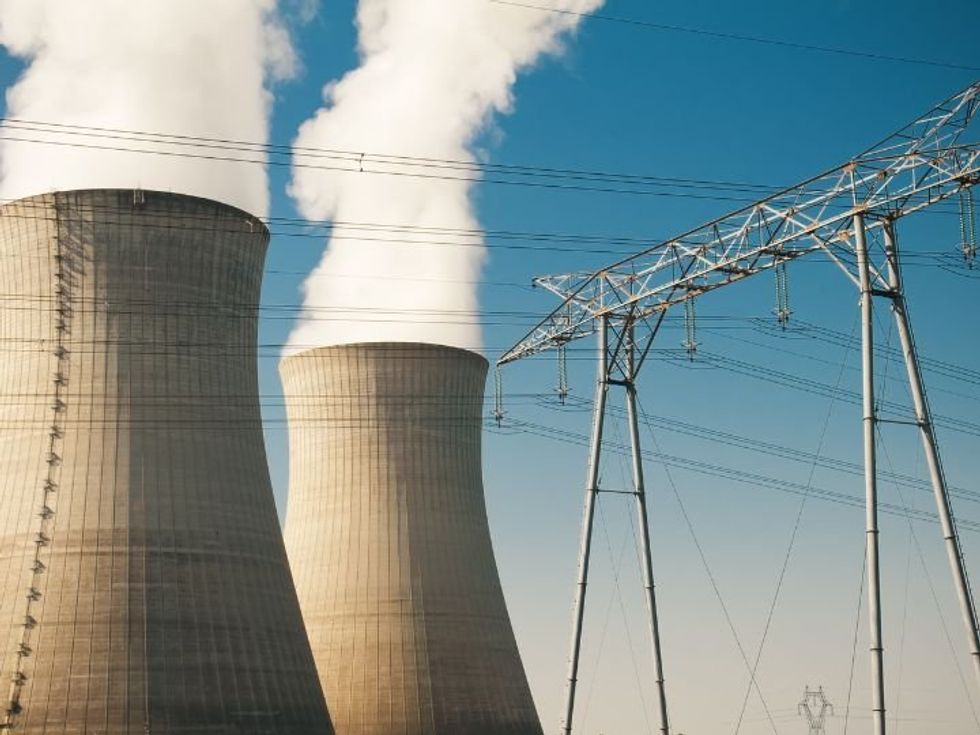
Republicans and Democrats, environmental groups and the oil and gas industry all oppose the temporary sites. Photo via uh.edu
The Supreme Court heard arguments in a fight over plans to store nuclear waste at sites in rural Texas and New Mexico. President Joe Biden's administration and a private company with a license for the Texas facility appealed a ruling by the 5th U.S. Circuit Court of Appeals that found that the Nuclear Regulatory Commission exceeded its authority in granting the license. The outcome of the case will affect plans for a similar facility in New Mexico roughly 40 miles away.
On this issue, President Donald Trump's administration is sticking with the views of its predecessor, even with Texas Gov. Greg Abbott, a Republican ally of Trump, on the other side.
The push for temporary storage sites is part of the complicated politics of the nation’s so far futile quest for a permanent underground storage facility. Continue reading.
5. NRG Energy forms joint venture to build power plants for ERCOT and AI-driven demand
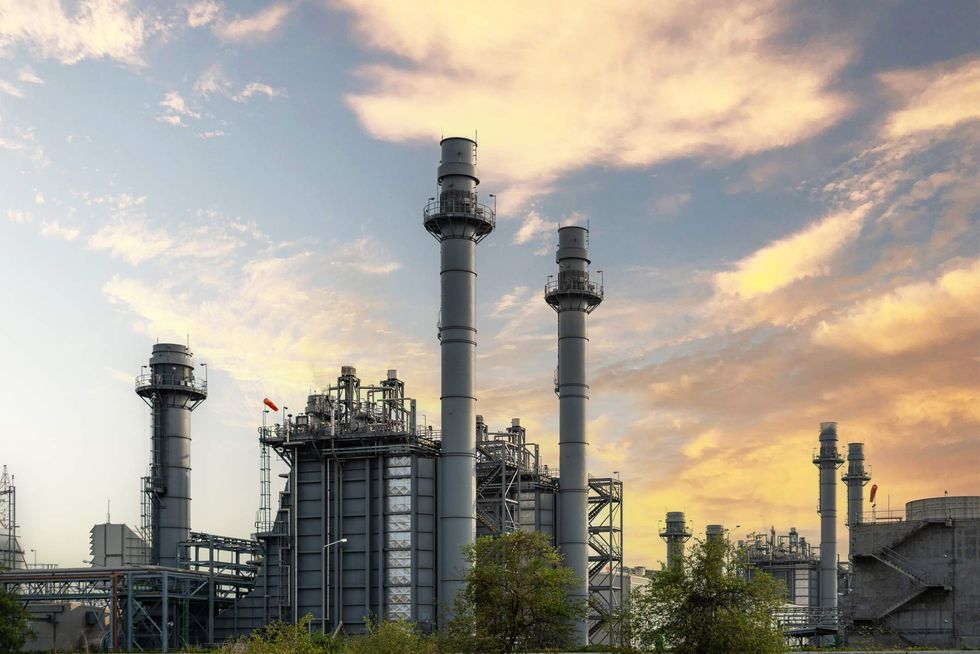
A new joint venture will work on four projects supplying 5 gigawatts of power from combined-cycle power plants for the ERCOT and PJM Interconnection grids. Photo via Getty Images.
Houston-based power provider NRG Energy Inc. has formed a joint venture with two other companies to meet escalating demand for electricity to fuel the rise of data centers and the evolution of generative AI.
NRG’s partners in the joint venture are GE Vernova, a provider of renewable energy equipment and services, and TIC – The Industrial Co., a subsidiary of construction and engineering company Kiewit. Continue reading.