Ad Placement 300x100
Ad Placement 300x600

CultureMap Emails are Awesome

Texas City ammonia plant acquired by Yara in $1.3 billion deal

Ammonia Acquisition

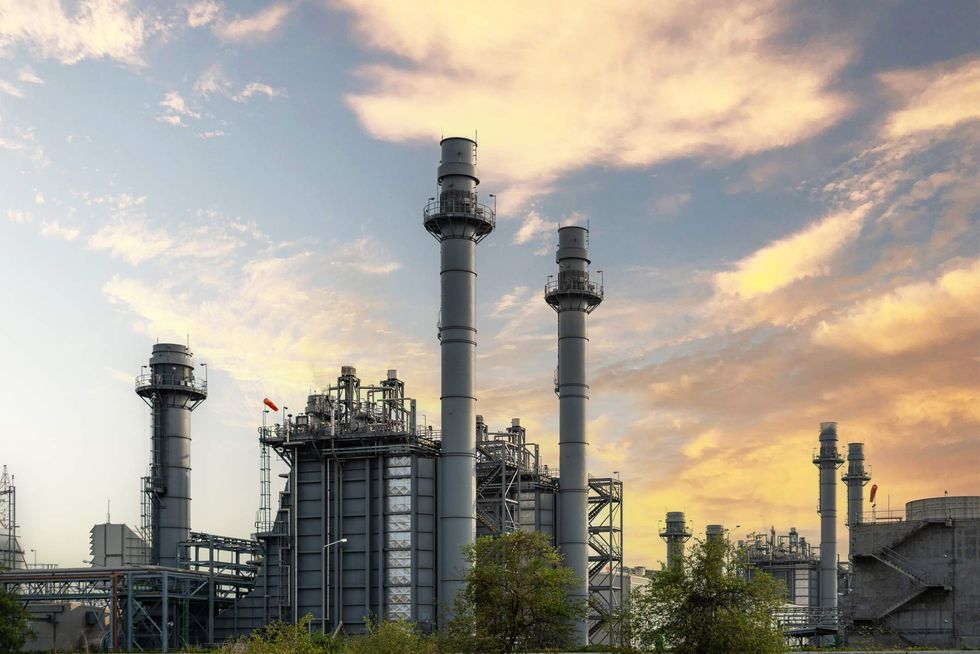
Yara North America, a subsidiary of Norwegian fertilizer and ammonia producer Yara International, has agreed to buy an ammonia production plant in Texas City for $1.3 billion.

The seller is GCA Holdings, an affiliate of Texas City-based chemical manufacturer Gulf Coast Ammonia, which is owned by private equity firms Lotus Infrastructure Partners and MB Energy.

The Texas City plant, with an eventual annual capacity of 1.3 million metric tons, is expected to start full production by the end of this year. Yara says the ammonia produced by the plant will serve its own fertilizer production system and its key customers.

During a recent call with analysts and investors, Magnus Ankarstrand, executive vice president and CFO of Yara International, said the plant holds the potential to become one of the company’s most profitable plants. The $1.3 billion purchase price, he added, “is a very attractive entry ticket to ammonia production in the U.S. at a very attractive cost.”

The Texas City plant will add to Yara’s holdings in the Lone Star State, as Yara is the majority owner of an ammonia, hydrogen and nitrogen production plant in Freeport.

Construction of the ammonia plant began in 2020, but technical and infrastructure issues delayed the project. On its website, Gulf Coast Ammonia says the plant represented a $600 million investment.

“Gulf Coast Ammonia is a world-class asset that required disciplined execution across development, financing, construction, and commercial structuring,” Philipp Pletka, managing director of Lotus Infrastructure Partners, says in a news release.

Trexlertown, Pennsylvania-based Air Products, which owns and operates the country’s largest hydrogen pipeline network, will continue to supply hydrogen and nitrogen for the plant under a long-term deal with Yara, according to the release.

However, the news comes two days after Yara International announced that it would no longer be purchasing ammonia assets in the Louisiana Clean Energy Complex (LCEC) from Air Products. In a separate release, Yara said it planned to reallocate funds toward "alternative mature U.S. ammonia investment opportunities with more competitive returns."

Houston hypersonic engine company lands $91M to accelerate production

Clean Speed

Houston-based Venus Aerospace has closed a $91 million Series B round and plans to scale the production of its hypersonic engine.

The round was led by Houston-based Mercury Fund with participation from Lockheed Martin Ventures, MESH, PEAK6, Draper Associates, Starboard Star Venture Capital, Green Sands Equity and other investors, according to a news release.

The investment comes about a year after Venus completed the first U.S. flight test of its high-thrust rotating detonation rocket engine (RDRE). The engine is expected to enable vehicles to travel four to six times the speed of sound from a conventional runway and is about 15 percent more efficient than traditional alternatives, according to the company.

Venus Aerospace says the latest round of funding will allow it to move the RDRE from demonstration to deployment and meet customer requirements for the near-term defense and space industries. The company says that the reusable RDRE is designed with a "common propulsion architecture" that can work for multiple industries and mission types.

“This financing marks an important step in moving Venus from breakthrough demonstration to scaled capability,” Sassie Duggleby, co-founder and CEO, said in the news release. “Our customers need propulsion systems that go farther, can be produced reliably and are built on supply chains they can trust. We are advancing that capability with American engineering and manufacturing talent to strengthen U.S. defense, expand space access and support the future of high-speed flight.”

Venus Aerospace raised a $20 million Series A in 2022, led by Wyoming-based Prime Movers Lab. At the time, the company said it would put the funding toward three main technologies: a next-generation rocket engine, aircraft shape and leading-edge cooling system.

The company also picked up an investment from Lockheed Martin Ventures, the investment arm of aerospace and defense contractor Lockheed Martin, in November 2025—in addition to funding from other investors over the years.

“Since our initial investment, Venus has progressed very quickly in its technology development," Chris Moran, vice president and general manager of Lockheed Martin Ventures, added in the release. "Our reinvestment in Venus recognizes Venus’ accomplishments to date and focus on speed to manufacture, cost management and reduction of supply chain constraints. Venus is working effectively to position its propulsion system for the production scale required by defense programs.”

"Venus is exactly the kind of company Houston capital should be backing," Blair Garrou, co-founder and managing partner at Mercury Fund, added in the release. "It combines multiple frontier technologies, domestic manufacturing and clear commercial and national security relevance. We believe this team is positioned to lead an important new chapter in defense and space, and we are proud to support a company building breakthrough technology here in Texas."

Venus Aerospace and Houston clean tech startup Vaulted Deep were also named to the World Economic Forum's Technology Pioneers community earlier this summer.

---

This article first appeared on InnovationMap.com.

14 climatech startups join Greentown Houston in first half of 2026

green team

Climatech incubator Greentown Labs reports that 14 startups have joined its Houston community so far this year.

The companies are among 30 new startups to have joined Greentown Houston and Greentown Boston in 2026. Four of the companies are headquartered in Houston.

The startups are working on a range of "hydrogen-powered heavy-duty transport to AI-driven grid interconnection," according to Greentown.

The local startups that joined Greentown Houston include:

  • Houston-based Focis AI, which transforms industrial laser scans into structured asset intelligence to automatically identify, classify and map components in refineries and plants
  • Houston-based Iron Lattice, which develops next-generation memory technology for AI and high-performance computing that improves energy efficiency, endurance and scalability while remaining compatible with existing semiconductor manufacturing
  • Houston-based Orbital Arc, which is developing a new ion engine designed to improve the efficiency and scalability of spacecraft propulsion from low Earth orbit to deep space
  • Houston-based Sustain Energy LLC, which delivers cleaner, lower-cost fuel to industrial customers in pipeline-absent, underserved markets, cutting their energy costs and emissions with no infrastructure investment on their end

Other startups from around the world joined the Houston incubator in the same time period, including:

  • Ankara-based AIS Field, which develops robotic, AI-assisted non-destructive inspection systems, including submersible tank and boiler crawlers
  • San Francisco-based Armada AI, which builds rapidly deployable modular and edge data centers that run on local, stranded, or renewable power
  • San Francisco-based Armeta, which turns complex engineering drawings and legacy documentation into structured, usable data
  • Pittsburgh-based Atlas Robotics, which develops a Physical AI platform that powers autonomous material-handling robots and AI-guided forklifts
  • Ghana-based Cocoa Potash, which transforms high-emissions agricultural waste from cocoa, coconut, and palm-nut into organic potash, fertilizer and renewable energy
  • Israel-based Criaterra, which produces low-carbon, cement-free building materials
  • Italy-based ETAK, which manufactures modular reactors that convert solid waste into clean syngas
  • Kenya-based FelixFusion, which uses its Felix platform to model every grid connection point, including capacity, upgrade costs, and constraints
  • San Diego-based Gemini Energy, which builds next-generation fuel cells for data-center power
  • Tokyo-based Hibot, which develops robotic systems for inspecting and maintaining infrastructure in hazardous, hard-to-access environments
  • Austin-based Sheetak, which designs and manufactures thermoelectric coolers, generators, and assemblies for solid-state cooling and energy harvesting
  • The Netherlands-based ToPerform, which makes AI-powered, non-intrusive fouling sensors that monitor pipelines around the clock and predict the optimal cleaning time

Another 16 startups joined Greentown's Boston incubator. See the full list of new members here.

More than 100 startups joined Greentown last year, according to an end-of-year reflection shared by Greentown CEO Georgina Campbell Flatter. Read more about them here.