







fresh funding

Houston-based ‘grid in a box’ provider Branch Energy raises $33M

The company says its proprietary Arc “grid in a box” contains everything needed to store and supply electricity. Photo via LinkedIn

Houston-based startup Branch Energy, which offers a self-contained “grid in a box,” has collected $33 million in a Series B round.

Piva Capital and Clean Energy Ventures led the round, according to a news release. Active Impact Investments, Whitecap Venture Partners, Prelude Ventures, Zero Infinity Partners and Inovia Capital also contributed to the round.

In 2024, Branch raised $10.8 million in an oversubscribed Series A round.

Branch’s business model

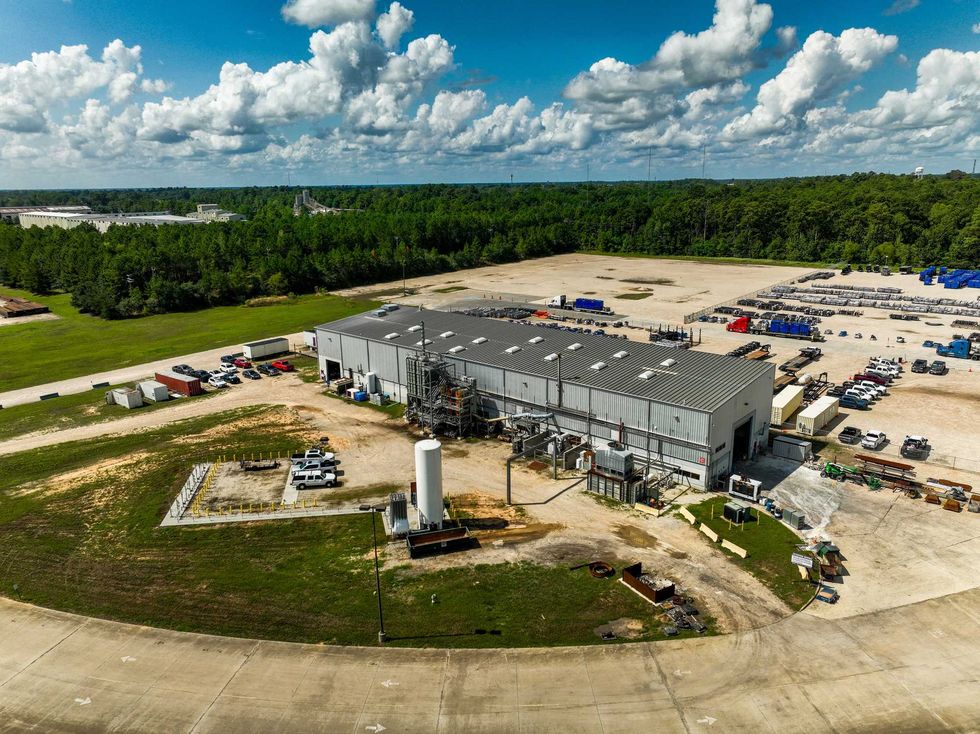
Branch, which launched in 2021, says its proprietary Arc “grid in a box” contains everything needed to store and supply electricity. A container about the size of a parking space holds an industrial-grade battery, grid connection equipment, cooling capabilities, autonomous controls and cloud-based management software.

The startup installs Arc systems at warehouses, hotels, factories, stores and other commercial properties. Each system arrives on a flatbed truck and can be online within two days, Branch says.

Under Branch’s business model, a property owner avoids upfront payment for an Arc system.

Aside from equipping a host business with an Arc system, Branch serves as the business’ power provider. The startup says it guarantees savings on the host’s energy bills and delivers backup power during outages.

Branch generates revenue by sending the battery’s stored power to the grid or to customers like hyperscale data centers. It also benefits by shifting energy from low-cost periods at night to high-cost periods during daily power peaks.

The startup handles permitting, installation, insurance and operations for each Arc system. The host provides a parking-lot-sized plot of land for the system.

Alex Ince-Cushman, co-founder and CEO of Branch, says the startup’s “grid in a box” can quickly meet the substantial power requirements of hyperscale data centers.

“We can do it on the timeline of a delivery, not a construction project. Our customers don’t lift a finger, don’t pay a dime and get guaranteed savings,” Ince-Cushman said in the release.

Entering the Illinois market

Branch already operates in Texas and is entering the Illinois market.

PJM, which operates Illinois’ power grid, recently paved the way for major energy users like data centers to connect to the grid sooner when they rely on their own electricity generation. PJM’s territory covers roughly 1.2 million commercial buildings and represents 20 percent of U.S. power demand, according to Branch.

“Grids around the country need the distributed capacity that [the Arc] system can supply, especially in states with fast-growing power demand like Texas and Illinois,” Lee Larson, principal at Piva Capital added in the release.

To keep up with that demand, Branch plans to build tens of thousands of Arc systems in the U.S.

A multibillion-dollar company in the making?

Daniel Goldman, co-founder and managing partner of Clean Energy Ventures, said Branch holds the potential to become a multibillion-dollar competitor in the emerging market for distributed power.

“With utility-scale generation and storage challenged by interconnect and siting constraints, behind-the-meter commercial, and industrial storage sites have become the ultimate market opportunity with ease of interconnect, ability to combine distributed AI data centers, and identifiable savings in rapidly growing markets,” Goldman said.
Trending News

A View From HETI

Here's who won at two of Houston Energy and Climate Week's signature pitch competitions. Photo via greentown.org

Approximately 100 startups from around the world pitched their breakthrough technologies and businesses during Houston Energy and Climate Week, with a select few taking home top prizes and bragging rights.

Each year, investors at the Rice Alliance Energy Technology Venture Forum name the 10 most-promising startups. Greentown's Climatetech Summit also culminates in a pitch event, where member companies can earn cash prizes.

Here's who won at two of the week's anchor events and competitions.

Rice Alliance Energy Tech Venture Forum

The 23nd annual event was held Thursday, Sept. 17, at Rice University’s Jones Graduate School of Business. The most-promising companies were selected by industry experts and participating investors attending the event.

The 10 most-promising companies included:

  • Australia-based Aquafortus, which has developed a non-thermal liquid to liquid desalination technology for resource recovery from wastewater brine
  • Houston-based Focis AI, which converts industrial laser scans into a queryable digital twin of refineries and plants
  • Houston-based ironlattice, a semiconductor manufacturing company
  • Houston-based Licube, which has developed technology to produce ultra-high-purity lithium compounds for the fusion energy, pharmaceuticals, semiconductors and high-performance solid-state battery sectors
  • Houston-based Mars Materials, a clean chemical manufacturing business that is working to convert captured carbon into resources, such as carbon fiber and wastewater treatment chemicals
  • Dallas-based MCatalysis, which has developed a suite of proprietary microwave-driven catalysts to produce high-quality, ready-to-use fuels compatible with existing infrastructure
  • Oslo, Norway-based OTee, an automation machinery manufacturer
  • Houston-based Pike Robotics, which deploys its Wall-Eye robot to inspect hazardous tanks without taking assets offline
  • New Mexico-based Spiritus, a direct-air-capture (DAC) technology company
  • San Francisco-based UptimeAI Inc., which develops AI reasoning agents for industrial operations teams

Stellai won the People's Choice Award. The Norwegian company develops AI products for the waste management industry.

The energy technology ventures selected to participate in the forum were named earlier this year. See the full list here, and read about last year's winners here.

Greentown Lab's Climatetech Summit

The annual summit was held Wednesday, Sept. 16, featured a number of Houston startups in its pitch competition and lighting pitch round. Judges included Dave Dreessen,, Jon Greene, Naval Preet Singh, Philip Llewellyn, Erin Madro, Justin Yeung, Jay Kim, Rawand Rasheed and Moji Karimi.

Pitch winners included:

  • First place: Elementium Materials' CEO Matthew Dawson, winning a $10,000 cash prize sponsored by TotalEnergies plus another $10,000 in legal services sponsored by Foley Hoag. The company develops advanced battery electrolytes. It is a Greentown Boston member; though Dawson is based in Houston.
  • Second place: Houston-based Solidec CEO and co-founder Ryan DuChanois, winning $5,000 in legal services sponsored by Foley Hoag. The company electrolyzes air, water and electricity into onsite hydrogen peroxide.

Lightening pitch winners included:

  • First place: Montana-based MagDrive Technologies, winning a $1,000 cash prize sponsored by Energy Transition Ventures. The company develops magnetically actuated, zero-emission valve systems that eliminate fugitive emissions and improve reliability.
  • Second place: Houston-based HEXASpec, winning a $500 cash prize sponsored by Foley Hoag. The company has created a new material to improve heat management for the semiconductor industry.

Read Greentown's recap of the summit here.

Houston Energy and Climate Week announced that the 2027 event will move to the spring, held April 4-10.

Trending News