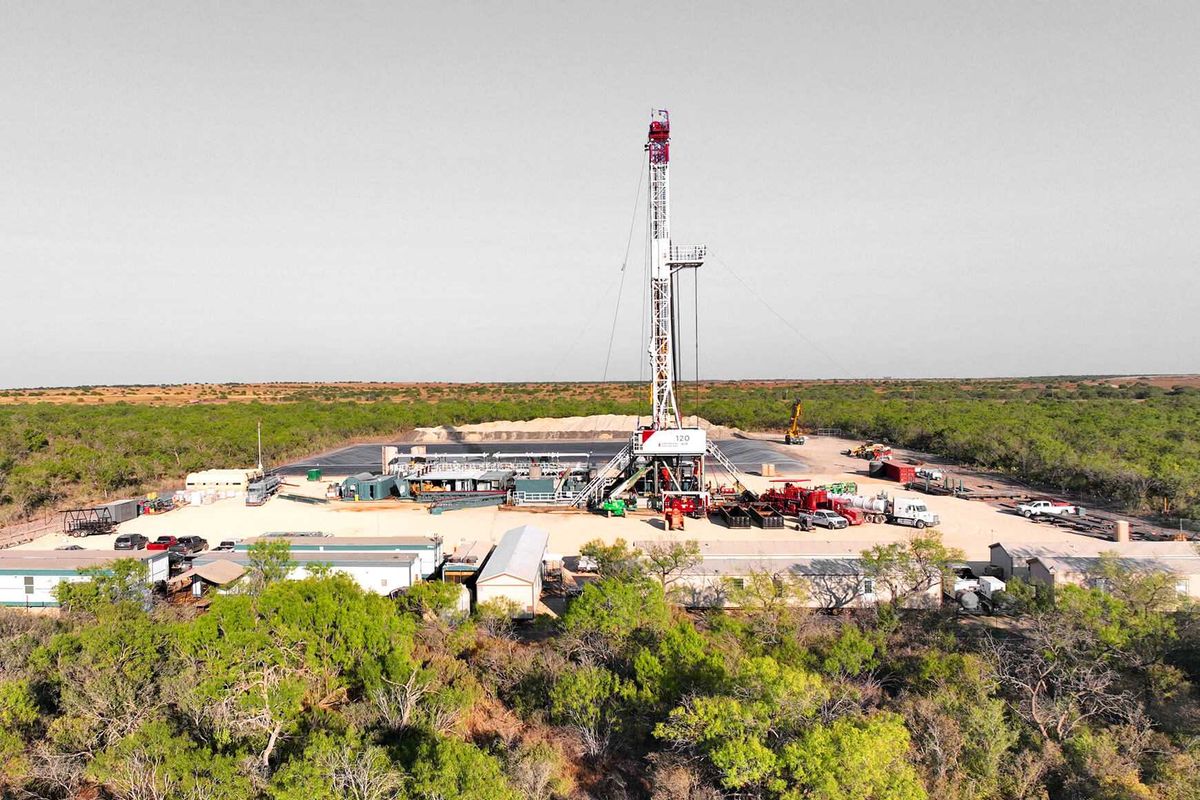
The new plant will be co-located at the company's existing solar module site in Humble. Photo via Pexels

Japanese solar manufacturing company TOYO Co. Ltd. plans to invest $357 million to bring a 1.5-gigwatt solar cell manufacturing facility to the Houston area.

TOYO’s latest state-of-the-art facility will be co-located at its existing solar module site in Humble, according to a news release from the company. It will produce heterojunction (HJT) solar cells, which are known to be more durable and efficient with a higher heat threshold.

TOYO reports that the new facility will create 400 full-time manufacturing jobs. The project is expected to be completed in 20 months, which includes an initial pilot production.

"Expanding into domestic cell manufacturing is the natural next step in our commitment to creating an integrated onshore solar supply chain from polysilicon to panels," Takahiko Onozuka, chairman and CEO of TOYO, said in the news release. "Co-locating 1.5 GW of HJT cell capacity at our Houston module site significantly optimizes our capital allocation and infrastructure spend.”

TOYO entered the Houston market in 2024 through its acquisition of a majority stake in Solar Plus Technology Texas LLC.

Earlier this year, it began producing solar modules at its 567,140-square-foot plant in Lovett Industrial’s Nexus North Logistics Park. At the time, the company said it planned to expand manufacturing capacity to 6.5 gigawatts.

"The new cell plant reflects TOYO's long-term strategy to build a fully FEOC-compliant domestic manufacturing platform focused on serving the needs of the U.S. utility-scale solar market," Rhone Resch, TOYO's chief strategy officer, added in the release. "By producing premium solar products in the United States, we will be well positioned to meet the market's evolving domestic content requirements while strengthening supply chain security and reliability. Looking ahead, we believe HJT is the optimal technology platform for integrating next-generation perovskite solar cells, which we expect will drive the next major advancement in solar conversion efficiency and support TOYO's long-term technology roadmap.”

Ad Placement 300x100
Ad Placement 300x600

CultureMap Emails are Awesome

Sage Geosystems brings South Texas geothermal plant online

powering up

Houston-based Sage Geosystems, a provider of geothermal power, has begun full operations at its South Texas facility for the San Miguel Electric Cooperative.

Sage says the plant was recently “placed in service,” according to a news release. This means it’s fully built and tested, and ready to generate and supply electricity to the grid.

Since selling its first electricity in Q2 of this year, the facility has been operating for more than four months to evaluate aspects like efficiency and water management. Sage relied on its GeoTwin modeling tool to carry out some of the testing.

The testing demonstrates Sage’s proprietary approach to geothermal power “overcomes one of the industry’s most persistent challenges, high water losses in engineered reservoirs, while delivering the consistent performance required to scale next-generation geothermal,” co-founder and CEO Cindy Taff said in the release.

Sage says the South Texas facility will serve as a model for future projects, including one in Nevada. The Nevada facility will use Sage’s proprietary technology to extract geothermal heat from hot dry rock, creating a reliable, affordable source of carbon-free power.

During the testing period, water losses amounted to less than 10 percent. This low rate indicates most water remains in the system, enabling Sage to capture more usable energy, boost power production and improve the project’s finances, the company says.

“Commercial geothermal isn’t just about creating a reservoir. It’s about creating one whose performance can be engineered, predicted, and consistent,” Lev Ring, the company’s co-founder, president and chief technology officer, said in the release.

Since being founded in 2020, Sage has raised $159 million in outside funding. This includes a more than $97 million Series B round co-led by Ormat Technologies and Carbon Direct Capital.

Two years ago, Sage announced a deal with Meta Platforms, the parent company of Facebook and Instagram, to supply up to 150 megawatts of geothermal power to Meta data centers.

Halliburton Labs adds 3 energy, materials startups to Houston incubator

green team

Three new companies have joined Halliburton Labs, the incubator for early-stage energy and hardtech startups run by Houston energy giant Halliburton.

Halliburton Labs provides the emerging companies with mentorship, industry connections, laboratory access and other resources as they work toward commercialization. The latest companies to join the incubator focus on battery materials, resource recovery and gas separation solutions to address some of the "key bottlenecks in the energy and industrial landscape," according to a news release.

The new members include:

  • Electroflow, a California-based company that produces lithium iron phosphate (LFP) cathode material from lithium brines through its proprietary process. LFPs are critical components in batteries used in electric vehicles, grid storage systems and industrial electrification, according to Halliburton Labs.
  • Osmoses, a Cambridge, Massachusetts-based company that has developed a membrane platform to reduce the energy use, cost and emissions associated with gas separations used in natural gas, hydrogen, helium and other industrial applications
  • SiTration Inc., another Cambridge, Massachusetts-based company that has developed electro-extraction and filtration technologies to recover critical metals like copper directly from mining waste streams more quickly and affordably. Its process has completed successful pilot projects with Tier 1 mining companies in three continents.

"Affordable and reliable molecules are essential building blocks of the energy future. Each company brings a bold, technical solution to a complex industrial challenge. We look forward to helping them scale and deploy their technologies," Andres Cabada, Halliburton Labs managing director, added in the news release.

Halliburton Labs previously added four new members from around the world —Nandina REM, Noon Energy, Proof Energy and Tidal Metals—this spring. Alumni from the incubator include Houston-based companies like NanoTech Materials, which is developing insulation and fireproofing to reduce heat transfer in buildings and outdoor infrastructure; and SolvCor, which develops water additives to improve cooling for data centers and thermal storage.

With the addition of the three new members, the incubator currently supports nine early-stage companies.

Houston companies advance 200MW green ammonia plant in South Texas

coming soon

Two global companies with a major presence in Houston are teaming up on a green ammonia plant in Port of Victoria, Texas.

Topsoe, a Danish company with operations in Houston and Bayport, Texas, has been tapped to provide ammonia synthesis technology for the project being developed by First Ammonia, a New York-based company with offices in Houston and Denmark.

The flagship 200-megawatt plant will use renewable electricity to produce green hydrogen through electrolysis, which will then be combined with nitrogen from a nearby Air Liquide pipeline to make green ammonia, according to First Ammonia. It is expected to serve both U.S. and global markets.

According to First Ammonia, every 100,000 tons of electric ammonia produced avoids approximately 240,000 tons of CO2 emissions compared to fossil ammonia

The Topsoe technology used on site is designed to be able to increase production from 10 percent to 100 percent within 30 minutes, and decrease production at a similar rate, allowing the plant to respond to fluctuations from solar- or wind-based energy sources.

“Topsoe is the world leader in ammonia synthesis, and First Ammonia is delighted to continue our partnership with them in establishing a green ammonia industry in the US and around the world,” Joel Moser, CEO of First Ammonia, said in a news release.

Topsoe has previously signed on to supply its 100-megawatt solid oxide electrolyser (SOEC) to the First Ammonia project. However, the company announced in March that it did not extend the contract after multiple delays.

The First Ammonia project was originally expected to come online by 2027 and to produce 1.1 million tonnes of green ammonia. The project is now expected to reach financial before the end of 2026, with construction slated to begin in 2027 and commercial operations launching by 2029.

“As green ammonia projects move from ambition to execution, operational flexibility becomes increasingly important,” Yassir Ghiyati, chief commercial officer at Topsoe, added in a news release. “We’re proud to support First Ammonia with technology designed to enable efficient and reliable green ammonia production. We look forward to continuing to work with the First Ammonia team to help bring this important U.S project to life.”