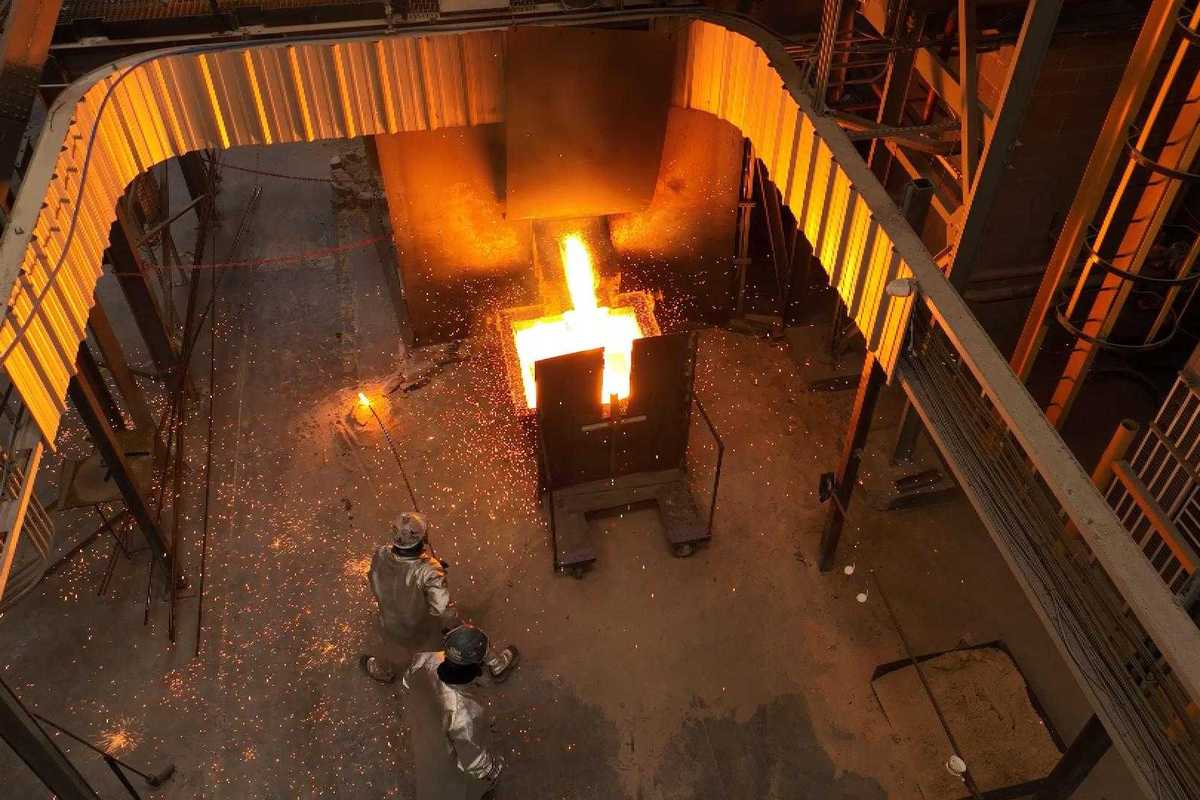
The Rice Alliance Clean Energy Accelerator has named its fifth cohort. Photo via the Ion

The Rice Alliance Clean Energy Accelerator has named 12 early-stage startups to its latest cohort.

The hybrid program, which operates in a hybrid capacity based out of the Ion, runs for 10 weeks and provides energy transition startups with training focused on fundraising, pilots, partnerships and sale. It begins July 8 and will be led by executive director Kerri Smith and program director Matthew Peña with support from executives-in-residence Lynn Frostman, John Jeffers, David Horsup and Dev Motiram.

The accelerator will culminate with a demo day on Sept. 18 at the Rice Alliance Energy Tech Venture Forum during the Houston Energy and Climate Startup Week.

Members of this year's cohort come from the Houston area as well as across the U.S. and Canada.

Class 5 for the Rice Alliance Clean Energy Accelerator includes:

  • Aqua-Cell Energy, which builds industrial-scale overnight batteries to provide affordable solar power
  • Arculus, a company that provides multilayer internal coating for pipelines that lowers friction, extends pipeline life and enables carbon dioxide transport and hydrogen blending
  • AtmoSpark, a Houston-based sustainable cooling and freshwater company that provides an electric field-driven air separation system that reduces dehumidification energy costs for data centers and industrial facilities
  • AtoMe, which delivers durable metallic composites to energy and aerospace companies using an eco-friendly dry blade method that eliminates harmful chemicals
  • ConceptLoop, a company that converts plastic waste into eco-friendly, low-carbon aggregate
  • Fathom Storage, which provides a more solidly embedded and steel-efficient anchoring solution for offshore service providers, wind energy developers and research institutes
  • GeoKiln, a Houston-based company that addresses issues of subsurface hydrogen extraction by applying proven oil and gas techniques to accelerate natural hydrogen reactions, enabling hydrogen production
  • Innowind Energy Solutions, a company that provides nonintrusive, active flow control devices to boost energy production and extend turbine lifespan
  • Lukera Energy, which transforms waste methane into high-value methanol using a breakthrough nanobubble technology
  • Metal Light Inc., which has developed a scalable, cost-effective Metal-Air generator to replace diesel generators
  • Moonshot Hydrogen, a company that converts food and agricultural waste into clean hydrogen and bioethanol
  • Resollant, a Woodlands-based company that delivers compact, zero-emission hydrogen and carbon reactors to refineries, petrochemical plants, steel and cement manufacturers and fuel producers

The Rice Alliance Clean Energy Accelerator has supported 55 ventures since it was founded in 2021, collectively raising over $250 million in funding, according to the university. See last year's cohort here.

Ad Placement 300x100
Ad Placement 300x600

CultureMap Emails are Awesome

Houston microgrid company names new CEO

new hire

Houston-based electric microgrid company Enchanted Rock has named a new CEO.

John Carrington has assumed the role after serving as Enchanted Rock's executive chairman since June, the company announced earlier this month.

Carrington most recently was CEO of Houston-based Stem, which offers AI-enabled software and services designed for setting up and operating clean energy facilities. He stepped down as Stem’s CEO in September 2024. Stem, which was founded in 2006 and went public under Carrington's leadership in 2021, was previously based in San Francisco.

Carrington has also held senior leadership roles at Miasolé, First Solar and GE.

Corey Amthor has served as acting CEO of Enchanted Rock since June. He succeeded Enchanted Rock founder Thomas McAndrew in the role, with McAndrew staying on with the company as a strategic advisor and board member. With the hiring of Carrington, Amthor has returned to his role as president. According to the company, Amthor and Carrington will "partner to drive the company’s next phase of growth."

“I’m proud to join a leadership team known for technical excellence and execution, and with our company-wide commitment to innovation, we are well positioned to navigate this moment of unprecedented demand and advance our mission alongside our customers nationwide,” Carrington said in the news release. “Enchanted Rock’s technology platform delivers resilient, clean and scalable ultra-low-emissions onsite power that solves some of the most urgent challenges facing our country today. I’m energized by the strong momentum and growing market demand for our solutions, and we remain committed to providing data centers and other critical sectors with the reliable power essential to their operations.”

This summer, Enchanted Rock also announced that Ian Blakely would reassume the role of CFO at the company. He previously served as chief strategy officer. Paul Froutan, Enchanted Rock's former CTO, was also named COO last year.

6 major acquisitions that fueled the Houston energy sector in 2025

2025 In Review

Editor's note: As 2025 comes to a close, we're revisiting the biggest headlines and major milestones of the energy transition sector this year. Here are six major acquisitions that fueled the Houston energy industry in 2025:

Houston-based Calpine Corp. to be acquired in clean energy megadeal

Houston's Calpine Corp. will be acquired by Baltimore-based nuclear power company Constellation Energy Corp. Photo via DOE

In January 2025, Baltimore-based nuclear power company Constellation Energy Corp. and Houston-based Calpine Corp. entered into an agreement where Constellation would acquire Calpine in a cash and stock transaction with an overall net purchase price of $26.6 billion. The deal received final regulatory clearance this month.

Investment giant to acquire TXNM Energy for $11.5 billion

Blackstone Infrastructure, an affiliate of Blackstone Inc., will acquire a major Texas electricity provider. Photo via Shutterstock

In May 2025, Blackstone Infrastructure, an investment giant with $600 million in assets under management, agreed to buy publicly traded TXNM Energy in a debt-and-stock deal valued at $11.5 billion. The deal recently cleared a major regulatory hurdle, but still must be approved by the Public Utility Commission of Texas.

Houston's Rhythm Energy expands nationally with clean power acquisition

PJ Popovic, founder and CEO of Houston-based Rhythm Energy, which has acquired Inspire Clean Energy. Photo courtesy of Rhythm

Houston-based Rhythm Energy Inc. acquired Inspire Clean Energy in June 2025 for an undisclosed amount. The deal allowed Rhythm to immediately scale outside of Texas and into the Northeast, Midwest and mid-Atlantic regions.

Houston American Energy closes acquisition of New York low-carbon fuel co.

Houston American Energy Corp. has acquired Abundia Global Impact Group, which converts plastic and certified biomass waste into high-quality renewable fuels. Photo via Getty Images.

Renewable energy company Houston American Energy Corp. (NYSE: HUSA) acquired Abundia Global Impact Group in July 2025. The acquisition created a combined company focused on converting waste plastics into high-value, drop-in, low-carbon fuels and chemical products.

Chevron gets green light on $53 billion Hess acquisition

With the deal, Chevron gets access to one of the biggest oil finds of the decade. Photo via Chevron

In July 2025, Houston-based Chevron scored a critical ruling in Paris that provided the go-ahead for a $53 billion acquisition of Hess and access to one of the biggest oil finds of the decade. Chevron completed its acquisition of Hess shortly after the ruling from the International Chamber of Commerce in Paris.

Investors close partial acquisition of Phillips 66 subsidiary with growing EV network

Two investment firms have scooped up the majority stake in JET, a subsidiary of Phillips 66 with a rapidly growing EV charging network. Photo via Jet.de Facebook.

In December 2025, Energy Equation Partners, a London-based investment firm focused on clean energy companies, and New York-based Stonepeak completed the acquisition of a 65 percent interest in JET Tankstellen Deutschland GmbH, a subsidiary of Houston oil and gas giant Phillips 66.

Houston researchers develop energy-efficient film for AI chips

AI research

A team of researchers at the University of Houston has developed an innovative thin-film material that they believe will make AI devices faster and more energy efficient.

AI data centers consume massive amounts of electricity and use large cooling systems to operate, adding a strain on overall energy consumption.

“AI has made our energy needs explode,” Alamgir Karim, Dow Chair and Welch Foundation Professor at the William A. Brookshire Department of Chemical and Biomolecular Engineering at UH, explained in a news release. “Many AI data centers employ vast cooling systems that consume large amounts of electricity to keep the thousands of servers with integrated circuit chips running optimally at low temperatures to maintain high data processing speed, have shorter response time and extend chip lifetime.”

In a report recently published in ACS Nano, Karim and a team of researchers introduced a specialized two-dimensional thin film dielectric, or electric insulator. The film, which does not store electricity, could be used to replace traditional, heat-generating components in integrated circuit chips, which are essential hardware powering AI.

The thinner film material aims to reduce the significant energy cost and heat produced by the high-performance computing necessary for AI.

Karim and his former doctoral student, Maninderjeet Singh, used Nobel prize-winning organic framework materials to develop the film. Singh, now a postdoctoral researcher at Columbia University, developed the materials during his doctoral training at UH, along with Devin Shaffer, a UH professor of civil engineering, and doctoral student Erin Schroeder.

Their study shows that dielectrics with high permittivity (high-k) store more electrical energy and dissipate more energy as heat than those with low-k materials. Karim focused on low-k materials made from light elements, like carbon, that would allow chips to run cooler and faster.

The team then created new materials with carbon and other light elements, forming covalently bonded sheetlike films with highly porous crystalline structures using a process known as synthetic interfacial polymerization. Then they studied their electronic properties and applications in devices.

According to the report, the film was suitable for high-voltage, high-power devices while maintaining thermal stability at elevated operating temperatures.

“These next-generation materials are expected to boost the performance of AI and conventional electronics devices significantly,” Singh added in the release.

---

This article originally appeared on our sister site, InnovationMap.