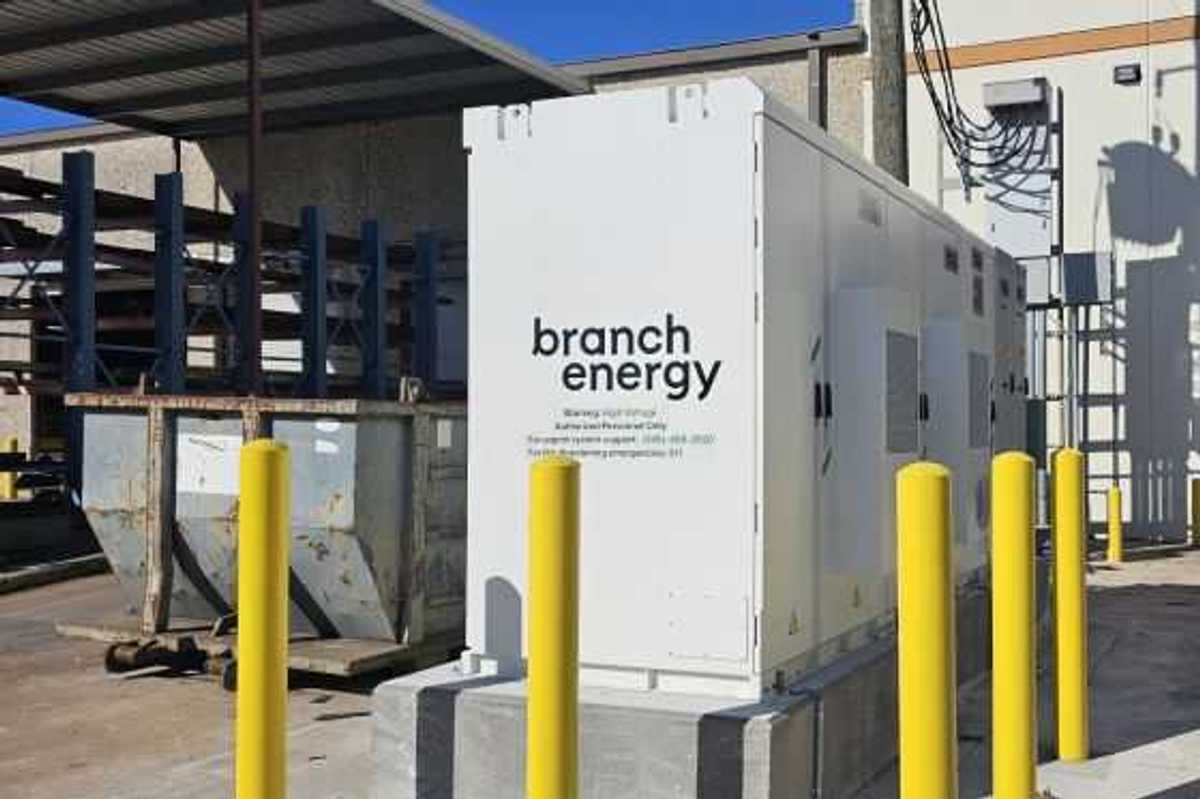
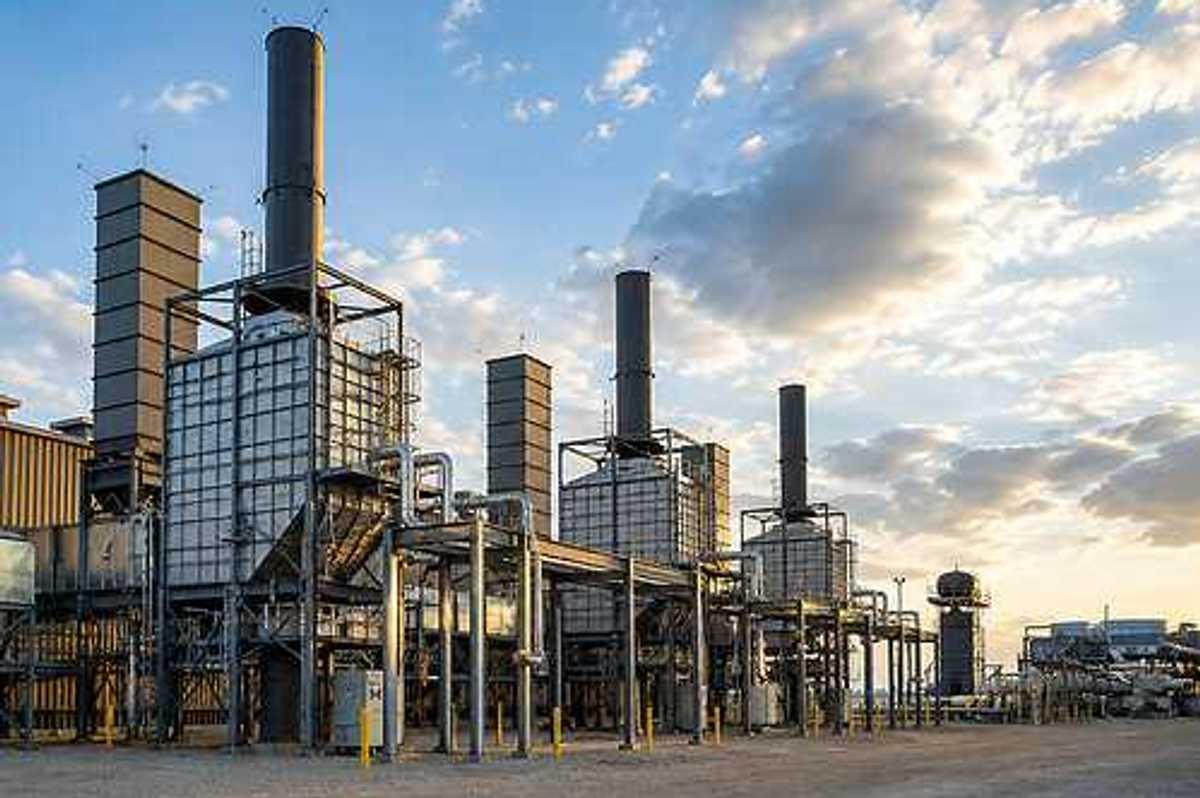
Utility Global’s H2Gen technology aims to decarbonize the heavy industrial sector. Photo courtesy of Utility Global

Houston-based Utility Global has raised $100 million in an ongoing Series D round to globally deploy its decarbonization technology at an industrial scale.

The round was led by Ara Partners and APG Asset, according to a news release. Utility plans to use the funding to expand manufacturing, grow its teams and support its commercial developments and partnerships.

“This financing marks a critical step in Utility’s transition from a proven technology to full-scale global commercial execution,” Parker Meeks, CEO and president of Utility Global, said in the release. “Industrial customers are no longer looking for pilots or promises; they need deployable solutions that work within existing assets and deliver true economic industrial decarbonization today that is operationally reliable and highly scalable. Utility’s technology produces both economic clean hydrogen and capture-ready CO2 streams, and this capital enables us to scale and deploy that impact globally with speed, discipline, and rigor.”

Utility Global's H2Gen technology produces low-cost, clean hydrogen from water and industrial off-gases without requiring electricity. It's designed to integrate into existing industrial infrastructure in hard-to-abate assets in the steel, refining, petrochemical, chemical, low-carbon fuels, and upstream oil and gas sectors.

“Utility is tackling one of the most difficult challenges in the energy transition: decarbonizing hard‑to‑abate industrial sectors,” Cory Steffek, partner at Ara Partners and Utility Global board chair, said in the release. “What sets Utility apart is its ability to compete head‑to‑head with conventional fossil‑based solutions on cost and reliability, even as it materially reduces emissions. With this new funding, Utility is well-positioned for its next chapter of commercial growth while maintaining the technical excellence and capital discipline that have defined its development to date.”

Utility Global reached several major milestones in 2025. After closing a $53 million Series C, the company agreed to develop at least one decarbonization facility at an ArcelorMittal steel plant in Brazil. It also signed a strategic partnership with California-based Kyocera International Inc. to scale global manufacturing of its H2Gen electrochemical cells.

The company also partnered with Maas Energy Works, another California company, to develop a commercial project integrating Maas’ dairy biogas systems with H2Gen to produce economical, clean hydrogen.

"These projects were never intended to stand alone. They anchor a deep and growing pipeline of commercial projects now in development globally across steel, refining, chemicals, biogas and other hard-to-abate sectors worldwide, Meeks shared in a 2025 year-in-review note. He added that 2026 would be a year of "focused acceleration to scale."

Ad Placement 300x100
Ad Placement 300x600

CultureMap Emails are Awesome

Houston startup strikes deal to develop hydrogen production plant in Canada

hydrogen partnership

Houston-based cleantech startup Vema Hydrogen has reached a tentative agreement with Canada-based CHARBONE Corp. to develop a hydrogen production and processing plant in Québec.

The deal would couple Vema’s production of engineered mineral hydrogen with CHARBONE’s purification, compression and distribution capabilities.

Engineered mineral hydrogen, also known as orange hydrogen, is produced underground by accelerating naturally occurring geochemical reactions in iron-rich rock formations, according to the journal Energy & Environmental Science.

“Across high-value markets — from aviation and maritime fuels to industrial gases — there is incredible demand for Vema’s low-carbon [hydrogen]. Now, more than ever, we need a pathway to deliver these low-carbon fuels,” Pierre Levin, CEO of Vema, said in a news release.

The project would enable Vema to expand into emerging markets like low-carbon maritime and aviation fuel, e-fuels and power generation. Incorporating CHARBONE’s capabilities, the agreement would also support Québec’s hydrogen supply chain.

“The market is demanding high-value industrial gases, and our customers need cleaner, more reliable supply. By pairing Vema’s [hydrogen] feedstock with our purification and distribution capabilities, we’re strengthening Québec’s position as a regional hub for next-generation hydrogen,” Dave Gagnon, CEO of CHARBONE, added in the release.

Vema said in February that it had completed drilling of its first two pilot wells in Québec, making them the world’s first pilot well for orange hydrogen. It’s the first time Vema’s technology has been used outside a lab.

“This pilot will provide the critical data needed to validate [our hydrogen] at commercial scale and demonstrate that Quebec can lead the world in this emerging clean energy category,” Levin said. “The quality of the rock within our core samples is exactly what we expected and is very promising for hydrogen yields.”

Shortly before Vema carried out the pilot drilling, it signed a 10-year deal with California-based energy technology company Verne Power to supply clean hydrogen for California data centers. Over the course of the 10-year agreement, Vema will boost annual production of orange hydrogen to more than 36,000 metric tons.

“There is a robust market for baseload power generation across the U.S., where data centers are straining the grid,” Levin said. “As we power California’s fastest-growing markets with clean hydrogen, we look toward expanding our hydrogen to markets globally and supporting AI-driven power hubs.”

Vema, founded two years ago, raised $13 million in seed funding in 2025.

“The energy transition and emerging uses of hydrogen have spurred demand for clean hydrogen,” Levin said in its funding announcement. “However, existing decarbonized hydrogen production methods simply don’t work — they are too costly and energy-intensive. Vema is here to change that. It’s time to unlock a new era of scalable, low-carbon hydrogen.”

Greentown names 5 climatech startups to manufacturing accelerator

Catalyst Cohort

Greentown Labs has named five climatech startups to its Go Make 2026 cohort, including one from Houston.

Greentown Go Make 2026 is in partnership with Shell Catalysts & Technologies and Technip Energies. Startups will be able to collaborate with leadership from Shell and Technip and have opportunities to work directly with their process engineering teams and develop potential partnerships, pilots and demonstrations, according to Greentown.

This year's manufacturing cohort focuses specifically on process technology and catalytic innovations, which, according to Greentown, have the potential to be a "critical enabler of the global energy transition." Greentown shares that 90 percent of chemical processes depend on catalysis, but traditional methods rely on fossil fuels and consume significant amounts of energy.

“Catalysis underpins the majority of industrial chemical processes, which together account for a significant share of global emissions, making it a critical lever for reducing carbon intensity while improving performance,” Georgina Campbell Flatter, CEO of Greentown, said in a news release. “Greentown Go Make 2026 is designed to close the gap between breakthrough innovation and industrial deployment. By connecting startups with Shell and Technip Energies’ technical expertise and global scale, we’re helping accelerate solutions that improve efficiency and drive industrial decarbonization.”

The five Greentown Go Make 2026 companies include:

  • Houston-based Biosimo, which makes scalable biochemicals from ethanol
  • Missouri-based Catalyxx, which transforms bioethanol into drop-in, cost-competitive, carbon-negative chemicals
  • Sydney, Australia-based HydGene Renewables, which produces low-carbon hydrogen and industrial chemicals from waste biomass
  • Switzerland-based TreaTech, which turns waste into renewable gas, water and minerals through catalytic hydrothermal gasification
  • California-based Unifuel, which has developed a chemical technology platform to make sustainable aviation fuel, renewable gasoline and other renewable chemicals

The cohort will be celebrated at a kickoff event in Houston at The Ion on June 9.

In addition to Greentown Go Make, Greentown also runs its Go Move (transportation), Go Energize (energy and electricity), Go Build (buildings), and Go Grow (food and agriculture) cohort-based programs. The climatech incubator announced its Go Build 2026 cohort in March. Read more here.