The Rice Alliance Clean Energy Accelerator has named its fifth cohort. Photo via the Ion

The Rice Alliance Clean Energy Accelerator has named 12 early-stage startups to its latest cohort.

The hybrid program, which operates in a hybrid capacity based out of the Ion, runs for 10 weeks and provides energy transition startups with training focused on fundraising, pilots, partnerships and sale. It begins July 8 and will be led by executive director Kerri Smith and program director Matthew Peña with support from executives-in-residence Lynn Frostman, John Jeffers, David Horsup and Dev Motiram.

The accelerator will culminate with a demo day on Sept. 18 at the Rice Alliance Energy Tech Venture Forum during the Houston Energy and Climate Startup Week.

Members of this year's cohort come from the Houston area as well as across the U.S. and Canada.

Class 5 for the Rice Alliance Clean Energy Accelerator includes:

  • Aqua-Cell Energy, which builds industrial-scale overnight batteries to provide affordable solar power
  • Arculus, a company that provides multilayer internal coating for pipelines that lowers friction, extends pipeline life and enables carbon dioxide transport and hydrogen blending
  • AtmoSpark, a Houston-based sustainable cooling and freshwater company that provides an electric field-driven air separation system that reduces dehumidification energy costs for data centers and industrial facilities
  • AtoMe, which delivers durable metallic composites to energy and aerospace companies using an eco-friendly dry blade method that eliminates harmful chemicals
  • ConceptLoop, a company that converts plastic waste into eco-friendly, low-carbon aggregate
  • Fathom Storage, which provides a more solidly embedded and steel-efficient anchoring solution for offshore service providers, wind energy developers and research institutes
  • GeoKiln, a Houston-based company that addresses issues of subsurface hydrogen extraction by applying proven oil and gas techniques to accelerate natural hydrogen reactions, enabling hydrogen production
  • Innowind Energy Solutions, a company that provides nonintrusive, active flow control devices to boost energy production and extend turbine lifespan
  • Lukera Energy, which transforms waste methane into high-value methanol using a breakthrough nanobubble technology
  • Metal Light Inc., which has developed a scalable, cost-effective Metal-Air generator to replace diesel generators
  • Moonshot Hydrogen, a company that converts food and agricultural waste into clean hydrogen and bioethanol
  • Resollant, a Woodlands-based company that delivers compact, zero-emission hydrogen and carbon reactors to refineries, petrochemical plants, steel and cement manufacturers and fuel producers

The Rice Alliance Clean Energy Accelerator has supported 55 ventures since it was founded in 2021, collectively raising over $250 million in funding, according to the university. See last year's cohort here.

Ad Placement 300x100
Ad Placement 300x600

CultureMap Emails are Awesome

Oxy CEO Vicki Hollub to retire, Reuters reports

retirement plans

Vicki Hollub, CEO of Houston-based Occidental (Oxy), is set to retire this year, Reuters first reported Thursday.

Hollub has held the top leadership position at Oxy since 2016 and has been with the oil and gas giant for more than 40 years. Before being named CEO, she served as chief operating officer and senior executive vice president at the company. She led strategic acquisitions of Anadarko Petroleum in 2019 and CrownRock in 2024, and was the first woman selected to lead a major U.S. oil and gas company.

Reuters reports that a firm date for her retirement has not been set. Richard Jackson, who currently serves as Oxy's COO, is expected to replace Hollub in the CEO role.

Oxy is leading a number of energy transition projects.

It's subsidiary 1PointFive is developing a $1.3 billion direct air capture (DAC) project in the Midland-Odessa area that is slated to be the largest facility of its kind in the world. Known as STRATOS, it's designed to capture up to 500,000 metric tons of CO2 per year.

The company shared recently that Phase 1 of the project is expected to go online in Q2, with Phase 2 ramping up through the remainder of 2026.

“We are immensely proud of the achievements to date and the exceptional record of safety performance as we advance towards commercial startup,” Hollub said of Stratos last year.

“We believe that carbon capture and DAC, in particular, will be instrumental in shaping the future energy landscape,” she added.

Oxy was one of the first to set ambitious net-zero goals. In a 2020 interview during CERAWeek, Hollub outlined Oxy's future as a “carbon management company.”

“Ultimately, I don’t know how many years from now, Occidental becomes a carbon management company, and our oil and gas would be a support business unit for the management of that carbon. We would be not only using [CO2] in oil reservoirs [but] capturing it for sequestration as well,” Hollub said.

Oxy opened its Oxy Innovation Center in the Ion last year, focused on advancing low-carbon technology. It also operates Oxy Low Carbon Ventures, which focuses DAC, carbon sequestration and low-carbon fuels through businesses like 1PointFive, TerraLithium and others.

Hertha Metals named world's  No. 1 most innovative manufacturing co. of 2026

top innovators

Led by Conroe-based Hertha Metals, five organizations in the Houston area earned shoutouts on Fast Company’s list of the World’s Most Innovative Companies of 2026.

Hertha Metals ranked No. 1 in the manufacturing category.

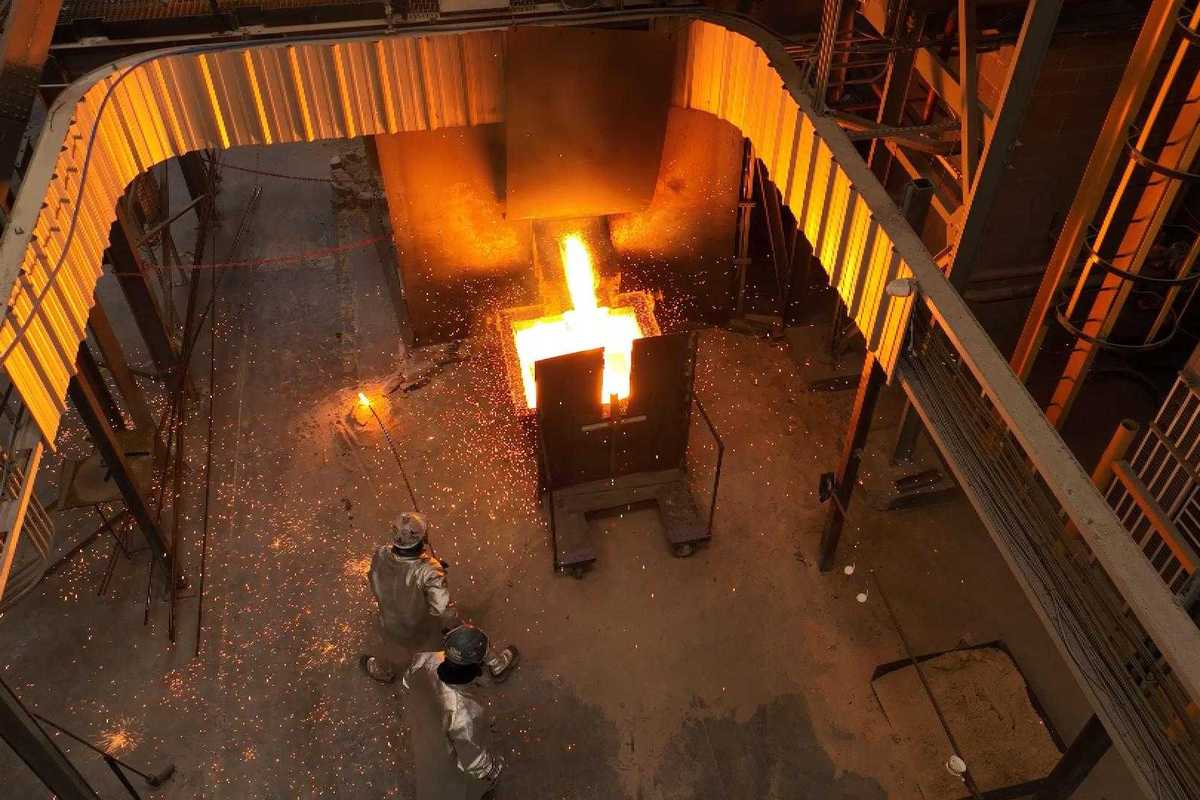
Last year, Hertha unveiled a single-step process for steelmaking that it says is cheaper, more energy-efficient and just as scalable as traditional steel manufacturing. It started testing the process in 2024 at a one-metric-ton-per-day pilot plant.

At the same time, Hertha announced more than $17 million in venture capital funding from investors such as Breakthrough Energy, Clean Energy Ventures, Khosla Ventures, and Pear VC.

“We’re not just reinventing steelmaking; we’re redefining what’s possible in materials, manufacturing, and national resilience,” Laureen Meroueh, founder and CEO of Hertha, said at the time.

Meroueh was also recently named to Inc. Magazine's 2026 Female Founders 500 list.

Hertha, founded in 2022, says traditional steelmaking relies on an outdated, coal-based multistep process that is costly, and contributes up to 9 percent of industrial energy use and 10 percent of global carbon emissions.

By contrast, Hertha’s method converts low-grade iron ore into molten steel or high-purity iron in one step. The company says its process is 30 percent more energy-efficient than traditional steelmaking and costs less than producing steel in China.

Last year, Hertha said it planned to break ground in 2026 on a plant capable of producing more than 9,000 metric tons of steel per year. In its next phase, the company plans to operate at 500,000 metric tons of steel production per year.

Here are Fast Company’s rankings for the four other Houston-area organizations:

  • Houston-based Vaulted Deep, No. 3 in catchall “other” category.
  • XGS Energy, No. 7 in the energy category. XGS’ proprietary solid-state geothermal system uses thermally conductive materials to deliver affordable energy anywhere hot rock is located. While Fast Company lists Houston as XGS’ headquarters, and the company has a major presence in the city, XGS is based in Palo Alto, California.
  • Houston-based residential real estate brokerage Epique Realty, No. 10 in the business services category. Epique, which bills itself as the industry’s first AI brokerage, provides a free AI toolkit for real estate agents to enhance marketing, streamline content creation, and improve engagement with clients and prospects.
  • Texas A&M University’s Nanostructured Materials Lab in College Station. The lab studies nano-structured materials to make materials lighter for the aerospace industry, improve energy storage, and enable the creation of “smart” textiles.

CERAWeek crowns winners of 2026 clean tech pitch competition

top teams

Twelve teams from around the country, including several from Houston, took home top honors at this year's Energy Venture Day and Pitch Competition at CERAWeek.

The fast-paced event, held March 25, put on by Rice Alliance, Houston Energy Transition Initiative and TEX-E, invited 36 industry startups and five Texas-based student teams focused on driving efficiency and advancements in the energy transition to present 3.5-minute pitches before investors and industry partners during CERAWeek's Agora program.

The competition is a qualifying event for the Startup World Cup, where teams compete for a $1 million investment prize.

PolyJoule won in the Track C competition and was named the overall winner of the pitch event. The Boston-based company will go on to compete in the Startup World Cup held this fall in San Francisco.

PolyJoule was spun out of MIT and is developing conductive polymer battery technology for energy storage.

Rice University's Resonant Thermal Systems won the second-place prize and $15,000 in the student track, known as TEX-E. The team's STREED solution converts high-salinity water into fresh water while recovering valuable minerals.

Teams from the University of Texas won first and second place in the TEX-E competition, bringing home $25,000 and $10,000, respectively. The student winners were:

Companies that pitched in the three industry tracts competed for non-monetary awards. Here are the companies named "most-promising" by the judges:

Track A | Industrial Efficiency & Decarbonization

Track B | Advanced Manufacturing, Materials, & Other Advanced Technologies

  • First: Licube, based in Houston
  • Second: ZettaJoule, based in Houston and Maryland
  • Third: Oleo

Track C | Innovations for Traditional Energy, Electricity, & the Grid

The teams at this year's Energy Venture Day have collectively raised $707 million in funding, according to Rice. They represent six countries and 12 states. See the full list of companies and investor groups that participated here.