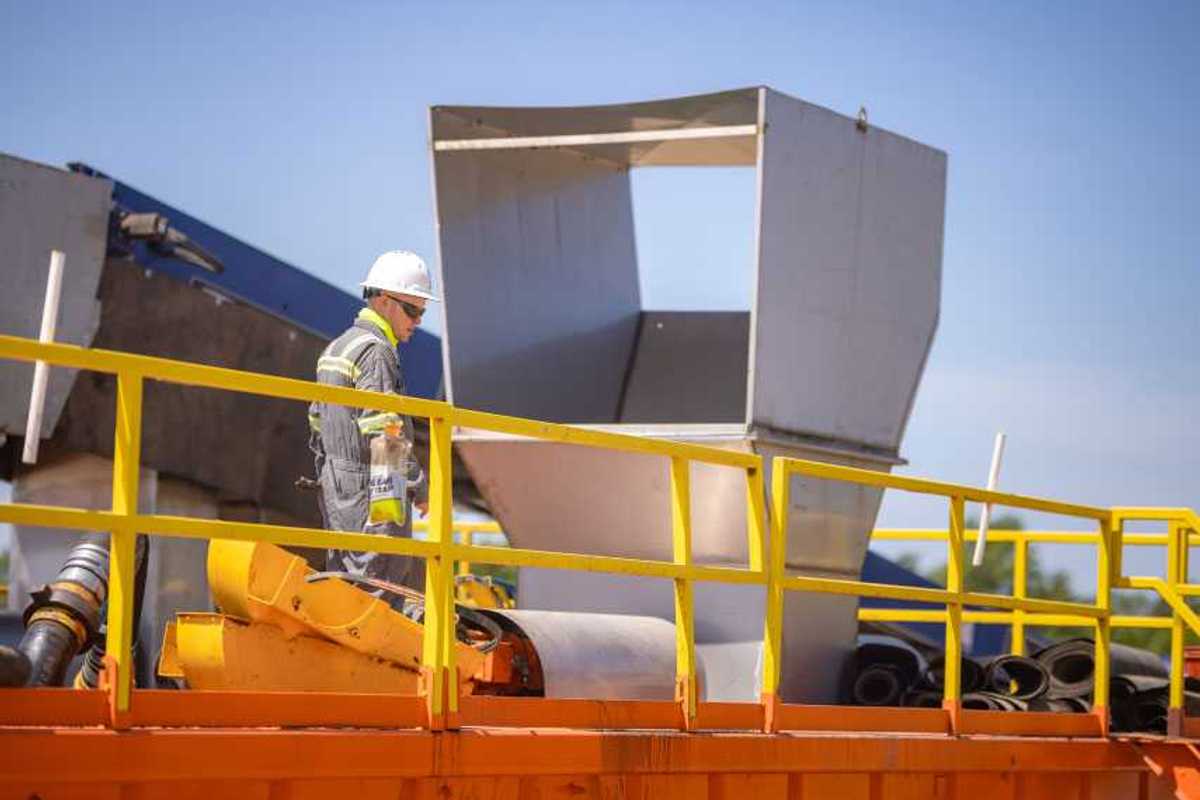
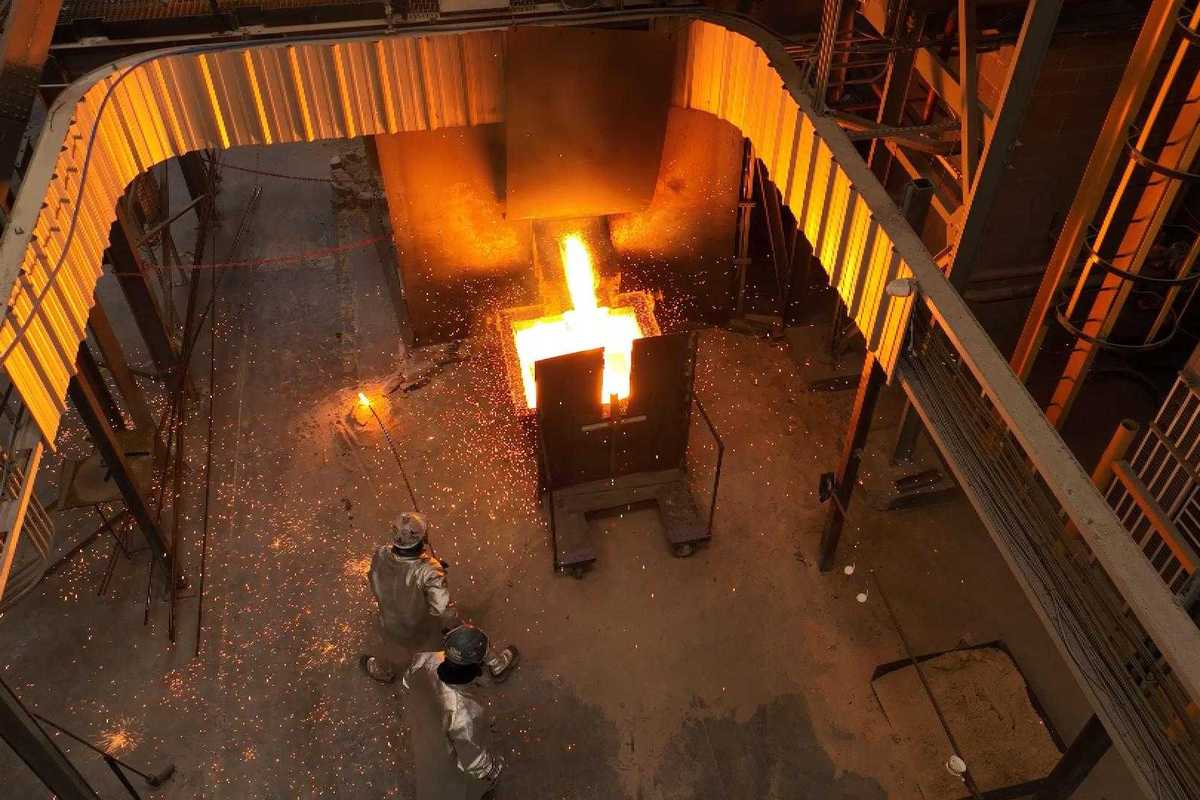
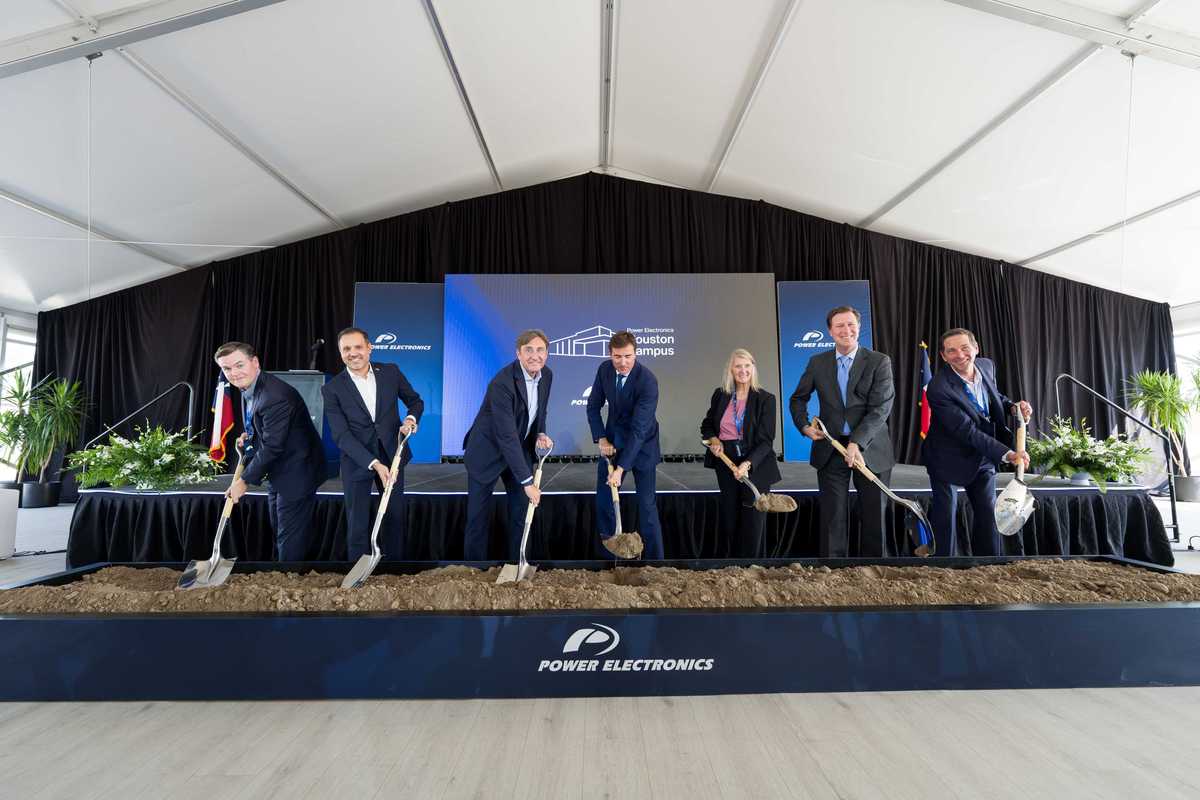
ERock Inc., which previously did business as Enchanted Rock, is filing for IPO. Photo via erock.com

Another energy company in Houston is going public amid a flurry of energy IPOs.

Houston-based ERock Inc., which specializes in utility-grade onsite microgrid systems for data centers and other customers, has filed paperwork with the U.S. Securities and Exchange Commission (SEC) to sell its shares on the New York Stock Exchange.

The ERock filing follows the recent $1.9 billion IPO of Houston-based Fervo Energy, a provider of geothermal power that’s now valued at $7.7 billion.

Another Houston energy company, EagleRock Land, just went public in a $320 million IPO that values the company at $3 billion. EagleRock owns or controls about 236,000 acres in the Permian Basin, earning money from royalties, fees, easements, water services and other revenue streams tied to drilling on its land.

According to Barron’s, more than a dozen energy and energy-related companies in the U.S. have gone public since the beginning of 2025, with the bulk of the IPOs happening this year.

ERock’s SEC filing doesn’t identify the per-share pricing range for the IPO or the number of Class A shares to be offered. ERock is a portfolio company of Energy Impact Partners, a New York City-based venture capital and private equity firm that invests in energy companies.

The company previously did business as Enchanted Rock. ERock Inc., formed in January, will function as a holding company that controls predecessor company ER Holdings Ltd.

In 2025, ERock generated revenue of $183.1 million, up 42.5 percent from the previous year, according to the IPO filing. It recorded a net loss of $59 million last year.

As of March 31, ERock boasted a sales backlog of nearly $1.3 billion, up 779 percent on a year-over-year basis. The company attributes most of that increase to greater demand from data centers.

The company primarily serves the power needs of data centers, utilities, industrial facilities, and commercial buildings. Its biggest markets are Texas and California.

“Several U.S. markets, such as Texas and California, face especially acute reliability risks,” ERock says in the SEC filing. “Texas already shows rapid load-growth pressures tied to data centers and industrial expansion, while California faces grid congestion, long interconnection queues, and above-average vulnerability to extreme heat- and weather-driven outages.”

Since its founding in 2018, ERock has installed microgrid systems at more than 400 sites with a capacity of about 1,000 megawatts. Customers include ComEd, Foxconn, H-E-B, Microsoft and Walmart.

By the end of this year, the company plans to expand its production of microgrid systems to a capacity of about 1.2 gigawatts with the opening of its Hyperion facility in Houston.

John Carrington leads ERock as CEO. He joined ER Holdings last year as chairman and CEO. Carrington previously was CEO of Houston-based Stem, a public company that offers AI-enabled clean energy software and services. Earlier, he spent 16 years at General Electric.

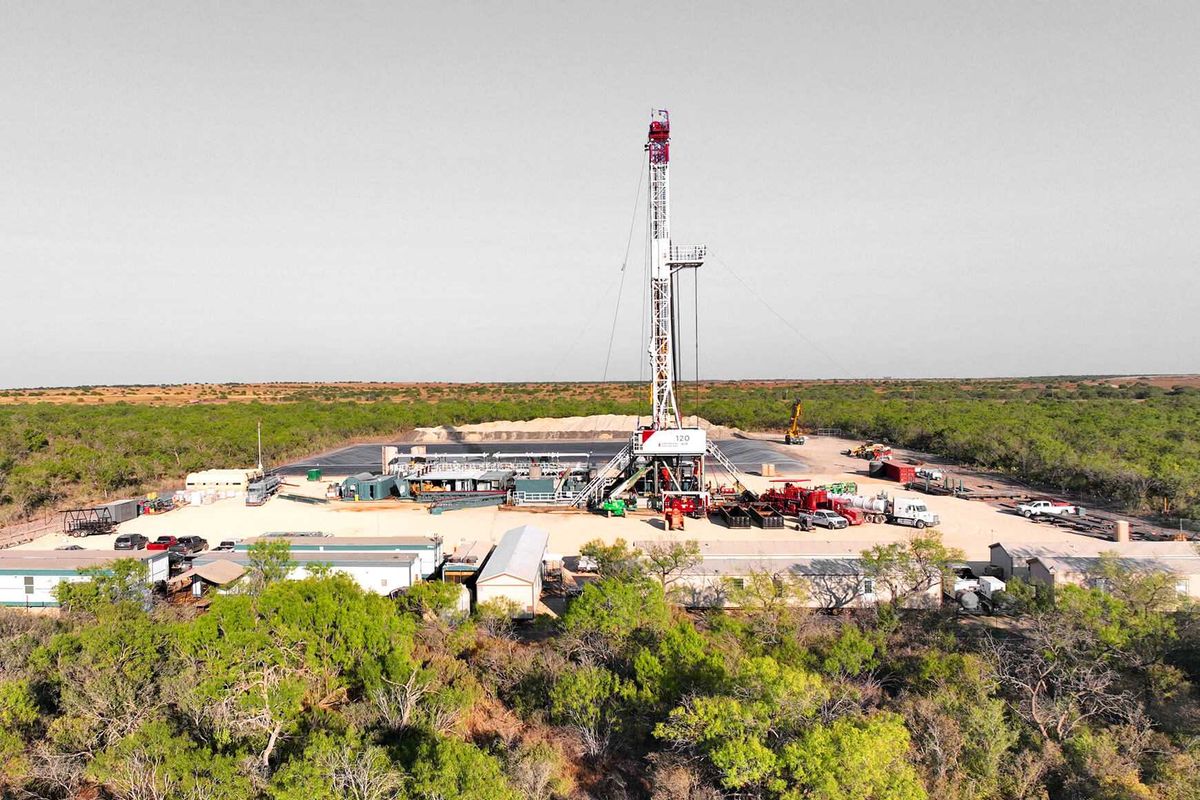
Fervo plans to sell 70 million shares of Class A common stock at $25 to $26 per share. Photo courtesy Fervo Energy

Fervo Energy bumps up IPO target to $1.82B

IPO update

Houston-based geothermal power company Fervo Energy is now eyeing an IPO that would raise $1.75 billion to $1.82 billion, up from the previous target of $1.33 billion.

In paperwork filed Monday, May 11 with the U.S. Securities and Exchange Commission, Fervo says it plans to sell 70 million shares of Class A common stock at $25 to $26 per share.

In addition, Fervo expects to grant underwriters 30-day options to buy up to 8.33 million additional shares of Class A common stock. This could raise nearly $200 million.

When it announced the IPO on May 4, Fervo aimed to sell 55.56 million shares at $21 to $24 per share, which would have raised $1.17 billion to $1.33 billion. The initial valuation target was $6.5 billion.

A date for the IPO hasn’t been scheduled. Fervo’s stock will be listed on Nasdaq under the ticker symbol FRVO.

Fervo, founded in 2017, has attracted about $1.5 billion in funding from investors such as Bill Gates-founded Breakthrough Energy Ventures, Google, Mitsubishi Heavy Industries, Devon Energy (which is moving its headquarters to Houston), Tesla co-founder JB Straubel, CalSTRS, Liberty Mutual Investments, AllianceBernstein, JPMorgan, Bank of America and Sumitomo Mitsui Trust Bank.

Fervo’s marquee project is Cape Station in Beaver County, Utah, the world’s largest EGS (enhanced geothermal system) project. The first phase will deliver 100 megawatts of baseload clean power, with the second phase adding another 400 megawatts. The site can accommodate 2 gigawatts of geothermal energy. Fervo holds more than 595,000 leased acres for potential expansion.

Cape Station has secured power purchase agreements for the entire 500-megawatt capacity. Customers include Houston-based Shell Energy North America and Southern California Edison.

Fervo Energy is targeting a listing on the Nasdaq exchange. Photo courtesy Fervo Energy

Fervo Energy officially files for initial public offering

going public

Fervo Energy has officially filed for IPO.

The Houston-based geothermal unicorn filed a registration statement on Form S-1 with the U.S. Securities and Exchange Commission on April 17 to list its Class A common stock on the Nasdaq exchange. Fervo intends to be listed under the ticker symbol "FRVO."

The number and price of the shares have not yet been determined, according to a news release from Fervo. J.P. Morgan, BofA Securities, RBC Capital Markets and Barclays are leading the offering.

The highly anticipated filing comes as Fervo readies its flagship Cape Station geothermal project to deliver its first power later this year

"Today, miles-long lines for gasoline have been replaced by lines for electricity. Tech companies compete for megawatts to claim AI market share. Manufacturers jockey for power to strengthen American industry. Utilities demand clean, firm electricity to stabilize the grid," Fervo CEO Tim Latimer shared in the filing. "Fervo is prepared to serve all of these customers. Not with complex, idiosyncratic projects but with a simplified, standardized product capable of delivering around-the-clock, carbon-free power using proven oil and gas technology."

Fervo has been preparing to file for IPO for months. Axios Pro first reported that the company "quietly" filed for an IPO in January and estimated it would be valued between $2 billion and $3 billion.

Fervo also closed $421 million in non-recourse debt financing for the first phase of Cape Station last month and raised a $462 million Series E in December. The company also announced the addition of four heavyweights to its board of directors last week, including Meg Whitman, former CEO of eBay, Hewlett-Packard, and Spring-based HPE.

Fervo reported a net loss of $70.5 million for the 2025 fiscal year in the S-1 filing and a loss of $41.1 million in 2024.

Tracxn.com estimates that Fervo has raised $1.12 billion over 12 funding rounds. The company was founded in 2017 by Latimer and CTO Jack Norbeck.

Ad Placement 300x100
Ad Placement 300x600

CultureMap Emails are Awesome

Houston developer launches AI-powered water platform to boost efficiency

eyes on AI

Houston real estate company McCord Development has launched an artificial-Intelligence-run water management platform, MizuWatch.

MizuWatch aims to help operators, districts, and municipalities detect leaks faster, reduce water loss and improve efficiency, according to the company. MizuWatch pulls data from supply sources, smart meters, historical usage and maintenance records, and combines them into a single platform. The AI system also uses visual mapping and digital twin technology to deliver near-real-time system insights.

“MizuWatch brings the right data together daily, so teams can see what’s happening now, intervene earlier and focus their resources where they have the greatest impact,” Jerzy Wielgus, chief product officer for MizuWatch, said in a news release.

MizuWatch was built to “scale across geographies and system sizes to help assist with water scarcity, aging infrastructure, and operational complexity,” according to the company. It was developed at Houston’s Generation Park, McCord’s 4,300-acre master planned commercial district. McCord was able to pilot the platform onsite to help manage its complex, real-world water systems at scale.

“Resilient infrastructure is a key factor for the companies choosing Generation Park,” Ryan McCord, CEO of McCord Development and Founder & CEO of MizuWatch, added in the release. “We made the decision to deploy smart meters, but no one knew how to use the data they generate. This is an opportunity across all infrastructure where sensors are deployed. What started as an internal solution has become a platform we believe can help stakeholders everywhere be more efficient in their operations, investment, and compliance.”

Last fall, Eli Lilly and Co. selected Generation Park for its $6.5 billion manufacturing plant. More than 300 locations in the U.S. competed for the factory. Bristol Myers Squibb Co., another pharmaceutical giant, also announced it is considering Generation Park for a new manufacturing hub earlier this month.

Oil giant BP ousts new chairman over serious conduct concerns

Sudden Exit

BP has ousted its chairman over what it called serious concerns related to “important governance standards, oversight and conduct.”

The departure was abrupt and unexpected, with Albert Manifold having been appointed to the position late last year.

“Albert has helped bring a welcome focus and pace to BP’s transformation," Amanda Blanc, senior independent director, said in a statement Tuesday, May 26. "However, the board has been surprised and disappointed to learn of governance oversight and conduct issues it deems unacceptable and has taken decisive action.”

BP's board named Ian Tyler as interim chair, effective immediately.

BP, based in London and with North American headquarters in Houston, is a “supermajor,” one of the five largest oil production and exploration companies in the world when measured by revenue and profit.

Manifold, who had been the top executive at Dublin-based global building materials company CRH for 10 years, became the chair at BP in October. BP was looking for someone to revamp the oil giant and went with an industry outsider in Manifold, who had made major strategic changes at CRH.

After a new focus on renewable energy at BP in 2020, by 2025 the company was seeking a return to its roots. BP's hard reset was criticized by environmentalists, as well as some shareholders.

CEO Murray Auchincloss said last year that optimism over opportunities in renewable energy was misplaced, with the company moving “too far and too fast.”

Changes in leadership at BP in recent years has been tumultuous.

CEO Bernard Looney resigned in late 2023 after BP determined that he had misled the company over his past relationships with colleagues.

Auchincloss stepped down in December, and the company named Meg O'Neill as his successor.

Manifold’s was challenged almost immediately when shareholders defeated company resolutions this spring that would have allowed BP to reduce climate reporting requirements and move its annual meetings fully online. Some 18% of shareholders voted against Manifold’s election as chairman, a high level of opposition for an appointment that is generally rubber stamped by investors.

Legal & General, one of Britain’s largest insurers and investment companies, said at the time that Manifold was responsible for resolutions that would have had “a negative impact on shareholders’ insight into how the company is addressing financially material long-term risks, and seizing long-term value creation opportunities, associated with the energy transition,” the Times of London reported on April 23.

Glass Lewis, an influential shareholder advisor, urged investors to vote against Manifold’s election. It held that BP took “unprecedented action” by refusing to consider a resolution from a group of climate activists and pension funds hoping to force the board to create an alternative strategy should demand for fossil fuels decline, the Times reported.

Like other big oil companies, BP has struggled with falling demand in recent years.

BP’s 2025 earnings fell 16% from a year earlier to $7.49 billion as the price of Brent crude, a benchmark for international oil prices, dropped 16.9%. The company’s preferred measure of earnings is underlying replacement cost profit, which adjusts for one-time items and fluctuations in the market value of inventories. Net income plunged 86% to $55 million.

Last year there were media reports that British oil giant Shell was in talks to buy rival BP. Shell denied the reports at the time.

The search for a new chair is underway, BP said Tuesday. Shares of BP Plc slid nearly 5% in midday trading on the NYSE.

Houston startup nets new funding to accelerate methane leak detection

fresh funding

Houston climatech startup Aquanta Vision has secured pre-seed funding to accelerate the commercialization of its methane leak detection software.

EIC Rose Rock participated in the round, joining investors like Marathon Petroleum Corporation, Chevron Technology Ventures, Ecosphere Ventures, and Odyssey Energy Advisors. The investment follows successful field trials for Aquanta Vision’s optical gas imaging (OGI) detection software, according to the company.

“This investment highlights our shared excitement as our patented novel technology improves detection levels for OGI camera operators,” Babur Ozden, Aquanta Vision’s CEO and founder, said in a news release. “The funding from EIC Rose Rock enables us to strategically accelerate this impact.”

Aquanta Vision’s OGI technology features an automated detection layer through an add-on app that improves methane detectability without requiring new hardware. It installs in minutes, runs locally and provides real-time, in-flight plume visualization for inspections with drone-mounted and handheld cameras.

“We are excited to partner with Aquanta Vision to scale and deploy this world-class technology that enables the energy industry to continue to deliver the secure, reliable and affordable energy that drives the American economy,” David Clouse, managing director of the EIC Rose Rock fund, added in the news release.

The company has partnered with Teledyne Flir and Sierra Olympia, makers of one of the world’s largest deployed fleet of handheld and drone-mounted optical gas imaging cameras used in industrial inspections. AquantaVision is now working with Teledyne Flir’s product team, as well as Sierra Olympia and its OEM partners.

Aquanta Vision has estimated that methane leaks cost the U.S. energy industry billions of dollars each year, with 60 percent of leaks going undetected, and methane leaks accounting for around 10 percent of natural gas's contribution to climate change, according to MIT’s climate portal.