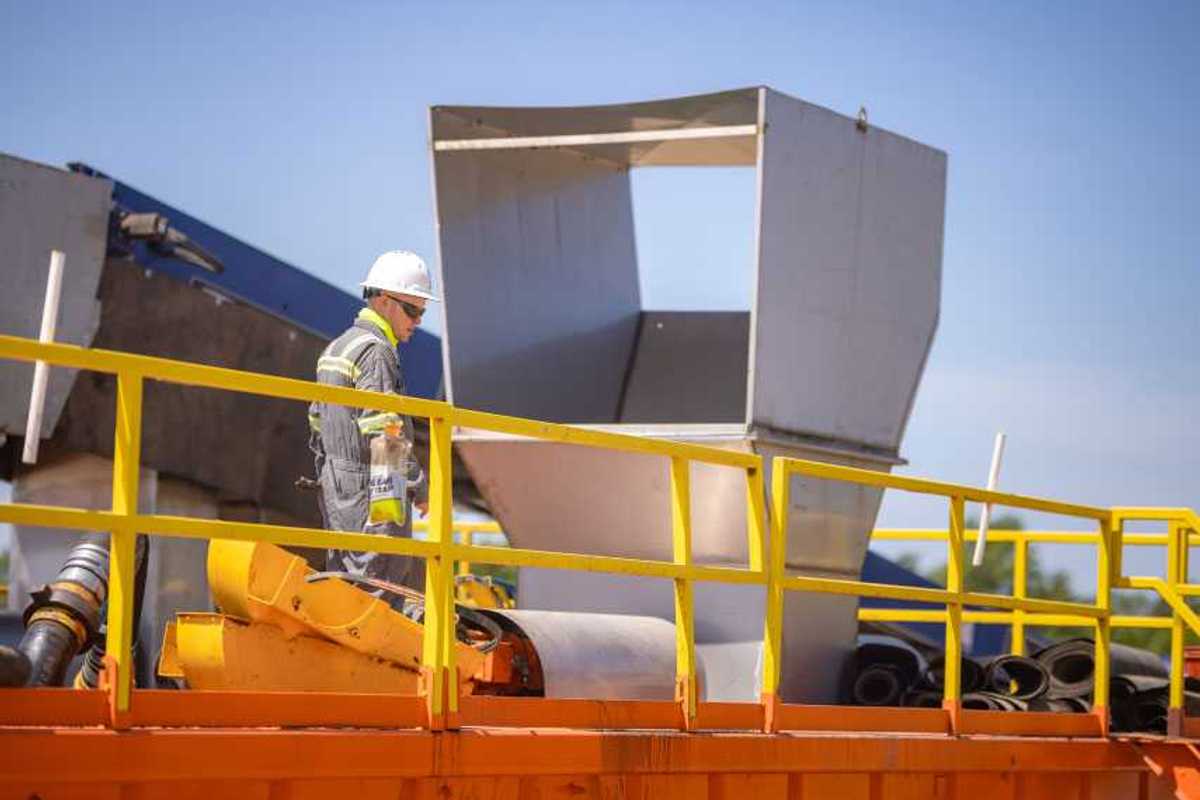
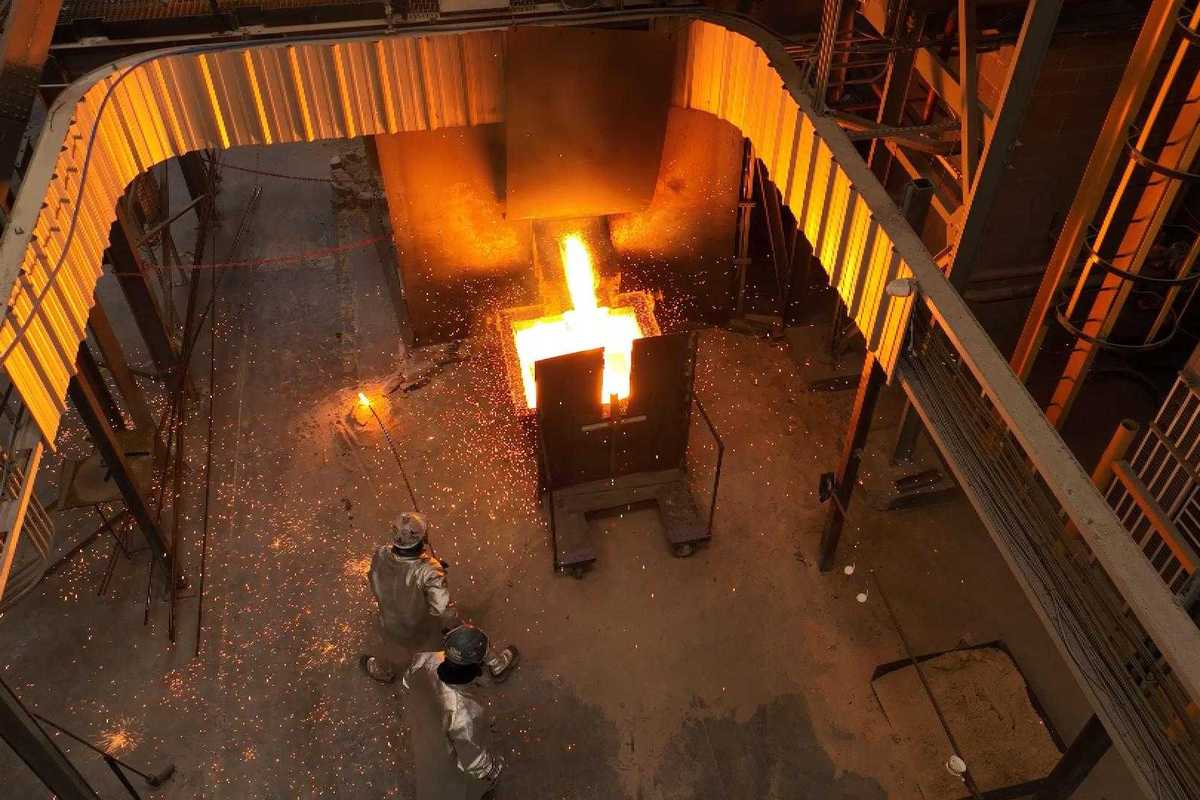
ERCOT plans to build a “super highway” of new transmission lines to boost grid reliability. Photo via Getty Images

The Electric Reliability Council of Texas, which manages the electric grid for 90 percent of Texans, is undertaking a $9.4 billion project to improve the reliability and efficiency of statewide power distribution. The initiative comes as ERCOT copes with escalating demand for electricity from data centers and cryptocurrency-mining facilities.

The project, approved Dec. 9 by ERCOT’s board, will involve building a 1,109-mile “super highway” of new 765-kilovolt transmission lines. One kilovolt equals 1,000 volts of electricity.

According to the Hoodline Dallas news site, the $9.4 billion project represents the five- to six-year first phase of ERCOT’s Strategic Transmission Expansion Plan (STEP). Hoodline says the plan, whose price tag is nearly $33 billion, calls for 2,468 miles of new 765-kilovolt power lines.

STEP will enable ERCOT to “move power longer distances with fewer losses,” Hoodline reports.

Upgrading the ERCOT grid is a key priority amid continued population growth in Texas, along with the state’s explosion of new data centers and cryptocurrency-mining facilities.

ERCOT says about 11,000 megawatts of new power generation capacity have been added to the ERCOT grid since last winter.

But in a report released ahead of the December board meeting, ERCOT says it received 225 requests this year from large power users to connect to its grid — a 270 percent uptick in the number of megawatts being sought by mega-users since last December. Nearly three-fourths (73 percent) of the requests came from data centers.

Allan Schurr, chief commercial officer of Houston-based Enchanted Rock, a provider of products and services for microgrids and onsite power generation, tells Energy Capital that the quickly expanding data center industry is putting “unprecedented pressure” on ERCOT’s grid.

“While the state has added new generation and transmission capacity, lengthy interconnection timelines and grid-planning limitations mean that supply and transmission are not keeping pace with this rapid expansion,” Schurr says. “This impacts both reliability and affordability.”

For families in Texas, this could result in higher energy bills, he says. Meanwhile, critical facilities like hospitals and grocery stores face a heightened challenge of preventing power outages during extreme weather or at other times when the ERCOT grid is taxed.

“I expect this trend to continue as AI and high-density computing grow, driving higher peak demand and greater grid variability — made even more complex by more renewables, extreme weather and other large energy users, like manufacturers,” Schurr says.

According to the Pew Research Center, data centers accounted for 4 percent of U.S. electricity use in 2024, and power demand from data centers is expected to more than double by 2030. Data centers that support the AI boom make up much of the rising demand.

In September, RBN Energy reported more than 10 massive data-center campuses had been announced in Texas, with dozens more planned. The Lone Star State is already home to roughly 400 data centers.

“Texas easily ranks among the nation’s top states for existing data centers, with only Virginia edging it out in both data-center count and associated power demand,” says RBN Energy.
Ad Placement 300x100
Ad Placement 300x600

CultureMap Emails are Awesome

Houston robotics company partners with Marathon Petroleum to scale fleet

robot alliance

Houston- and Boston-based Square Robot Inc. has announced a partnership with downstream and midstream energy giant Marathon Petroleum Corp. (NYSE: MPC).

The partnership comes with an undisclosed amount of funding from Marathon, which Square Robot says will help "shape the design and development" of its submersible robotics platform and scale its fleet for nationwide tank inspections.

“Marathon’s partnership marks a major milestone in our mission to transform industrial tank inspection,” David Lamont, CEO of Square Robot, said in a news release. “They recognize the proven value of our robotic inspections—eliminating confined space entry, reducing the environmental impact, and delivering major cost efficiencies all while keeping tanks on-line and working. We’re excited to work together with such a great company to expand inspection capabilities and accelerate innovation across the industry.”

The company closed a $13 million series B last year. At the time of closing, Square Robot said it would put the funding toward international expansion in Europe and the Middle East.

Square Robot develops autonomous, submersible robots that are used for storage tank inspections and eliminate the need for humans to enter dangerous and toxic environments. Its newest tank inspection robot, known as the SR-3HT, became commercially available and certified to operate at a broader temperature range than previous models in the company's portfolio this fall.

The company was first founded in the Boston area in 2016 and launched its Houston office in 2019.

Eclipse Energy lands Weatherford investment to scale clean hydrogen tech

clean energy collab

Oil and gas giant Weatherford International (NASDAQ: WFRD) has made a capital investment for an undisclosed amount in Eclipse Energy as part of a collaborative partnership aimed at scaling and commercializing Eclipse's clean fuel technology.

According to a release, joint projects from the two Houston-based companies are expected to launch as soon as January 2026. The partnership aims to leverage Weatherford's global operations with Eclipse Energy's pioneering subsurface biotechnology that converts end-of-life oil fields into low-cost, sustainable hydrogen sources.

“We strongly believe the subsurface is the most overlooked climate asset,” Prabhdeep Singh Sekhon, CEO of Eclipse Energy, said in the release. “This partnership demonstrates how traditional oilfield expertise and frontier biotechnology can come together to transform the energy transition. Weatherford’s global reach and deep technical knowledge will accelerate our ability to scale our low-carbon technology rapidly and cost-effectively.”

Eclipse Energy, previously known as Gold H2, completed its first field trial this summer, demonstrating subsurface bio-stimulated hydrogen production. According to the company, its technology could yield up to 250 billion kilograms of low-carbon hydrogen, and it could also extend "beyond hydrogen, laying the foundation for the next generation of subsurface clean energy fuels."

Last month, Eclipse Energy won in the Energy Transition Business category at the 2025 Houston Innovation Awards. The company closed an $8 million series A this year and has plans to raise another round in 2026.