A new report shows that Texas has about 16 public charging stations per 1,000 EVs. Photo by Kindel Media/Pexels

A new study from FinanceBuzz reports that Texas has the fifth most public electric vehicle charging stations among states in the U.S.

In its Electric Vehicle (EV) Statistics [2025]: Trends in Sales, Savings, and More report, FinanceBuzz, a personal finance and investment adviser, compiled electric vehicle data to find sales trends, adoption rates, charging infrastructure, costs, savings and more.

Texas has a total of 3,709 public EV charging stations, which equals about 16 stations per 1,000 EVs, according to the report. The remaining top five included:

  • No. 1 California with 17,122 EV charging stations
  • No. 2 New York with 4,814 EV charging stations
  • No.3 Massachusetts with 3,738 EV charging stations
  • No. 4 Florida with 3,715 EV charging stations

Los Angeles had the most public charging stations at 1,609 among U.S. cities. Austin was Texas’s top city with 656 stations.

The study also looked at how much Americans are spending on transportation, and found that the average American using a gas vehicle spends $1,865 annually on fuel. FinanceBuzz found that electric vehicle owners would pay 65 percent less on energy costs. Calculations were based on driving 14,489 miles annually, which measures to 37.9 miles per day. The full report sourced data from the International Energy Agency, the U.S. Department of Energy, the U.S. Department of Transportation, AAA, the U.S. Energy Information Administration and other organizations.

The report said Americans purchased over 1.5 million EVs in 2024, which equals approximately 10 percent of all new light-duty vehicles sold, citing information from the International Council on Clean Transportation.

While Tesla remains the most popular make, 24 new EV models were launched in 2024 by other companies, which represents a 15 percent increase from the previous year.

Other trends in the report included:

  • The U.S. now has more than 64,000 public charging stations and over 168,000 charging ports, which is up from fewer than 1,000 stations in 2010.
  • An average EV owner will spend about $654 per year on electricity, compared to $1,865 for a gas-powered vehicle. The savings equate to about $1,211 per year.
  • In 2024, U.S. EV sales surpassed 1.5 million, but the pace slowed compared to the previous year, with a 10 percent increase versus 40 percent in 2023.
  • Insuring an EV can be more costly because parts are harder to come by, making repairs and replacements more expensive.
  • In the second quarter of 2024, nearly half of new EVs were leased, which is a 28 percentage point increase since 2021.
Ad Placement 300x100
Ad Placement 300x600

CultureMap Emails are Awesome

Houston energy tech company breaks ground on low-cost green hydrogen pilot plant

coming soon

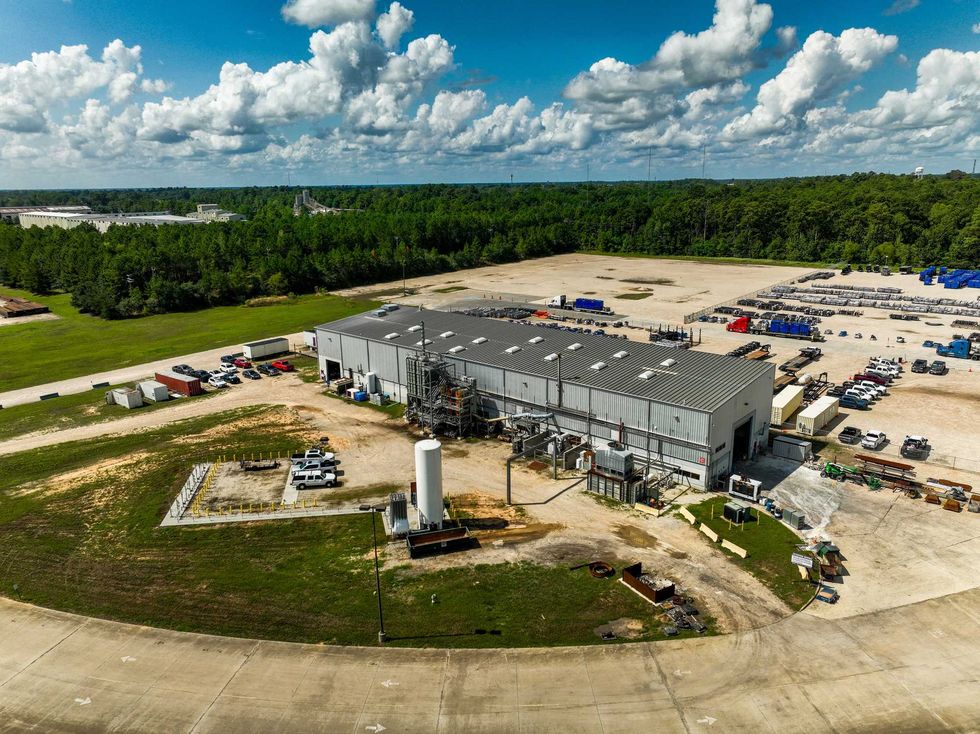
Houston’s Lummus Technology and Advanced Ionics have broken ground on their hydrogen pilot plant at Lummus’ R&D facility in Pasadena.

The plant will support Advanced Ionics’ cutting-edge electrolyzer technology, which aims to deliver high-efficiency hydrogen production with reduced energy requirements.

“By demonstrating Advanced Ionics’ technology at our state-of-the-art R&D facility, we are leveraging the expertise of our scientists and R&D team, plus our proven track record of developing breakthrough technologies,” Leon de Bruyn, president and CEO of Lummus, said in a news release. “This will help us accelerate commercialization of the technology and deliver scalable, cost-effective and sustainable green hydrogen solutions to our customers.”

Advanced Ionics is a Milwaukee-based low-cost green hydrogen technology provider. Its electrolyzer converts process and waste heat into green hydrogen for less than a dollar per kilogram, according to the company. The platform's users include industrial hydrogen producers looking to optimize sustainability at an affordable cost.

Lummus, a global energy technology company, will operate the Advanced Ionics electrolyzer and manage the balance of plant systems.

In 2024, Lummus and Advanced Ionics established their partnership to help advance the production of cost-effective and sustainable hydrogen technology. Lummus Venture Capital also invested an undisclosed amount into Advanced Ionics at the time.

“Our collaboration with Lummus demonstrates the power of partnerships in driving the energy transition forward,” Ignacio Bincaz, CEO of Advanced Ionics, added in the news release. “Lummus serves as a launchpad for technologies like ours, enabling us to validate performance and integration under real-world conditions. This milestone proves that green hydrogen can be practical and economically viable, and it marks another key step toward commercial deployment.”

Houston Energy Transition Initiative releases 2025 year in review

The View From HETI

The Houston Energy Transition Initiative (HETI) concludes another impactful year by reaffirming our commitment to positioning Houston as the global leader in the energy transition – delivering more energy with fewer emissions. HETI continues to be focused on advancing key regional priorities, driving economic development and talent recruitment.

It was a year of changes across the energy landscape, yet HETI continued to collaborate, convene, and deliver measurable progress. Below are some of the year’s key highlights:

Sharing Members’ Impact on Decarbonization and Emissions Reductions

HETI released a report detailing members’ low-carbon initiatives and commitments, showcasing industry momentum and long-term pathways to achieving the dual challenge of meeting growing global energy demand while reducing emissions. Major findings include more than $95 billion in low-carbon investments and 20% reduction in Scope 1 emissions since 2017 by HETI-affiliated companies. The report also recommends strategic pathways for continued emissions reductions.

Advancing CCUS at Commercial Scale

HETI publicly supported efforts to accelerate carbon capture, utilization, and storage (CCUS) efforts to commercial scale. Early in the year, HETI and the Houston CCS Alliance commissioned Texas A&M University’s Energy Institute and Mary Kay O’Connor Process Safety Center to research the operational history and safety record of CCUS in the United States. In November, the U.S. Environmental Protection Agency granted Texas authority to permit CCUS—a significant win that increases the region’s competitiveness in the global energy ecosystem.

Leadership in Resilient Power for Houston’s Growth

In June, HETI hosted its first Resilient Power: Fueling Houston’s Growing Economy summit, bringing together more than 100 business and civic leaders to discuss the role of resilient, reliable power in Houston’s economic development. Cross-sector leaders explored the impacts of rising power demand driven by industrial decarbonization and digitalization, and discussed the essential collaboration between the energy and tech sectors to strengthen long-term resilience through an “all of the above” approach. HETI also published a fact sheet on Houston’s resilient power access, affordability, and reliability as a resource for partners.

Showcasing Houston’s Leadership at CERAWeek 2025

HETI participated in CERAWeek 2025, elevating Houston’s energy leadership on the world stage. The HETI House activation in the Innovation Agora attracted more than 1,000 visitors and generated over 80 economic development leads. In addition, HETI partnered with Rice Alliance and TEX-E for the fourth annual Energy Ventures Pitch Competition at CERAWeek, bringing together students, startups and energy leaders to advance innovation and investment.

Scaling Houston’s Innovation Ecosystem

As Houston’s energy innovation ecosystem continues to grow, HETI plays an important role in shaping its future. During its second year, Houston Energy and Climate Startup Week attracted more than 3,900 attendees from local and global startups, industry leaders, and investors—further solidifying Houston’s status as the world’s leading energy innovation hub.

Strengthening Regional Competitiveness

To advance technology commercialization and support the Gulf Coast’s continued energy competitiveness, HETI hosted its second annual Gulf Coast National Labs Workshop. This year’s event convened more than 120 leaders representing six national laboratories, industry partners, academia, and government stakeholders to accelerate collaboration around the region’s greatest energy and chemical challenges.

HETI’s progress this year is significant, but the work ahead is even more critical. As we move into the new year, HETI remains steadfast in its commitment to convening industry leaders, informing policy, supporting innovation, and driving economic growth across the region. This work strengthens Houston’s core energy economy and accelerates the emerging sectors that will ensure Houston continues to lead the world in energy.

———

This article originally appeared on the Greater Houston Partnership's Houston Energy Transition Initiative blog. HETI exists to support Houston's future as an energy leader. For more information about the Houston Energy Transition Initiative, EnergyCapitalHTX's presenting sponsor, visit htxenergytransition.org.

Chevron CEO touts biofuels as part of its renewable energy efforts

Betting on biofuels

As Chevron Chairman and CEO Mike Wirth surveys the renewable energy landscape, he sees the most potential in biofuels.

At a recent WSJ CEO Council event, Wirth put a particular emphasis on biofuels—the most established form of renewable energy—among the mix of low-carbon energy sources. According to Biofuels International, Chevron operates nine biorefineries around the world.

Biofuels are made from fats and oils, such as canola oil, soybean oil and used cooking oil.

At Chevron’s renewable diesel plant in Geismar, Louisiana, a recent expansion boosted annual production by 278 percent — from 90 million gallons to 340 million gallons. To drive innovation in the low-carbon-fuels sector, Chevron opened a technology center this summer at its renewable energy campus in Ames, Iowa.

Across the board, Chevron has earmarked $8 billion to advance its low-carbon business by 2028.

In addition to biofuels, Chevron’s low-carbon strategy includes hydrogen, although Wirth said hydrogen “is proving to be very difficult” because “you’re fighting the laws of thermodynamics.”

Nonetheless, Chevron is heavily invested in the hydrogen market:

As for geothermal energy, Wirth said it shows “some real promise.” Chevron’s plans for this segment of the renewable energy industry include a 20-megawatt geothermal pilot project in Northern California, according to the California Community Choice Association. The project is part of an initiative that aims to eventually produce 600 megawatts of geothermal energy.

What about solar and wind power?

“We start with things where we have some reason to believe we can create shareholder value, where we’ve got skills and competency, so we didn’t go into wind or solar because we’re not a turbine manufacturer installing wind and solar,” he said in remarks reported by The Wall Street Journal.

In a September interview with The New York Times, Wirth touched on Chevron’s green energy capabilities.

“We are investing in new technologies, like hydrogen, carbon capture and storage, lithium and renewable fuels,” Wirth said. “They are growing fast but off a very small base. We need to do things that meet demand as it exists and then evolve as demand evolves.”