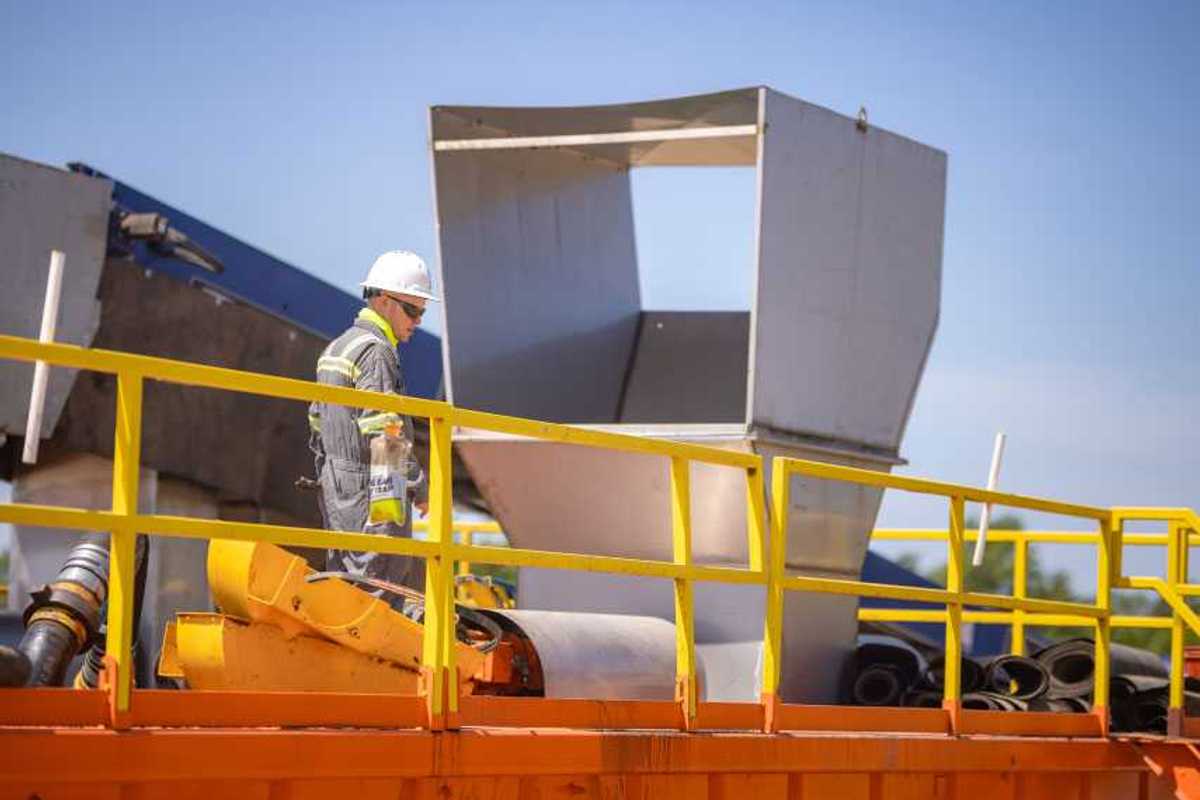
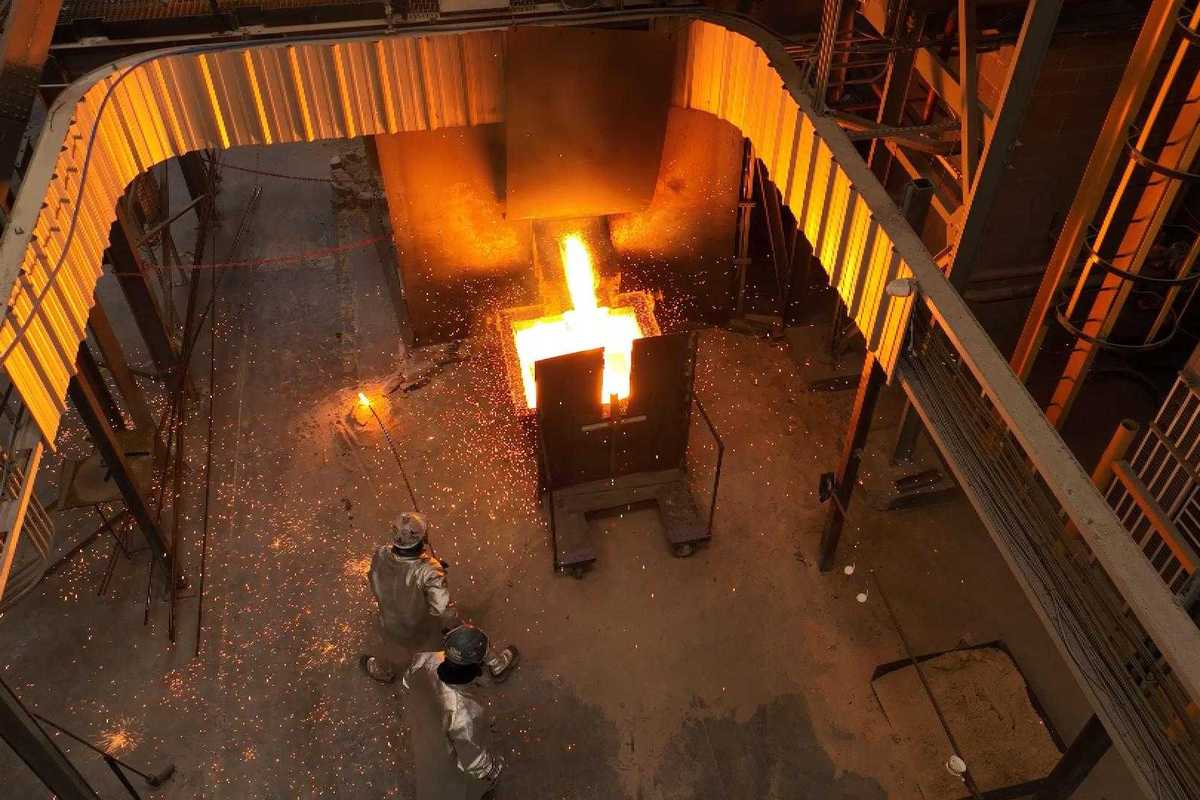
Ten Rice University energy innovators have been selected for the Chevron Energy Graduate Fellowship. Photo by Gustavo Raskosky/Rice University.

Chevron and Rice University have named 10 graduate students to the second cohort of the Chevron Energy Graduate Fellowship.

The students come from various departments at Rice and are working on innovations that reduce emissions or improve upon low-carbon technology. Fellows will each receive a $10,000 award to support their research along with the opportunity to connect with "industry experts who can provide valuable insight on scaling technologies from the lab to commercial application," according to Rice.

The fellows will present projects during a cross-university virtual symposium in the spring.

The 2025-26 Chevron Energy Graduate Fellows and their research topics include:

  • Cristel Carolina Brindis Flores, Molecular Simulations of CO₂ and H₂ for Geostorage
  • Davide Cavuto, Intensification of Floating Catalyst Chemical Vapor Deposition for Carbon Nanotubes Synthesis
  • Jaewoo Kim, Distributed Acoustic Sensing for In-situ Stress Monitoring in Enhanced Geothermal Systems
  • Jessica Hema Persaud, Understanding Tin Perovskite Crystallization Dynamics for All-Perovskite Tandems
  • Johanna Ikabu Bangala, Upcycling Methane-derived Zero-Valent Carbon for Sustainable Agriculture
  • Kashif Liaqat, From Waste to Resource: Increased Sustainability Through Hybrid Waste Heat Recovery Systems for Data Centers and Industry
  • Md Abid Shahriar Rahman Saadi, Advancing Sustainable Structural, Energy and Food Systems through Engineering of Biopolymers
  • Ratnika Gupta, Micro-Silicon/Carbon Nanotube Composite Anodes with Metal-free Current Collector for High Performance Li-Ion Batteries
  • Wei Ping Lam, Electrifying Chemical Manufacturing: High-Pressure Electrochemical CO₂ Capture and Conversion
  • William Schmid, Light-Driven Thermal Desalination Using Transient Solar Illumination

“Through this fellowship program, we can support outstanding graduate students from across the university who are conducting cutting-edge research across a variety of fields,” Carrie Masiello, director of the Rice Sustainability Institute, said in a news release. “This year, our 2026 Chevron Fellows are working on research that reflects the diversity of the sustainability research at Rice … and these scholarly endeavors exemplify the breadth and depth of research enabled by Chevron’s generous support.”

The Chevron Fellows program launched at Rice last year, naming 10 graduate students to the inaugural cohort. It is funded by Chevron and was created through a partnership between the Rice Sustainability Institute. Chevron launched a similar program at the University of Houston in 2023.

“Rice University continues to be an exceptional partner in advancing energy innovation,” Chris Powers, director of exploration commercial and portfolio at Chevron, added in the release. “The Chevron Energy Fellows program showcases the brilliance and drive of Rice graduate students, whose research in areas like carbon conversion, solar materials and geothermal sensing is already shaping the future of sustainable energy. We’re proud to celebrate their achievements and look forward to the impact they’ll continue to make across the energy landscape.”

Ad Placement 300x100
Ad Placement 300x600

CultureMap Emails are Awesome

Houston researcher develops efficient method to cool AI data centers

cool findings

A University of Houston professor has developed a new cooling method that can remove heat at least three times more effectively from AI data centers than current technologies.

Hadi Ghasemi, a distinguished professor of Mechanical & Aerospace Engineering at UH, published his findings in two articles in the International Journal of Heat and Mass Transfer. The findings solve a critical issue in the growing AI sector, according to UH.

High-powered AI data centers generate huge amounts of heat due to the GPU and operating systems they use with extreme power densities, which introduce complex thermal challenges. Traditionally, cooling methods, like microchannels, which use flow and spray cooling, have had limitations when exposed to extreme heat flux, according to UH.

Ghasemi’s research, however, found a more effective way to design thin-film evaporation structures to release heat from data centers and electronics at record performance.

Ghasem’s solution coupled topology optimization and AI modeling to determine the best shapes for thin film efficiency, ultimately landing on a branch-like structure—resembling a tree.

The model found that the “branches” needed to be about 50 percent solid and 50 percent empty space for optimum efficiency, and that they could sustain high heat fluxes with minimal thermal resistance.

“These structures could achieve high critical heat flux at much lower superheat compared to traditionally studied structures,” Ghasemi said in a news release. “The new structures can remove heat without having to get as hot as previous removal systems.

Ghasemi’s doctoral candidates, Amirmohammad Jahanbakhsh and Saber Badkoobeh Hezave, also worked on the project. The team believes their results show the impact of a physics-aware, AI design and can help ensure reliability, longevity and stability of AI data centers.

“Beyond achieving record performance, these new findings provide fundamental insight into the governing heat-transfer physics and establishes a rational pathway toward even higher thermal dissipation capacities,” Ghasemi added in the release

Texas federal judge allows lawsuit against California AG over ExxonMobil remarks

In the News

A federal judge in Texas ruled that ExxonMobil can bring a defamation lawsuit against California’s attorney general over comments about the company’s plastic recycling efforts.

U.S. District Judge Michael J. Truncale in the Eastern District of Texas said in a ruling in February that California Attorney General Rob Bonta cannot claim official immunity in regards to several statements he made, including one in a campaign email sent to Texas residents.

Bonta sued Exxon in September 2024, saying that the oil giant encouraged consumers to purchase plastics products with the promise that the products would be recycled. He said less than 5% of plastic is recycled into another plastic product, and that recycling processes touted by Exxon don't work. Exxon said the problem is with California's recycling system.

Exxon later sued Bonta in his individual capacity and environmental groups for defamation, saying that the comments harmed current and future business contracts. The lawsuit was filed in Texas, near its principal place of business.

Truncale dismissed the lawsuit against the environmental groups but allowed it to proceed against Bonta.

The judge pointed to a campaign email Bonta sent to Texas residents saying that only 5% is recycled and the rest ends up in the environment and in our bodies: “Exxon Mobil knew, and Exxon Mobil lied.” Bonta, a Democrat, argued he was simply updating email recipients on his office's activities.

But Truncale said a campaign contribution link on the email turned the communication into a campaign activity not protected by immunity in Bonta's official capacity as attorney general.

“Here, the contribution request betrays the email's true nature: a campaign promotion. Campaigning is not within Bonta's scope of employment,” the judge wrote.

Bonta has filed a notice of appeal.

“The Attorney General looks forward to vigorously litigating this case, and is proud to advance his lawsuit against ExxonMobil,” his press office said.

ExxonMobil said in a statement that the “campaign of lies designed to derail our advanced recycling business must stop.”

Houston startup debuts sustainable, bio-based 'leather' fashions

sustainable fashion

Last month, Houston-based Rheom Materials and India’s conscious design studio Econock unveiled a collaborative capsule collection that signaled more than just a product launch.

Hosted at Lineapelle—long considered the global epicenter of the world's premier leather supply chain—in the vaulted exhibition halls of Rho-Fiera Milano, the collection centered around Rheom’s 91 percent bio-based leather alternative, Shorai.

It was a bold move, one that shifted sustainability from a concept discussed in panel sessions to garments that buyers could touch and wear.

The collection featured a bomber-style jacket, an asymmetrical skirt and a suite of accessories—all fabricated from Shorai.

The standout piece, a sculptural jacket featuring a funnel neck and dual-zip closure, was designed for movement, challenging assumptions about performance limitations in bio-based materials. The design of the asymmetrical skirt was drawn from Indian armored warrior traditions, according to Rheom, with biodegradable corozo fasteners.

Built as a modular wardrobe rather than isolated pieces, the collection reflects a shared belief between Rheom and Econock in designing objects that adapt to daily life, according to the companies.

The collection was born out of a new partnership between Rheom and Econock, focused on bringing biobased materials to the market. According to Rheom, the partnership solves a problem that has stalled the adoption of many next-gen textiles: supply chain friction.

While Rheom focuses on engineering scalable bio-based materials, New Delhi-based Econock brings the complementary design and manufacturing ecosystem that integrates artisans, circular materials and production expertise to translate the innovative material into finished goods.

"This partnership removes one of the biggest barriers brands face when adopting next-generation materials,” Megan Beck, Rheom’s director of product, shared in a news release. “By reducing friction across the supply chain, Rheom can connect brands directly with manufacturers who already know how to work with Shorai, making the transition to more sustainable materials far more accessible.”

Sanyam Kapur, advisor of growth and impact at Econock, added: “Our partnership with Rheom Materials represents the benchmark of responsible design where next-gen materials meet craft, creativity, and real-world scalability.”

Rheom, formerly known as Bucha Bio, has developed Shorai, a sustainable leather alternative that can be used for apparel, accessories, car interiors and more; and Benree, an alternative to plastic without the carbon footprint. In 2025, Rheom was a finalist for Startup of the Year in the Houston Innovation Awards.

Shorai is already used by fashion lines like Wuxly and LuckyNelly, according to Rheom. The company scaled production of the sugar-based material last year and says it is now produced in rolls that brands can take to market with the right manufacturer.

---

This article originally appeared on our sister site, InnovationMap.