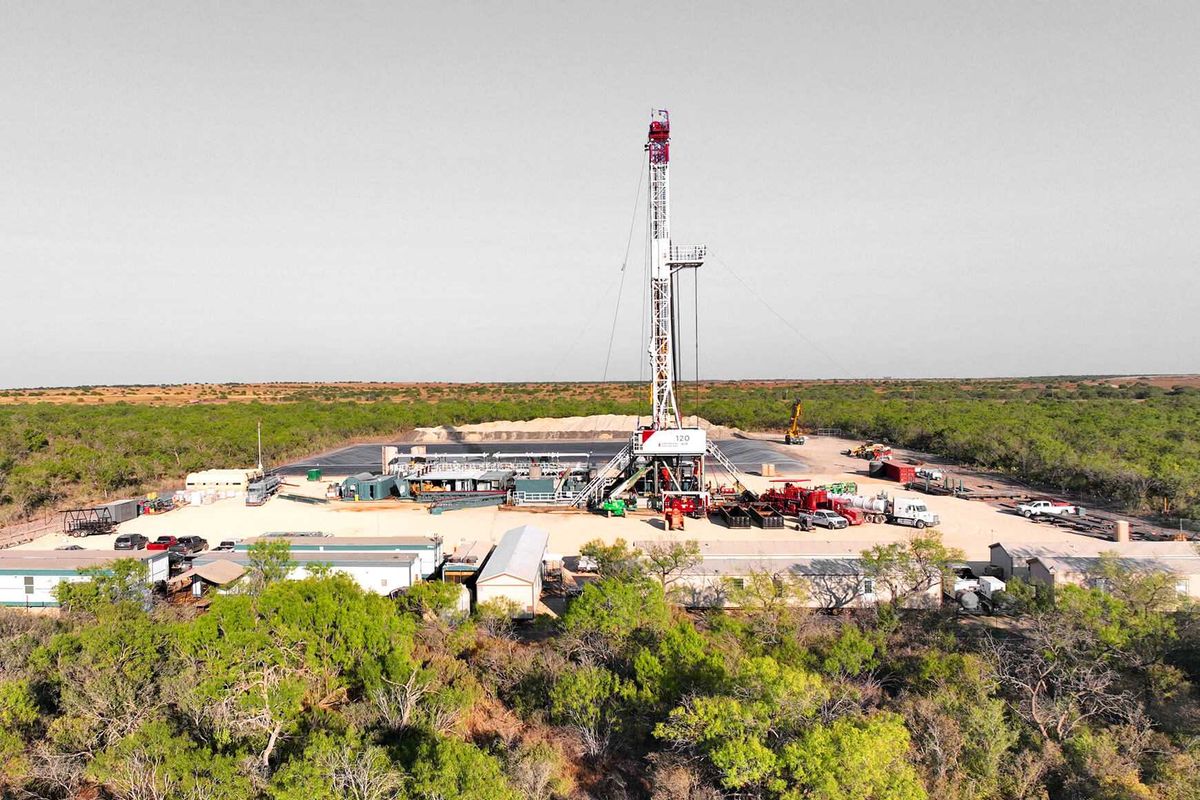
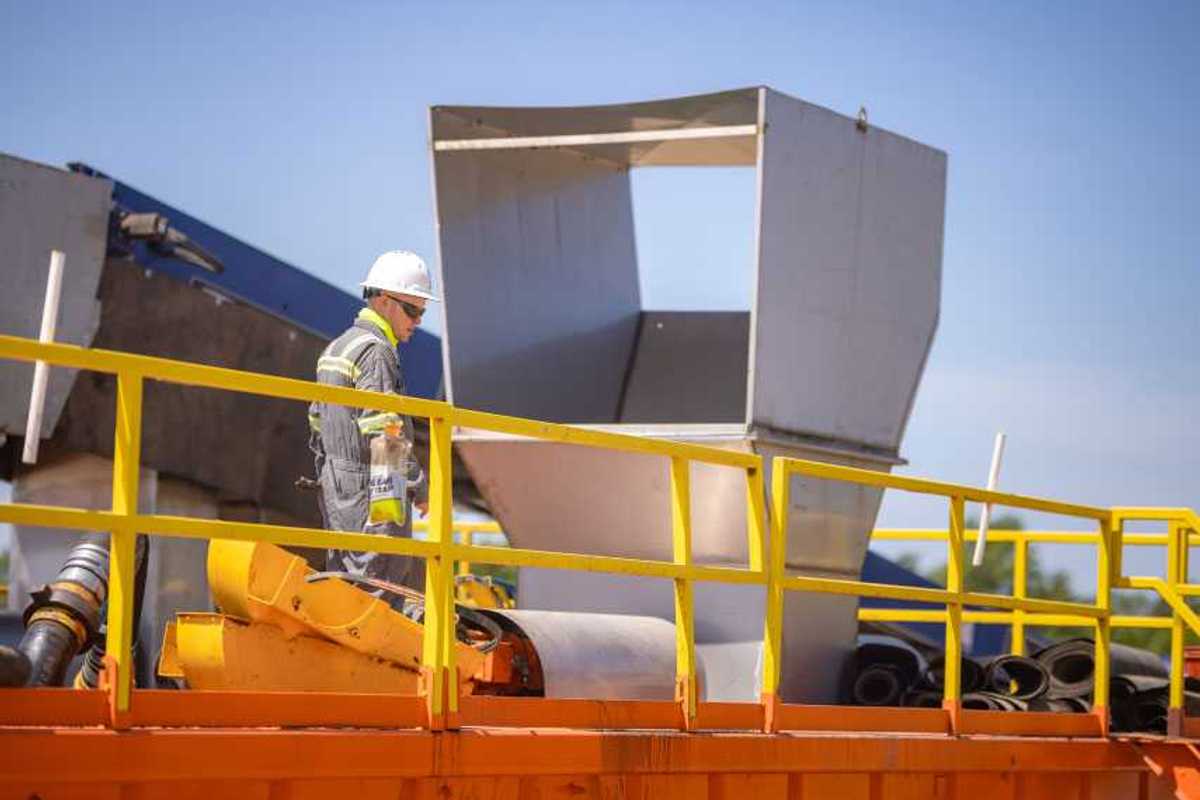
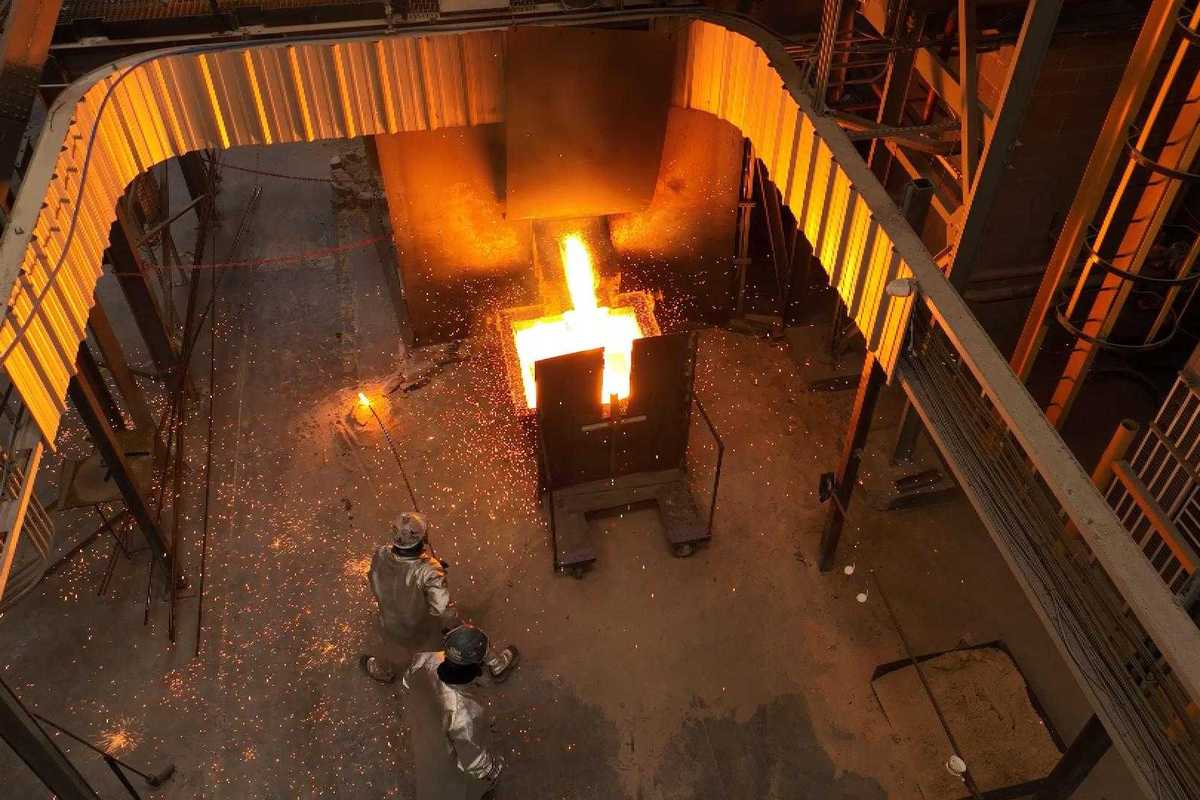
Syzygy Plasmonics has entered into a capacity reservation agreement with a global fuel distribution company. Photo courtesy of Syzygy

Houston-based Syzygy Plasmonics has secured a major future customer for its sustainable aviation fuel.

Syzygy announced this week that it has entered into a capacity reservation agreement with World Fuel Services, a global fuel distribution and logistics company.

Through the deal, World Fuel has reserved a portion of Syzygy's SAF production for future plants slated for Central and South America. The clean fuel will be produced at Syzygy’s NovaSAF-1 facility in Uruguay, which is moving toward construction.

The NovaSAF-1 will be the world's first electrified facility to convert biogas into sustainable aviation fuel (SAF). The facility is expected to produce over 350,000 gallons of SAF annually, which would be considered “a breakthrough in cost-effective, scalable clean fuel,” according to Syzygy.

The facility is expected to produce SAF with at least an 80 percent reduction in carbon intensity compared to Jet A fuel and make its first deliveries in 2028.

"Following NovaSAF-1, this agreement reflects continued interest in scalable pathways for producing SAF from biogas," Trevor Best, CEO of Syzygy Plasmonics, said in a news release. "Our NovaSAF platform is designed to deliver cost-competitive fuel while supporting the aviation sector's evolving regulatory and sustainability requirements."

Syzygy will make a portion of future production capacity available to World Fuel from its planned facilities, subject to the development and completion of those projects, according to the deal.

"We continue to evaluate supply opportunities that support increased access to lower carbon fuels in aviation, in line with emerging regulatory requirements and customer demand," Michael Ranger, senior vice president of supply EMEAA at World Fuel, added in the release. "Arrangements such as this are part of our ongoing efforts across the supply chain.”

Syzygy also secured an offtake agreement with Singapore-based commodity company Trafigura from NovaSAF-1 earlier this year.

Ad Placement 300x100
Ad Placement 300x600

CultureMap Emails are Awesome

Houston researchers land $10M grant to study how climate change drives disease threats

climate health research

Researchers from Rice University, Baylor College of Medicine and the University of Texas School of Public Health have received a $10 million grant to support research and public education on how climate change is linked to public health.

The funding comes from North Carolina-based Burroughs Wellcome Fund and is known as the organization’s Climate + Health Excellence (CHEX) award. It will be used over the next five years to launch the new FORECAST initiative, led by Rice professors and co-investigators Sylvia Dee and Joseph Campan.

FORECAST will “study how a rapidly changing environment and weather drive the emergence and expansion of deadly pathogens in human populations,” according to a release from Rice.

“This grant supports novel research linking climate change projections to health care solutions while simultaneously ensuring the next generation of scientists, leaders and policymakers have the training to assess and respond to the climate change risks that we already know are increasing every year,” Dee said in the release.

The funding will go toward a variety of new initiatives and centers.

At Rice, the funding will help launch the new Center for Climate and Environmental Health, as well as cross-campus multidisciplinary collaborations, seed grants, postdoctoral and graduate positions, and more, according to the university.

The grant will also support the statewide “Middle to Medical” climate-health educational program for youth. The program will focus on teaching how pathogens spread and how climate change plays a role in the process.

“FORECAST will prepare youth across Texas to make informed health decisions that protect themselves and their families and communities from extreme weather and disease-related risks,” Nancy Moreno, a professor of education, innovation and technology at Baylor College of Medicine and co-investigator on this grant, added in the release.

Anthony Maresso, professor of molecular virology and microbiology at Baylor College of Medicine, will share expertise in viral pathogen sewage detection that was developed during the COVID-19 pandemic; while Eric Boerwinkle, dean of the UT School of Public Health, will share insights from the Texas Wastewater Environmental Biomonitoring Network, which tracks disease-causing viruses and bacteria by testing wastewater weekly at Texas sites.

“Hotter days, bigger storms, new disease threats — Texas’s future demands preparation,” Boerwinkle added in the release. “With support from the Burroughs Wellcome Fund, the FORECAST team is helping Texas detect threats earlier and respond faster, saving lives and strengthening our economy.”

EV surge could shutter 40 refineries by 2040, Wood Mackenzie report warns

ev outlook

The rise of electric vehicles could spell trouble for Houston’s oil and gas sector, a new report suggests. But the oil and gas industry stands to benefit from potential sluggishness in U.S. adoption of EVs.

If worldwide EV adoption rises as expected, global oil demand could fall by five million barrels per day by 2040, accelerating the closure of about 40 oil refineries, says the report, published by energy research and consulting firm Wood Mackenzie. The firm’s North American hub is in Houston.

Those closures might spell trouble for refinery operators with a sizable Houston-area presence, including BP, ExxonMobil, Marathon, Saudi Aramco, and Valero. In 2025, the five companies collectively earned roughly $33 billion from downstream operations, including refineries. One caveat: Each company assigns a different definition to “downstream.”

Refineries in Organization for Economic Co-operation and Development (OECD) countries, including the U.S. but excluding Middle Eastern heavyweights, “are most at risk due to their high energy costs and carbon prices,” the Wood Mackenzie report says.

On the flip side, an abundant U.S. oil supply means American drivers have less of an incentive to switch from traditional cars to electric vehicles, despite stubbornly high fuel prices, according to the report.

Wood Mackenzie predicts EVs will account for 20 percent of the U.S. personal and commercial vehicle fleet in 2040, up from three percent in 2025. That compares with a global forecast of 25 percent in 2040, up from 4 percent last year.

Another U.S. roadblock to EV adoption cited in the report: the country’s relative lack of advanced battery manufacturing.

“Without advanced battery technologies, the U.S. auto sector is at risk of ceding its home market to non-Chinese EVs and falling behind competitors internationally,” the report says.

Furthermore, according to the report, Chinese investment in EV manufacturing in the U.S. probably will remain a no-go and tariffs on Chinese EV imports likely won’t be lifted, even if Democrats resurrected EV incentives following a White House win in 2028.

“Competition among EV manufacturers in international markets will only intensify,” the report notes. “Companies that can offer competitive products in high-growth markets will be best positioned for long-term success.”

Houston’s data center capacity set to grow 80%, report says

data findings

Houston stands to benefit from constraints dogging data center markets elsewhere in Texas, a new report indicates. This comes against the backdrop of Texas surpassing Virginia as the country’s top state for data centers — and amid deepening opposition to these facilities.

The report, published by commercial real estate services provider JLL, foresees Houston continuing to gain traction in data center development as occupants seek “scalable alternatives” to Texas markets experiencing supply-and-demand imbalances.

The Houston area currently hosts data centers with 287 megawatts of capacity, well below capacity levels in the Dallas-Fort Worth, Austin-San Antonio and West Texas markets.

However, the region is witnessing a spike in capacity, with 390 megawatts of capacity under construction, according to the report. Counting newly built data centers, Houston would be home to 677 megawatts of data center capacity, an 80 percent increase from the current inventory, the report says.

Developers target West Houston for large-scale data centers

Developers increasingly are evaluating West Houston and surrounding areas for large-scale campuses capable of supporting behind-the-meter power, according to the report. Data center development in the region is likely to remain concentrated in those areas, where power is readily accessible and flood risks are lower, the report adds.

The report notes that Houston is evolving from a traditionally enterprise-focused co-location market for data centers into a “credible large-scale growth market,” buoyed by rising interest in hyperscale facilities and increased development activity.

Corporate, energy and healthcare users are still active in Houston’s data center market, the report says, with cloud computing and technology tenants making inroads. The Houston market absorbed 25 megawatts of data center capacity in the first half of this year.

Texas crowned No. 1 state market for data center capacity

The growth of Houston’s data center sector is occurring in tandem with Texas’ ascent as a data center market. The report shows Texas now boasts 26 gigawatts of existing and under-construction capacity, followed by Virginia at 13 gigawatts.

JLL declares that “Texas has cemented its position as the state for data centers.”

The “frontier” markets of West Texas, the Carolinas, Louisiana, and Ohio account for 77 percent of all capacity being developed nationwide, according to the report.

As evidence of Texas’ heightened stature in the data center sector, commercial real estate services provider Cushman & Wakefield recently ranked Dallas as the world’s No. 1 primary data center market, while Austin-San Antonio led the list of second-tier markets and West Texas topped the third-tier ranking.

These rankings underscore “Texas’ growing importance as a large-scale AI infrastructure hub,” Cushman & Wakefield says.

Opposition to new data centers in Texas grows

While businesses see the value of adding data centers in Texas, the state’s data center boom is rattling residents and politicians alike.

A recent University of Houston survey finds that although 85 percent of Houston-area residents use AI—a key driver of data center growth—nearly 63 percent oppose construction of a data center within a mile of their home. Experts estimate 6.5 gigawatts of capacity, or roughly one-fifth of the total U.S. pipeline, will join the Texas power grid by 2030, with Houston serving as a main hub.

A poll taken recently by the University of Texas/Texas Politics Project yielded similar results: 56 percent of Texans oppose development of data centers in their community.

“Texas’ grid is already facing pressure from population growth, extreme weather and rising industrial demand,” UH researcher Soran Mohtadi says. “When residents say they are concerned about data centers, they’re mostly referring to grid reliability and affordability.”

Data center backlash prompts action by politicians

Responding to Texans’ concerns over power and water consumption, Gov. Greg Abbott recently imposed a moratorium on new data centers in the state to allow time for regulatory agencies to assess the projects’ impact. Meanwhile, some state lawmakers are calling for a crackdown on data center development.

Last month, a state legislative committee chaired by Sen. Joan Huffman, a Houston Republican, held a hearing on the effects of state sales tax exemptions given to data centers. The cost of these exemptions has climbed from an estimated $14.6 million in 2014-15 to a projected $3.3 billion in 2028-29, according to law firm Holland & Knight.

Two backers of massive data centers in Texas, social media giant Meta Platforms and AI powerhouse OpenAI, agreed this week to comply with Abbott’s recently issued standards regarding data center projects—and more have followed suit.

Dan Diorio, executive vice president of state policy and government affairs for the industry-backed Data Center Coalition, fears backlash against data centers may curb economic growth in Texas.

“I worry that communities that put moratoriums ultimately create too much uncertainty and unpredictability, and what that ultimately means is that those communities may shut themselves off to data center development but also may shut themselves off to broader economic development,” Diorio told Fox 7 News in Austin.