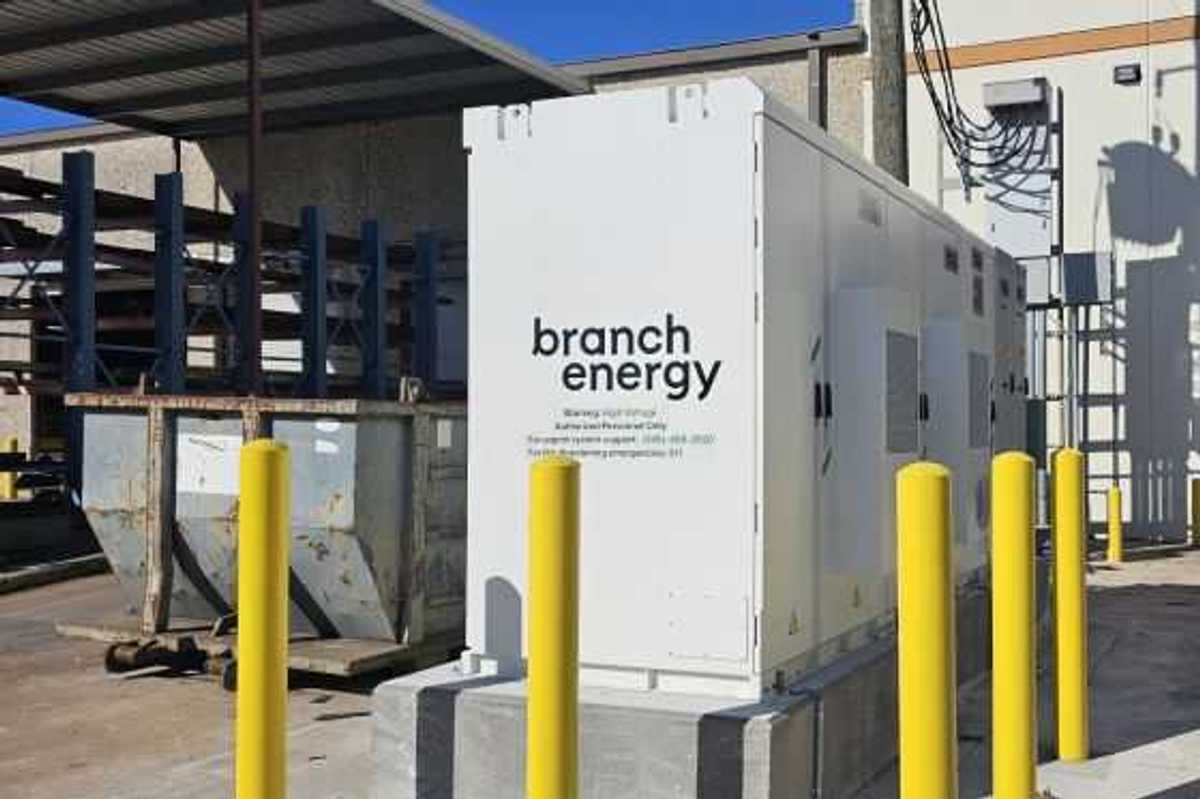
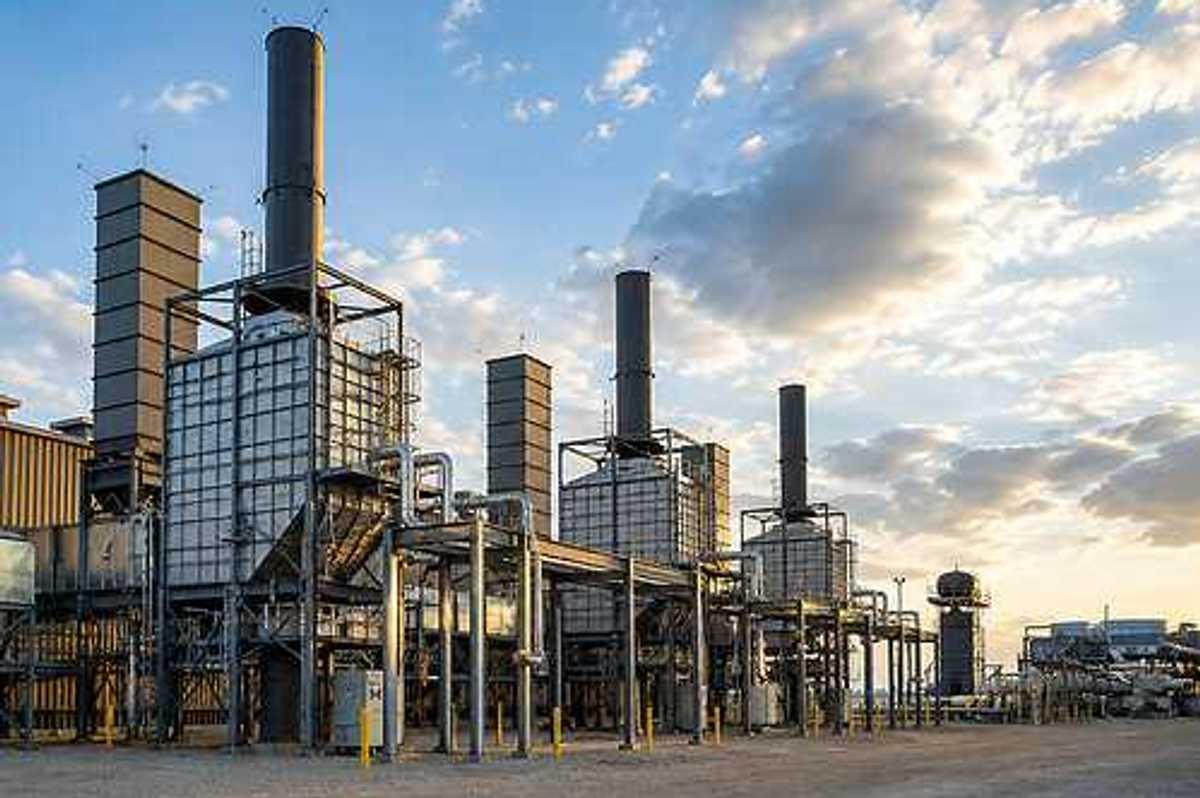
Utility Global’s H2Gen technology aims to decarbonize the heavy industrial sector. Photo courtesy of Utility Global

Houston-based Utility Global has raised $100 million in an ongoing Series D round to globally deploy its decarbonization technology at an industrial scale.

The round was led by Ara Partners and APG Asset, according to a news release. Utility plans to use the funding to expand manufacturing, grow its teams and support its commercial developments and partnerships.

“This financing marks a critical step in Utility’s transition from a proven technology to full-scale global commercial execution,” Parker Meeks, CEO and president of Utility Global, said in the release. “Industrial customers are no longer looking for pilots or promises; they need deployable solutions that work within existing assets and deliver true economic industrial decarbonization today that is operationally reliable and highly scalable. Utility’s technology produces both economic clean hydrogen and capture-ready CO2 streams, and this capital enables us to scale and deploy that impact globally with speed, discipline, and rigor.”

Utility Global's H2Gen technology produces low-cost, clean hydrogen from water and industrial off-gases without requiring electricity. It's designed to integrate into existing industrial infrastructure in hard-to-abate assets in the steel, refining, petrochemical, chemical, low-carbon fuels, and upstream oil and gas sectors.

“Utility is tackling one of the most difficult challenges in the energy transition: decarbonizing hard‑to‑abate industrial sectors,” Cory Steffek, partner at Ara Partners and Utility Global board chair, said in the release. “What sets Utility apart is its ability to compete head‑to‑head with conventional fossil‑based solutions on cost and reliability, even as it materially reduces emissions. With this new funding, Utility is well-positioned for its next chapter of commercial growth while maintaining the technical excellence and capital discipline that have defined its development to date.”

Utility Global reached several major milestones in 2025. After closing a $53 million Series C, the company agreed to develop at least one decarbonization facility at an ArcelorMittal steel plant in Brazil. It also signed a strategic partnership with California-based Kyocera International Inc. to scale global manufacturing of its H2Gen electrochemical cells.

The company also partnered with Maas Energy Works, another California company, to develop a commercial project integrating Maas’ dairy biogas systems with H2Gen to produce economical, clean hydrogen.

"These projects were never intended to stand alone. They anchor a deep and growing pipeline of commercial projects now in development globally across steel, refining, chemicals, biogas and other hard-to-abate sectors worldwide, Meeks shared in a 2025 year-in-review note. He added that 2026 would be a year of "focused acceleration to scale."


Ad Placement 300x100
Ad Placement 300x600

CultureMap Emails are Awesome

Houston lawmaker may kill data center tax breaks due to $8B revenue loss

looking at the data

An influential Houston-area state senator is raising concerns about potentially billions of dollars in lost state revenue from tax breaks for Texas data centers—and is pondering legislation that would abolish the tax incentives.

Citing data from the state comptroller’s office, The Texas Tribune reports the state stands to lose nearly $8 billion in revenue from 2026 to 2030 due to sales tax and use tax exemptions for data centers. During the state’s 2025 fiscal year, which ended on Aug. 31, these tax exemptions caused Texas to lose a little over $1 billion, up from an earlier estimate of $130 million.

“These new numbers are extremely concerning, and I will say they’re unsustainable,” Republican state Sen. Joan Huffman, chairwoman of the state Senate Finance Committee, tells The Texas Tribune. “I plan to look at filing legislation to either repeal the exemption or take a very close look at it and see.”

Texas on track to be No. 1 data center market in U.S.

Scrutiny of the tax breaks comes amid an explosion of data center development in Texas, where data provider Aterio identifies nearly 1,000 centers that are operating, under construction or planned.

A report issued in January by Bloom Energy says the state is poised to become the No. 1 U.S. market for data centers within three years. By 2028, according to the report, Texas is projected to exceed 40 gigawatts of data center capacity—representing nearly 30 percent of total U.S. demand.

Among companies benefiting from the data center boom are:

  • Tech titans like Apple, Google, Meta Platforms, and Microsoft, which are spending billions of dollars to build data centers in Texas.
  • Spring-based ExxonMobil and Houston-based Chevron, two oil and energy giants that are developing natural gas plants to supply power for data centers.
  • Houston-based energy technology company Baker Hughes, which is collaborating with Google Cloud to develop AI-enabled power optimization and sustainability software for data centers.
  • DataBank, Data Foundry, Equinix, Digital Realty, Lumen Technologies, and IBM, all of which operate data centers in the Houston area.

The Texas Legislature will begin debating tax breaks for data centers in July, when Huffman’s Senate Finance Committee meets for an interim hearing before the 2027 legislative session, according to the Tribune.

Data center industry defends tax breaks

Leaders in the data center industry warn that watering down or halting the tax breaks could slow down or even end Texas’ ascent in the data center sector.

A 2025 report commissioned by the Data Center Coalition found that in 2024, data centers provided more than $1.6 billion in state tax revenue and almost $1.6 billion in local tax revenue in Texas. Over the next several years, according to the report, planned development of data centers in the Lone Star State could generate almost $3.8 billion in state tax revenue and more than $4.9 billion in local tax revenue.

In 2024, the Houston area had 8.1 million gross square feet of data centers, with the properties’ real estate investments sitting at $10 billion, according to the report. That year, data centers in the region produced a little over $700 million in state and local tax revenue. About 60 data centers operate in the Houston area.

Watchdog group warns of tax breaks’ danger to state budgets

On the other side of the debate over tax breaks for data centers, a report released last year by Good Jobs First, a nonprofit, nonpartisan watchdog group that tracks economic development incentives, decries the tax breaks as dangerous to state budgets.

“We know of no other form of state spending that is so out of control. Therefore, we recommend that states cancel their data center tax exemptions,” says Good Jobs research analyst Kasia Tarczynska, co-author of the report. “Shy of that, states should amend … legislation to cap how much any facility and company can avoid paying in taxes each year.”

Rice, UH launch joint effort to accelerate plastics recycling solutions

plastics partnership

Institutes at two Houston universities are joining forces to help position the city as a global leader in plastics recycling innovation.

The Center for Energy Studies (CES) at Rice University’s Baker Institute for Public Policy and the University of Houston’s Energy Transition Institute (UH-ETI) have announced a strategic partnership that aims to develop real-world solutions for plastic recycling.

The universities will kick off the new initiative with the Annual Sustainability Summit: Innovations and Collaborations in Circularity & Supply Chain Resilience event April 22 at the Baker Institute.

“Houston sits at the center of the global plastics and petrochemical value chain, which makes it uniquely positioned to lead in circular solutions,” Rachel Meidl, deputy director of CES, said in a news release. “This partnership is about moving beyond theory and bringing together data, policy and industry insight to accelerate technologies and frameworks that can scale.”

The partnership—which was made official during CERAWeek—will integrate policy, economics, science and engineering. The universities will work to “share data, insights, networks and connections to advance global work in protecting the environment, economy and society,” according to a news release from Rice.

Initially, the universities will focus on evaluating scalable advanced recycling pathways, developing policy frameworks to improve plastics circularity, analyzing emerging technology and using industry stakeholders for deployment.

Plastics circularity aligns with Rice and UH’s energy transition efforts to advance a circular economy. UH's ETI recently published a white paper that analyzes how the U.S. currently handles plastics recycling and advocates for a new approach. Ramanan Krishnamoorti, author of the paper and vice president of energy and innovation at UH, said the partnership with Rice’s Baker Institute could help bring some of the ideas outlined in the paper to reality.

“Our research has shown that a uniform approach may be the best way for the U.S. to tackle plastic waste,” Krishnamoort said in a news release. “By partnering with Rice’s Baker Institute for Public Policy, we will be better positioned to deliver real-world solutions that advance a circular plastics economy.”