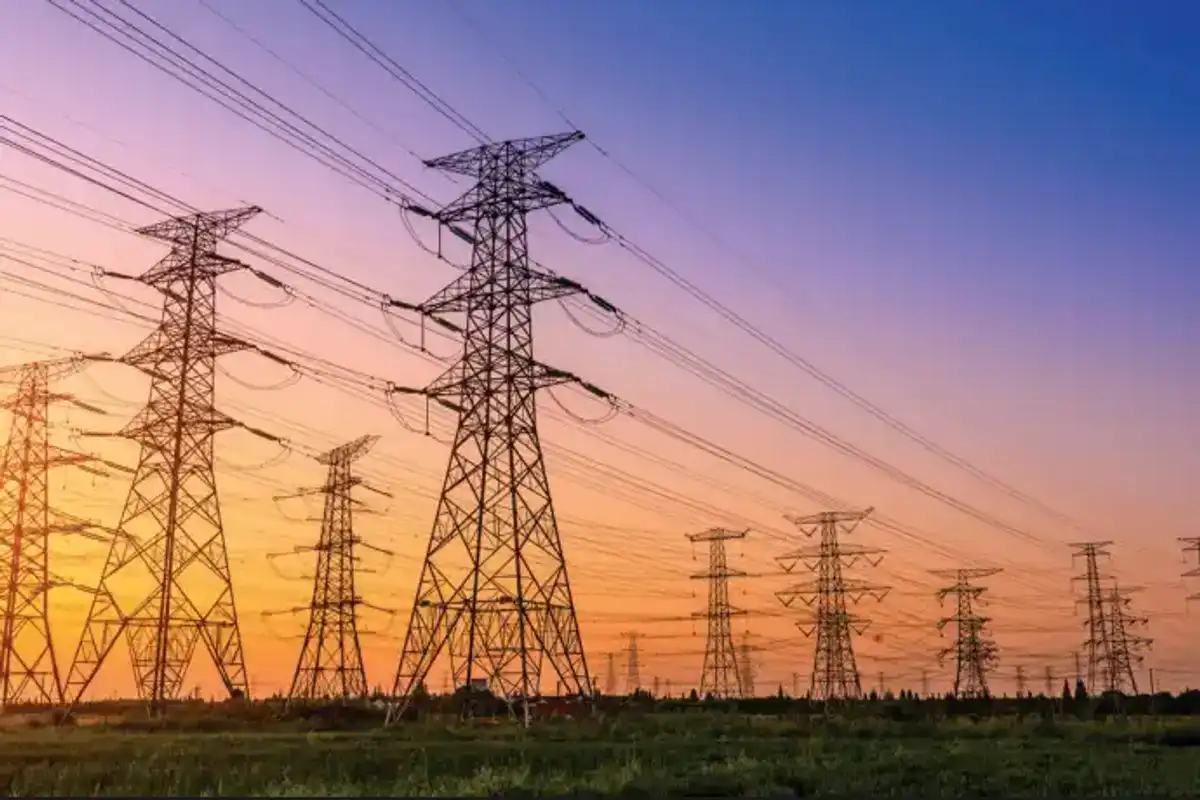
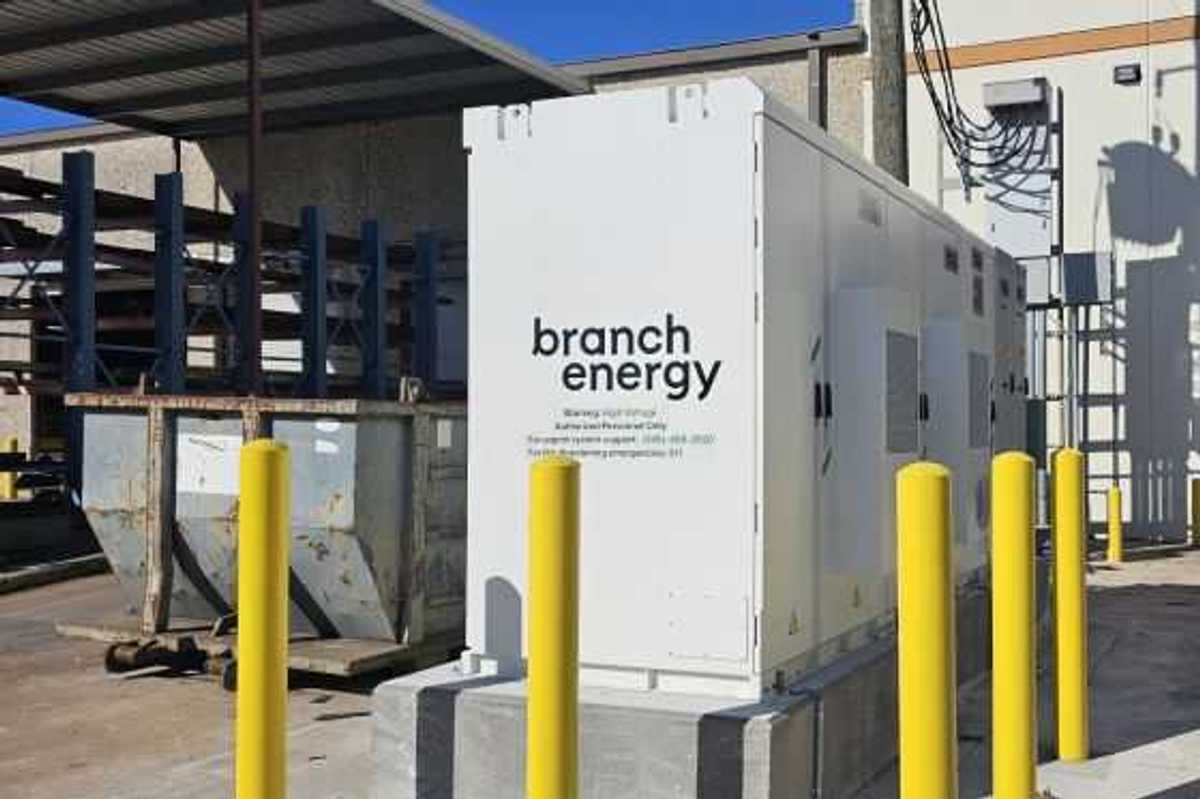
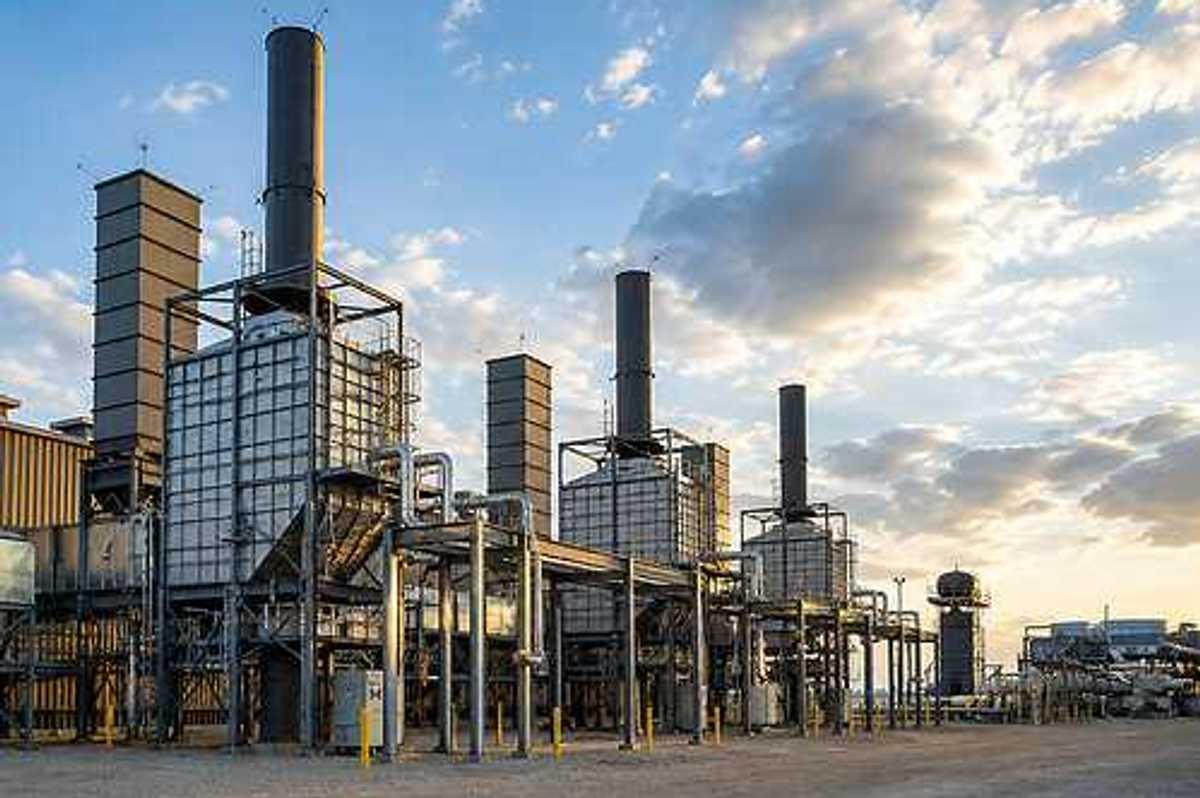
Lancium has partnered with AI leader NVIDIA. Photo courtesy Lancium

With an initial investment of $2 billion, AI chip manufacturer NVIDIA just acquired a 20 percent stake in The Woodlands-based Lancium, which develops large-scale campuses that combine AI data centers and onsite power supplies.

Lancium recently announced the investment but didn’t disclose the dollar amount. The Information news website reported NVIDIA’s investment totaled $2 billion, with the possibility of an additional $1 billion if Lancium achieves certain milestones.

Dealroom.co calls NVIDIA’s investment a “form of supply-chain insurance.”

NVIDIA “is gaining exposure to the scarce physical assets that determine whether its chips can be deployed,” Dealroom.co says. “The move makes Nvidia look less like a pure chip company and more like an allocator of infrastructure capacity.”

Investment precedes possible IPO in 2027

Thanks to NVIDIA’s cash infusion, Lancium and its portfolio of land and power connections carry an enterprise value of about $10 billion, according to The Information.

The investment should enable Lancium to expand as it explores a potential IPO next year, The Information reported.

Neither Lancium nor NVIDIA is responding to requests for comment about the deal.

Lancium’s marquee project is a 1,000-acre data center and power generation campus in West Texas for the $500 billion Stargate initiative. Stargate, a joint venture comprising MGX, OpenAI, Oracle and SoftBank, is building data centers equipped to handle AI-level workloads.

“Epicenter of energy and AI infrastructure”

Founded in 2017, Lancium has 4 gigawatts of leased capacity and a more than 15-gigawatt development pipeline. In 2024, Blackstone Energy Transition Partners invested about $500 million in Lancium, giving Blackstone a roughly 50 percent stake.

“This partnership with NVIDIA is a strong testament to Lancium’s position at the epicenter of energy and AI infrastructure … . We look forward to continuing to partner with these leading companies to help power the next generation of AI innovation,” Bilal Khan, senior managing director at Blackstone, said in a release.

Through the NVIDIA partnership, Lancium’s data center and power generation campuses will use the tech company’s “AI factory” platform, including software, computing, and networking capabilities. This will give NVIDIA customers and partners access to power capacity that supports heavy AI workloads.

“We have spent years assembling the power, the land, and the infrastructure expertise needed to deliver AI data center capacity at a scale the world has never seen,” Michael McNamara, co-founder and CEO of Lancium, said in the release.

“Partnering with NVIDIA — the definitive technology platform for AI computing — ensures that every campus in our portfolio will be deployed with the industry’s most advanced technology and that NVIDIA’s customers will have access to the capacity they need to compete and lead in the AI era.”

UH researchers have developed a thin film that could allow AI chips to run cooler and faster. Photo courtesy University of Houston.

Houston researchers develop energy-efficient film for AI chips

AI research

A team of researchers at the University of Houston has developed an innovative thin-film material that they believe will make AI devices faster and more energy efficient.

AI data centers consume massive amounts of electricity and use large cooling systems to operate, adding a strain on overall energy consumption.

“AI has made our energy needs explode,” Alamgir Karim, Dow Chair and Welch Foundation Professor at the William A. Brookshire Department of Chemical and Biomolecular Engineering at UH, explained in a news release. “Many AI data centers employ vast cooling systems that consume large amounts of electricity to keep the thousands of servers with integrated circuit chips running optimally at low temperatures to maintain high data processing speed, have shorter response time and extend chip lifetime.”

In a report recently published in ACS Nano, Karim and a team of researchers introduced a specialized two-dimensional thin film dielectric, or electric insulator. The film, which does not store electricity, could be used to replace traditional, heat-generating components in integrated circuit chips, which are essential hardware powering AI.

The thinner film material aims to reduce the significant energy cost and heat produced by the high-performance computing necessary for AI.

Karim and his former doctoral student, Maninderjeet Singh, used Nobel prize-winning organic framework materials to develop the film. Singh, now a postdoctoral researcher at Columbia University, developed the materials during his doctoral training at UH, along with Devin Shaffer, a UH professor of civil engineering, and doctoral student Erin Schroeder.

Their study shows that dielectrics with high permittivity (high-k) store more electrical energy and dissipate more energy as heat than those with low-k materials. Karim focused on low-k materials made from light elements, like carbon, that would allow chips to run cooler and faster.

The team then created new materials with carbon and other light elements, forming covalently bonded sheetlike films with highly porous crystalline structures using a process known as synthetic interfacial polymerization. Then they studied their electronic properties and applications in devices.

According to the report, the film was suitable for high-voltage, high-power devices while maintaining thermal stability at elevated operating temperatures.

“These next-generation materials are expected to boost the performance of AI and conventional electronics devices significantly,” Singh added in the release.

---

This article originally appeared on our sister site, InnovationMap.

Ad Placement 300x100
Ad Placement 300x600

CultureMap Emails are Awesome

ExxonMobil secures approval for $5B East Texas carbon capture project

ccs expansion

Spring-based ExxonMobil has won approval from the Texas Railroad Commission for a $5 billion carbon capture and storage project in East Texas.

Dominic Genetti, senior vice president of CCS at ExxonMobil, told The Financial Times, which broke the news, that the Railroad Commission’s action is a “major milestone” that lets the company keep expanding along the Gulf Coast. In a 2-1 vote, commissioners authorized a carbon sequestration permit for the project.

“The Railroad Commission clearly recognizes the important role carbon capture and storage can play in meeting growing global demand for lower-carbon products while supporting new jobs and economic growth,” Genetti said.

The U.S. Environmental Protection Agency (EPA) approved ExxonMobil’s Rose CCS project last year.

The project will enable the company to inject about 53 metric tons of industrial customers’ carbon emissions into three underground wells it drilled in the Beaumont-Port Arthur area. Over a 13-year period, ExxonMobil plans to inject about 4 million metric tons per year into the Fleming and Upper Frio rock formations, according to Carbon Herald.

ExxonMobil says it owns the world’s first and largest CCS system, comprising 1,300 miles of CO2 pipeline and secure storage sites. Seventy percent of the pipelines are along the Gulf Coast.

The company ramped up its CCS business in 2023 with the $4.9 billion purchase of Denbury, which owned about 1,000 miles of CO2 pipelines.

“Our expertise, combined with Denbury’s talent and CO2 pipeline network, expands our low-carbon leadership and best positions us to meet the decarbonization needs of industrial customers while also reducing emissions in our own operations,” ExxonMobil Chairman and CEO Darren Woods said when the deal closed.

In January, Genetti wrote in a post on ExxonMobil’s website that the company is committed to CCS “for the long haul.”

“CCS is not new technology, but it’s flown relatively under the radar compared with the attention that production of hydrocarbons commands,” he wrote. “Now, as the world becomes more aware of the need to reduce emissions, CCS finally has a brighter spotlight and a broader runway to scale up.”

The company also announced this week that it has begun CCS operations at a direct reduced iron facility in Convent, Louisiana. The project will capture, transport and store up to 800,000 metric tons of CO2 per year, according to the company.

Houston’s power future: The role of energy efficiency and demand response

The View from HETI

In Houston, industrial expansion, advanced manufacturing, data centers, AI, electrification, and population growth are all increasing demand for power across the region. At the same time, the infrastructure needed to support that growth, from generation and transmission to distribution and storage, takes significant time and investment to plan and build.

This growing power demand creates a near-term challenge: how can the region support new investment while major grid projects are planned and built?

A new report from the Houston Energy Transition Initiative, “Role of Efficiency & Demand Response to Meet Near-Term Regional Power Demand”, examines how Houston can get more from the grid it has today. Its central finding: energy efficiency (EE) and demand response (DE) can create measurable grid “headroom” while new major infrastructure projects are being planned, financed, permitted and built.

Explore the key takeaways from the report:

Houston’s power challenge affects economic growth

Houston’s ability to attract industrial investment increasingly depends on reliable, affordable power. ERCOT and MISO Texas project major load growth through 2030 and 2035 from industrial development, data centers, AI, advanced manufacturing and electrification.

Efficiency and demand response can lower peak demand and help manage local grid constraints that could slow growth.

EE and DE are different tools, and Houston needs both

Energy efficiency creates lasting reductions in electricity use through equipment upgrades, building improvements and changes in operations. Demand response lets customers temporarily reduce or shift power use based on grid conditions, incentives or market signals.

Texas programs show measurable results

In 2024, Texas investor-owned utility programs delivered about 609 MW of evaluated demand reduction and 603 GWh of annual energy savings. The report puts the lifetime cost of saved energy at about $0.02 per kWh.
CenterPoint Energy accounted for more than 40% of ERCOT investor-owned utilities’ total demand reduction and energy savings. It achieved about 236 MW of peak demand reduction and 229 GWh of energy savings, above goals of 66 MW and 116 GWh.

Entergy Texas also achieved significantly more demand reduction and energy savings than its 2024 program year goals, with a reported 24 MW of peak demand reduction against a goal of 17 MW and 43 GWh of energy savings against a goal of 30 GWh.

Large power users can add flexibility

Data centers, industrial facilities and advanced manufacturers may be able to shift noncritical work, adjust cooling, use on-site resources or briefly cut consumption.

The report states that verified demand savings, flexible loads and behind-the-meter resilience could help reduce interconnection risk and support more cost-effective growth.

Technology can expand options

Storage, smart controls and energy management systems can work with efficiency and demand response. Smaller loads can also be combined across commercial buildings, multifamily developments and homes.

For Houston, these tools do not replace new generation, transmission, distribution or storage. They can help the region use existing infrastructure more effectively while new capacity is built, supporting reliable, affordable power and continued economic growth.

———

This article originally appeared on the Greater Houston Partnership's Houston Energy Transition Initiative blog. HETI exists to support Houston's future as an energy leader. For more information about the Houston Energy Transition Initiative, visit htxenergytransition.org. Download your copy of Role of Efficiency & Demand Response to Meet Near-Term Regional Power Demand to learn more.

Clean energy leaders taking the stage at Houston Energy and Climate Week

expert voices

Some of the biggest names in the clean energy scene will be sharing their expertise in Houston this week.

From leaders fresh off one of the industry's biggest IPOs to local organizers, here's who's speaking at promising panels and anchor events during Houston Energy and Climate Week—taking place now through Sept. 18. Visit each event's website for a full lineup.

Read more about Houston Energy and Climate Week and its programming in Energy Capital's event preview. Or learn more about the startups pitching at events throughout the week here.

Energy Solutions in a New Era Hosted by JERA & Mitsubishi Heavy Industries — Sept. 15 at the Ion

  • Mary Dhillon, strategy manager at Fervo Energy
  • Ricky Sakai, SVP of investment & business development at Mitsubishi Heavy Industries America
  • Daniel Padilla, strategy & business development lead at Emerald AI
  • Adrian Trömel, chief innovation officer / interim vice president for innovation at Rice University (moderator)
  • Shigeki Uchihashi, VP of strategy & corporate venturing at JERA Americas

Cypher Pilotathon and Startup Showcase — Sept. 15 at POST Houston

  • Nada Ahmed, co-founder and CRO of Energytech Cypher
  • Taylor Chapman, investment principal at New Climate Ventures
  • Jason Ethier, co-founder and CEO of Energytech Cypher
  • Sean Kelly, CEO of Amperon
  • Ionel Nechiti, investment director for Aramco Ventures
  • Hema Prapoo, global energy industry leader from Microsoft
  • Ishan Rao, VP of commercial at Syzygy Plasmonics

Greentown Climatetech Summit — Sept. 16 at Greentown Labs

  • Arne Ballantine, co-founder of Ohmium International
  • David Baldwin, partner at SCF Partners
  • Christopher Hanson, former chair of the U.S. Nuclear Regulatory Commission
  • Tim Latimer, CEO and co-founder of Fervo Energy
  • Georgina Campbell Flatter, CEO of Greentown Labs
  • Nicolaus Radford, CEO and co-founder of Persona AI
  • Prag Mishra, chief AI officer at Armada
  • Jeremy Pitts, managing director at Activate
  • Bobby Gallagher, CEO, CTO and co-founder of Deployable Energy
  • Jason Wells, chair, president and CEO of CenterPoint Energy
  • Eliecer Viamontes, CEO of Entergy Texas

Rice Alliance Energy Tech Venture Forum — Sept. 17 at Rice University’s Jones Graduate School of Business

  • Laurent Alteirac, enabling technology development manager at SLB
  • Kemal Anbarci, managing executive and general manager of venture capital at Chevron Technology Ventures
  • Sameer Bandhu, managing director of ventures and licensing at GE Vernova
  • Brad Burke, former associate vice president at Rice Office of Innovation and former executive director of Rice Alliance for Technology and Entrepreneurship at Rice University (moderator)
  • Andres Cabada, managing director at Halliburton Labs
  • Quennie Co, managing partner at Shell Ventures
  • Rob Crane, technology scouting & venturing manager at ExxonMobil
  • Ira Ehrenpreis, founder and managing partner at DBL Partners
  • Menachem Elimelech, director of Rice Center for Membrane Excellence (RiCeME) at Rice University
  • Brian Iversen, founder & managing partner at Cimbria Capital
  • Dustin Kinder, CEO of Maverick Water Group
  • Megan Lund, lead of venturing strategy & strategic partnerships at Woodside Energy
  • Sean Maher, vice president of investor relations & chief economist at Phillips 66
  • Robert Mellors, SUPERHOT program director at ARPA-E
  • John (JR) Reale, interim associate vice president for industry and new ventures at Rice University and executive director of Rice Alliance for Technology and Entrepreneurship at Rice University
  • Chad Seely, SVP of regulatory policy, general counsel, chief compliance officer, and corporate secretary at ERCOT
  • David Sholl, executive vice president for research and professor of chemical & biomolecular engineering at Rice University
  • Jim Sledzik, managing director of strategic venturing, North America, at Aramco Ventures