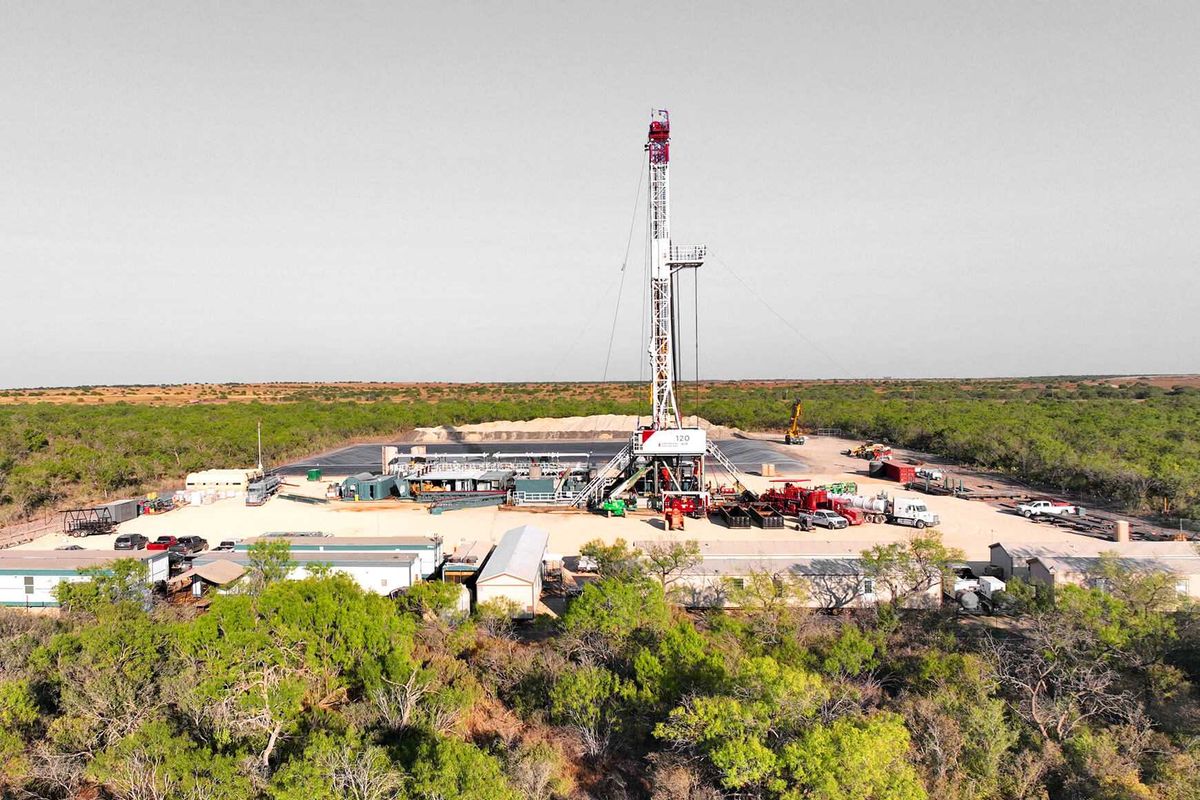
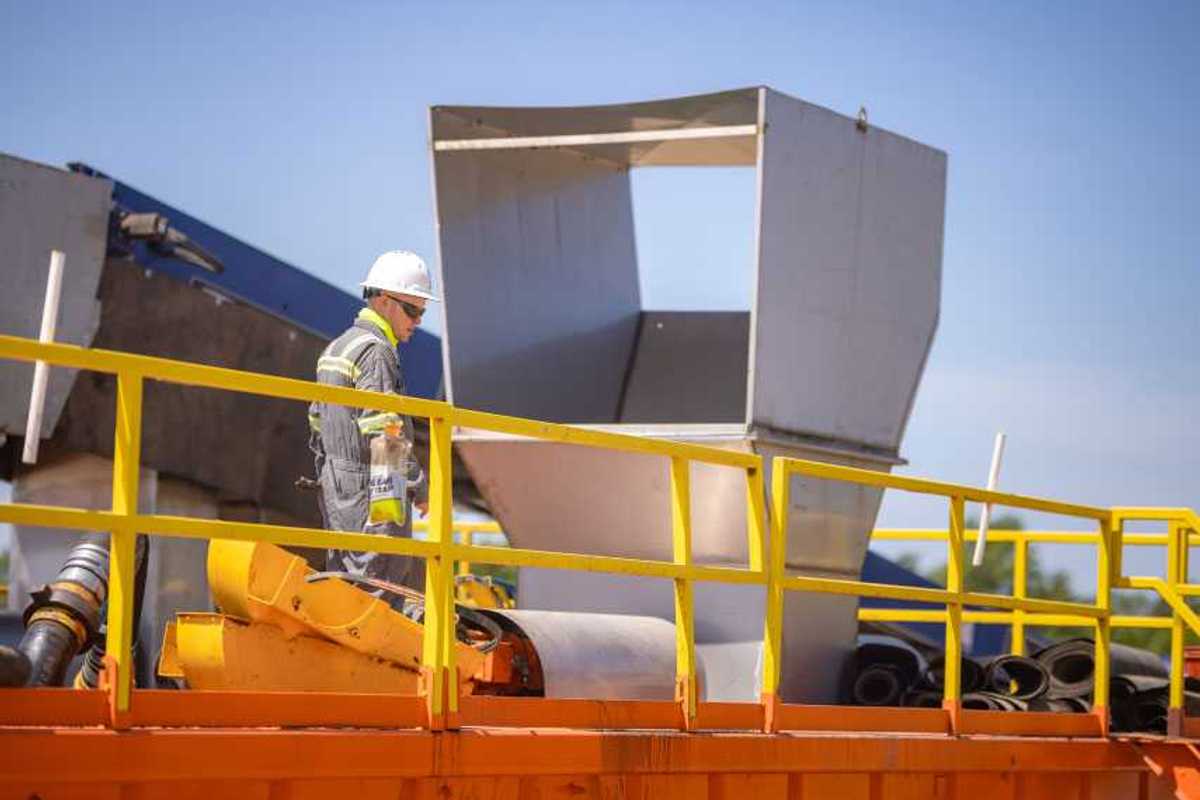
U.S. Rep. Morgan Luttrell, a Magnolia Republican, and Hertha Metals founder and CEO Laureen Meroueh toured Hertha’s Conroe plant in August. Photo courtesy Hertha Metals/Business Wire.

Led by Conroe-based Hertha Metals, five organizations in the Houston area earned shoutouts on Fast Company’s list of the World’s Most Innovative Companies of 2026.

Hertha Metals ranked No. 1 in the manufacturing category.

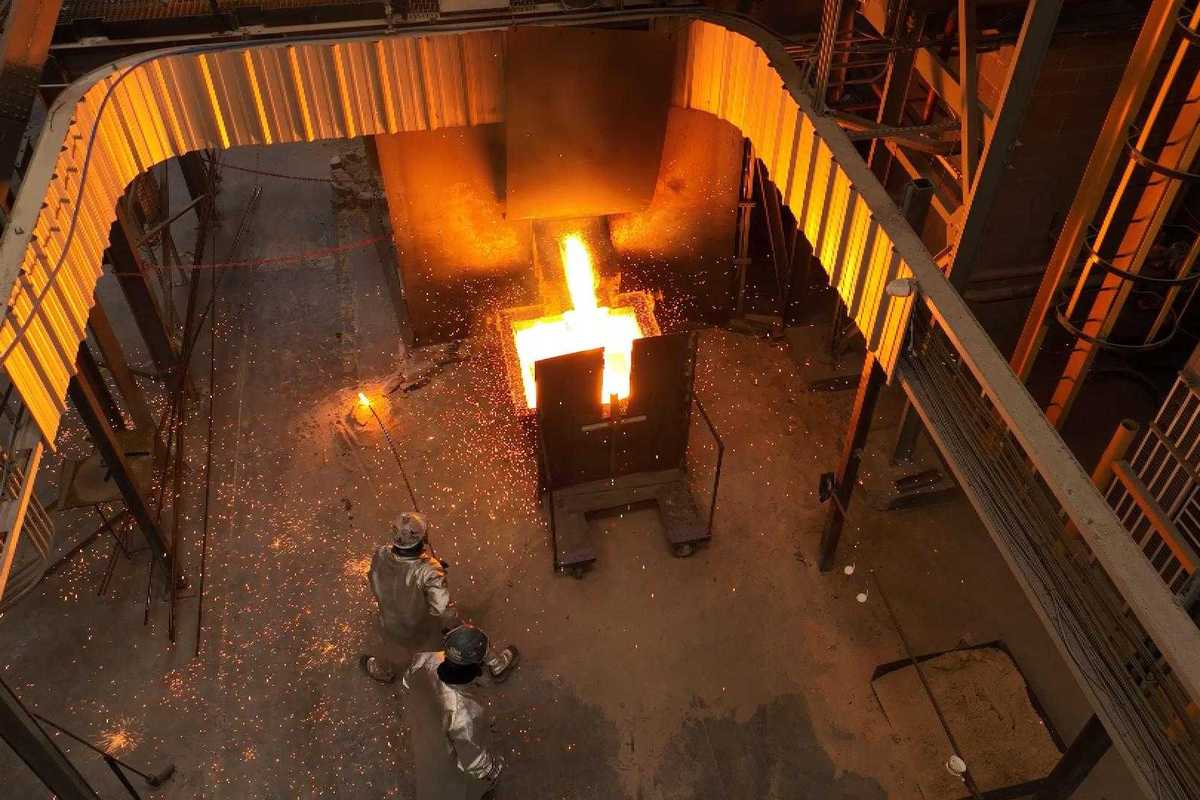
Last year, Hertha unveiled a single-step process for steelmaking that it says is cheaper, more energy-efficient and just as scalable as traditional steel manufacturing. It started testing the process in 2024 at a one-metric-ton-per-day pilot plant.

At the same time, Hertha announced more than $17 million in venture capital funding from investors such as Breakthrough Energy, Clean Energy Ventures, Khosla Ventures, and Pear VC.

“We’re not just reinventing steelmaking; we’re redefining what’s possible in materials, manufacturing, and national resilience,” Laureen Meroueh, founder and CEO of Hertha, said at the time.

Meroueh was also recently named to Inc. Magazine's 2026 Female Founders 500 list.

Hertha, founded in 2022, says traditional steelmaking relies on an outdated, coal-based multistep process that is costly, and contributes up to 9 percent of industrial energy use and 10 percent of global carbon emissions.

By contrast, Hertha’s method converts low-grade iron ore into molten steel or high-purity iron in one step. The company says its process is 30 percent more energy-efficient than traditional steelmaking and costs less than producing steel in China.

Last year, Hertha said it planned to break ground in 2026 on a plant capable of producing more than 9,000 metric tons of steel per year. In its next phase, the company plans to operate at 500,000 metric tons of steel production per year.

Here are Fast Company’s rankings for the four other Houston-area organizations:

  • Houston-based Vaulted Deep, No. 3 in catchall “other” category.
  • XGS Energy, No. 7 in the energy category. XGS’ proprietary solid-state geothermal system uses thermally conductive materials to deliver affordable energy anywhere hot rock is located. While Fast Company lists Houston as XGS’ headquarters, and the company has a major presence in the city, XGS is based in Palo Alto, California.
  • Houston-based residential real estate brokerage Epique Realty, No. 10 in the business services category. Epique, which bills itself as the industry’s first AI brokerage, provides a free AI toolkit for real estate agents to enhance marketing, streamline content creation, and improve engagement with clients and prospects.
  • Texas A&M University’s Nanostructured Materials Lab in College Station. The lab studies nano-structured materials to make materials lighter for the aerospace industry, improve energy storage, and enable the creation of “smart” textiles.
Ad Placement 300x100
Ad Placement 300x600

CultureMap Emails are Awesome

Halliburton Labs names 4 new clean energy startups to incubator

green team

Four new companies have joined Halliburton Labs, the incubator for early-stage energy and climate startups run by Houston energy giant Halliburton.

Halliburton Labs provides the emerging companies with mentorship, industry connections, laboratory access and other resources as they work toward commercialization, according to a news release.

The four new members include:

  • Nandina REM, a Singapore-based company that delivers carbon fiber thermoplastics. It turns end-of-life assets into new, reliable, high-performance materials for the aviation, aerospace and defense industries in a fraction of the time of standard supply chains.
  • Noon Energy, a California-based company that delivers clean, reliable electricity with ultra-long duration energy storage. Its system uses solid oxide electrochemical cells and stores energy as abundant, flexible industrial gases.
  • Proof Energy, a Silicon Valley-based company developed by the Lawrence Berkeley National Laboratory that is commercializing next-generation metallic solid oxide fuel cell (M-SOFC) technology. Its system uses widely available fuels such as ethanol, methanol, ammonia, and natural gas as hydrogen carriers to enable lower-cost, low-emission commercial transportation, and also offers a zero-emission heating solution to preserve battery range in electric vehicles.
  • Tidal Metals, a New Jersey-based company that has developed technology to economically make decarbonized magnesium metal from seawater and electricity.

"Halliburton Labs exemplifies our commitment to advance a secure and pragmatic energy future," Jeff Miller, chairman, president and CEO of Halliburton, said in the news release. "We welcome these companies into our ecosystem, where they will gain access to the tools, expertise, and connections needed to scale their technologies."

Auckland-based Aquafortus Technologies and California-based Sunchem joined Halliburton Labs in September. With the addition of the four new members, the incubator currently supports six early-stage companies.

Read more about the incubator's 2025 cohort here.

Houston-area company to develop next-gen batteries for electric helicopters

emissions-free flight

Webster-based KULR Technology Group has announced a strategic co-development collaboration with Robinson Helicopter Company (RHC) to develop a next-generation, high-performance battery system for the eR66 battery-electric helicopter demonstrator.

KULR, an electronics manufacturing company, will serve as the developer of the advanced battery system for the eR66 platform. KULR will design and integrate a high-performance battery structure that uses its proprietary battery safety technologies and thermal management solutions, previously developed for aerospace and spaceflight applications.

California-based Robinson Helicopter Company is the world's leading manufacturer of civil helicopters. Its eR66 is expected to deliver zero-emission, affordable and quiet performance for “high-demand applications.”

“Robinson Helicopter has built more civil helicopters than any manufacturer on Earth, and their commitment to reliability is exactly the standard KULR’s battery architecture is designed to meet,” Michael Mo, CEO of KULR, said in a news release. “KULR’s battery systems have been qualified for NASA spaceflight. They were designed from day one for dual use: a primary flight cycle and a certified second life. The eR66 is where that architecture proves itself in rotorcraft.”

David Smith, president and CEO of Robinson Helicopter Company, cited the partnership as a shift in service for commercial and civil operations and touted the potential environmental benefits.

“By integrating electric propulsion, we aren't just reducing our environmental impact; we are unlocking critical new capabilities for life-saving missions,” Smith added in the release. “For use cases like rapid organ and tissue transport, the reduced acoustic signature and zero-emission profile ensure that time-sensitive, low-emission deliveries are faster, quieter, and more sustainable than ever before."

The companies say, through the partnership, they aim to:

  • Advance eR66 performance
  • Enhance aviation safety
  • Increase cost efficiency
  • Uphold American aerospace leadership
  • Support decarbonization
  • Promote circular economy principles

Tesla's EV Robotaxis officially launch in Texas' largest metros

On The Road

Tesla’s Robotaxi service has taken to the streets of Houston. In a brief statement Saturday, April 18 on its X social media account, Tesla Robotaxi says the autonomous rideshare service just launched in Texas’ two biggest metro areas — Houston and Dallas.

“Try Tesla Robotaxi in Dallas & Houston!” Tesla CEO Elon Musk says in a reposting on X of the Robotaxi announcement.

One of Robotaxi’s competitors, Alphabet-owned Waymo, beat the Tesla service to the Dallas, Houston, and Austin markets. Another competitor, Amazon-owned Zoox, has Dallas flagged for its autonomous rideshare service.

Robotaxi previously kicked off in Austin, where Tesla is based and manufactures electric vehicles, and the San Francisco Bay Area. Nearly 50 Robotaxis operate in Austin, where the service’s inaugural rides happened last year, and more than 500 in the San Francisco area.

Of the three rides logged in a 31-square-mile area in Dallas as of Monday morning, the average fare was $7.96 and the average trip was 3.5 miles, according to an online tracker of autonomous rideshare services. The tracker showed only one Robotaxi was on the roads in Dallas.

As of Monday morning, a 25-square-mile area in Houston had two Robotaxis on the road, according to the online tracker. The average fare for five recorded rides was $11.34 and the average trip was six miles.

“We want Robotaxi pricing to be simple and easy for you to understand,” according to the Robotaxi website. “Initially, as part of our introductory program, we will charge a simple, affordable rate plus applicable taxes and fees for all rides within the available service area.”

The tracker shows the Robotaxi in Dallas did not have a human aboard to monitor each trip, and only one of Houston’s two Robotaxis did not have a human monitor in the driver’s seat.

For now, all passengers ride in Tesla Model Y cars. Robotaxi operates from 6 am-2 am daily.

To use the service, you first must download the Robotaxi app, which works only on iPhones.

Robotaxi lets you stream music and adjust climate settings and seat positioning from the Robotaxi app or the vehicle’s touchscreen. Climate and media settings are stored in your Robotaxi profile and automatically transfer from one vehicle to another. If you own a Tesla, certain profile settings and media preferences are available in your own car as well as in a Robotaxi.

In January at the World Economic Forum in Davos, Switzerland, Musk said a “widespread” network of driverless rideshare vehicles would be operating in the U.S. by the end of this year, CNBC reported.

---

This article originally appeared on CultureMap.com.